
Analysis: How, and why, Sporting KC remains at the fore of MLS’s homegrown movement
Peter Vermes has never built his teams around the “cookie-cutter idea” of what a Major League Soccer roster is supposed to look like. He doesn’t compare his rosters to those of other teams, or what other coaches deem “successful.”
And his approach seems to be working well enough: In his 13th year at the helm of Sporting Kansas City, Vermes is the longest-tenured MLS head coach.
As Sporting’s coach, sporting director and technical director, Vermes has overseen the creation of Sporting KC’s USL affiliate team and the Sporting Kansas City Academy while simultaneously leading Sporting to three U.S. Open Cups and an MLS Cup championship.
Since the creation of the SKC Academy in 2007 and Sporting KC II in 2015, Vermes’ primary focus has been something called the “pro-player pathway“: a system he and his staff devised to create a sustainable path to the pros for homegrown players within Sporting KC’s developmental system.
Initial homegrown production was slow. From MLS’s first homegrown contract in November 2008 through the 2015 season, Sporting KC had signed just three homegrown players.
But then, in 2016, SKC’s homegrown production took off. It started with a trickle — Daniel Salloi signed in January 2016 — but then the dam burst: Sporting KC has signed at least one homegrown player every year since.
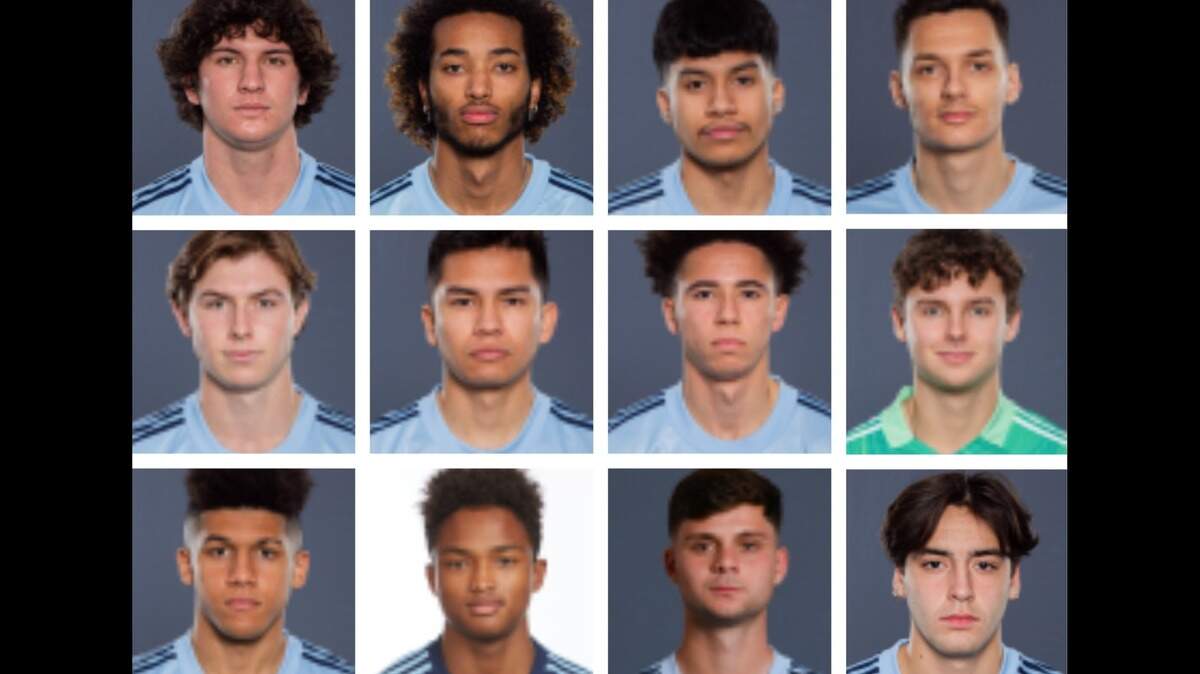
This season has proven to be the most fruitful yet. Sporting KC’s signing of 18-year-old Kayden Pierre on Tuesday marked the club’s fifth homegrown signing of 2021, and Pierre became and the 12th SKC Academy-trained homegrown on Sporting’s current first-team roster.
The other academy products now playing for Sporting’s top squad are Grayson Barber, Gianluca Busio, Ozzie Cisneros, Cam Duke, Tyler Freeman, Wilson Harris, Felipe Hernandez, Jaylin Lindsey, Kaveh Rad, Daniel Salloi and Brooks Thompson.
Twelve Sporting KC Academy-trained homegrown players on the first-team roster ... no other team in Major League Soccer has more. Goalkeeper John Pulskamp would actually make it 13, but the 20-year-old was developed in the L.A. Galaxy’s academy before joining SKC II in 2019, and thus doesn’t count toward the KC organization’s total.
Cool story. So, is it working?
With winning championships as the goal, is Vermes ahead of the curve on the impact homegrowns can have on a roster?
A close review of MLS Cup winners and composition of their respective rosters since MLS launched its Homegrown Player Rule in 2008 shows a gradual increase in reliance on homegrown players, and perhaps where Sporting KC stands in pursuit of future championships.
Consider this rundown of most recent MLS champs, including total homegrown players on each roster, with number of players trained in each club’s academy:
2020: Columbus Crew 4 (3)
2019: Seattle Sounders 5 (5)
2018: Atlanta United 5 (5)
2017: Toronto 6 (5)
2016: Seattle Sounders 4 (4)
2015: Portland Timbers 0 (0)
2014: L.A. Galaxy 1 (1)
2013: Sporting KC 3 (3)
2012: L.A. Galaxy 2 (2)
2011: L.A. Galaxy 1 (1)
2010: Colorado Rapids 1 (1)
2009: Real Salt Lake 0 (0)
Since the Homegrown Player Rule’s inception in 2008, only two homegrown players were part of MLS Cup-winning rosters without funneling through their respective club’s own academy: Marky Delgado (Toronto 2017) and Grant Lillard (Colombus 2020).
Sporting KC was the first MLS Cup champion with more than two homegrowns on its roster, and this homegrown flavor has only increased since SKC won it all in 2013 — both around the league and, at a league-leading clip, right here in KC.
But let’s stay on 2013 for a moment. Vermes was ahead of the curve that season, as Sporting had three homegrowns on its roster. One, Kevin Ellis, logged minutes that season; Jon Kempin and Erik Palmer-Brown watched from the sidelines.
But all three continue to enjoy productive pro careers.
“When we signed (Palmer-Brown), you’ve got to remember he was still in high school, but we didn’t have a second team,” Vermes said Wednesday. “So we couldn’t loan him to some other USL team at the time and get him games. And so he wasn’t necessarily yet prepared for the first team, so there wasn’t a lot of opportunity to develop him.”
Palmer-Brown went on to play in 20 matches for Sporting KC before being sold to Manchester City in January 2018.
Sporting Kansas City debuted its USL team, SKC II, in 2015 — which is also the last year an MLS Cup winner featured no homegrowns. Other MLS teams began establishing USL affiliates around that same time: L.A. Galaxy II in 2014, New York Red Bulls II in 2015 and the Houston Dynamo’s Rio Grande Valley FC in 2016.
By 2016, the homegrown movement was in full bloom across Major League Soccer. The last five MLS Cup winners each featured at least four homegrowns.
The average number of academy-trained homegrowns on MLS rosters this season is 5.6, ranging from 12 for Sporting and 10 for FC Dallas, Philadelphia, Real Salt Lake and Toronto, down to none for recent expansion clubs Nashville and Austin. They’re just too new to be reaping the fruits of such labor, but they, too, will likely follow soon enough.
It remains to be seen whether having a dozen homegrowns in Kansas City will constitute a future championship formula for Vermes and company. Not all of those 12 will play, certainly not immediately, anyway.
Some of those 12, perhaps prospects such as Felipe Hernandez, Tyler Freeman and Ozzie Cisneros, will feature more prominently for the SKC Academy team or Sporting KC II.
“We put a plan together for each player,” Vermes said, “to make sure they at least get a number of games over the course of the year between whatever properties in our system that they’re available for.”
For now, success in the MLS postseason will no doubt continue to be forged primarily on the backs of veterans. But if working more homegrown players into that equation helps produce championship results, as would seem to be the case?
Consider Sporting KC a step ahead of that curve.
This story was originally published May 6, 2021 at 11:36 AM with the headline "Analysis: How, and why, Sporting KC remains at the fore of MLS’s homegrown movement."