
Kendall McIntosh has fought for everything he’s gotten in soccer ... with ample support
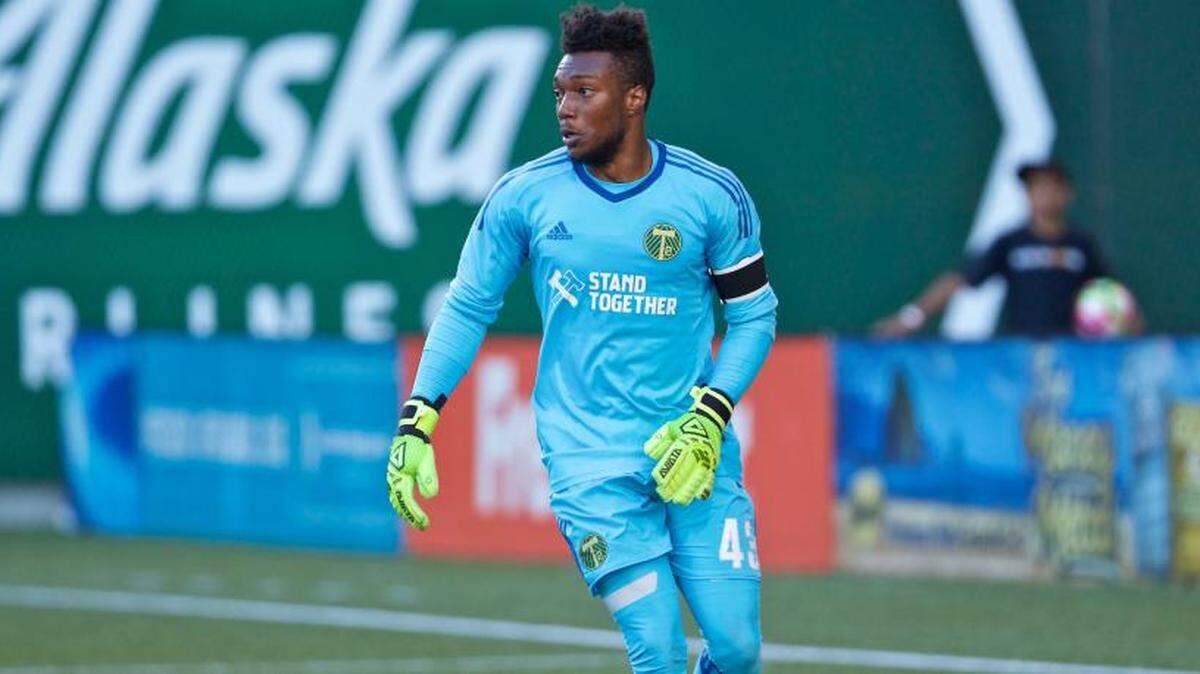
Whenever Kendall McIntosh is feeling down on himself, he thinks about a saying his mother has repeated to him his whole life.
“How do you make your own luck, Kendall?” Sonja McIntosh would ask. She’d keep asking him until he gave the correct answer:
“Luck is the intersection of preparation and opportunity.”
Kendall would brush it off as a kid. But now, as a 27-year-old goalkeeper in Major League Soccer, it’s something he’s often reverting to.
McIntosh recently signed with Sporting Kansas City via the 2020 MLS Re-Entry Draft, but it hasn’t been an easy ride to the pros.
Everywhere he’s gone he’s had to fight adversity. He’s never arrived at a club as the first choice. Even during his years in the youth national team setup, he always had to fight his way there. During his sole year with the New York Red Bulls in 2020, he didn’t even get a look in on the first team before being released.
A will to get past adversity has empowered McIntosh to keep pushing. To rise from a fifth-string goalkeeper to backup with Sporting KC.
McIntosh couldn’t have made it this far without a few “unique coaches” along the way — as well as his mother’s words echoing in his ears.
▪ ▪ ▪
McIntosh describes himself as having been “a bit of a psycho” as a kid. It was the whole reason he was made the goalkeeper on his rec team — to protect the other kids from his high energy.
That, and he wasn’t very good at playing outfield.
Nonetheless, McIntosh’s older brother, Julian, also played soccer, and Kendall wanted to be just like him. So when the family moved from Oakland to Santa Rosa, California, when McIntosh was 9, his parents got him started in organized soccer.
That was when he met Messias Souza.
“That was a pivotal moment in my soccer career,” McIntosh said, “because he had this wealth of knowledge in skill acquisition.”
Souza, a former professional goalkeeper in Brazil, moved to California in 2003 and soon after met McIntosh. Souza immediately saw the potential in the youngster and began working with him.
“His athleticism was very different than any player that I had worked with before,” Souza said. “His learning ability and his athleticism and his desire to work, I thought can definitely make him a player.”
The pair trained relentlessly together. Throughout the summer, they’d meet up at 8 a.m. with a couple of other players. A quick lunch break was followed by more hours of practice until the sun went down.
Souza worked with McIntosh on the intricacies of goalkeeping: exact hand positioning, body positioning, foot placement.
Every day, every summer.
By the time McIntosh was 12, he was playing for the state team. By 14, he was playing for the U14 national team.
“He could kind of mold me in a way that I trusted him, and I just gave a lot of belief into the stuff that he was selling me,” McIntosh said. “And then you could see the proof in the pudding: My ability rose very, very fast.”
But Souza wouldn’t let up on McIntosh, no matter how high he rose. When McIntosh would return from traveling with the national team, Souza asked him if his head had gotten too big.
“I came from Brazil, and too many players (there) got lost in the process because they got too big-headed and cocky and they were doing things that athletes were not supposed to be doing,” Souza said. “I tried to keep Kendall grounded and understand that only hard work is going to take him where he wants to go.”
And if Kendall were to get too big-headed? Souza wouldn’t coach him anymore.
“That helped keep me grounded,” McIntosh said. “... I think there were definitely opportunities to kind of get carried away initially and early on with the bit of success that I had.”
▪ ▪ ▪
McIntosh trained with Souza until McIntosh’s late teens, but as college approached, he needed something a bit different.
He found his answer in youth national team coach Eric Yamamoto. A national champion with Santa Clara in 1989, Yamamoto was immediately drawn to McIntosh’s drive to improve.
“From a football standpoint, for me, it makes it much easier to coach players that are intelligent,” Yamamoto told The Star. “I think different coaches manage players differently, but I think, because Kendall is a very, very intelligent guy in addition to being a great goalkeeper, that we worked well together.”
McIntosh would drive two hours to practice with Yamamoto, but it wasn’t so much about skill acquisition anymore. What drew McIntosh to Yamamoto was his emphasis on the mental side of the game, things like how to “get into the zone” before games and remain there for a long period of time.
McIntosh had private practice sessions with Yamamoto throughout college — McIntosh also played at Santa Clara.
The young goalkeeper’s freshman year was a tough one. He thought he would be the starter for the Broncos from the get-go, but upperclassman Larry Jackson unexpectedly remained with the program, relegating McIntosh to the bench for the whole season.
Facing one of his first real battles, McIntosh was in touch with both Souza and Yamamoto for advice.
“It’s a marathon, not a sprint, It’s a marathon,” Yamamoto would tell him. “You’re in your position now, that just is what it is. Do what you need to do, so at the end of the marathon, you’re in the position that you want to be.”
McIntosh went on to become the starter at Santa Clara, playing 54 games for the Broncos. Nationally, he went from third-string to starter in the U17s World Cup and was the backup goalkeeper for the U20s in World Cup qualifying.
“That was so special to me to have those two guys to talk to,” McIntosh said. “And it was just immensely helpful in keeping me mentally locked in.”
▪ ▪ ▪
McIntosh was ready to jump straight into the pro game after college. He was expecting to either become a homegrown player with the San Jose Earthquakes or get drafted.
Neither of those things happened.
“I was kind of in this no-mans-land of ‘I have no idea what I’m going to do,’” McIntosh said.
Yamamoto reached out to Red Bulls head coach Jesse Marsch, securing McIntosh a preseason spot on the roster. But at the end of the preseason, he was cut.
He returned to Santa Clara distraught.
Two days later, he received a call from Timbers 2, the Portland Timbers’ United Soccer League affiliate. He quickly signed on as the club’s fifth-string goalkeeper, just grateful for a pro-soccer contract.
Within five weeks, thanks to two injuries to goalkeepers above him in the pecking order, McIntosh was the starting keeper for Timbers 2. He kept a clean sheet in his debut and went on to start 17 more games that season.
“So, from there, what does mom say?” McIntosh asks with a laugh. “’’How do you make your own luck? The intersection of preparation and opportunity.’”
McIntosh continued to work for his position, doing two-a-day workouts for two years and earning a contract with the Timbers’ MLS squad. He left the Pacific Northwest in 2019 and spent a year with the Red Bulls through 2020 before being released and joining KC in January.
Throughout his early career, McIntosh would be lying if he said he never considered throwing in the towel. He had his struggles both in college and with the national teams. He also never made an MLS appearance for the Timbers.
But his old coaches were just a phone call away. And if not his coaches, his family.
“I think that I am so fortunate to have people around me,” McIntosh said. “Especially my family, I think they believe in me more than I do.”
This story was originally published March 19, 2021 at 10:37 AM with the headline "Kendall McIntosh has fought for everything he’s gotten in soccer ... with ample support."