KC Current team president preaches health, emotional growth after beating cancer
AI-generated summary reviewed by our newsroom.
- Raven Jemison, KC Current president, found stage‑1 cancer in her left breast.
- Staff and leadership kept the club running and supported Jemison through recovery.
- Jemison urges regular screenings and self‑care, citing racial mortality gaps.
Ahead of the 2025 season in the National Women’s Soccer League, the Kansas City Current organization was ecstatic about beginning its second year of competition at historic CPKC Stadium.
The club’s top executives are proud to be present in every phase of the team’s business. That attitude starts with co-owners Chris and Angie Long and permeates through president Raven Jemison on down.
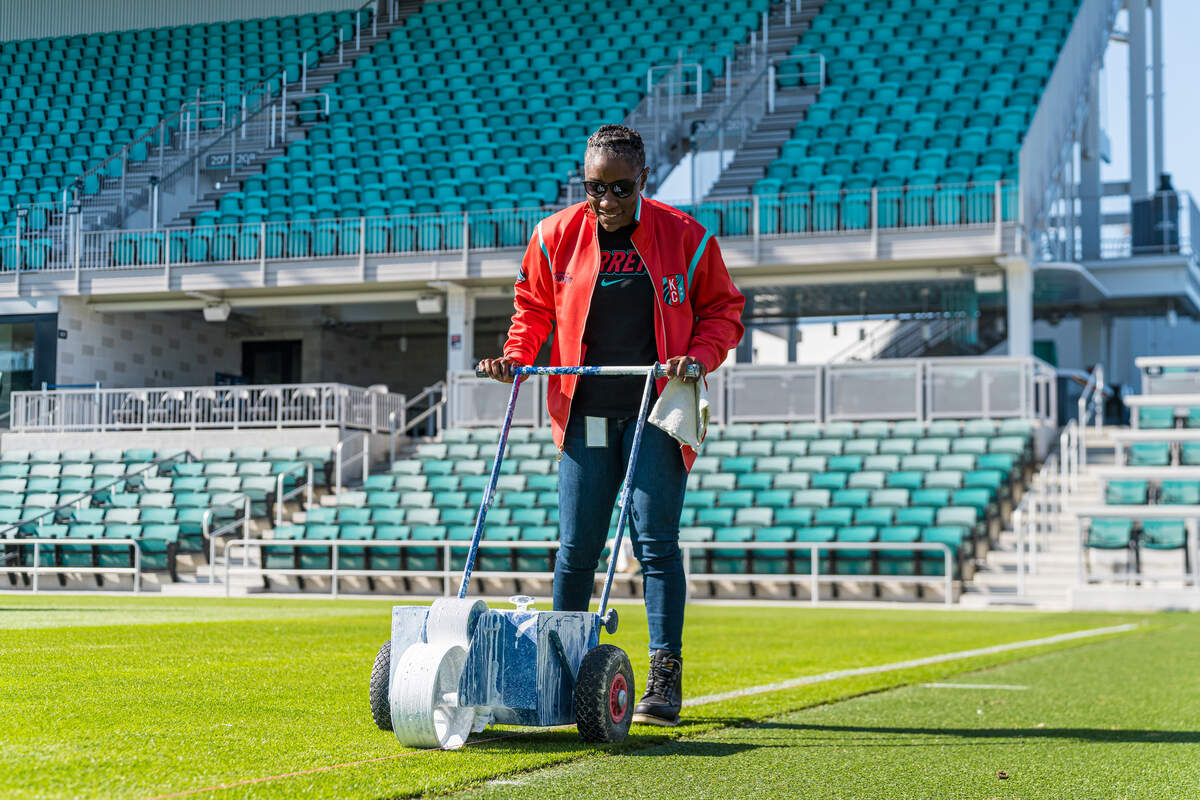
In her excitement for the new season last year, Jemison was assisting the grounds crew in painting the lines on the pitch. She remembers the date well, and even the time: March 7, 11:42 a.m., just a week before the Current’s season opener.
The sun was shining and the field seemed to signal a fresh season with new beginnings. Jemison had made an immediate impact with the Current, leading a young club to increasing global recognition as host of numerous sporting events inside its purpose-built stadium.
Five minutes into Jemison’s field-painting foray came the phone call that changed her life.
A month earlier, on Feb. 14, Jemison was at home watching All-American: Homecoming on TV. One of the characters revealed they had breast cancer. That scene sparked Jemison to do an immediate self-screen — and she found a lump on her left breast.
Concerned, she set up a mammogram the next day ... and rounds of testing followed.
Jemison remembers March 7 well. She painted the lines and had a noon meeting to get to next. Five minutes after painting those lines, however, University of Kansas Medical Center staff was calling her with results.
The lump was breast cancer.
“I’m hearing this person talk about all the things that I got to do, kind of goes very much Charlie Brown’s teacher,” Jemison told The Star. “Like, Wah wah wah, your cancer. Wah wah wah, your cancer.”
Jarring life development
A year after that fateful call, Jemison is more admired than ever for being strong and dependable, personally and professionally.
As a Black queer woman, the native of Tuscaloosa, Alabama is renowned for her time with pro teams across multiple sports. She’s worked for the NBA’s Milwaukee Bucks, the NFL’s San Francisco 49ers and MLB’s Pittsburgh Pirates. She is currently part of the 1% of Black female sports executives.
Jemison is used to being in control and knowing how to operate a few steps ahead. But learning she had a deadly illness was jarring, she said.
“Me talking to someone without specific next steps on what needs to happen, and all those things,” Jemison said, “I just didn’t want to break down at work in that moment.”
She continued through the work day anyway, only letting her tears flow on the way home. Then she told her family.
“Don’t even remember what that 12 o’clock meeting was,” Jemison said. “But I had more meetings that day, and I just went through the day, compartmentalize the news that I just got, and then I get in the car on the way home, and, of course, lost it.”
Learning to be vulnerable
Jemison is diligent about her health.
She routinely gets up at 4:30 a.m. to work out and has been a vegetarian and vegan through the past decade. She usually got her yearly mammograms also, but scheduling conflicts caused her to push back those exams for nearly five years before her diagnosis.
Still, the cancer was discovered early, and was only at stage 1. She didn’t need radiation or chemotherapy, but she did undergo two surgeries: a unilateral left mastectomy in April, and breast reconstruction.
She said she never missed a game in 19 years of being in the sports industry until those surgeries. Jemison waited until after the Current’s home opener to inform her staff.
Disclosing her diagnosis to her staff last year was a big step for Jemison, who is used to keeping work and her personal life separate.
“I think that was the first time that she’s really been in a situation where people needed to understand what she was going through, personally,” Jemison’s wife, April Biggs, said. “And so at first it was very uncomfortable for her, like, extremely uncomfortable.”
Biggs was well-equipped to comfort Jemison throughout her recovery process. Biggs has cystic fibrosis, a genetic condition that causes damage to the lungs. Biggs, Jemison’s partner for 15 years, also received a double lung transplant more than two decades ago.
Jemison’s mother and sister came to help take care of her, as well.
“How we as a culture react to people being sick is sort of like, that’s all we can see when we look at them, at least at first,” Biggs said. “You’re working with somebody who has cancer, but they’re still themselves. You’re trying to find the balance between who they had to be before they got sick, and who they need to be right now, in this moment, while they recover.”
KC Current staff immediately supported Jemison as co-workers — teammates, as they say — by doing their jobs properly and giving her space to heal and recover. Her vulnerability was appreciated and admired.

“I don’t know if she let us in. We kind of just said, ‘We’re coming in,’” vice president of marketing Jocelyn Monroe said.
“Everybody has moments of vulnerability, and in that moment, we see you, we support you. It’s not something we look to exploit. It’s something we look to support you in,” Monroe said.
The Current squad took a picture with a kit, or jersey, bearing Jemison’s name before a match in April. Staffers also sent Jemison photos of themselves wearing pink, the global symbol for breast cancer awareness, even though she hates the color. They even gifted their sneakerhead president some pink shoes.
Once Jemison returned to her first all-staff meeting, colleagues and staff wore shirts of her crossing the finish line at a half-marathon. It was a symbol of the race Jemison was running against her cancer.
“That’s just joy to cross that finish line of that type of race,” Monroe said, “but also doing it, understanding what she was probably in her mind racing against, physically and mentally and emotionally as well.
“So we did little things that probably got on her nerves a little bit, as far as ... making her the star of the show. But we also wanted her to understand you, we are here for you.”
‘Thank God for therapy’
Jemison returned to full-time work in January, eager to start the upcoming 2026 season. She’s been declared cancer-free but must continue taking medicine for four years before the cancer is in remission.
Her time away from work, for the fight of her life, was the most time she’s ever missed. In addition to recovering from cancer, Jemison spent those days reflecting on her life and learning more about herself and her body.
Jemison has shared her professional journey often; she’s a board member for several nonprofits and has written a book to help others. But facing a deadly illness made her question everything — made her sit in uncomfortable moments that her years of therapy hadn’t prepared her for.
“Thank God for therapy,” she said. “This entire year, I have become someone that I don’t know.”
Today, Jemison said she is still recovering from surgery, slowly getting her stamina back. Simple acts of daily life, such as getting in a car and driving, were things that she had to relearn.
“Things like that were definitely something that humbled me really quickly, but grateful to have gone through it,” Jemison said. It’s absolutely something I’m still struggling with.”
Battling cancer, with therapy and some familial perspective from her mother, made Jemison learn to prioritize herself more. Her self-work was previously about how she could be her best self to be present for other people. Now, it’s about taking care of herself, too.
“It’s about understanding and really accepting the fact that I did have cancer, and it’s not just a blip on the screen. It is a very important kind of inflection point in my life,” Jemison said. “And how does that not define me, but how do I remember what that was and call it what it is.”
Monroe has seen Jemison be more present since she returned to work.
“She still works hard, she’s still a workaholic, she’s still smart and sharp and leads us every day with the same amount of rigor and pushing us towards strategic priorities,” Monroe said. “But I think she’s learned a little bit along the way to kind of take a moment, you know, in small bits and pieces.”
Awards and honors
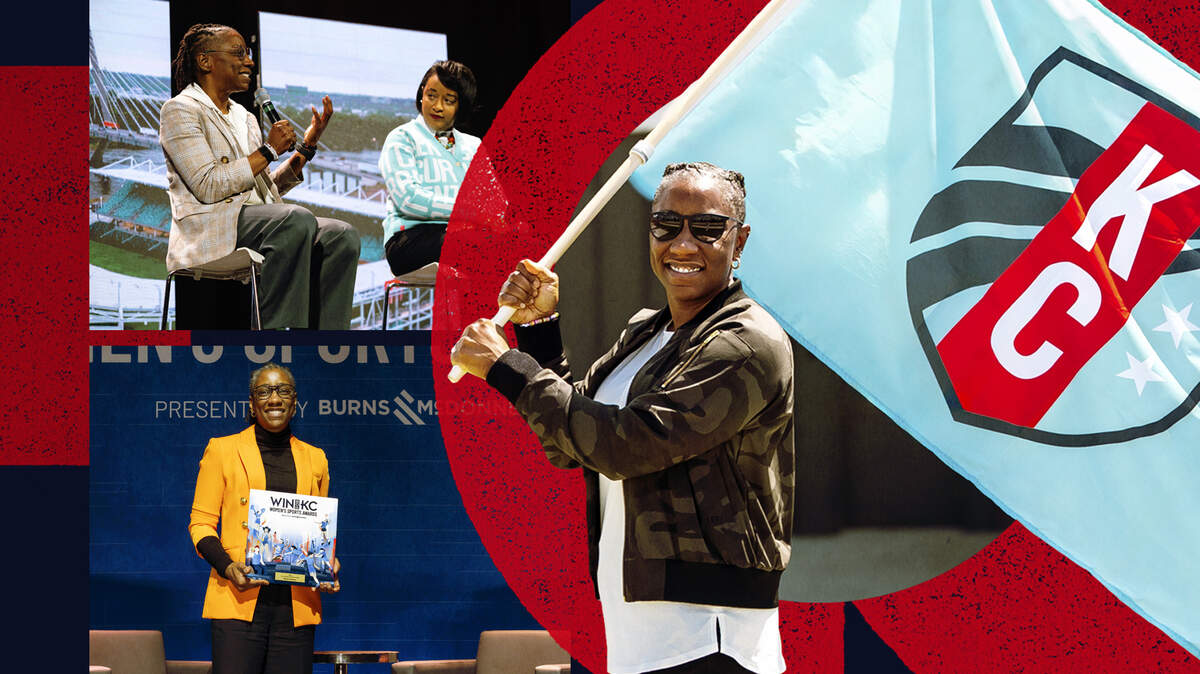
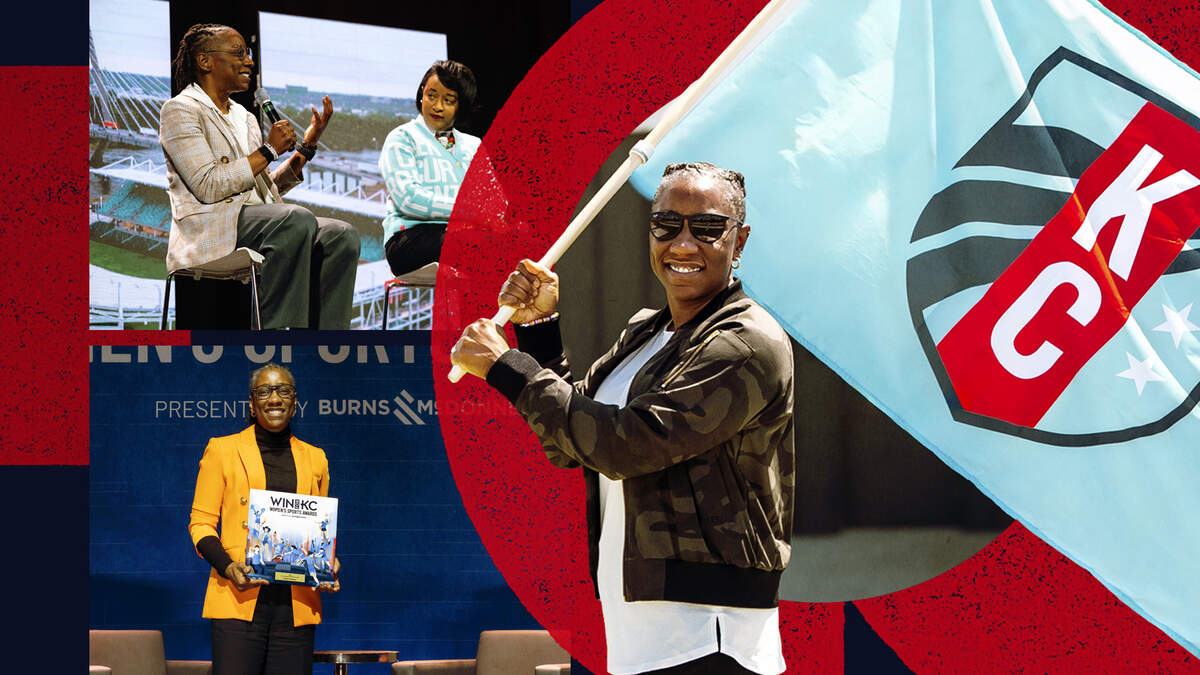
Jemison was already going to be honored for her work at the 2026 Women’s Sports Awards — she set to receive the Forvis Mazars BE BOLD Award, given to an individual or group in the community that has made an outstanding impact on women and girls in sports.
But once Greater Kansas City Sports Commission CEO Kathy Nelson was informed of Jemison’s diagnosis, she also found out that Jemison already had steps and structure in place to ensure the link between the Current and city remained stable in her absence.
“It’s so Raven that no ball got dropped ever,” Nelson said. “We always say ‘leaders grow leaders’. That’s exactly what she did.”
Throughout her journey, Jemison has urged people to see their doctors regularly. She’s telling women to stay on top of their mammograms.
Black women have a 40% breast cancer mortality rate, the highest of any U.S. racial or ethnic group, according to Breast Cancer Prevention Partners. The mortality rate for Black women diagnosed with breast cancer is 42% higher than the rate for White women.
Jemison doesn’t want to be known as the woman who had cancer. She rarely brings it up herself.
But she has opened up about her personal journey in hopes of spreading the messages of breast cancer awareness and self-prioritization.
“I tried to disassociate myself from it for the most part and not really verbalize it,” she said. “But when I got back, having all these conversations definitely helped. Therapy is helping me accept that as part of my story.”
This story was originally published March 14, 2026 at 5:00 AM.