
KC NWSL’s Carly Nelson on being LGBTQ+ teen in Utah and becoming role model she needed
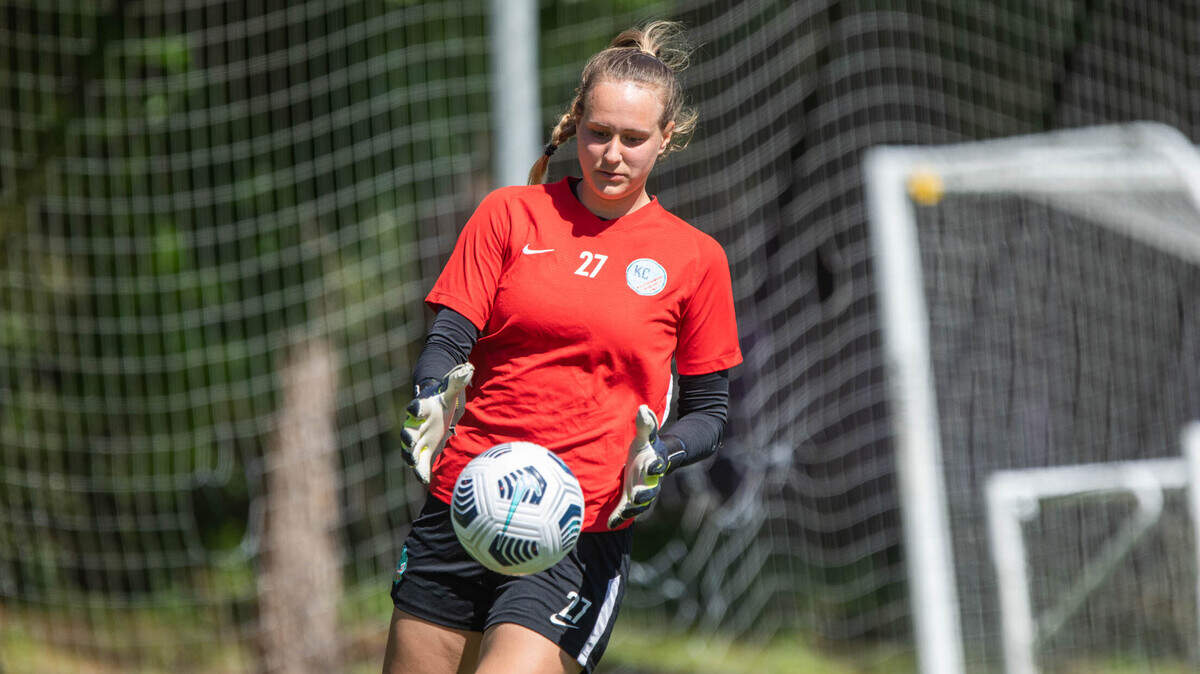
Carly Nelson is the person she needed when she was 13 years old.
The KC NWSL goalkeeper grew up in Lindon, Utah, where identifying as LGBTQ+ wasn’t an open conversation. She was raised in The Church of Jesus Christ of Latter-day Saints — the Mormon church — and struggled to navigate the weight of who she felt she had to be ... and who she really was.
“It was really hard to be my authentic self, and not just because I’m gay, but just because I’m more of a free spirit ... and the religion necessarily wasn’t for me,” Nelson said. “I felt a lot of pressure to be someone and do things that I didn’t necessarily feel like pertained to the authentic part of myself, and I didn’t really want to go down the path that everyone is told they need to go down.”
Nelson is now living as her authentic self, playing professional soccer in the National Women’s Soccer League, a place where she’s supported and encouraged to share her identity and be who she is. Growing up, she wasn’t really exposed to people in the LGBTQ+ community. The only three people in the LGBTQ+ community that she knew of were soccer pros Megan Rapinoe and Abby Wambach and entertainer Ellen DeGeneres.
She’d see them on TV, for a moment identifying with someone like her, and then the TV would inevitably be turned off.
Now, Nelson is part of the visibility she craved as a teen.
“At first I was like, ‘Wait, this is cool here? Oh my gosh,’” Nelson said. “It just made me feel normal. And it’s really cool.
“I think it’s dope, especially for the younger generations to see women — especially being like them, feeling like them, identifying and then loving like them — being successful, being seen.”
She not only embraces her platform, she’s speaking up, making a video that was posted on KC NWSL social media accounts before Pride Night last Saturday. Sitting in her car, she briefly talked about growing up in Utah as a gay teen in the Church.
In her own words, she wanted to bring awareness to the struggles LGBTQ+ teens go through. According to the Trevor Project, LGBTQ+ youth make up as much as 40% of the homeless youth population, and studies have indicated that more than 60% of that population is likely to attempt suicide.
“I think that people don’t realize how religion, especially cultures like that play a big part into it,” Nelson said. “It’s not just that particular religious culture, because I came from there, I can speak from it.
“But it’s these communities and this religion is all around the world, like the 70 other countries that still are imprisoning people, the 11 countries that are still allowing the death penalty. I don’t think people realize that even in America, because it’s so big in the media, that there’s still like issues coming from the small cultures like mine.”
The risk of being kicked out of the house and not having any resources, the possibility of having more church forced upon her and the fact that conversion therapy was not banned in Utah until January 2020 kept Nelson from coming out to her parents until she was 18 and going to college at the University of Utah.
“A lot of people don’t talk about it, because religion does get a lot of controversy, but especially in Utah, it’s not as talked about at all,” Nelson said. “Being gay, same-sex stuff isn’t talked about — if it is, it’s in an incredibly negative light. And I don’t think a lot of people realize the damage it’s doing to their kids.”
Nelson’s parents weren’t the first people she came out to. She initially came out at 13 to a friend. Thinking it was going to be “awesome,” she looked forward to relieving some of the weight she felt. She expected her peer to meet her proclamation with acceptance.
Instead, she found herself in an exposed, vulnerable situation. She started to get bullied at school; she was harassed by her classmates for coming out.
The friend’s reaction to a situation that had seemed so promising is also part of what led Nelson to hide her truth from her parents. She couldn’t face rejection from them, or worse, risk the only safe space she had left.
“My parents loved and supported me, and I think they would have (continued to), just maybe not in the ways … that would be helpful towards me,” Nelson said. “I kind of just let that all the stuff going on at school stay at school, so I could come home and have somewhat of a safe haven. But the reason why I stayed in the closet for so long to my parents is because I didn’t feel safe. I didn’t want to come out to them if I didn’t have the money, the resources, the out.”
Living a life untrue to herself was not without consequences. In denying her own truth, her mental health suffered.
“So many things were so repressed and suppressed, and then I just eventually became depressed and was sad and struggling,” she said. “I don’t feel like I had the support from my parents to be able to talk about it because if I did, then it was denying the family religion or denying the family values. So it was just trying to navigate those things when there’s no conversation behind it.”
Family rejection can have significant effects on LGBTQ+ youth. According to the Trevor Project, lesbian, gay and bisexual youth who had high levels of family rejection were 5.9 times more likely to report high levels of depression, 3.4 times more likely to use illegal drugs and 3.4 times more likely to report having engaged in unprotected sex, compared to peers who did not face rejection from family.
For Nelson, soccer was a “lifesaver.”
“Lucky for me, soccer was huge outlet for me,” she said. “That was my safe haven, to play, kick a ball around, let the struggles with life go and not have to focus on the things outside the field.”
Nelson earned 23 career shutouts at Utah and found teammates and school resources supportive. She was able to go to her first Pride event with her friends — to fully celebrate who she was.
Through her journey of accepting herself, of healing from the pain of her past and experiencing the liberation of true acceptance, Nelson came to a conclusion:
It is much more peaceful to come from a place of grace.
“(Some people) genuinely don’t understand, and they haven’t been exposed and if they knew better, or knew better how to interact and treat people (in the LGBTQ+ community), then they would,” Nelson said. “They haven’t necessarily been exposed — it’s not an excuse for them to treat anyone differently or think of anyone less — but just understand that … this might be the first this may be the first time they’re being exposed to this, and now they’re having to change the entire view. I feel like just coming from a place of a deeper understanding is much easier and peaceful part of the journey.”
Nelson is in the process of writing a book about her experiences in the church and her family dynamic. Her goal is to show how religion played a part in her entire world, and how it affected her as a teenager.
“It would have been amazing to have more people that I could look up to being open and honest, and being truthful about who they are and just speaking up about it,” Nelson said. “Not just in the good, but the struggles and the real, raw parts of the experience and the realities that we live in, to help kids know that they’re not alone.
“So, I think it’s incredible — it’s an honor. It really is, to be in a time and age where I can be visible and open.”
This story was originally published July 1, 2021 at 11:19 AM with the headline "KC NWSL’s Carly Nelson on being LGBTQ+ teen in Utah and becoming role model she needed."