
In the Rio Grande Valley, the glory of birds is found in every tree and marsh
When Huck Hutchens wanted to view a flock of wild parakeets, he didn’t head for some remote, wilderness setting in the Rio Grande Valley.
Instead, he drove right into the middle of highly populated McAllen, Texas. Then he parked his vehicle on the street and focused his binoculars on a row of palm trees.
“For some reason, these green parakeets are urban birds. They’re not scared off by city activity; just the opposite,” Hutchens said as he scanned the gray sky with his binoculars. “They’ll roost and nest in these palm trees right along the street.
“You can go to a roost area and see 600 to 700 of them at a time. It’s really quite a sight.”
Forget what you think you know about parakeets. These aren’t the birds that many domesticate and keep in cages. Those parakeets are budgies and come from Australia. The green parakeets are wild … and common in the Rio Grande Valley, just a few miles from the border with Mexico.
That’s just one more reason that makes McAllen and nearby destinations in southern Texas a world-class birding destination. People from across the world flock to the region for glimpses at rare birds that aren’t seen anywhere else in the United States.
“When you find a rare bird, you report it,” said Hutchens, an avid bird-watcher. “Within minutes, birders get alerts on their cell phones.
“Some of them will drop everything and come down here. This really is a birding mecca.”
And an economic boon for cities such as McAllen.
“Often birders will hear of particular birds through Texbirds (an email list) or hotlines, and they’ll fly into an area, rent a car, eat a few meals, spend the night in a hotel and then fly back home,” said Nancy Millar, director of the McAllen Convention and Visitors Bureau. “That’s money spent in our community.”
Research by the U.S. Fish and Wildlife Service indicates that each rare bird species accounts for almost $100,000 per year in local spending.
With rising interest in birding, that puts McAllen squarely in the spotlight. The city is a hub for birding activity in the Rio Grande Valley. Because of its location on a major flyway and its diverse habitat — everything from wetlands to lush vegetation to arid areas — it attracts a diversity of birds few areas in the United States can match.
More than 500 species of birds, including 39 rare species, have been recorded in the Rio Grande Valley. That sends avid birders, the type who keep lists and relish the thought of adding a rare bird to their journals, streaming into the area.
But casual birders also have a home in McAllen. They can stroll down city streets, walk through city parks, visit World Birding Centers, and even pass through cemeteries to find a fascinating array of birds.
The wild parakeets aren’t rare, but they are part of what makes the region alluring to Hutchens, 69, who lives in Weslaco, Texas.
“Here they come,” Hutchens said as he focused on a flock of bright-green parakeets, squawking loudly to announce their arrival. “They’ll just come out of nowhere and roost in these palm trees.”
But that was only part of the fascination of a tour Hutchens took on a recent weekday. He started at Estero Llano Grande (which translates to “big low wetlands”) State Park, a world birding center near McAllen, where he serves as a volunteer host and regularly guides birders.
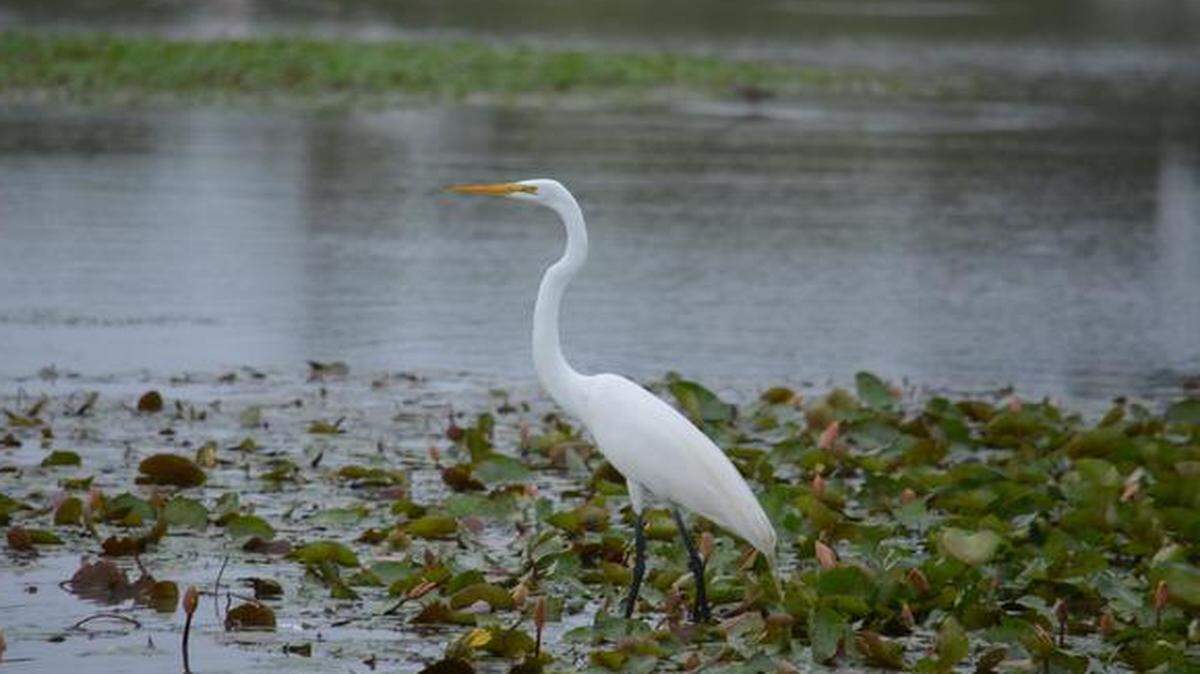
Early in the morning, he focused his binoculars on water birds such as roseatte spoonbills, great and snowy egrets, black-bellied whistling ducks and Hudsonian godwits. Later, he followed paths through wooded areas and viewed chachalacas, known for their distinctive calls, owls that peeked out from boxes in the trees and bright-colored altamira orioles.
Hutchens is serenaded by those birds daily. He lives in a trailer at the edge of the state park.
From there, Hutchens drove to Quinta Mazatlan, the grounds of a historic Adobe mansion that has been turned into a nature sanctuary in McAllen, where he strolled paths through thick timber and viewed species such as great kiskadees, groove-bill anis and even a rare green jay. Then he drove to other parks and greenways in McAllen and viewed everything from green parakeets to parrots.
“I go birding every day,” he said with a smile. “I don’t go anywhere without my binoculars around my neck.”
Hutchens originally lived in Virginia. When he retired, he and his wife bought a motor home and toured each of the 48 states. “For 10 years, our home was on wheels,” he said.
When they got to the Rio Grande Valley, they were fascinated by the number and diversity of the birds, and they decided to settle there. Hutchens now has been birding for 25 years and he still looks forward to each day on the trails.
“You never know what you will see,” he said. “I remember April of last year when there was what we call a ‘fallout.’
“The birds coming across the Gulf got tired from fighting a north wind and they just landed to rest up. There were huge numbers of warblers.
“They lost all of their wariness; they were just exhausted. You had birds right at your feet. You had to watch where you walked or else you would trample them.
“Days like that, you don’t forget.”
To reach Brent Frazee, The Star’s outdoors editor, call 816-234-4319 or send email to bfrazee@kcstar.com.
Rio Grande Valley birds
LOCATION: The Rio Grande Valley consists of the four southern-most counties in Texas — Hidalgo, Cameron, Starr and Willacy.
SIGNIFICANCE: The Rio Grande is a bird zone. Because of its diversity of habitat and its location in the middle of a major flyway, it attracts a rich assortment of birds. Surveys have recorded 538 species in the region, 39 of them seen nowhere else in the country.
BIRDING POPULARITY: A survey by Texas A&M found that 2.4 million people flock to the region annually to watch wildlife. Birding is so popular in the region that there are festivals centering on the pastime, dozens of ranches that rent photo blinds, the Great Texas Coastal Birding Trail, and many parks and wildlife areas with staff to aid birders.
WORLD BIRDING CENTER: The center consists of nine parks in the region set aside to protect habitat and help people understand and appreciate birds.
ECONOMIC BENEFITS: The Texas A&M study showed that birders spend $463 million in the region annually.
MORE INFORMATION: McAllen, Texas, is a center for bird-watching activities. For more information on birding in the Rio Grande Valley, call the McAllen Convention and Visitors Bureau at 956-682-2871.
This story was originally published July 12, 2014 at 11:19 AM with the headline "In the Rio Grande Valley, the glory of birds is found in every tree and marsh."