
Opening of pheasant season a tradition not yet lost in Kansas
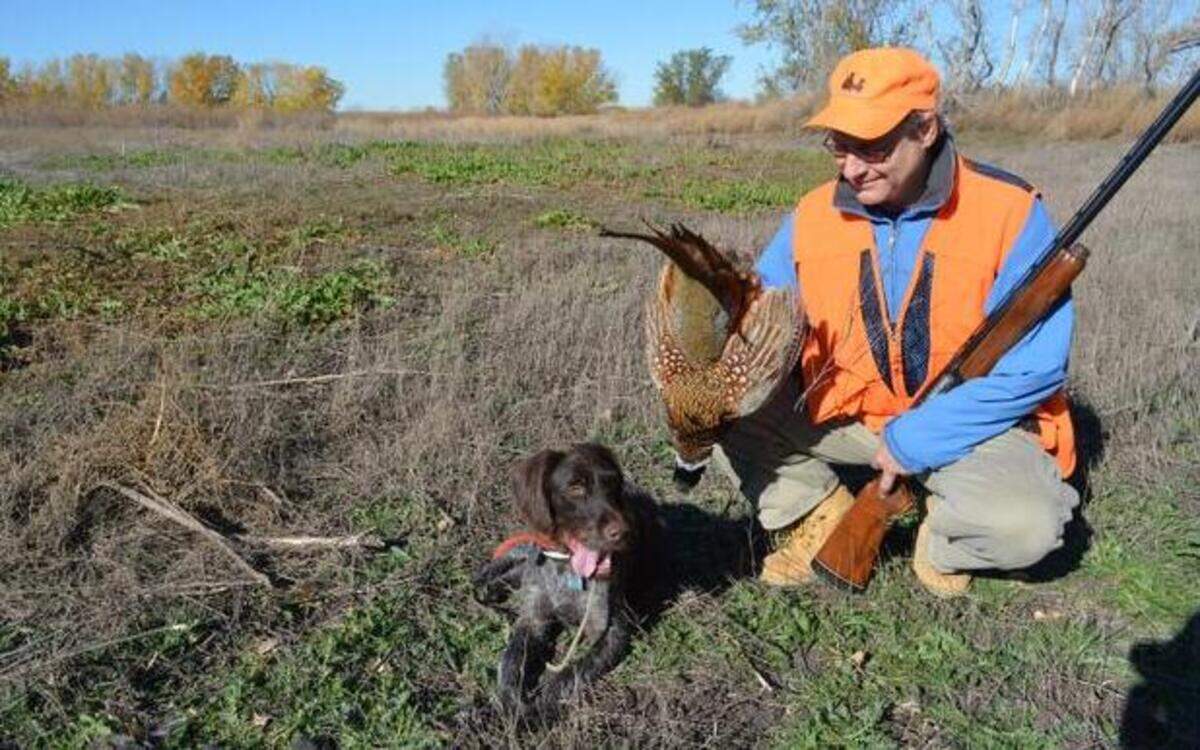
For Gene Hallett, Saturday was all about tradition.
It was opening day of the Kansas pheasant season, and he was back in the fields where he became a hunter some 50 years ago.
He was hunting his family land in Rush County, the place where he tagged along with his dad, uncles and friends as a boy.
His father can no longer hunt and many of the relatives who once joined him have passed away or are too old to get out. But Hallett carried a memory of days gone by when he opened the 2014 pheasant season.
“I’m hunting with my dad’s old gun,” said Hallett, 57, who lives in Shawnee. “It’s kind of a tribute to him.
“The last time he hunted with us was three years ago. His health won’t allow him to be out here anymore, but I know he’d love to be with us.”
Hallett carries on the tradition, even though the size of the opening-day hunting party has dwindled over the years. Once, as many as 20 hunters joined the Halletts. And they shot pheasants — lots of pheasants.
By Saturday, only five hunters showed up for the opener: Hallett, his longtime friend Dave Zumbaugh and Zumbaugh’s relatives — his son, Zack, his brother-in-law Larry Dodge, and Dodge’s son, Davis. And the hunting was, as Hallett put it, “dismal.”
The orange-clad hunters put miles on their boots, walking fields where they have always taken pheasants. And they only saw hens and a few roosters.
“I can’t believe we walked that field and didn’t up a pheasant,” Hallett said.
Finally, they waded into the thick cover along a wetlands area that had gone dry and they flushed a cackling rooster. Dodge fired and the pheasant fell. Then Zumbaugh’s German wirehair pointer, Mota, raced out and made a retrieve.
The hunters kidded Dodge about shooting the last rooster pheasant left in Rush County. Not true, of course. It only seemed that way Saturday, and the group shot another later in the day.
Hallett and Zumbaugh met when they were students at Fort Hays State University in the 1970s, and became friends when they discovered a shared interest: hunting. They have returned to Hallett’s family land for the opener since 1978, and have experienced memorable moments and forgettable ones, too.
Saturday’s opener falls in the “forgettable” category. But tradition still ruled the day.
“For me, coming back here for the pheasant opener has always been kind of a religious pilgrimage,” Hallett said. “I love coming back here to the old family place to hunt. It brings back a lot of memories.”
Hallett paused along a sidewalk where his dad once lived. His grandpa’s initials and the year 1949 were scrawled in the cement. In another section, there were pheasant tracks.
“Those were real,” Hallett said. “A pheasant must have gone through that concrete when it was still wet.
“There were a lot of birds back in those days.”
Hallett and Zumbaugh still talk about the 1980 opener when everyone in their hunting party had his limit by 11 a.m. “We had a big group that day, and we had 76 pheasants,” Hallett said.
It was days like that that inspired Zumbaugh to return virtually each year. Even when he was living in Houston, he would fly back … with his hunting dog.
“There probably aren’t many people who would do that,” Zumbaugh said. “But I wasn’t going hunting without my dog.”
Even Zumbaugh’s 32-year-old son, Zack, has a budding tradition on the Rush County land. Though he now lives in Denver, he has returned for the opening-day hunt for the last 14 years.
“Last year was bad. We only shot five birds on opening weekend,” Hallett said. “This year may be even worse than that.
“But we’ll be back. We have to be here for the opener, no matter how bad the pheasant population is.”
To reach outdoors editor Brent Frazee, call 816-234-4319 or send email to bfrazee@kcstar.com.
The history of Kansas pheasants
▪ Pheasants were introduced to Kansas in the spring of 1906, when 3,000 birds were released in 84 counties.
▪ The first hunting season took place from Dec. 1-15 in 1917.
▪ The season was closed from 1921 to 1931 to allow pheasants to build their population.
▪ Limited hunting seasons resumed starting in 1932.
▪ Pheasant numbers steadily climbed and hunting success increased, too. By the 1980s, Kansas became one of the nation’s leaders in pheasant hunting.
▪ Hunters took a record 1,565,000 pheasants in 1982. Hunter numbers also reached a peak, 195,600.
▪ With a steady loss of habitat, pheasant populations declined. That habitat loss, combined with drought that hampered nesting, became especially noticeable last year. Hunters took a record-low 190,285 birds. The number of hunters, 54,000, also was the lowest on record.
Information provided by the Kansas Department of Wildlife, Parks and Tourism
This story was originally published November 8, 2014 at 3:33 PM.