
A fish that can breathe air and ‘walk’ on land spotted twice in Missouri in 2 weeks
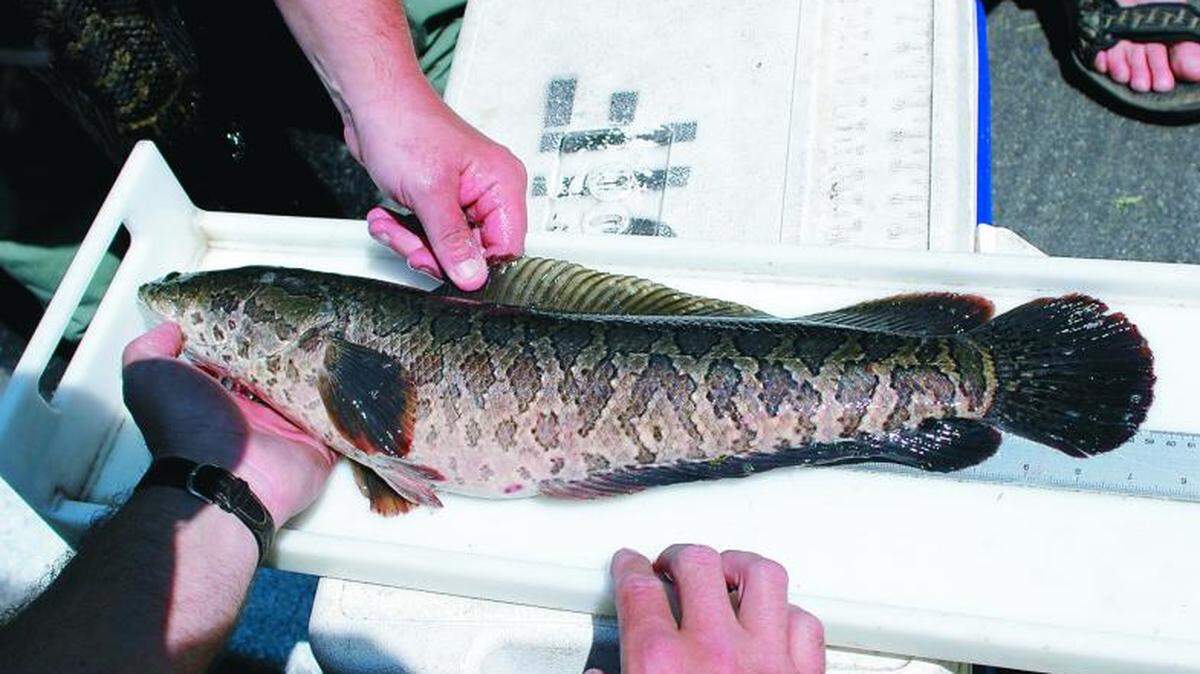
“Fish out of water” just got a disturbing new connotation in Missouri. For the second time in two weeks, an invasive snakehead fish has been identified in the state.
The Wayne County catch is the fifth confirmed sighting of the snakehead in Missouri since 2019 — a worrisome trend for anglers and conservationists alike. Originally native to Asia, the snakehead is a dangerous intruder to Missouri’s waterways because it steals resources from native wildlife, including angler favorites like largemouth and smallmouth bass.
“The size of the fish that were caught in the last two weeks indicate that there are breeding adults out there, and they are making their way up the Saint Francis watershed,” said Angela Sokolowski, the Missouri Department of Conservation’s invasive species coordinator.
Before this, the invasive fish hadn’t been spotted in the state since last year. Here’s what to know about this hardy species, and what to do if you find one in the wild.
Where have invasive snakeheads been spotted?
Currently, invasive snakeheads have only been spotted in southeastern part of Missouri. Sokolowski says they’ve been caught in the Duck Creek Conservation Area, the Mingo National Wildlife Refuge and now in the spillway just below the Wappapello Lake Dam.
All of these areas are open to recreational fishing, making Missouri anglers the first line of defense against this species.
“We really don’t want it to get into Lake Wappapello,” Sokolowski said “One of the challenges with these being in the boot heel of the state is that so much of it is connected via manmade ditches. Those ditches are used to move water for agriculture — well, the fish are utilizing those ditches as well.”
She added that the snakehead can survive in nearly any conditions, from muddy water to shallow streams and wetland areas. They can even survive out of water for up to four days by using a lung-like organ to breathe in air.
These fish don’t just breathe out of water — they can use a slithering motion to “walk” on land as well.
KY3 of Springfield reported Thursday that the specimen caught recently in Wayne County stayed alive overnight, escaped the cooler it was stored in and attempted to wriggle away. Angler Josh Shipman, who caught the fish, found it under his car and reported the catch to the Missouri Department of Conservation.
What should I do if I catch a snakehead?
Sokolowski laid out three simple steps for anglers with snakeheads in their local waterways: Catch it, kill it and report it.
The first step is to identify the snakehead, which can be easily mistaken for the bowfin, another type of native fish found in Missouri waters. You can tell them apart in a few ways, but the easiest is by looking at the fin that runs along the bottom of the fish near its tail. On snakeheads, this anal fin is long and continuous, while on bowfins, it’s short and rounded.
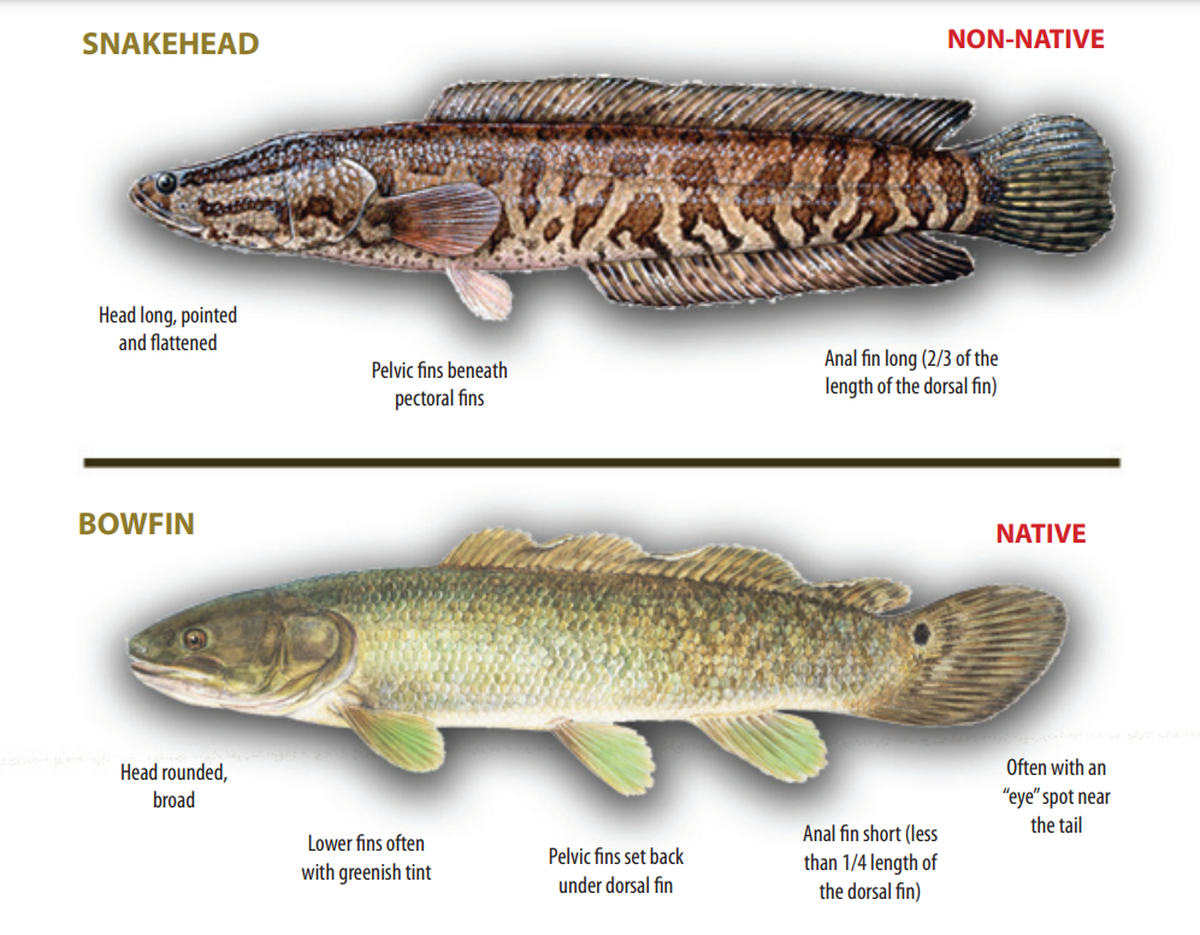
It’s illegal in Missouri to possess a snakehead alive. That means if you catch one, the best course of action is to kill it immediately. But don’t do so by merely laying it on the ground or placing it in a cooler — snakeheads can survive these conditions and may even make it back into the water.
It’s best to immediately gut the fish, sever its head or kill it in another way. If you’re squeamish, you can do so nonviolently by sealing the fish in a plastic bag or placing it in a freezer (not just a cooler with ice). Other anglers may also be willing to help you end the fish’s life.
Finally, it’s vital to report the location of any suspected snakeheads to the Missouri Department of Conservation’s southeast regional office by calling 573-290-5730. For now, this is the office tracking all snakehead sightings.
State conservation officials are working on an online form where anglers can report their snakehead encounters along with photos. This form should be up online in the coming days.
Do you have more questions about fish and wildlife in Missouri? Ask the Service Journalism team at kcq@kcstar.com.
.jpg)