
Failed salmon experiment led to arrival of rainbow trout in Missouri 140 years ago
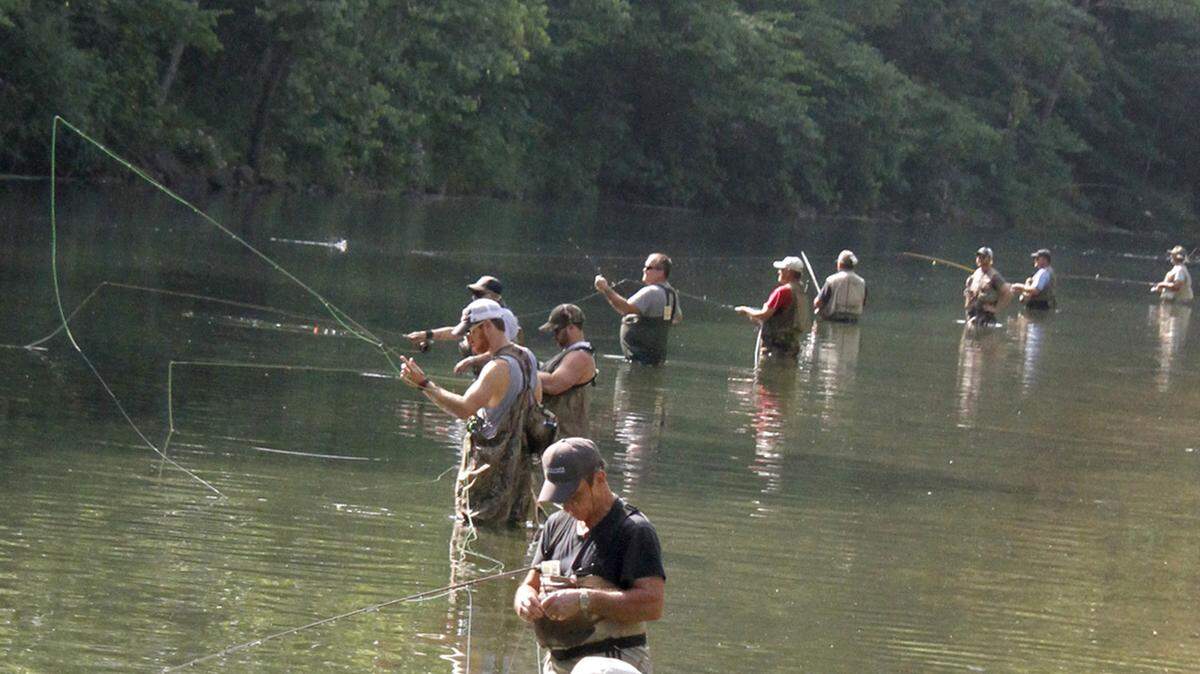
If you fish for trout in Missouri, you have something to celebrate this summer.
Rainbow trout are not native here — their first stocking in Missouri streams occurred 140 years ago in the summer of 1880. Why were they planted in the Midwest? Where did they come from?
The answers tell an interesting tale.
Rainbows were introduced into Missouri waters as part of the federal government’s plan to manage the nation’s fish stocks. Atlantic salmon and other coastal fish populations were diminishing rapidly, and inland stocks were also experiencing depletion as development spread westward. Believing that governmental intervention was the only viable answer, Congress passed and President Grant signed into law Joint Resolution No. 22 in 1871; this legislation created the U.S. Fish Commission and set the government on a path to fisheries management.
The commission soon began experimenting with ways to curtail the decline in American fish stocks by relocating fish around the country. Eastern shad went from New York to California; Pacific salmon were shipped from California to the East. While transplanting shad was quite successful, Pacific salmon never established a foothold in any state in which they were planted, including Missouri.
Those in charge at the time actually thought a spawning run to the Gulf of Mexico and back could be created by stocking salmon fry in, among other rivers, the Missouri near Kansas City.
Federal officials quickly realized the folly of their attempt to relocate salmon. But in the McCloud River in Northern California, the river from which the salmon were taken, there lived another cold-water fish of interest: the rainbow trout. By 1879, the commission’s interest shifted from salmon to collecting and fertilizing rainbow trout eggs and shipping them via rail to federal and state hatcheries across the country. After hatching, the rainbow fry were transported using milk cans and deposited in many states’ rivers.
Rainbows were not the first trout to be brought to Missouri. In 1879, the newly formed Missouri Fish Commission planted Eastern brook trout in several Ozark streams, and some still fished by anglers today: Spring Creek in Phelps County, for instance, and the Spring River near Verona and ever-popular Bennett’s Spring outside of Lebanon. But brook trout are finicky and did not take well to Missouri’s streams. So, beginning in 1880, the commission planted rainbows from the McCloud ... and our love affair with the rainbow has not waned since.
The first batches of rainbows in Missouri were deposited into the Spring River, which over the next 20 years would receive more trout than any other waters in the state. And for good reason: By the mid-1880s, the U.S. Fish Commission reported that rainbows from the 1880 planting already had grown to several pounds and were being found in abundance. Spring River demonstrated the potential success of the commission’s effort of introducing rainbows far from their home waters.
Other Missouri streams receiving an initial stocking of rainbows included Meramec Spring and Crane Creek. Today, Meramec Spring is home to one of the state’s cold-water hatcheries and a trout park (as is Bennett’s Spring). Crane Creek, too, has a special allure: It was one of the first Missouri rivers to receive these trout, and some believe its current population of wild rainbows is the last vestige of the original strain from the McCloud River (it is not).
Many changes in how the state manages its trout population have since occurred. Fish culturists quickly discovered how easy it was to propagate rainbows in hatchery conditions. This made the McCloud operation redundant. In fact, one of the last shipments of rainbow eggs from the McCloud came to Missouri in 1887. State hatcheries, or a federal hatchery like the one in Neosho, have supplied rainbows for stocking here ever since.
If you’re able to wet a line and catch a rainbow this summer, take a moment to appreciate the fact that it all started 140 years ago with the crazy idea of relocating salmon and rainbows from Northern California to points east, including Missouri.
Rik Hafer is a professor of economics at Lindenwood University in St. Charles, Missouri, and the author of “From Northern California to the Ozarks of Missouri: How Rainbow Trout Came to the Show-Me State.”