
Guide uses electronics to keep track of bass when they go deep
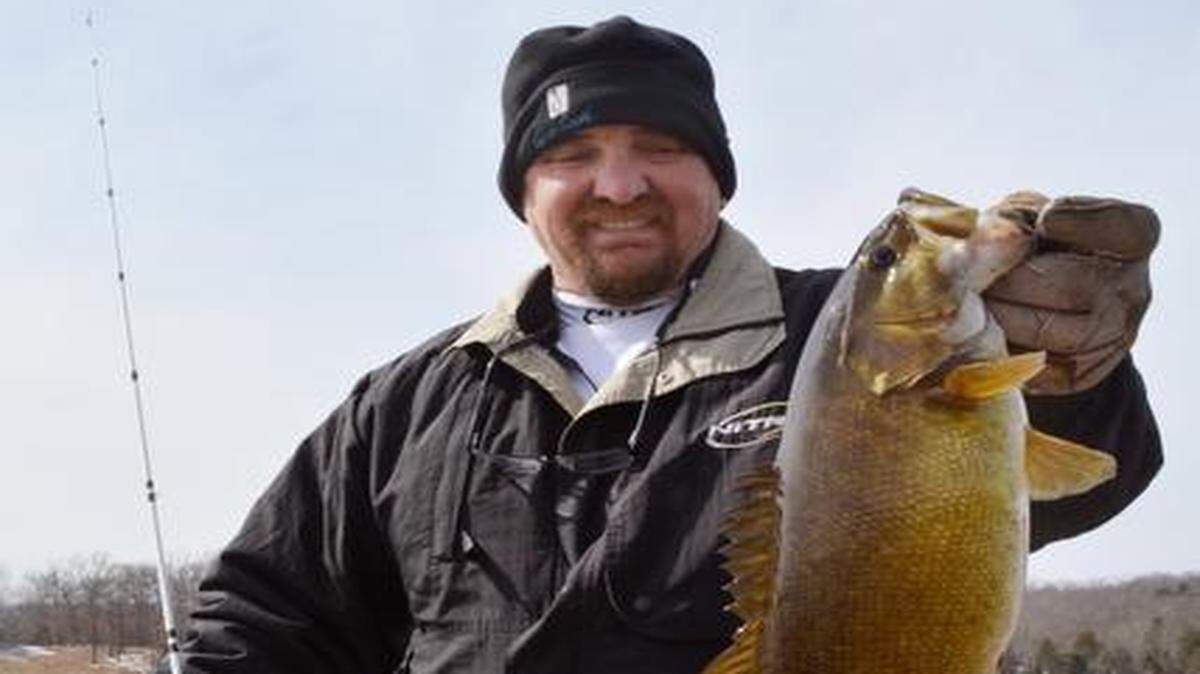
On a cold, late-February morning, Mike Webb was playing his favorite video game.
Well, kind of.
Sitting at the front of his bass boat, he stared at the screen of his sonar unit glowing with bright colors and dropped his lure to the depths of Table Rock Lake.
“This is just like playing a video game,” he said with a smile. “Except that this is real.
“I can see where the fish are and I can drop my lure right to them. I can put it right on their nose.
“It’s like a game.”
With his boat sitting in 60 feet of water, Webb watched as the screen etched a thick mat of brush coming off the bottom. Then he spotted a fish moving out of that brush.
“C’mon, girl,” he said. “Time to eat.”
Webb moved his Rapala Jigging Rap right in front of the fish and wiggled it. Then he braced for a hit. But it never came.
“That one was just kickin’ tires,” Webb joked. “She was just looking.”
But minutes later, another bass showed more than a passing interest. When Webb dropped his lure into the depths and stopped it, he watched the mark move closer to his lure. When the two joined, he set the hook without even feeling the hit.
His fishing rod bowed sharply, and the fish took out line. But after a spirited fight, Webb had a big smallmouth bass tn the surface and guided it into a waiting landing net.
“That is a good smallmouth,” said Webb, 55, who guides on Table Rock and is a member of Bass Pro Shops’ national pro team. “That one will go close to three pounds.
“But that’s not unusual. This is the time when you can catch the big ones. They’re full of eggs right now, and they’re feeding up before the spawn.
“There are times when I’ll bring a fish into the boat and it’s just spitting up shad.”
Webb specializes in a type of fishing that many anglers can’t even envision.
From December into March, he often is a lone wolf in the middle of deep, clear Ozark reservoirs such as Table Rock. While other fishermen are pounding the banks, he is fishing vertically at depths of 50 to 80 feet of water.
He uses the electronics on his boat to tell him where the fish are active. For example, he often targets places where the brush is thick on the bottom. If he spots fish moving on the screen, he will drop his lure right in front of that mark and try to tease them into eating.
His dream scenario? Using his electronics to find a huge ball of shad.
“That usually means the shad are being chased,” Webb said. “When you find one of those big balls suspended up off the bottom, there are usually gamefish around them.”
Some might say the modern electronics give fishermen an unfair advantage. Not so, Webb said. Because of the depth of the water he fishes, even finding the bass can be a trying process. And even when the lure is dropped in front of the fish, there are no guarantees it will hit.
“A lot of times, I’ll see a fish streak up to take a look, then it just drifts away,” he said.
But Webb knows one thing: Big bass can be taken from Table Rock’s deep water.
Flash back to April Fool’s Day in 2013. Webb, who is known for his mastery in using electronics, was checking out a point near Big Cedar Lodge. When he spotted a mark in 30 point of water, he immediately dropped an Alabama rig into the depths and began vertically jigging it. The bass he had marked hit on cue. And the fight was on.
Soon, he was landing the biggest bass he has ever caught on Table Rock — an 11.07-pound largemouth. Webb weighed the fish, took its measurements, then let it go.
Score another victory for high-tech fishing.
It’s a method that Webb, a longtime fisherman on Table Rock, learned about 20 years ago.
“The first time I tried it, I was hooked,” said Webb, who lives north of Branson. “When you can go out and catch 20 to 30 fish a day and watch them on the screen come up to eat your bait, that’s fun.”
Webb and I didn’t have one of those days on a recent trip. But we did catch a mix of big smallmouth, Kentucky and largemouth bass as deep as 60 feet. We lured the fish with red-copper colored XPS grubs, Rapala Jigging Raps and Alabama rigs on spinning outfits with eight-pound test line.
“This deep fishing was unbelievable back in December,” Webb said. “We had some 60-fish days.
“It’s dropped off since then, but you can still catch fish.”
To reach outdoors editor Brent Frazee, call 816-234-4319 or send email to bfrazee@kcstar.com. Follow him on Twitter: @fishboybrent.
This story was originally published March 7, 2015 at 7:38 PM.