Chiefs pass-rusher breaking out at perfect time. An underlying stat helps explain why
Pittsburgh Steelers right tackle Broderick Jones took two exaggerated kick-steps backward, doing all he could to prevent the Kansas City Chiefs pass rush across from him.
It still wouldn’t be enough.
Though Jones tried to cut off the edge against Chiefs defensive end George Karlaftis, he couldn’t get to the spot he needed on time. Karlaftis was too fast.
Or, more specifically, Karlaftis’ takeoff was too quick.
This was the third quarter of a Christmas Day game in Pittsburgh, and Karlaftis’ first movement came immediately after the snap. He pumped his arms forward to get upfield, then beat Jones around the end, shoving away a block attempt before deflecting a Russell Wilson pass.
The rep was just part of a recent surge for Karlaftis, who has excelled alongside his teammates in racking up QB pressures in December.
“Just bringing it together later in the season,” Karlaftis told The Star. “We’re challenged about cranking our games up to a man, and I think that’s what it is.”
No one has elevated their game more than Karlaftis, with the improvements also appearing in an underlying stat that typically portends success.
Specifically, the third-year pro Karlaftis has posted some of his best games in one advanced measure: NFL Next Gen’s “Pass Rush Get Off,” which computes the average time it takes for a pass rusher to cross the line of scrimmage.
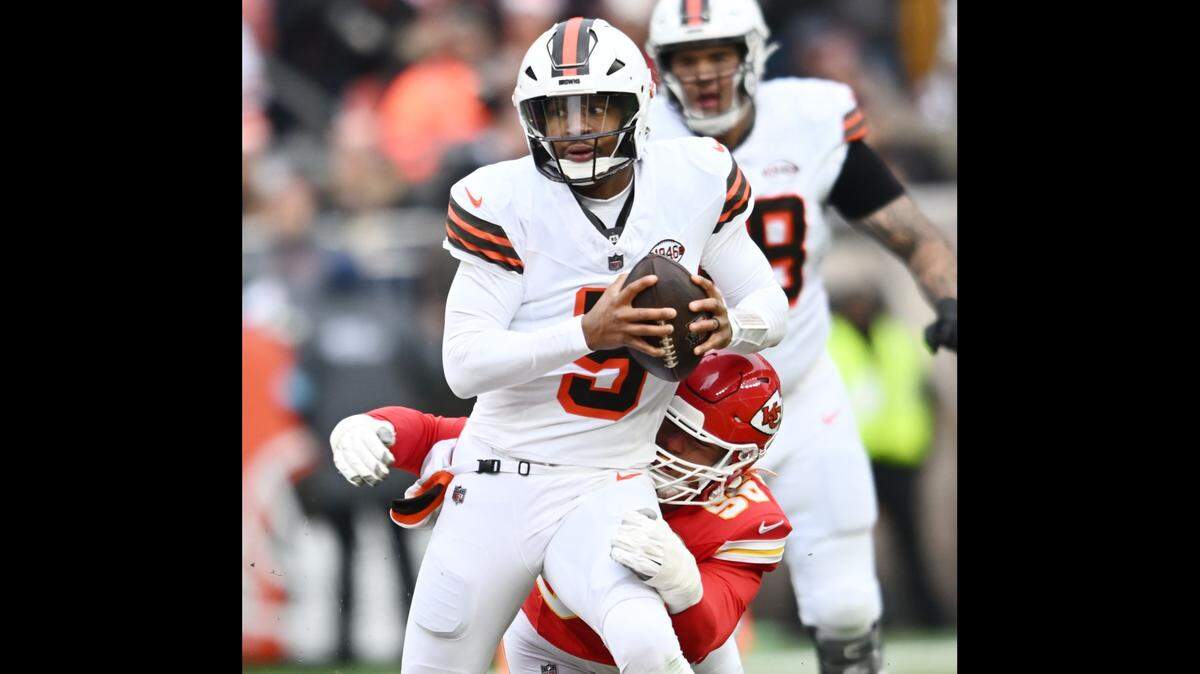
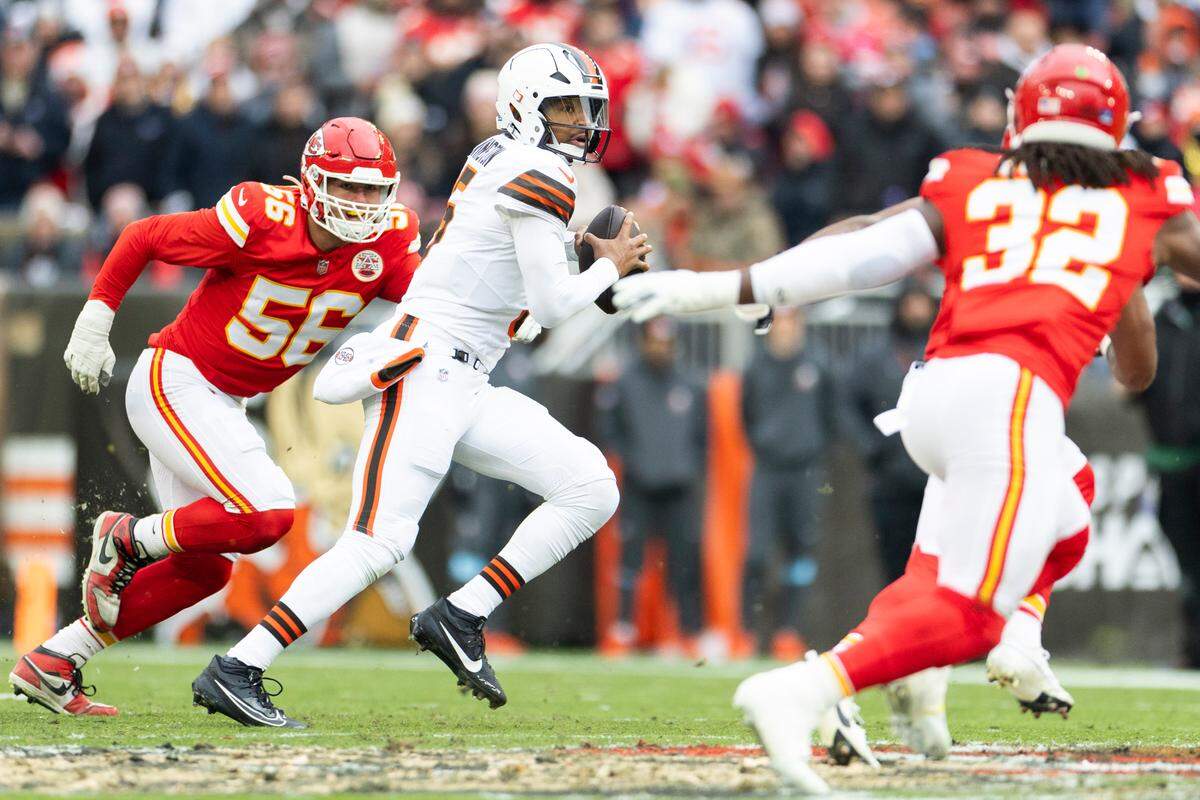
Karlaftis posted the fastest time of his career — 0.65 seconds — in KC’s Week 15 win over Cleveland. Then, two weeks later, Karlaftis matched his second-quickest time this season with a 0.77-second average mark against Pittsburgh.
Those numbers overlapped with some of the best production of his career. Karlaftis registered 20 QB pressures in his last four games, including at least four in each of those contests. To compare, Karlaftis had seven QB pressures in his previous five games combined.
His quicker starts likely contributed. A 2021 FiveThirtyEight study shows that “Pass Rush Get Off” is a valuable trait; speedy times correlated strongly with pass-rush win rates and quarterback pressures.
Karlaftis said getting out of the blocks remains a constant emphasis for KC’s defensive linemen. Chiefs coaches stress focusing on the ball or the center’s head movement when timing the snap, as a QB’s cadence can be deceiving — especially when guys like Aaron Rodgers try to draw defenders offsides through deception.
This uptick from Karlaftis is hard to miss when perusing the numbers. For example, in his last four games, Karlaftis has eight “quick” pressures coming in under three seconds. That gives him 18 quick QB pressures this season; he had nine during the entire 2023 campaign.
Something else that’s helped? The return of defensive end Charles Omenihu.
Omenihu, who came back on Nov. 29 after tearing his ACL late last season, has given the Chiefs a complementary edge-rusher opposite Karlaftis for the past month and a half.
This should also be seen as encouraging: Omenihu’s pass-rush get-off time following his knee injury remains slightly faster in 2024 than it was last season.
“He can create disruption,” Karlaftis said of Omenihu. “And when the O-line has just another guy to worry about it, it brings stuff together and can make more stuff shake.”
The combination of those two — along with All-Pro defensive tackle Chris Jones — has fueled a Chiefs pass rush that’s been finishing plays well.
Since Omenihu’s return, KC had averaged 4 1/2 sacks per game before resting most of its starters in a Week 18 loss to the Denver Broncos.
Karlaftis said turning “close, but no cigar” pass rushes into game-changing plays has been a rewarding part of the last few weeks.
“You want to affect (quarterbacks) at all times,” Karlaftis said with a smile. “But when you bring them down, it’s a better feeling.”