
This former Chiefs star saw teammates as people first, and caught first Super Bowl pass
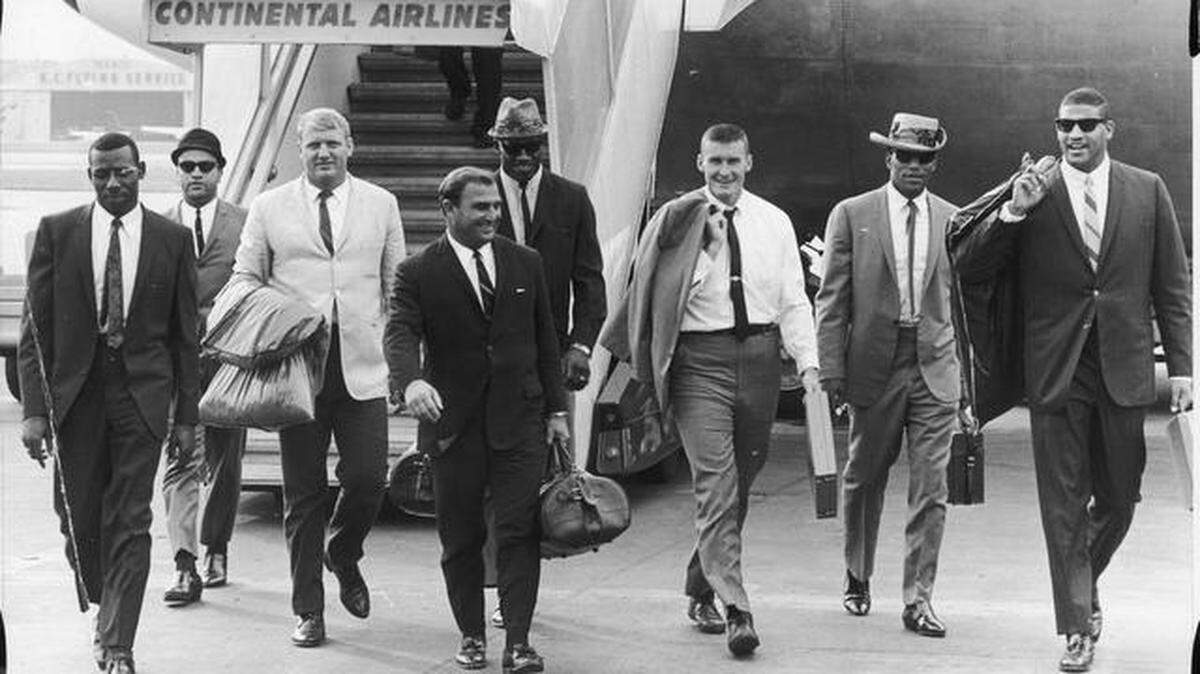
Chris Burford was instrumental in the early success of the franchise that eventually became the Kansas City Chiefs. He played three seasons with the Dallas Texans and five more after the franchise moved to Kansas City before the 1963 season.
He caught the first touchdown pass in Super Bowl history in January 1967. His 391 career receptions still rank sixth in team history, and his 5,505 yards still rank eighth.
But his legendary value has nothing to do with stats.
At a time when racial tension was everywhere, especially in the South, Burford emphatically welcomed his Black teammates. He didn’t care about the color of their skin. They were there to help the team win, and he saw them as equals.
Abner Haynes, the Texans’ star running back, told The Star’s Vahe Gregorian in 2020, “Chris is special to me because of the things he helped me through. We just became brothers, man, right away. We got comfortable with each other. Liked each other. Trusted each other.”
Haynes nominated Burford for inclusion in the African-American Ethnic Sports Hall of Fame, now the Multi-Ethnic Sports Hall of Fame, in 2010.
Burford wasn’t trying to make a political statement or start a movement. He was being himself.
“I grew up in Oakland, a fully integrated city,” Burford said. “My high school was probably one-third Black. I played with Black kids all my life. I didn’t think much about it. We’re all just people.”
Burford now sees how groundbreaking he was, though at the time he was just doing what he thought was right.
“It’s hard not to realize the significance. When we played games in Dallas and Little Rock (Ark.), that was a big deal,” he said. “The public was just beginning to be integrated. I think our team went a long way in moving things forward.”
Burford was one of the Chiefs first-round selections in 1960, and was the first player to sign a contract with the franchise. In the 1960 draft, each of the eight teams received one territorial pick to help ensure every team had a regional draw. The Texans selected SMU’s Don Meredith, who instead signed with the NFL’s Cowboys.
Following the territorial picks, a consensus was determined as to who the top eight players were at each position. In an era where two-way players were common, college players generally were listed by their offensive positions only.
The names in each position were then put into a box and drawn for by each club. This process continued until each team had 33 selections, or three offensive units. The second round was done in similar fashion with defensive players.
Burford also was drafted by the NFL’s Cleveland Browns in the ninth round, giving him the opportunity to fulfill a lifelong dream. But the Browns tried to bully Burford — the rest of the NFL did the same thing — and said if he didn’t sign by a certain day, their contract offer would be pulled.
“They were trying to buffalo everybody, trying to kill the AFL before it got started,” Burford said. “What they did was legal, but it wasn’t very nice.
“I was always a big NFL fan, but I wasn’t much of an ‘or else’ person. I was probably being a little bit stubborn.”
No one knew if the AFL would ever play a game, much less last very long, but Burford said it was an exciting time to be a part of the new league.
“I don’t know that any of us knew what would happen,” he said. “Some of the owners were well-off financially and some were struggling to pay the phone bill. I knew if it didn’t work that I had a Stanford education to fall back on.”
He was leery when the Texans announced that they were moving to Kansas City so they wouldn’t have to compete with the Cowboys. He was attending law school at SMU, but when he found out that all his credits would transfer to UMKC he was ready to give it a shot.
“We were sorry to leave Dallas,” he said. “but Kansas City made a very good offer to Lamar. It turned out to be a wonderful decision.”
The Chiefs were one of the few teams in the pass-happy AFL to focus on the run first, but Burford said he enjoyed playing for head coach Hank Stram. At 6-foot-3, 218 pounds, he was a good blocker and would catch anything thrown his way.
He also believes he could have played in the current NFL where everybody thinks pass first.
“Being a receiver, I would hope so,” he said. “I didn’t have great speed, but I had decent moves. I could get open and catch the ball. I’d like to think I’d be wonderful.”
He especially likes the way Andy Reid’s offense works, and he still follows and supports his old team. He wore a Chiefs polo shirt for this interview, and he says he comes back to Kansas City for the team’s annual Alumni Weekend whenever possible.
He also says he shares one other thing with Chiefs fans everywhere: He doesn’t like the Raiders. He notes that he left Oakland four years before the Raiders played their first game, and the Bay Area (Stanford) before the Raiders had their first play.
“I think we share a dislike of the Raiders,” he said, “even though I grew up in Oakland.”
Now that’s a sign of a true Chiefs legend.
David Smale is a freelance writer and author of 22 books on sports history. One of his recent books, The Keys to the Kingdom, is on the entire history of the Chiefs franchise. It is available at www.davidsmalebooks.com. He also is the host of “Sports Connections,” available wherever podcasts are found.