
Debate about the Chiefs’ name, and its ties to Native Americans, rages on. Here’s why
Priest Holmes walked onto the Arrowhead Stadium field one afternoon in 2014 and grabbed a mallet from the hands of a Native American tribal representative. As nearly 75,000 people awaited kickoff, Holmes, once the Chiefs’ all-time leading rusher, lifted the hammer behind his head and swung it forcefully onto a drum.
Boom!
Boom!
As the sound reverberated through the venue, its speakers cued music. The fans followed suit with the distinctive and unmistakable tomahawk chop, sending their arms backward and forward as they echoed a corresponding chant in unison.
Whohhhh, Ohhhhhh, Ohhhhhh, Ohhhhhh.
Boom!
Boom!
For 30 years, this roar-inducing cry has been synonymous with the Chiefs, so much so that you might even hear it break out at a Kansas City restaurant, bar or wedding. But on this afternoon in 2014, the Chiefs preceded a long-standing tradition with a brand new one — one that included voices who had for so long felt ignored or even silenced.
Before kickoff, they invited a group of 14 Native American tribal representatives onto the field for a blessing of the drum — a ceremonial act essentially offering their permission for the instrument to be used as part of the Chiefs’ customs.
“I get goosebumps remembering that,” said John Learned, a member of the Cheyenne and Arapaho tribes. “I never thought we’d be honoring American Indians at a Kansas City Chiefs game. Never.”
The moment was a long time coming for some — but entirely too late and undeserving of support from others. And the contrast between those two stances illustrates the essence of a fire that has followed the Chiefs for many years but has burned brighter in the wake of the Washington Football Team’s decision to ditch its nickname, the Redskins.
“Chiefs” does not conjure a racial slur in the same manner, nor do they have a logo with a literal depiction of a Native American, but they are forever tied to the Native American community. Yes, even if it’s true that the name itself stemmed from an admiration for Harold Roe Bartle, the mayor who helped land the city the franchise and a man nicknamed “The Chief.”
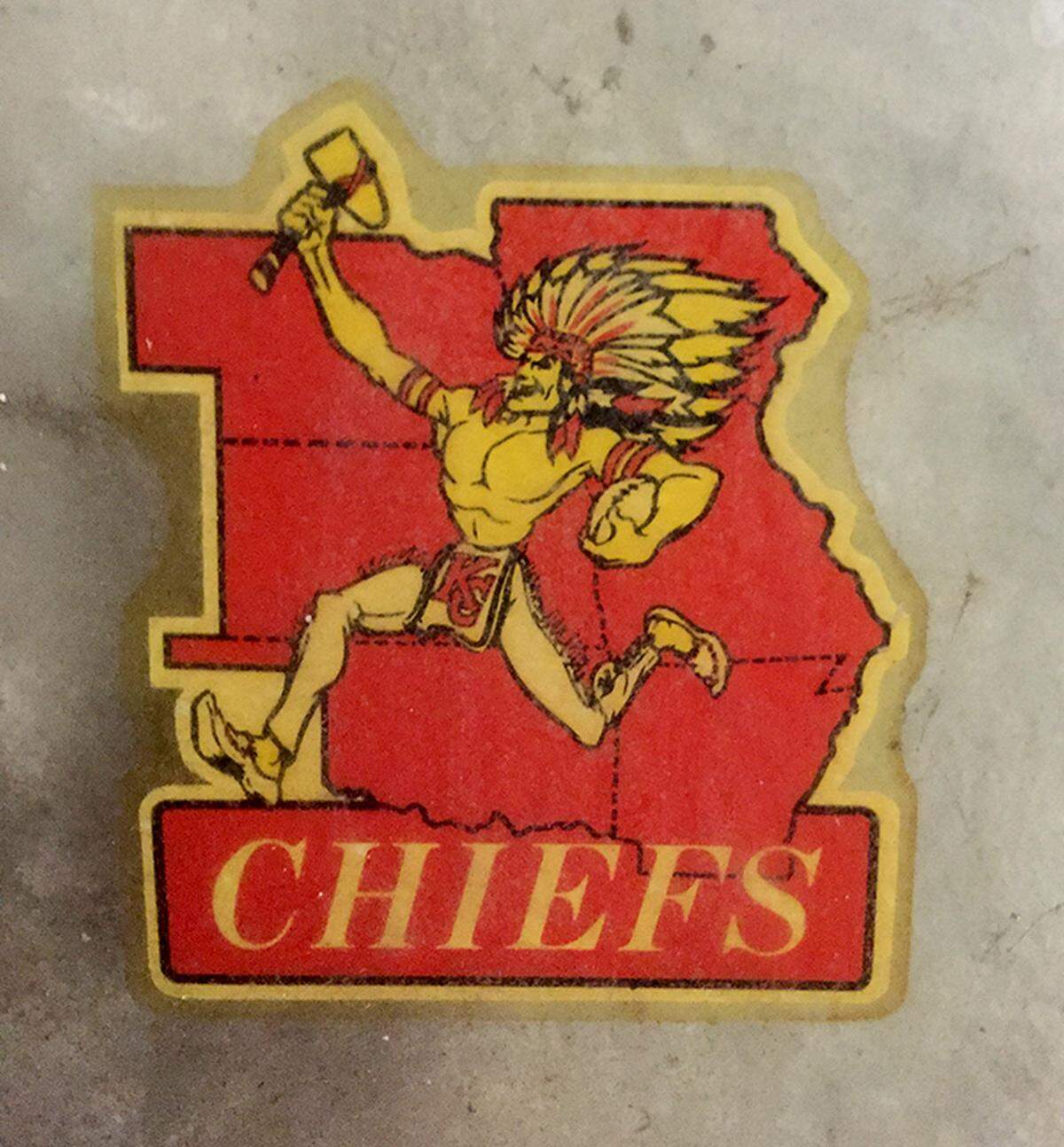
The connection used to be much clearer. The franchise’s original logo after relocating from Dallas and becoming the Chiefs was something of a caricature of a Native American. The Chiefs once celebrated touchdowns with a man donning a headdress riding a horse across the field. In the 1990s, players appeared on posters wearing attire that many Native Americans would consider offensive.
The Chiefs have made changes. Sensing the flame’s ignition, they began a dialogue more than six years ago with Learned and other Native Americans, who formed what’s now known as the American Indian Working Group. It has recently expanded to include new voices.
“We can honor, educate and create awareness of American Indian culture for our fans,” Chiefs team president Mark Donovan said.
That prompted the blessing of the drum. It prompted that moment in 2014, in which those tribal representatives stood on the field for a drum-blessing ceremony.
Some of them cried. They felt appreciated. Empowered, even, Learned said.
The Chiefs’ conversations with their working group are ongoing. So are the modifications. The Chiefs announced earlier this offseason they will ban fans from entering their stadium if they wear headdresses or have their faces painted in a manner that portrays American Indian culture. They altered “The Chop,” asking fans to make a closed fist instead of an open hand as they move their arm up and down. Getting fans to oblige might be a long shot. The blessing of the drum and the blessing of the four directions came years earlier.
What they’ve yet to consider — and have no plans to consider — is the measure the Washington Football Team took this summer: a name change. And an altogether abandonment of the history that accompanies it.
Thus, the debate rages on. The root of it has further complicated the issue — because this particular debate sprouted long before the Chiefs’ involvement.
In Native American communities themselves.
Quiet protests continue
On a Thursday night last month, as the Chiefs opened their 2020 season by dropping a Super Bowl banner on the upper deck at Arrowhead Stadium, a group of American Indians stood adjacent to the Truman Sports Complex parking lot, holding hand-written signs.
End racism, one of them read. Let’s start with our football team.
They stood out there for a few hours. Most of the football fans who walked or drove by were receptive.
But some cars honked their horns. A few passengers even gave them the middle finger. And one group of young men, dressed in Chiefs gear, walked by and began doing The Chop, louder and louder as they approached.
“The Chiefs aren’t a tribute to Native people,” said Rhonda LeValdo, one of the protesters and an Acoma Pueblo woman who teaches media communications at Haskell Indian Nations University in Lawrence. “This is how some people see us.
“We’re not mascots.”
Fifteen years ago, a coalition of college students referring to itself as “Not in Our Honor” stood in the Truman Sports Complex parking lot before the Chiefs played Washington. The group’s mission is to “advocate against the use of Native American imagery in sports.”
The beliefs of Not in Our Honor, composed of Native Americans, contrast to those in the working group with which the Chiefs have maintained ongoing communication for more than six years. Their viewpoints on some of the Chiefs’ traditions, in fact, represent complete opposite ends of the spectrum.
Not in Our Honor is demanding the elimination of The Chop, the drum and even the team’s name. The working group has asked for modifications to the pre-game drum ceremony. It has no issue with The Chop or the name itself.
As the Chiefs sought to better educate themselves about Native American culture, they quickly realized that any search for consensus would be too idealistic — that their resulting decisions would please only some and anger others.
“Everybody is going to have opinions on all these issues,” Donovan said last month. “And I respect that.”
The Chiefs have been criticized for making their decisions after speaking to a working group that includes only six people. More recently, they acknowledged those critiques had merit, and they expanded their outreach to also solicit input from the National Congress of American Indians (NCAI). Notably, the NCAI published a report in 2013 that called for the elimination of Native mascots.
The Chiefs know more opinions will come with their new relationship. They’ll be reminded that not all agree on questions of appropriation.
Throughout their conversations, even the recent ones in which they have expanded their scope, the Chiefs say their team name has not come up. The same goes for the Arrowhead logo and stadium name.
But they have not added members of Not in Our Honor to those discussions. For Gaylene Crouser, the executive director for the Kansas City Indian Center, and others like her, the dissension rests not in hearing the word “Chiefs” but rather the connections to it. If invited to the table, that’s the point she would make.
“To me, everything is connected. When you allow people to dehumanize you by using you as mascots, it’s hard for them to take you seriously with other things,” Crouser said. “When people look at you as a mascot, you’re less of a human being. It’s easier to dismiss your views on important issues. The Chiefs want to separate those things from each other, but I know that everything is connected to everything else.”
Some traditions remain
The Chiefs’ recent changes — disallowing headdresses and face paint, the blessing of the drum — began with a cup of coffee.
Learned reached out to the Chiefs, and Donovan expressed a desire to study what he didn’t know. The Chiefs saw an opportunity to address the fight brewing in Washington, D.C., at a time when the punches thrown toward Kansas City remained jabs, and not yet full-blown haymakers.
Donovan and Learned met at a coffee shop, and Donovan opened with a list of complaints from Native Americans that had been brought to his attention.
Learned, 66, grew up in Oklahoma. He said he’s been a Chiefs fan since day one — on the day he heard the team name, he and his mother developed an attachment. That partly explains his desire to see the name persist, he acknowledged. Bartle earned his nickname due to his involvement with the Boy Scouts of America and his founding of the Tribe of Mic-O-Say.
“If it didn’t bother me then, why should it bother me now? If it didn’t bother my elders, why should it bother me?” Learned asks. “What’s racist about it? Seriously. What’s racist about it?”
But when Donovan explained the Chiefs’ use of a drum to begin The Chop, Learned replied, “Well, now we have a problem.”
The drum is a significant symbol in Native culture, representative of a heartbeat. If the Chiefs wanted to continue using it, Learned said, it should first be properly blessed by Native Americans.
“Done,” said Donovan, who has since admitted his own unfamiliarity with its meaning. “Let’s do it.”
Learned’s second sticking point — fans in headdresses — initiated a longer battle. His working group began with educating fans on its importance — likening it to someone outside the military wearing a military uniform, complete with stripes. They passed out fliers in the parking lots at games. They started conversations with Chiefs fans.
And that’s where the two sides of the issue most agree — the importance of educating a general society they believe still knows too little about their culture’s history. They disagree, however, about the best avenue in which to provide it.
As executive director of the Kansas City Indian Center, Crouser would prefer to focus efforts on the history of Native Americans being taught in schools — kids should know that history long before they become football fans.
Stepanie Bucaro, a Chiefs fan who is part of the Rosebud Sioux Tribe, laments the fact that society gathers knowledge about Native Americans not from actual interaction with Natives but from activities like The Chop.
“It’s aggravating. I don’t know how to explain it really,” Bucaro said. “But it’s like they’re making a joke out of us when they do it.”
Other measures, Bucaro said, have been a welcome change, such as the ban on headdresses. She expressed appreciation for the Chiefs talking with someone — anyone — in the Native American community. She’s never considered not rooting for a Chiefs team she loves, even as she now lives in California.
Each year, the Chiefs host a game during American Indian Heritage months, during which tribal leaders perform the blessing of the drum. It coincides with an announcement over the Arrowhead public-address system that has been fine-tuned in an attempt to teach fans about its meaning. About its importance.
“We all have different opinions like we all have belly buttons,” said Gary Johnson, part of the American Indian Working Group. “I respect that. But the way I’ve always approached this is that there’s no better way to get our message across than with an NFL team at our side. We’ve been making progress in our education. I think that’s the thing I look at.”
Initially, the Chiefs requested fans stop wearing headdresses. They asked TV stations to refrain from showing fans donning them like some sort of Halloween characters.
This summer, that request became policy. When it was announced, LeValdo, part of the Not in Our Honor coalition, received text messages from friends.
“You must be happy today,” they wrote.
Her reply: “We’re not standing down.”
The debate endures
On Sunday, the undefeated Chiefs will play host to the Las Vegas Raiders. Before kickoff, someone will grab a mallet and bang the drum, and a reduced-capacity crowd will echo the chorus of The Chop.
Some 500 yards away, just outside the stadium parking lot, a small group of protesters will hold a sign with the identical words that were stenciled into the back of the Chiefs’ end zones last month on opening night for the NFL.
End Racism.
Learned will retort once again, “What’s racist about ‘Chiefs?’”
And some of his opponents will shake their heads.
Neither side seems to know exactly what percentage of people favor their cause. Learned said he knows he does not speak for all Native Americans when he sits down with the Chiefs, “but I am giving solutions for education.”
Both sides absorb insults from the other. Learned said he has received death threats. Amanda Blackhorse, a member of Not in Our Honor and a leading activist on pro football name changes, said she had beers hurled at her during one protest.
It’s clear that progress is being made on these issues. The “Redskins” nickname is no more. The Cleveland Indians baseball franchise no longer wears a cartoonish logo depicting a red-faced Native American on its caps. Some colleges and universities have changed their nicknames, too.
When the Chiefs play in games that widen their national spotlight — and there have been plenty of them lately — some prominent news outlet will again address the topic. At the Super Bowl, the appropriation debate garnered attention from CNN and The New York Times. An article in The Washington Post illustrated the need for changes.
The Chiefs have made some. Six years ago, they sought education that guided their ensuing steps. And those steps have been enough to please some.
But not all.
So the dialogue marches on.
“I think one of the best things that has come out of this for us as an organization and the groups that we are working with is an understanding that it’s going to take some time,” Donovan said after the Chiefs instituted the headdress ban.
“This isn’t overnight. These aren’t things that we are going to be able to successfully change one way or the other overnight. And we’re going to continue to work on that.”
This story was originally published October 9, 2020 at 5:00 AM.