
Guest commentary: Why the Royals will win or lose the World Series
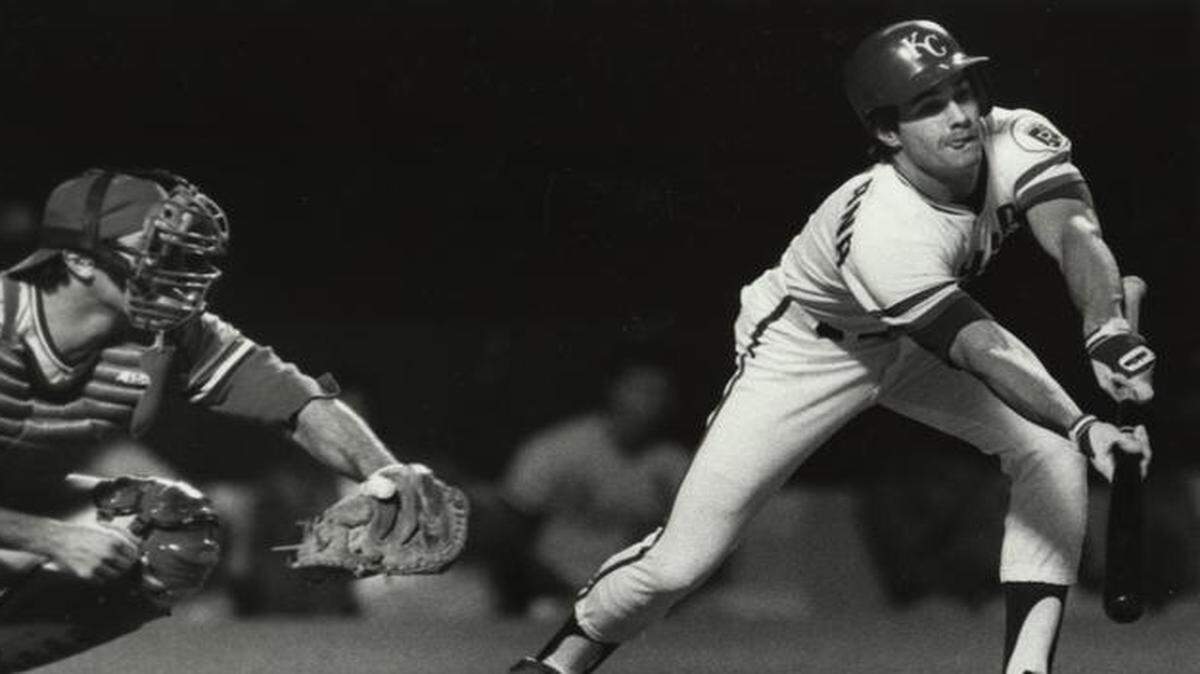
The success of this Royals club is kicking up questions and memories about our 1985 World Series win against the Cardinals. Many are asking my opinion about how the two teams compare, and if the club can stay hot. I am really enjoying watching the city come alive and the exhilaration so many are enjoying. What a wonderful time!
As you may know, my notoriety was achieved from one week of my career when I had an “in-the-zone experience” in the ’85 Series, in which I played the best baseball I ever played. After hitting just .188 during the regular season, I hit .278 with a .435 on-base percentage and played errorless at shortstop. It was as if the game was in slow motion. I felt like I had more time; I wasn’t thinking and my swing and my defense were more fluid and effortless than ever before. I was told I received the highest number of MVP votes for a position player. (Bret Saberhagen deservedly won the award.)
A big question surrounding the club going into spring training the following season was whether I could sustain my level of play and keep the shortstop job. The same question loomed largely in my own mind, because I had no idea what took place that allowed me to play so well the previous fall. I really had no idea how to repeat it. I was hoping I could, but I felt quite a bit of anxiety wondering if I really could.
It turned out that I did not keep the job, and was out of the major leagues just 18 months later. I had a career-ending back injury, which contributed to that, but my level of play had also diminished greatly even before the injury.
As I look at this current Royals club, I see a team that has a great bullpen, good speed and excellent defense. The biggest thing they have going for them may be the huge wave of momentum they have been riding. They and their thousands of followers are hoping the wave doesn’t crash over the next several days like mine did after the ’85 Series.
Momentum is powerful energy that the fans and players co-create, but a club cannot depend on momentum and talent alone to assure success.
Over the years, many very talented players have not played well in the postseason. Alex Rodriguez, Barry Bonds and Prince Fielder are three — for the most part, none of them really produced in October.
In the first two games of the Royals’ ALDS win against the Angels, the trio of Mike Trout, Albert Pujols and Josh Hamilton were a collective 1 for 25. I’m sure that is not what Angels general manager Jerry Dipoto had in mind when signing them to contracts that collectively exceeded $500 million.
The fact that those three guys struggled does not indicate they are not great players, but it very clearly indicates they do not understand from the most fundamental level what makes them great.
A process quantified by Dr. Fred Travis, director of the Center for Brain Consciousness and Cognition, seeks to explain what takes place in the brain when an athlete is playing at his or her best. Called The Fluid Motion Factor, it enables an athlete who is “in the zone” to process information more clearly in the brain. This is what I experienced when playing in the ’85 Series. It is also what many of the current Royals have been experiencing over the first 10 postseason games.
James Shields is a very talented pitcher and a consummate professional. But he is one Royals player who is clearly not experiencing the Fluid Motion Factor. I had the pleasure of managing Shields several years ago when he was a minor-league player in the Tampa Bay organization. He is a rock-solid individual who has rightfully earned the reputation of being “mentally tough.” He has a career ERA of 3.72 with a WHIP (walks and hits per innings pitched) of 1.22.
It has been a much different story for Shields in the postseason, and this year is no different. His career postseason ERA is 5.74 with a WHIP of 1.53.
As great as Shields, A-Rod, Bonds, Fielder, Trout, Pujols and Hamilton are or were, their Fluid Motion Factor has shut down in the postseason, which caused their playoff performance to suffer.
The concern now, for the majority of the red-hot Royals, is that the Fluid Motion Factor can leave them just as quickly as it came. Like me in the spring of 1986, they may not know how regain it. Hopefully their momentum and talent can carry them across the finish line. The good news is that Royals general manager Dayton Moore has not tied up more than $500 million in three players.
Former Royals shortstop Buddy Biancalana is the co-founder of PMPM Sport-Zone Training. Learn more about his work at www.buddybiancalana.com.