Why Royals tabbed relief pitcher Lucas Erceg for special bullpen role this year
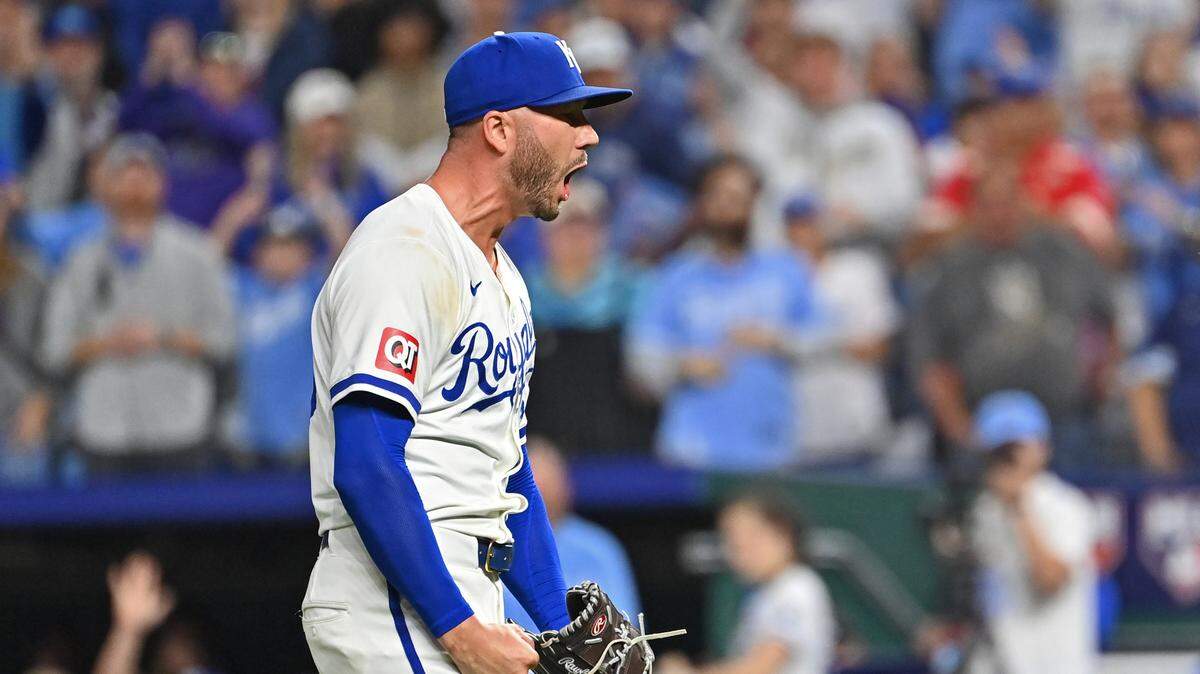
Kansas City Royals manager Matt Quatraro knows which button to push if his team is in deep trouble.
All it takes is a call to the bullpen.
On the other end of the line, bullpen coach Mitch Stetter will alert the troops. And if the situation is dire, the Royals will likely assign the job to right-handed relief pitcher Lucas Erceg.
“He is going to come in and do what he does,” Quatraro said. “You know, good for him: He doesn’t back down from anything.”
Erceg, 29, is known for putting out fires — tense situations in which the opposing team is threatening to score. It’s a familiar role, one he held with the Oakland Athletics in front of phenomenal major-league closer Mason Miller.
During the Royals’ 2024 playoff run, Erceg was called upon to pitch multiple innings and record outs. He faced the toughest parts of opposing teams’ lineups — and the Royals played dangerous foes.
The Royals defeated the Baltimore Orioles in an American League Wild Card series before falling to the New York Yankees in the American League Division Series.
Erceg was Kansas City’s closer during both series. However, he displayed qualities that made him a fit for something that’s back in style by popular demand:
The role of the ultimate fireman.
The Royals signed elite closer Carlos Estévez in free agency this past offseason. His arrival flipped previous KC bullpen roles on their heads. Royals executives personally called Erceg about the signing of a new closer, and he appreciated the gesture.
Estévez now owns the ninth inning. But Erceg has embraced the heat of the moment he encounters in high-leverage situations that occur slightly earlier in the game.
“It’s all about how consistent you can be on a day-in and day-out basis,” he said. “Just making sure your manager trusts that you are prepared from the fifth inning on. So they can call down at any point and kind of have you be that fireman to put out that fire.”
One call away
Major League Baseball teams have traditionally assigned regimented roles to their relievers. A typical bullpen included a long reliever, middle relievers, a few setup men and a closer.
If things went awry, MLB managers sometimes had to call upon their closer to record three, four, even five or sometimes six outs to finish a game. There was a potential downside to this, as big-league closers weren’t typically prepared to pitch additional innings.
Analytics have changed that. Teams now employ relievers based on high-leverage abilities, and that’s created a market for fireman relievers.
It’s not a new concept. Teams had often asked certain relievers to pitch multiple innings when the need arose.
But a fireman’s role is different. He’s a pitcher who can be deployed at any moment, with the same results expected, regardless of the situation. The Royals like Erceg in this role because he has arguably the best stuff in their bullpen.
Think of guys such as former Royals closer Dan Quisenberry, who was still effective late in his career as a fireman reliever. Or current MLB firemen like Griffin Jax (Minnesota Twins), Jason Adam (San Diego Padres) and Hunter Gaddis (Cleveland Guardians), to name a few.
Erceg is at the top of his class in part because his four-seam fastball touches 100 mph. That ranks in the 95th percentile among all qualified major-league pitchers. Opponents have a 42.9% whiff rate against his fastball this season, per Baseball Savant.
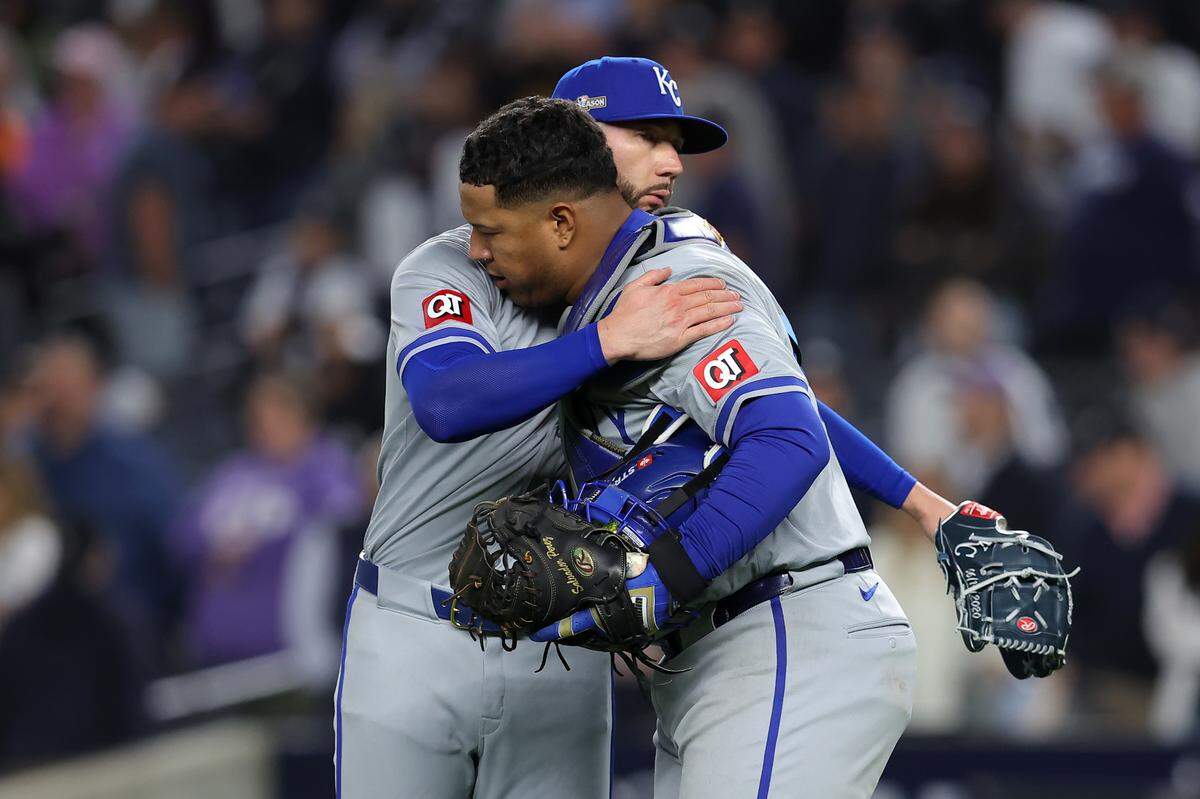
In addition to the fastball, Erceg throws a sinker, changeup and slider. It’s a four-pitch repertoire that has benefited him greatly on the mound.
He’s yet to allow a run in 6 2/3 innings this season.
“It all goes back to me knowing that my stuff is good enough to get those guys out,” he said. “All I have to do is focus on executing and throwing strikes. Just making sure to disrupt their (batters’) timing and doing anything I can to not allow them to do that damage.”
Erceg pitched an inning-plus six times in 2024 after arriving in Kansas City via a midseason trade with the A’s. He said shouldering the responsibility of fireman helped him develop into a dependable option.
“It’s a tough game,” he said. “My experience with being a fireman is really nothing different than what a closer’s job is, right?
“You are out there to close out the game and help keep the score the same to help secure the win. So if my job is to do it in the seventh or the eighth and not the ninth, it’s still the same job at the end of the day.”
By the numbers
The Royals dove deeply into Erceg’s analytics before acquiring him. They researched his trends and then decided the best approach for deploying him, if they were to get him.
“We’re looking for guys with not just power and stuff,” Royals vice president of research and development Daniel Mack explained, “but a good craft and the ability to locate into the areas where the pitches play the best.
“We felt that Lucas had a great fastball and we knew the breaking ball was something we could continue to work with and he would continue to develop.”
The Royals decided they would be comfortable using Erceg in pretty much any role. However, it was his changeup that set him apart as a reliever they sought to acquire.
“He’s got a great changeup,” Mack said. “So now you have a guy with power stuff and has the ability to locate. And he has a pitch to help mitigate the left side.
“It’s something we saw when we traded for him and what we thought would allow him to take on a full closer role for how that team was built.”
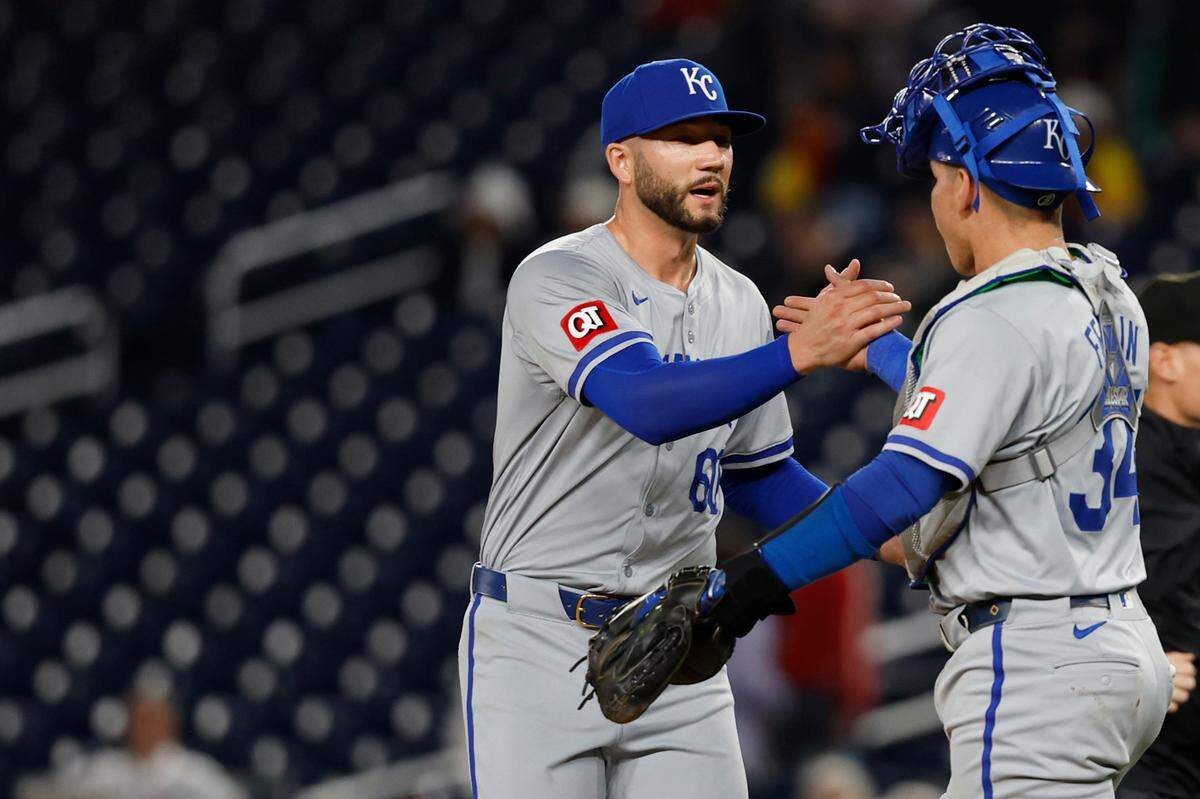
Erceg said returning to a fireman’s role has given him new perspective. He loved closing games, but the team’s success was his ultimate goal.
He realized he could still affect a game’s outcome as a closer, of sorts, for any inning, or innings, that he was asked to pitch.
“There are two ways I could’ve handled that,” he said. “I could’ve been salty about, you know, me earning that role towards the end of the year, into the playoffs, coming into the spring and 2025 wanting to be a closer.
“Or I could take a step back and say, ‘At the end of the day, it’s not my decision when I pitch. What is my decision is when I get called on to pitch, to do my job and to do it well.’”
The Royals laud Erceg for his professionalism. They have used him alongside Estévez, Hunter Harvey and John Schreiber late in games already this year.
Entering Wednesday’s series finale in New York against the Yankees, the Royals led the American League with a 3.28 earned-run average.
Erceg is a big part of the club’s goal of returning to the postseason this year.
“Now we have what I think is an even more polished version of him,” Mack said. “He gets to come in when we need him the most in the game.”
Learning on the job
Erceg knows his fireman role continues to evolve. He said he’s learning from veteran teammates in the bullpen each day.
Estévez has helped him be better prepared for each outing. The duo works together in the bullpen to curate best ways of attacking hitters.
“I found it to be a great opportunity to pick his brain,” Erceg said, “because he has been in the league for a long time. He has been there and done that.
“I can be down there asking questions about what the scouting report says and what he does with his scouting reports of certain hitters in a high-leverage spot. It’s one of those things you want to pick up on.”
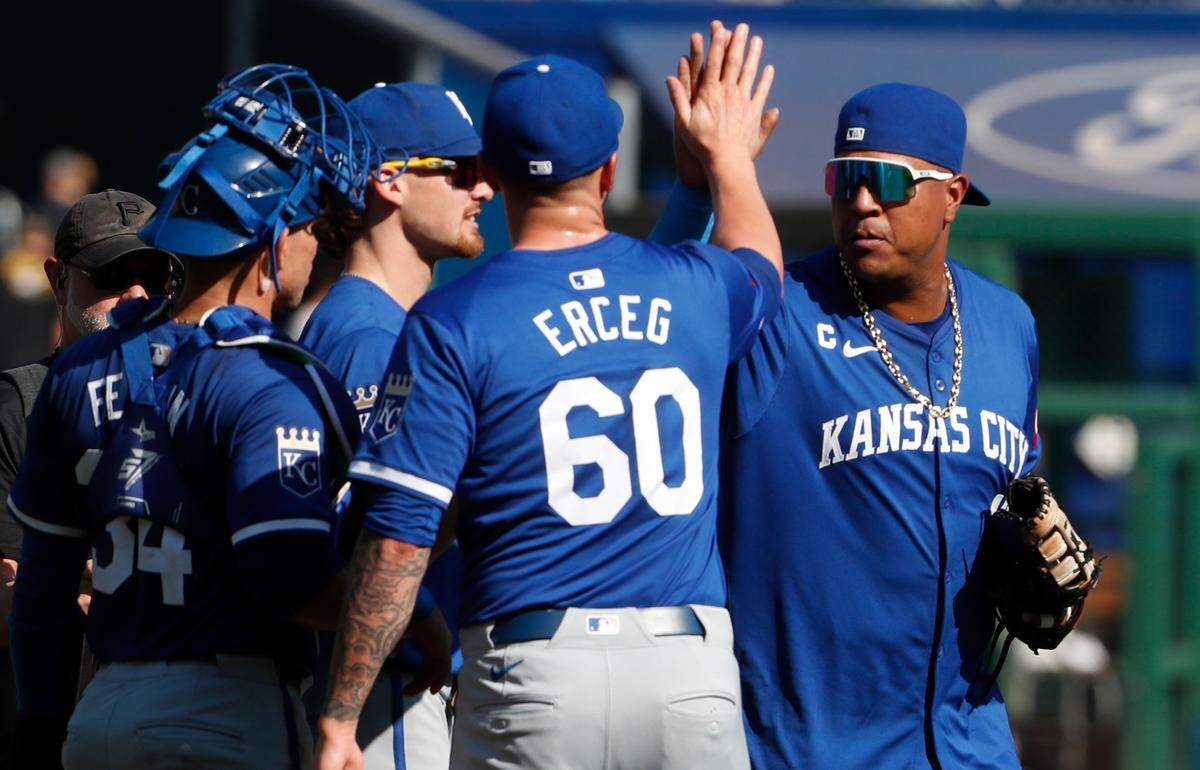
The Royals will continue to count on Erceg in high-leverage situations throughout 2025. He will also get a chance to close games when the situation calls for it.
Should Quatraro need him in a pinch, Erceg will be ready to put out fires in short order.
“In that situation, it doesn’t matter who is up there,” Erceg said. “It’s me and the baseball and can I execute this pitch?”
Words of a true fireman.