
Becoming major league (it happened 70 years ago) meant everything for Kansas City
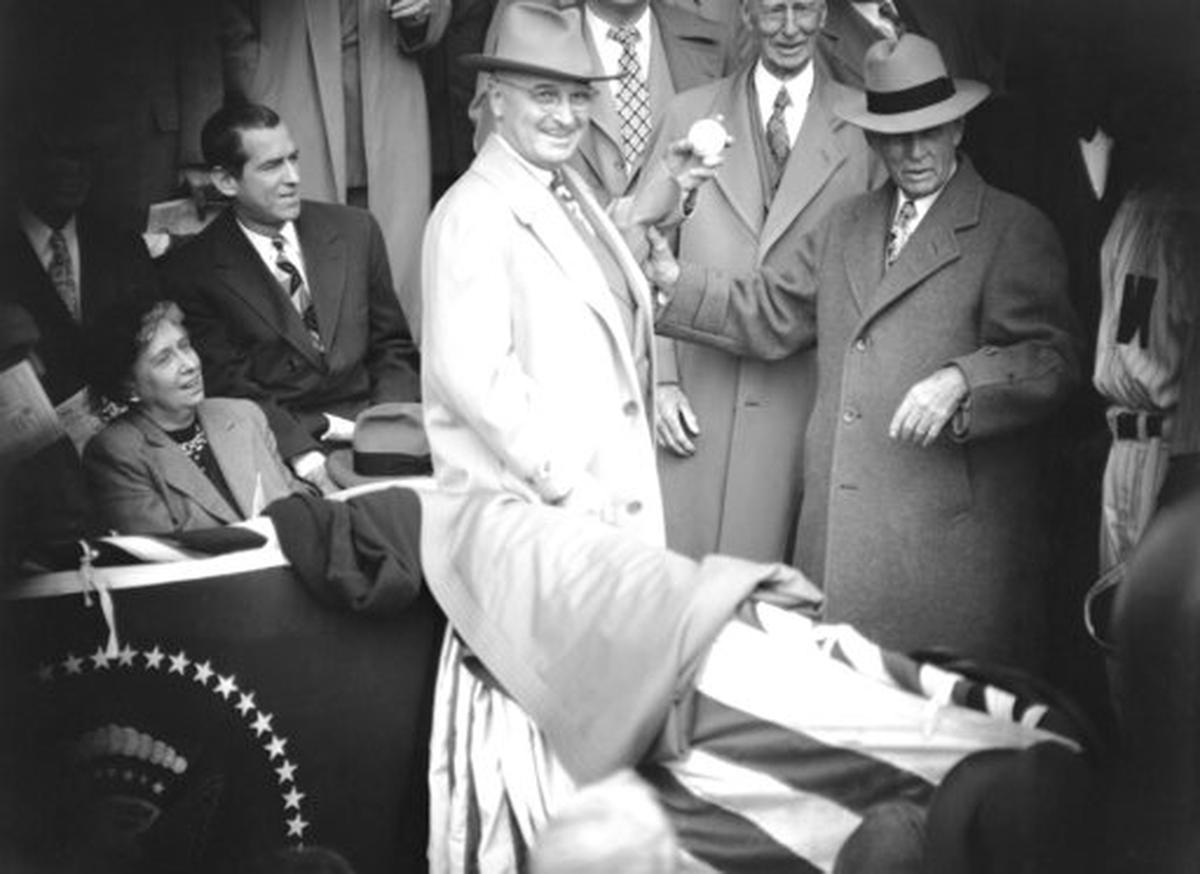
.JPG "President Truman threw out the first pitch from the Kansas City Athletics’ dugout before their 1955 debut at Municipal Stadium on April 12. At left is A’s manager Lou Boudreau; at right in the foreground is Detroit Tigers manager Bucky Harris. Also pictured are A’s owner Arnold Johnson and former owner Connie Mack.")
By the early 1950s, a descriptive quality had been added to the portrayal of select U.S. cities.
Major league.
You either had been for more than a half-century, or wanted to be, a city with Major League Baseball. And not just for months of entertainment on the diamond.
Being major-league meant status, that your city was economically and culturally vibrant enough to support a team in the nation’s most popular sport.
Kansas City and many other municipalities desperately wanted to join this exclusive club, and 70 years ago the doors swung open: major-league baseball arrived in KC in the form of the relocated Philadelphia Athletics.
Kansas City was minor-league no more. We’d finally made the bigs.
A seven-decade run of local opening days continues Thursday, when the Royals meet the Cleveland Guardians at Kauffman Stadium.
“This is one of those genuinely great days in the history of the city,” wrote Star president and executive editor Roy A. Roberts in a front-page editorial in 1954, when it was becoming apparent that Kansas City would land a team.
“Literally overnight the community sees itself in the big-time of cities. The psychological lift is tremendous. And the implications range wide.”
Also, it smelled good, at least to 8-year Richard Haynes, then of Kansas City and now of Basehor, Kansas. His excitement level rose as he approached a newly expanded Municipal Stadium at 22nd and Brooklyn for games during the KC Athletics’ first season there.
“You could smell the hot dogs and popcorn for blocks,” Haynes said. “Then you get to the stadium, it was huge. And the grass was beautiful, wooden seats that pulled down. You were in awe.”
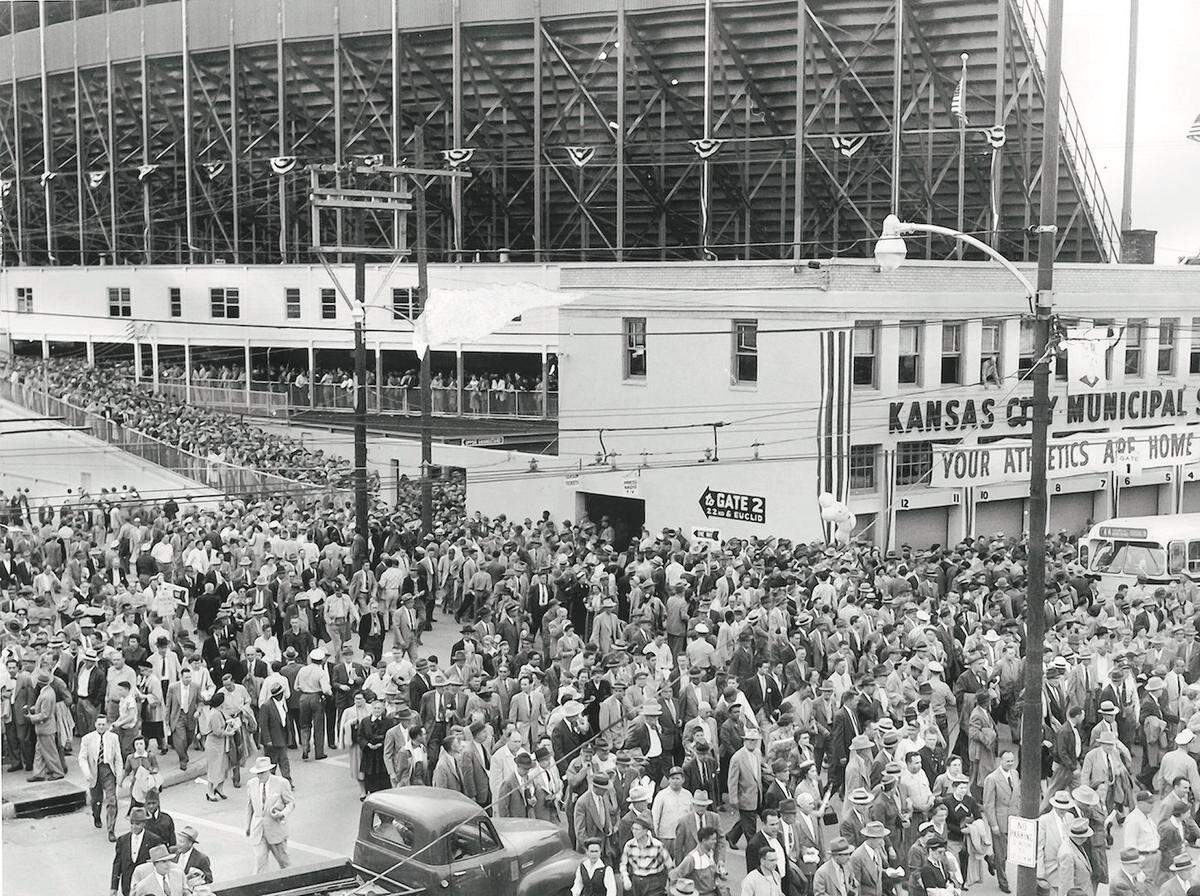
Welcome to KC, A’s
The Athletics’ 13-year lifespan in Kansas City is not fondly recalled for the on-field product.
Never producing a winning season, their highest finish in the American League standings (as a KC club) was sixth. That happened once: their first year in Kansas City.
In their early years, several trades with the New York Yankees favored the perennial power. The flow of players migrating from Kansas City to New York became known as the “pinstripe pipeline.” In their later years in KC, the Athletics’ constant threat of relocation further soured fans on the ballclub.
But it was better to have major-league baseball than not, and starting in 1955 Kansas City began to shape its identity as a professional sports town.
KC’s story as a major-league metropolis —and all that came with it, including franchises in every major sport (yes, we once had NBA and NHL teams), and the construction of stadiums and arenas — it all begins here.
In an alternate universe, one in which Kansas City doesn’t become major league in 1955 ... well, who knows the direction our path in sports might’ve taken? It’s fair to assume that some type of new stadium would’ve been erected for a team (or to lure one). But without the Athletics coming when they did, would a new structure have been built in time to attract Lamar Hunt and the Dallas Texans — the eventual Kansas City Chiefs?
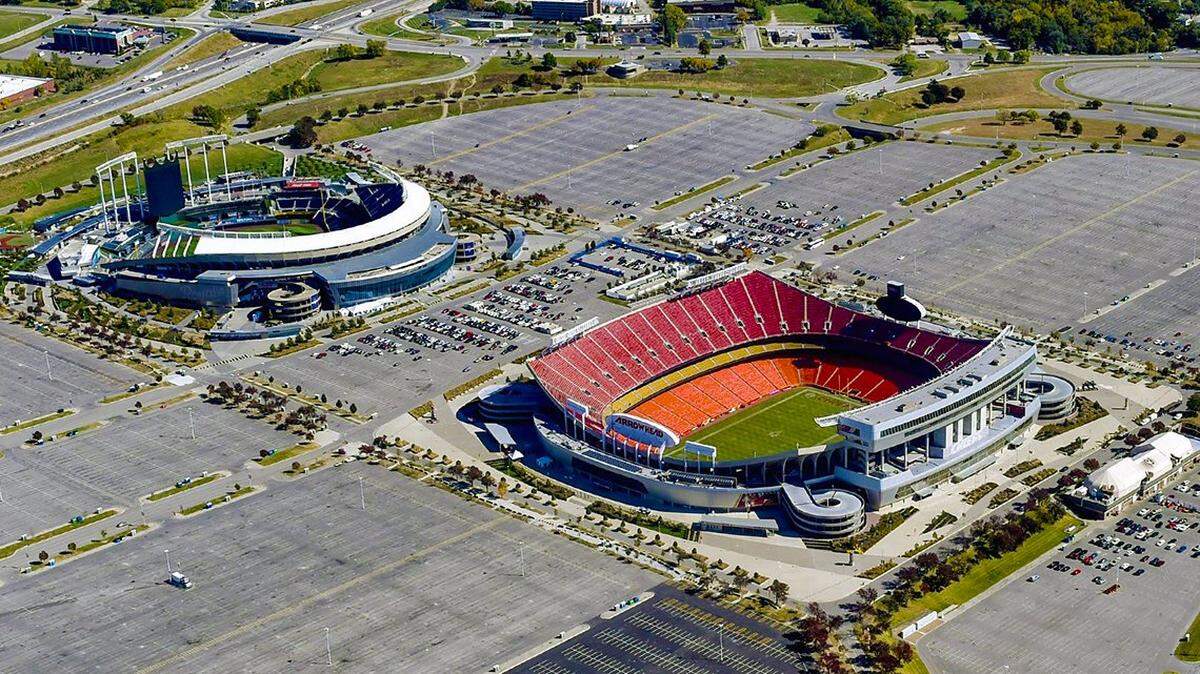
If baseball had arrived in KC later, perhaps the forward-thinking Truman Sports Complex would have been conceived differently — or might not have been built at all.
But the A’s-to-KC deal was finalized in 1954, and the next year Kansas City’s euphoria was best demonstrated by a parade that attracted 150,000 spectators along downtown streets ahead of the first opening day for the KC Athletics.
At the time, in 1955, it was believed to be the city’s biggest celebration since the dedication of the Liberty Memorial with President Calvin Coolidge on hand in 1926.
“It clearly was a huge point of civic pride,” said Tom Busch, a Kansas City attorney who has devoted part of his practice to sports law. “In my opinion, it was validation of status as a major-league city, which was a big deal back then. We’d been a minor-league baseball city for a long time.”
Coming of age in the Heartland
Landing a Major League Baseball club was a hard-earned triumph for Kansas City, which until then was more of an onlooker on the national sports scene.
Municipal Auditorium had been the site of NCAA and NAIA national basketball tournaments. The Monarchs were a Negro Leagues draw with several future Hall of Famers.
But membership in the major leagues in 1955 brought a different level of attention.
It meant having your team splashed across the nation’s daily newspapers and regular visits from the likes of major-league superstars Mickey Mantle and Ted Williams.
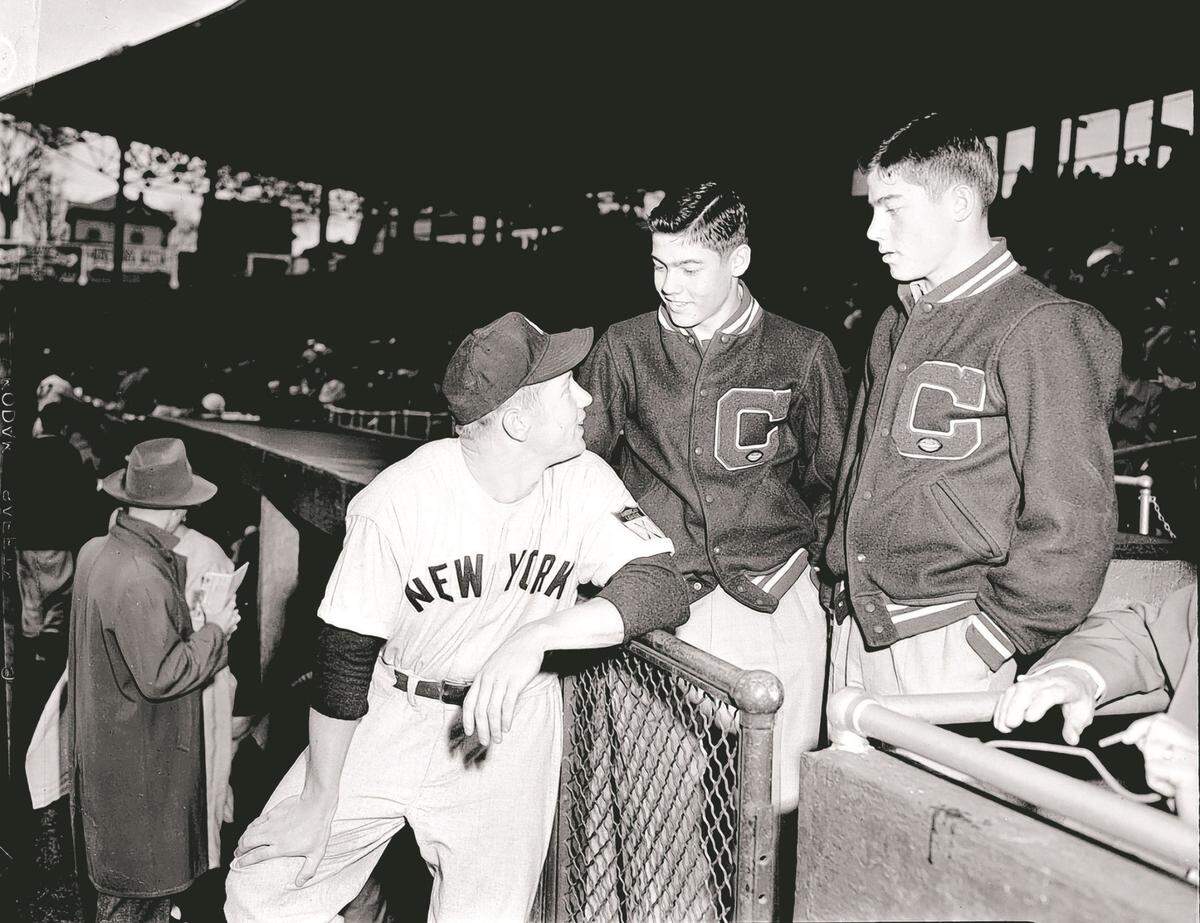
The Athletics were the first driver of sports tourism in Kansas City. A study conducted by the club determined that in 1956, some 37% of fans surveyed at games came from beyond the metropolitan area. Once in town, they’d spend money at restaurants and hotels.
A similar regional sales pitch was used by the city to attract the Chiefs ... and even, decades later, the FIFA World Cup that’s coming to Kansas City in 2026. Such teams and events not only represent Kansas City, but also several states in the middle of the country.
First, however, the notion of big-league Kansas City baseball needed a push. It was the national pastime, but the major leagues in 1950 had existed in the same 11 locales since 1903. There were no major-league cities west of St. Louis, which had two teams, as did Chicago, Boston and Philadelphia. New York had three.
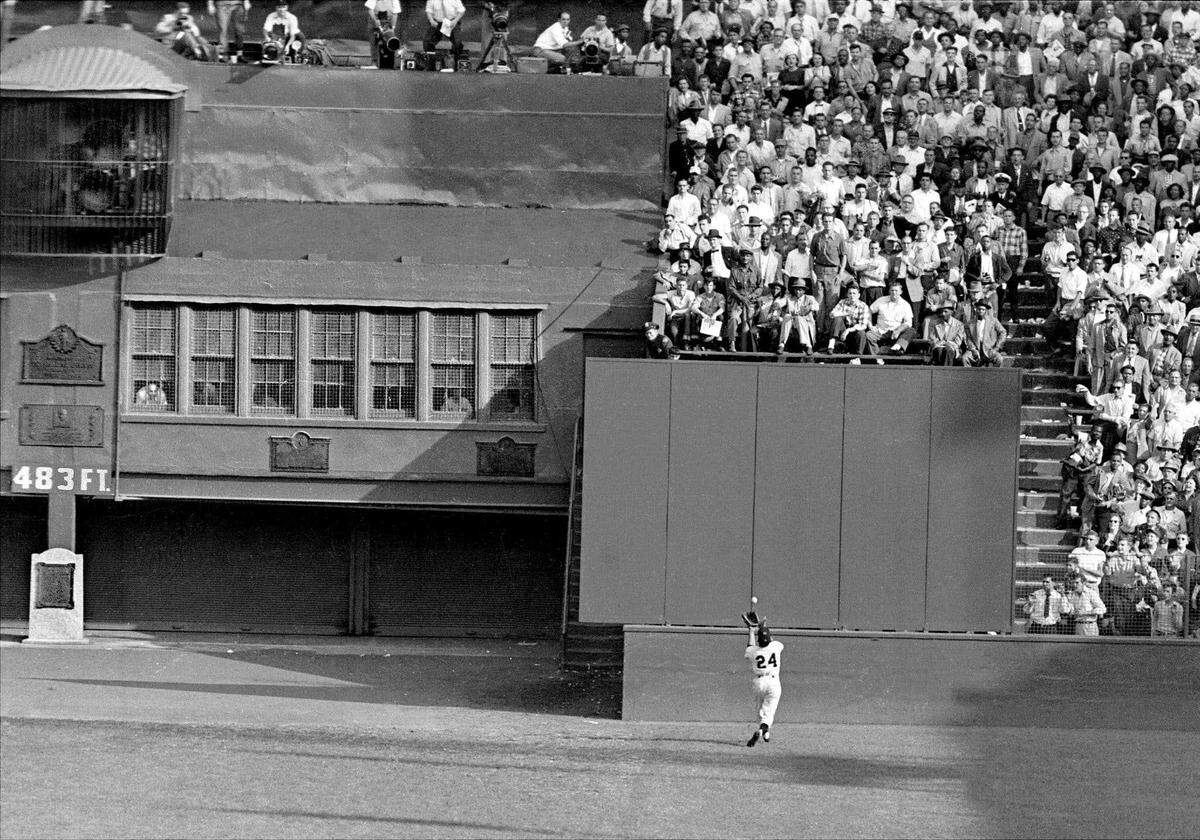
The game was on the move in the early 1950s, however, when the Boston Braves relocated to Milwaukee and the St. Louis Browns became the Baltimore Orioles.
Next up, Kansas City hoped, was westward expansion. But several other cities sought the same prize. At the time, there were no MLB teams in Los Angeles, San Francisco, Houston, Dallas, Denver, Atlanta, Minneapolis or Seattle. All would eventually have more major pro teams than Kansas City.
But they weren’t there yet, and Kansas City was moving quickly. The effort was led by a Chicago businessman, Arnold Johnson, who had a unique tie to KC (more about that in a moment). Johnson had been recruited by Star sports editor Ernie Mehl to become the owner of the new club.
‘We had ‘em, we didn’t have ‘em’
The task of buying and relocating the Athletics didn’t come without a struggle. Johnson had to overcome a local syndicate that wanted to purchase the team from the family of Connie Mack and keep it in Philadelphia.
The Athletics organization, an original member of the American League in 1901, had been managed by Mack for 50 seasons and was still owned by the family. But the team had fallen on hard times — both on the field and at the box office — and the Macks were looking to sell.
At one point it appeared the Philadelphia businessmen held the winning hand, and the team would stay in Pennsylvania. Some American League owners, whose approval was needed to complete a move, had doubts about KC as a major-league destination, given its cow-town reputation.
“I just think there are bigger towns, with more population,” opined Washington Senators owner Clark Griffin, “that will give our league better balance.”
Kansas City’s metro population — 808,000 in the 1950 census — ranked 17th nationally. Long before media-market size became a factor in the expansion and relocation of leagues and teams, prospective newcomers were judged on the population size of their surrounding areas and conditions of existing venues.
Another potential holdup in an A’s-to-KC transition: The Kansas City Blues had been the Yankees’ top farm team. The Yankees were early and full supporters of KC’s jump to the majors, and Johnson — here’s the connection to KC — owned Yankee Stadium in New York and Blues Stadium in Kansas City, leasing them back to the teams.
Also, Mehl had become friends with Yankees co-owner Del Webb, and it was Webb who who first mentioned that the Mack family might interested in selling. Some owners weren’t eager play ball with anything connected to the Yankees, baseball’s reigning power.
Lonnie Shalton didn’t know about any of that at the time. He was baseball-playing, card-collecting, autograph-seeking 13-year-old Kansas Citian just trying to keep up with news about his city’s quest to become major league.
“I remember it went back and forth,” said Shalton, who attended the Athletics’ first game in Kansas City. “We had ‘em, we didn’t have ‘em, then we finally got ‘em.”
Macks agree to a sale
On Nov. 8, 1954, the Mack family agreed to sell the Athletics to Johnson for $3.5 million. The American League owners came around and the news was splashed across the front page in the next day’s print edition of The Star:
“Kansas City Gets the A’s.”
The story by Mehl begins: “It’s now official that Kansas City has gone major league.”
No one worked harder for this than Mehl. He first floated the idea of Kansas City getting a major-league team in a Star column in 1949, quoting J.G. Taylor Spink, publisher of the weekly baseball magazine Sporting News.
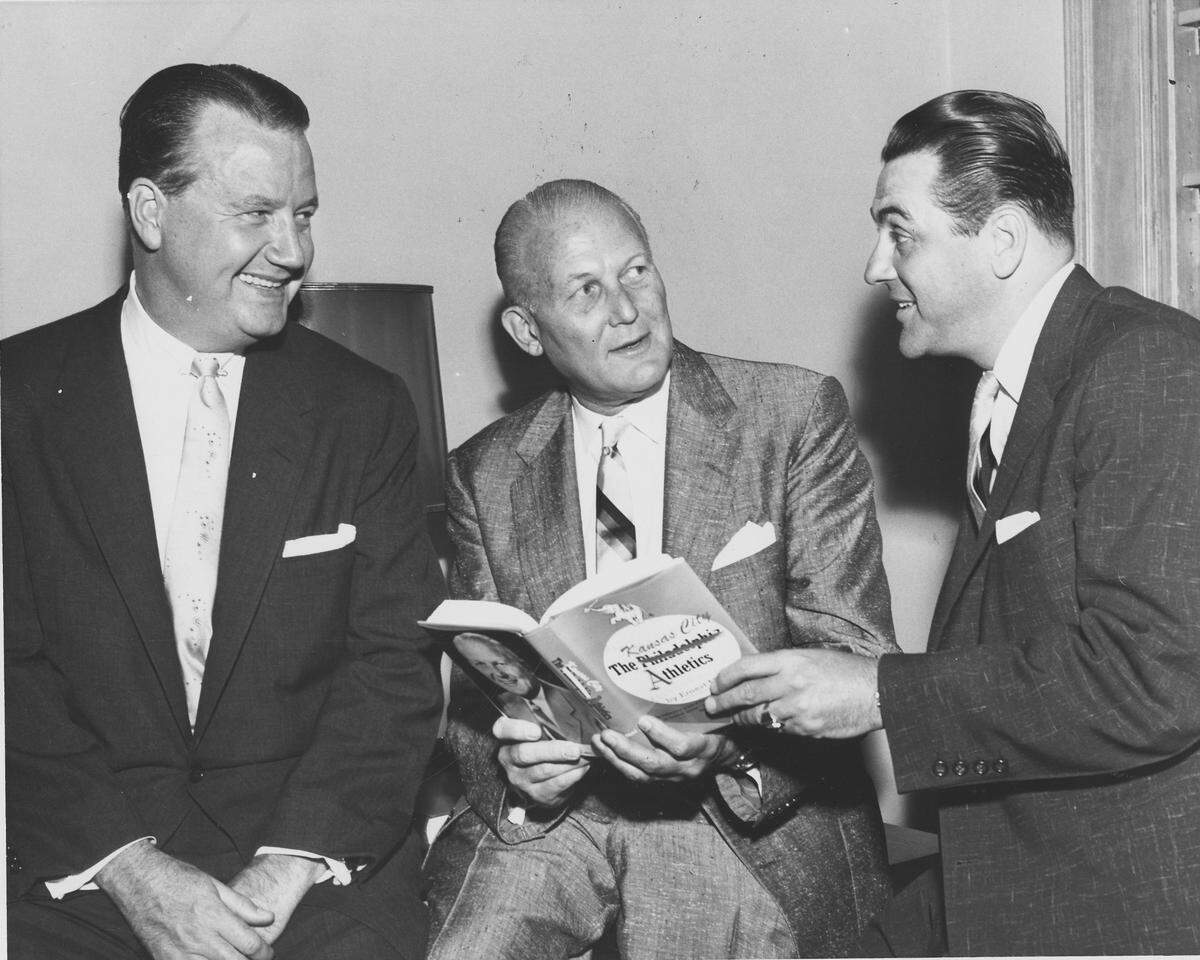
Spink believed relocation of some of baseball’s lesser-drawing teams was possible, and there was a vast nation of growing burgs with their arms (and wallets) open.
“There is more to this country than is contained east of the Mississippi. Take Kansas City, as example,” Spink had said.
Now there was the matter of a ballpark. The minor-league Blues and Negro Leagues’ Monarchs played in 17,000-seat Blues Stadium, which opened as Muehlebach Field in 1923. Increasing the capacity there was mandatory.
In another example of Kansas City’s can-do spirit, voters approved a $2 million bond to increase seating to 31,000 — before knowing whether the city actually had a team — and the work was completed in 90 days.
Rains washed away batting practice for the Athletics and Detroit Tigers on opening day in April 12, 1955. But the skies cleared in time for former President Harry Truman — from nearby Independence — to throw out the first pitch.
The A’s went on to win the game that day. Nearly 1.4 million fans attended A’s games during the 1955 season, ranking third in baseball and setting a franchise record.
First baseman Vic Power had an All-Star season and pitcher Art Ditmar was team’s workhorse. The A’s also featured Enos “Country” Slaughter, the old St. Louis Cardinals hero, who hit .322 that year, then was shipped to the Yankees the next season.
In 1960, Johnson died. His estate sold controlling interest to another Chicago businessman, Charlie Finley, and things only got worse. The losing continued and Finley constantly threatened to ship his club elsewhere — to Dallas or Atlanta or Louisville, or even, he once said, to a cow pasture in nearby Peculiar, Missouri.
Finley secured approval in 1967 to move the team to Oakland, just in time for Athletics to become a powerhouse.
But the seeds for the A’s to win three straight World Series championships starting in 1972 were planted in Kansas City, with a team that included Jim “Catfish” Hunter, Reggie Jackson, Sal Bando, Bert Campaneris, Blue Moon Odom and other future stars.
Here come the Royals
When the A’s pulled out, Kansas City moved quickly to retain its major-league status.
The Kansas City Royals debuted in 1969. The team owned by Ewing Kauffman became a contender quickly and the memory of the Athletics’ time in KC soon faded.
Just as they’ll one day fade in Oakland. Today, the team is setting up temporary headquarters in Sacramento, with a planned move to Las Vegas looming in three years.
As the Royals became a model new franchise in their first two decades, more connections to the Athletics were lost ... until 1990. That’s when Kansas City attorney Paul Blackman led the effort to stage a reunion.
Some 37 players from the 1955 team and their families returned to Kansas City to attend a dinner, a Royals game, a tour of the city and a brunch at Chappell’s in North Kansas City — which continues to house the largest known collection of KC Athletics memorabilia.
“They were my heroes,” Blackman said. “I started my baseball card collection because of that team. And they couldn’t have been more grateful and appreciative.
“That team put us in the big leagues. It made us different.”
It made us major league.
This story was originally published March 20, 2025 at 6:00 AM.