Royals’ Amir Garrett and Michael A. Taylor honored to wear Jackie Robinson’s number
Kansas City Royals relief pitcher Amir Garrett and Gold Glove-winning center fielder Michael A. Taylor wouldn’t have had realistic dreams of playing Major League Baseball 75 years ago.
It simply wouldn’t have been an option for them. MLB wasn’t an avenue open to Black men, despite their aptitude for the game, work ethic, skills and physical gifts.
There were other places they could’ve played, but the barrier around the major leagues stood strong and tall and daunting along with various other societal barriers for men and women who looked like them.
Then Jackie Robinson changed everything. By breaking the color barrier and being the first Black man in the modern era of the majors when he took the field as a member of the Brooklyn Dodgers on April 15, 1947, Robinson altered the history of professional baseball, American history and society and the lives of many who’ve come along in the three-quarters of a century since.
“He’s the reason why I’m here,” Garrett said while sitting in the home clubhouse at Kauffman Stadium, a jersey featuring Robinson’s No. 42 hanging in his locker. “He’s the reason why players of color are playing this game of baseball. He did a lot. They say he broke barriers. He battled for us to even be able to play this game. It gives me chills every time his name comes up. Just to be a part of this day and to wear 42 on our backs is a great feeling.”
MLB honored Robinson and celebrated on Friday the 75th anniversary of Robinson breaking the color barrier. All the players, coaches and on-field personnel wore Robinson’s jersey number 42, which has been retired throughout the majors in his honor since 1997.
Being the first, Robinson endured taunting, abuse, blatant racism and ostracism, death threats and threats against the safety and well-being of his family.
As part of his agreement with Dodgers general manager Branch Rickey, Robinson initially endured in silence in an effort to avoid conflict that could’ve been construed as proof that the barrier should never have been broken.
By enduring the abuse, Robinson left the door open for others to follow in his footsteps.
That explains the first word that comes to mind for Taylor when Robinson’s name comes up.
“Probably sacrifice,” Taylor said. “You know, you hear his story and the things he had to go through breaking into the game. Obviously, he went through a lot, and it wasn’t easy. I just think about the sacrifice that he made, paving the way for so many guys after him.”
Robinson’s playing career included the Rookie of the Year Award in 1947, the NL MVP in 1949, a batting title and seven All-Star selections. He eventually became the first Black player inducted into the National Baseball Hall of Fame in 1962.
Robinson died on October 24, 1972.
“As young kids, we don’t necessarily know the impact that he had,” Garrett said. “As you get older it’s something that is a really big deal, not just for the game of baseball but for the world.
“So I definitely knew about Jackie Robinson, but I didn’t know the impact he made on the game until I got older.”
On the silver screen
Hollywood helped drive home the intense and abrasive bigotry Robinson faced through its depiction of Robinson’s trailblazing efforts in the 2013 movie “42,” starring actor Chadwick Boseman.
For some in younger generations, it served as a much more raw and authentic account than they’d previously been exposed to in hearing Robinson’s story.
Taylor recalled his first recollection of Robinson from a children’s book when Taylor was a kid.
Of course, a book aimed towards youths didn’t go into the full extent of what Robinson’s adversity looked like or sounded like. Through the years, Taylor learned more.
The movie portrayal added to Taylor’s appreciation for what Robinson absorbed while playing baseball.
Taylor expressed gratitude for “just being able to play on Jackie Robinson Day and wear that number and honoring his legacy,”
Garrett definitely felt that seeing and hearing the anger, racial slurs and threats and racially-charged atmosphere acted out on the big screen added to his admiration for Robinson.
“The movie was helpful, watching the movie and seeing what he went through, Garrett said. “I definitely knew before that, but seeing it — even though it wasn’t the present time and it was recreated — but watching it and seeing what he had to go through is really crazy.
“I know me, personally, I wouldn’t be able to do it. I know a lot of people that wouldn’t be able to do it. That just spoke volumes of the kind of person Jackie was. He was just an amazing person. I’m very thankful to him. I’m grateful to him because without him, I wouldn’t be here playing this game today.”
Remembering the past and paying it forward
KC has always had a special tie to Robinson because he played for the Kansas City Monarchs of the Negro Leagues prior to joining the Dodgers’ organization.
The Negro Leagues Baseball Museum in downtown Kansas City still serves as a conduit for the history of an entire era of Black players, many who got shut out of the majors for their entire careers.
On Friday, the museum put the defaced historical marker recognizing Robinson’s birthplace on display as part of its celebration of Robinson’s 75th anniversary.
Garrett made his first visit to the museum in the last year, and it left an impression.
“It was just eye-opening,” Garrett said. “You don’t really understand, especially for me because I didn’t play baseball. I didn’t know the history of baseball. Going to the Negro League Museum opened my eyes to a lot of stuff.
“What those guys had to overcome just to play the game that they love, it was an eye opener for me. It was a great experience. I’m definitely looking forward to going back. I’m going to go back, probably here shortly.”
Taylor first visited the facility in 2015 as part of a team trip with the Washington Nationals, while in town playing against the Royals.
“My impression was it was great to see an extended display of the history,” Taylor said. “There’s certain names that you always hear about. Then to see that there were so many other guys that played this game and that were All-Stars and things like that, I definitely enjoyed the experience.”
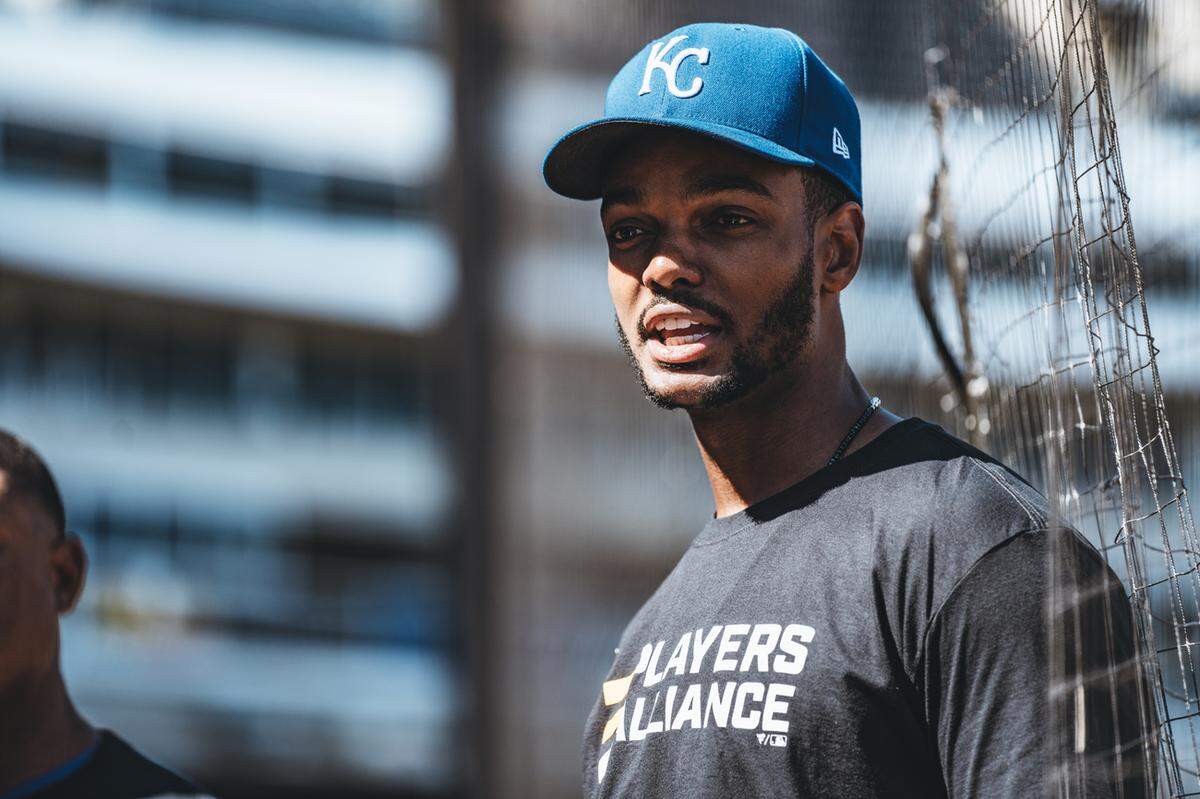
Taylor is also a member of The Players Alliance, a non-profit organization made up of current and former major-league players who have made spreading the game to Black communities part of their platform.
In that way, Taylor is also following in Robinson’s footsteps and trying to open doors in the sport.
Last season, Taylor spoke to a group of local youths as part of a Players Alliance’s Gear for Good Tour. The youths received a “player kit” of baseball/softball gear, had a sitdown question-and-answer session with Taylor and coach Damon Hollins and were also introduced to aspects of baseball such as data analytics, marketing, social media, ticketing, concessions, human resources and in the front office.
“It was a good opportunity to connect with other guys in the game,” Taylor said of joining the Players Alliance. “I was in alignment with their mission of growing the game of baseball and making it accessible to kids who might not otherwise have the opportunity.”
This story was originally published April 16, 2022 at 12:10 AM.