Missouri girl injured at Royals game joins push for increased netting at MLB ballparks
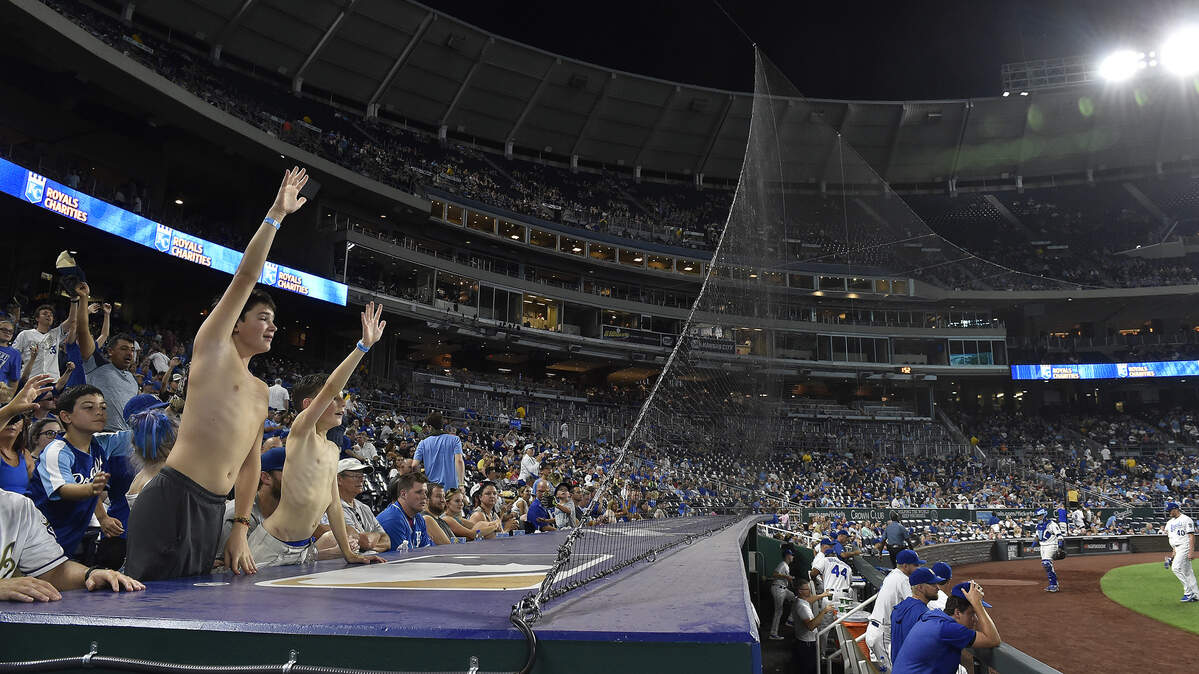
Less than a full inning into her first time at a Major League Baseball game in 2011, a 4-year-old Alexis Hoskey’s experience changed from excitement to trauma in the blink of an eye.
While attending a Kansas City Royals game, seated behind the third base dugout in section 116 and far enough back to be under the overhang of the upper seating level at Kauffman Stadium, a line-drive foul ball off the bat of former third baseman Wilson Betemit struck Hoskey’s head.
“It’s the bottom of the first inning,” Hoskey said of her recollection. “I don’t remember who it was, but they hit a foul ball and it basically struck me above my left eyebrow. I was taken to the hospital, and they concluded I had a fractured skull and a brain bleed.”
She suffered a fractured skull and subdural hematoma (when blood collects between the layers of tissue that surround the brain).
More than nine years later, Hoskey and her father, Monte, of Maryville, Missouri have joined a national campaign to apply pressure to MLB aimed at getting some form of independent oversight and requiring each team to increase netting in every ballpark, including spring training facilities, to help prevent foul ball-related injuries.
Wednesday night, Hoskey and her father took part in a video press conference led by New York City-based realtor and foul ball safety advocate Jordan Skopp, the founder of the website foulballsafetynow.com.
“It’s a sad tale — how our kids were put in harm’s way, how 80-mile per hour balls, 90-mile per hour balls, 100-mile per hour balls continue to reach us and our families is beyond me,” Skopp said.
In Hoskey’s case, neither her nor her parents fully grasped the potential danger.
At the time, Monte worked for a transportation company that hauled the visiting team’s gear. That’s how they got the tickets, and they went with some family friends to a Friday night game.
Later, one of the others in attendance told Monte the pitch that had been fouled off was traveling 90 mph.
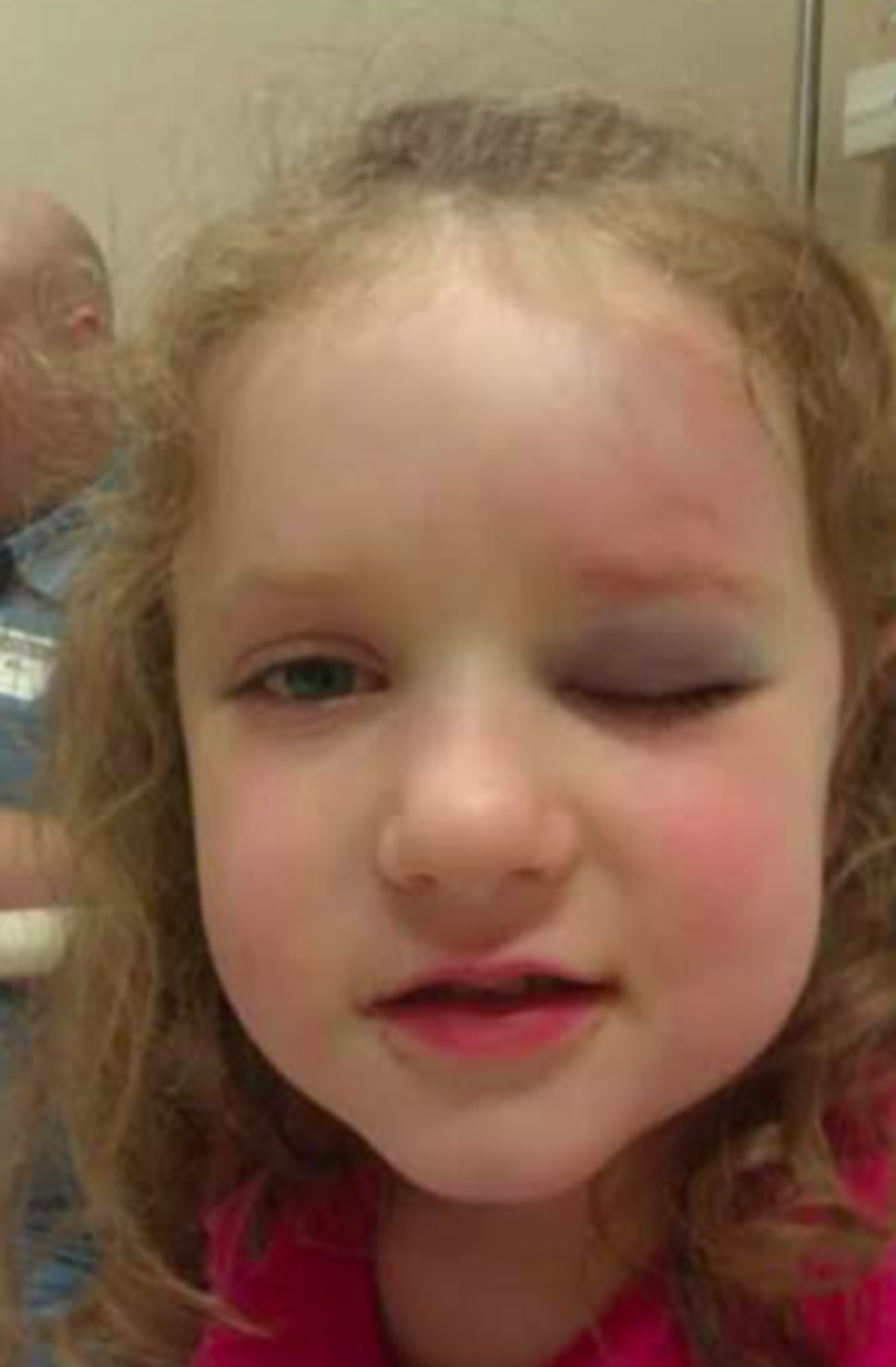
Hoskey’s eye initially swelled shut, and the whites of her eyes were shaded red when swelling subsided. She did not require surgery, but she had multiple CT scans that night and stayed in hospital until Monday, Monte said.
Hoskey remained on bed rest for a couple weeks, and the physical signs of the injury went away over a period of months. Though it was four or five years later before she felt comfortable enough to attend a game. That time, they went because it was a company outing for his job, and even then they sat much farther away from home plate and closer to the outfield.
Monte also said that within the last six months, Children’s Mercy Hospital diagnosed Hoskey with ADHD due to a traumatic brain injury.
“She’s done miraculous in school, and she does very well,” Monte said. “But it’s still something that a fun night outing with some family friends turned into something she’s going to deal with the rest of her life now.”
An MLB issue
Along with Hoskey and her father, Erwin Goldbloom and Stephanie Wapenski participated in the video conference.
Goldbloom is the widower of Linda Goldbloom, who was killed by a foul ball at Dodger Stadium in 2018.
Wapenski received 40 stitches after she was hit in the head while attending a Boston Red Sox game at Fenway Park in 2015.
Skopp cited 39 incidents of children hurt by foul balls between 2008 and 2019 at MLB and minor league games. He added that more examples likely exist, but the data is not readily available.
Skopp also pointed to an NBC News investigative report from 2019 which utilized lawsuits, news reports, social media postings and information from the contractors that provide first aid at four MLB stadiums that found 808 injuries to fans caused by baseballs from 2012 to 2019.
From that data based on four stadiums, Skopp extrapolates an estimated 5,000 fans may have been injured during that same period.
For context, MLB teams played 19,438 regular-season games in front of 580,361,276 spectators from 2012-19.
Skopp’s website includes a letter to MLB’s commissioner Rob Manfred in which Skopp places responsibility for these injuries at Manfred’s feet. The site also features an online petition.
Skopp somewhat bombastically compared baseball to “big tobacco” — cigarette smoking is responsible for more than 480,000 deaths per year in the United States according to the Center for Disease Control — and asserted MLB has known the dangers of foul balls for as many as 50 years.
He also rejected the idea that signs and in-stadium announcements were adequate warnings because fans don’t have time to get out of the way of foul balls.
Skopp proclaimed a need for an agency that looks at all the statistics of how many balls go into the stands and all stadiums must be “retrofitted properly.”
“No more fastballs should be ever reaching children or anyone when the doors do open again,” Skopp said.
Changes underway
Due to the COVID-19 pandemic, fans did not attend regular season games in 2020. A reduced number of fans did attend playoff games.
At last year’s MLB’s Winter Meetings following the 2019 season, Manfred addressed MLB’s plans to address netting.
“I hope it goes without saying that the safety of our fans in the ballpark are of paramount concern both to Major League Baseball and to the individual clubs,” Manfred said in December 2019. “In advance of the 2018 season, the Commissioner’s office worked with the individual clubs on the issue of netting, and as a result of that effort, all 30 clubs decided to expand their netting at least to the far end of the dugout.”
“During this past season a similar dialogue between my office and the clubs began again. Once again, that process of working with the clubs has produced action by the clubs. I’m really pleased to report that for the 2020 season all 30 clubs will have netting in place that extends substantially beyond the far end of the dugout.”
Manfred also said seven clubs planned to have netting extending all the way to the foul pole, and another 15 clubs were expanding netting headed into 2020. Some of those teams planned to extend netting past the end of the dugout to the elbow in the outfield where the stands begin to angle away from the field of play.
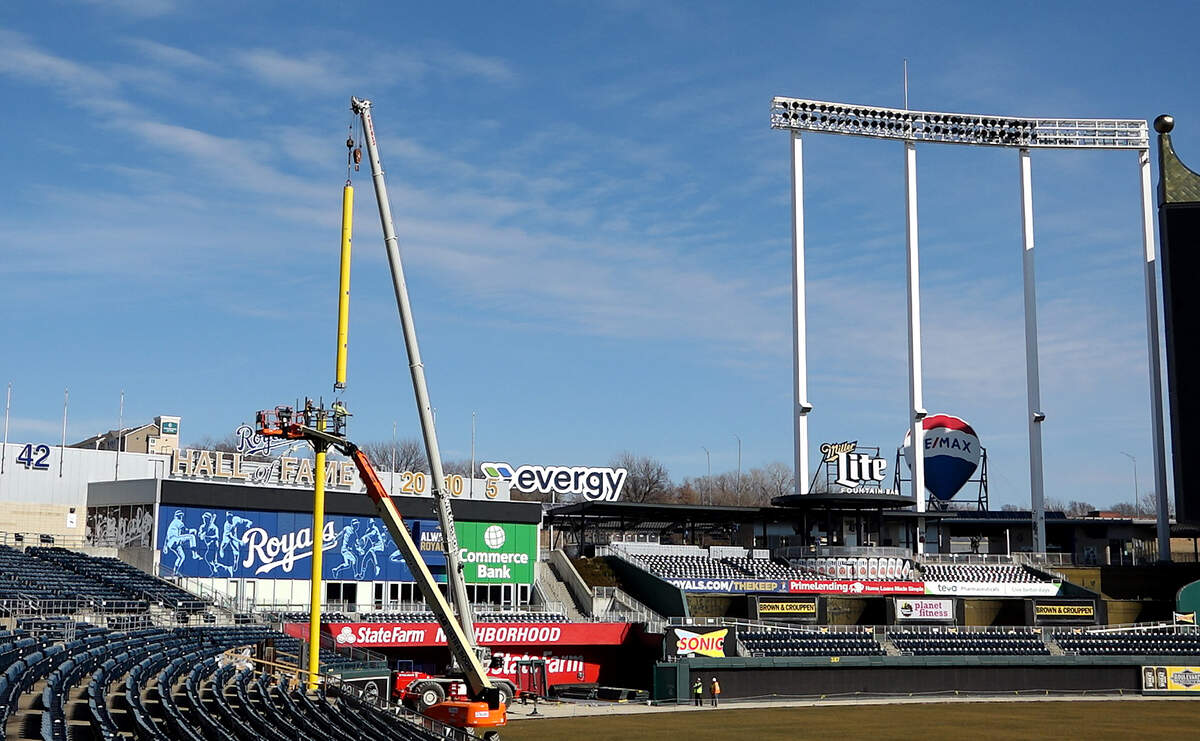
Last February, the Royals installed new foul poles and increased netting at Kauffman Stadium to extend past the dugouts to each foul pole.
Following Hoskey’s incident in 2011, the Royals increased the number of public address announcements warning about foul balls. Signs in the stadium and messages on videoboards are also designed to alert spectators to the dangers.
“Unfortunately, those changes weren’t made in time to help us out,” Monte said. “I hope that they’ve helped some people out. But the bottom line is that putting signs up, making an announcement before the game, making people more aware doesn’t stop it from happening again.”
Monte said he hired an attorney following his daughter’s incident in 2011, and he claimed they did not seek compensation other than expenses related to medical bills.
The Royals rebuffed the attempt, the current legal precedent places the onus on fans to understand and assume the risk of injury from batted balls or pieces of a broken bat.
As far as steps needed to assure safety, Monte said as long as people have cell phones and messages on videoboards encourage spectators to go to their cell phones at times, signs and announcements won’t be enough at ballparks.
“The only thing that 100 percent is going to stop it is looking at the netting,” Monte said.
This story was originally published January 10, 2021 at 5:00 AM.