
How Royals pitching prospect Kris Bubic finally mastered his curveball
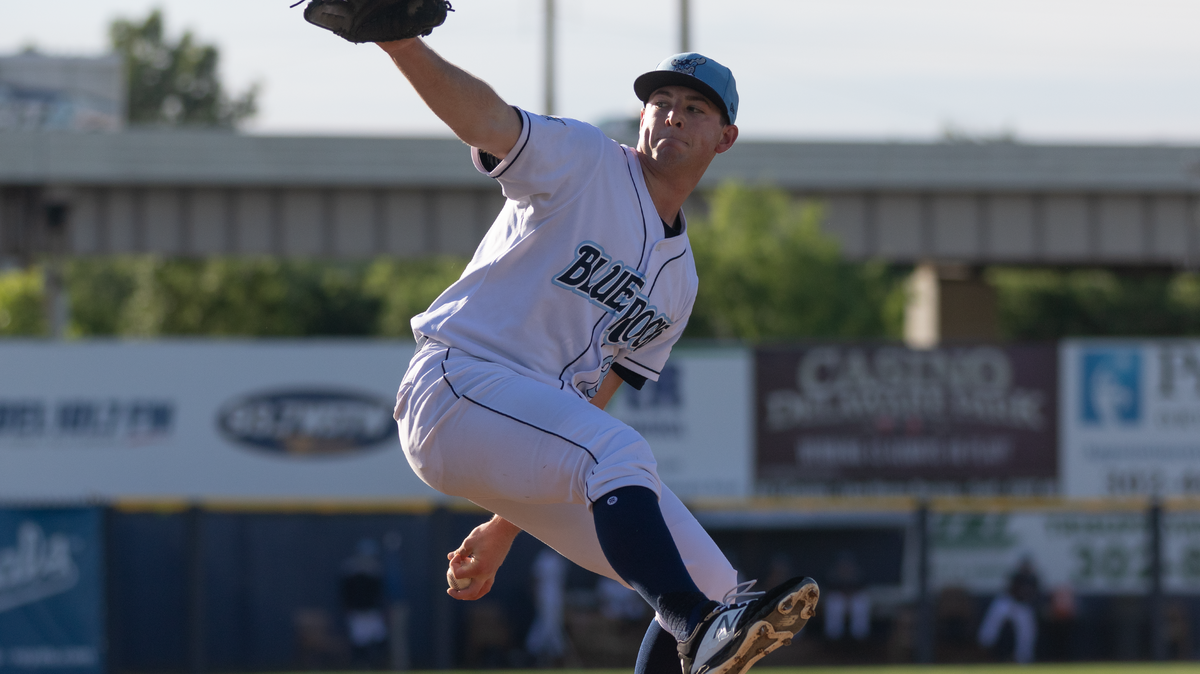
While at Stanford, Kris Bubic didn’t have a lot of confidence in throwing his curveball. He struggled to find a consistent grip.
Since then he’s figured it out.
A compensation-round pick in 2018, Bubic quickly received a promotion to High-A this season with help from newfound success with that curve.
At Stanford, Bubic primarily relied on his fastball and changeup while experimenting — mostly unsuccessfully — with a curveball. After signing with the organization, Bubic was encouraged to mix in his curveball with the Royals’ rookie-ball team in Idaho Falls. The team liked his high spin rates with his changeup and fastball.
Without much success, Bubic devoted the offseason to figuring out his curve. Now he can finally say it’s working.
“I altered the grip a little bit this past offseason and it’s been a lot more consistent,” Bubic told The Star. “I’ve been able to compliment a lot more.”
Bubic got promoted to Wilmington recently after going 4-1 with a 2.08 earned run average in Lexington. In Single-A, opponents hit just .167 against the 6-foot-3 left-hander, and his strikeout to walk ratio was 5:1. In six games with Wilmington, Bubic is 1-1 with a 3.69 earned run average.
The delay in Bubic’s development with the curveball depends upon who you ask.
Royals assistant general manager JJ Picollo said Idaho Falls isn’t an ideal place to develop an offspeed pitch because of the altitude, and the transition from college to rookie ball demands a ton of adjustments.
Picollo said Bubic needed encouragement to throw the curveball even on days when it wasn’t working in order to make himself more comfortable with the pitch.
“It was just the confidence he had in using it which was lacking,” Picollo told The Star. “Just trying to convince him, this is why we have the minor leagues. You want to compete every night, but this is about preparing to pitch in the major leagues.”
Bubic said part of his problem was finding a grip that worked with his abnormal mechanics. The start of Bubic’s windup is pretty standard, but it gets funky after he lifts his leg
“I kind of break my hands pretty early, I call it a slide step, my arms goes back and I have a hitch with my leg kick,” Bubic explained. “So as a hitter, I have no idea what it’s like facing me, but I can’t imagine it’s that comfortable your first at-bat.”
When the Royals were evaluating Bubic in college, the organizations’ scouts told Picollo and general manager Dayton Moore not to tinker with his delivery. While unorthodox, Picollo sees no reason to think it could lead to injury and has seen first-hand how much hitters chase his fastball because of its delivery.
“There’s an issue with timing for the hitter, that’s how Kris’ delivery works,” he said.
Bubic briefly overlapped in Wilmington with top Royals pitching prospects Brady Singer and Jackson Kowar, and has split time in the rotation with fellow prospect Daniel Lynch. He said he picked Kowar and Singer’s brains as much as he could before they got promoted to the Royals’ Double-A affiliate in Northwest Arkansas.
Considered the future of the organization’s rotation, Bubic said when all four were together they had regular contests to see who could one-up the other in everything from outings to spin rates.
“You can definitely tell there’s an internal competition between all of us,” he said. “They’re all putting up zeros pretty frequently. If Kowar or Lynch go six or seven scoreless, we want to match that, maybe have more strikeouts. Keep the competition going.”
This story was originally published June 27, 2019 at 11:34 AM.