
Ask the Royals: Is baseball easier in the big leagues? Nope, but there are advantages
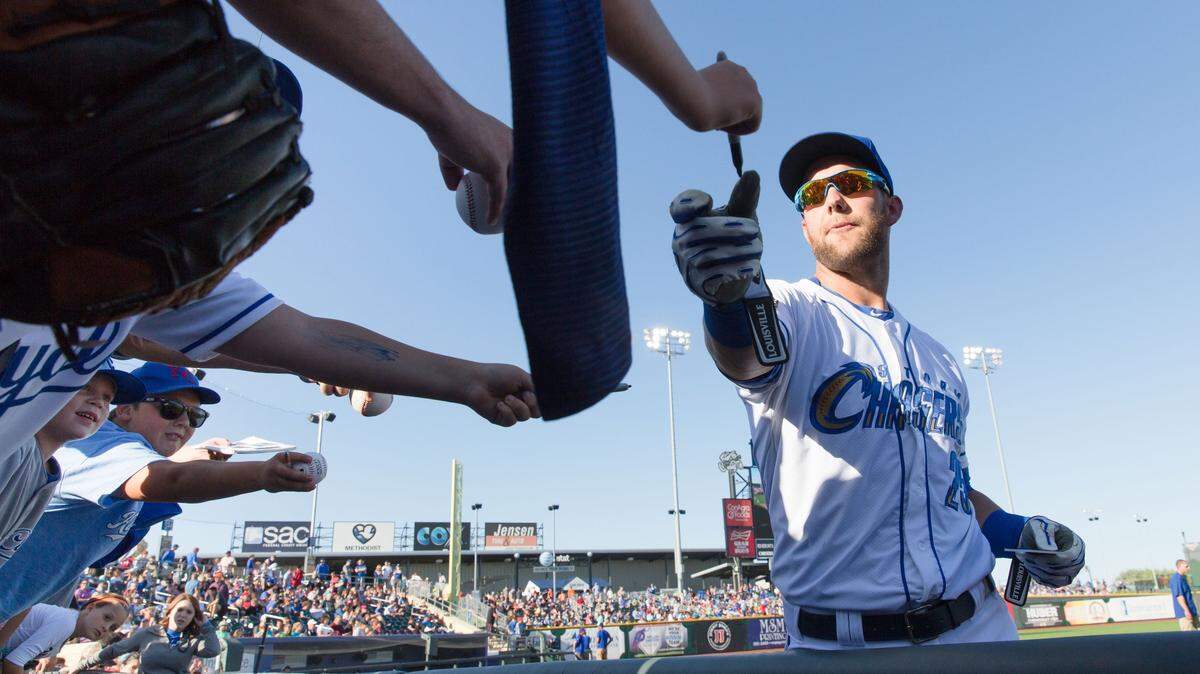
At the moment this sentence was written, Royals second baseman Whit Merrifield had a lifetime big-league batting average of .290 and a lifetime minor-league batting average of .274.
Ask Merrifield how it’s possible to hit better in the big leagues than the minors, and he might wind up talking about the state capital of Iowa.
The Iowa Cubs play in Principal Park in Des Moines, and the state capitol sits beyond the outfield wall. The capitol dome is lit up at night, which provides fans a great backdrop for watching baseball. But if you’re a right-handed batter trying to see a baseball thrown by a left-handed pitcher, the view isn’t so hot.
The “batter’s eye” is the area in center field that’s kept clear of signs and lights so hitters have a good background for seeing the ball. And every big league park has one. They have batter’s eyes in minor-league parks as well, but sometimes they’re not big enough.
Royals infielder Hunter Dozier confirmed Merrifield’s opinion and said that if the batter’s eye is too small and a pitcher is tall, works from the end of the rubber and throws from a three-quarter arm slot, the hitter might be trying to pick up the ball from a lousy background.
And then there are the lights.
Better lighting
Royals outfield coach Mitch Maier spent three years in the big leagues, got used to good lighting and then returned to the minors. Maier said it was much tougher to see the ball at the lower levels of baseball.
And that’s if you’re on the field.
The lighting in a minor-league park might not be that great to begin with, and what lighting there is will probably be pointed at the playing field. So if you’re a bullpen catcher, you might feel like you’re taking your life in your hands when warming up a pitcher with nasty movement.
Better bats, harder baseballs
Big-leaguers swear that minor-league baseballs are softer than the ones used in the majors. So a pitcher might wind up with a lopsided ball in his hand, or one with a dent from the last guy who hit it.
A softer ball won’t fly as far when you square it up, and the bat companies tend to save their better wood for big-league players. So minor leaguers are also often using lower-quality bats.
Better facilities
Minor-league parks are improving, but you still hear stories about rough infields, outfield walls made of plywood and indoor batting cages that are too far away from the field to be used during a game.
None of that is surprising to serious baseball fans, but here’s one element you might not have considered: Wind is a bigger factor in minor-league parks.
As Maier pointed out, big-league parks have upper decks that can knock down a lot of the wind; minor-league parks don’t. So a minor-league player trying to catch a fly or pop-up will have a harder time tracking the ball.
Maier also told a story about a minor-league stadium with showers that would back up. Minor-leaguers would race off the field after a game to make sure they got into the showers first and didn’t have to stand ankle-deep in scummy water while trying to get clean.
Better control
Big-league pitching is the best in the world, and oddly enough that can make hitters more comfortable at the plate.
When asked about conditions in the minor leagues, Royals pitching coach Cal Eldred mentioned the wildness of some minor-league pitchers.
Big-league hitters still get hit by pitches, but pitchers at the top of the food chain tend to have better control. That means a big-league hitter doesn’t have to spend as much time worrying about some minor-league Nuke LaLoosh launching a fastball at his head in a dimly lit ballpark.
Better rest
If you fly commercial in the minor leagues, you might be asked to get up before the sun, make a 6 a.m. flight and play a game that night. Flying the night before a game means another sizeable hotel bill: It’s cheaper to fly the day you play.
Being in the big leagues means more time in a hotel bed and less time trying to catch 40 winks on a long bus ride. So big-leaguers aren’t as tired when it’s time to play.
Better information
A fan recently asked why all the Royals hitters left the dugout to use the bathroom right after they had an at-bat. Those hitters were probably actually heading for the indoor batting cage to review video of what just happened.
And it’s not uncommon to see a hitter looking at an iPad just before he heads to the plate.
Mark Topping is the Royals’ video coordinator. If a player wants to see every first pitch thrown in a pitcher’s last four starts, or the pitches thrown in two-strike counts, or what a pitcher throws with a runner in scoring position, that information will be provided.
In fact, there’s so much information available at the big-league level, coaches warn players about information overload. They’ll caution their guys, Don’t try to look at everything; there’s just too much.
These days, part of a big-league coach’s job is to sift through the available information and provide his players with what they need to know to play the game that night.
Concentrating on baseball
Here’s another thing. Big-league players get VIP treatment.
The club provides laundry service, a nutritionist, healthy meals, trainers, a masseuse, a weight room, a cryotherapy chamber, hot tubs. ... They’ll also do your dry cleaning and clean your spikes. Heck, the Royals even have a barber shop on site.
The list of big-league perks goes on and on.
As Royals catcher Drew Butera pointed out, so much is done for you in the major leagues that it allows you to concentrate solely on baseball.
The people who provide the VIP treatment in Kansas City say that’s the point: A Royals player can come in early, have lunch and get his hair cut without ever leaving Kauffman Stadium. That means the player can spend more time working out, studying video and reading scouting reports.
When Butera was asked about conditions in the minors, he told a few stories but said it had been a while since he’d been there. Then he clasped his hands in prayer, looked to the heavens and said he hopes he never has to go back.
Baseball in the big leagues is never easy, but playing baseball in the majors does have its advantages.
This story was originally published August 16, 2018 at 2:51 PM.