
With Pratto and Melendez, the Royals are following a script that helped them win before
Grow up together, win together and watch the magic happen.
The philosophy isn’t new to the Royals. They’ve employed it for more than a decade under general manager Dayton Moore’s leadership. They’ve raised a World Series banner in Kauffman Stadium because of it.
They’ve never let it go.
And as the Royals find themselves on pace to lose more games than any other team in franchise history, their steadfast adherence to the philosophy provides hope in the midst of adversity.
“To have a group go through (the minor leagues) together is different. It’s similar to the 2007 and 2008 classes,” assistant general manager J.J. Picollo said. “We’re trying to follow that script because it worked.”
At Whitaker Bank Ballpark, you’ll find a few of the baseball players the Royals believe will form the foundation of the franchise’s next championship-winning club. They’re the ones the Royals have devoted their time to, using the same blueprint they designed to end the franchise’s 29-year playoff drought with the likes of third baseman Mike Moustakas, pitcher Danny Duffy, first baseman Eric Hosmer and catcher Salvador Perez.
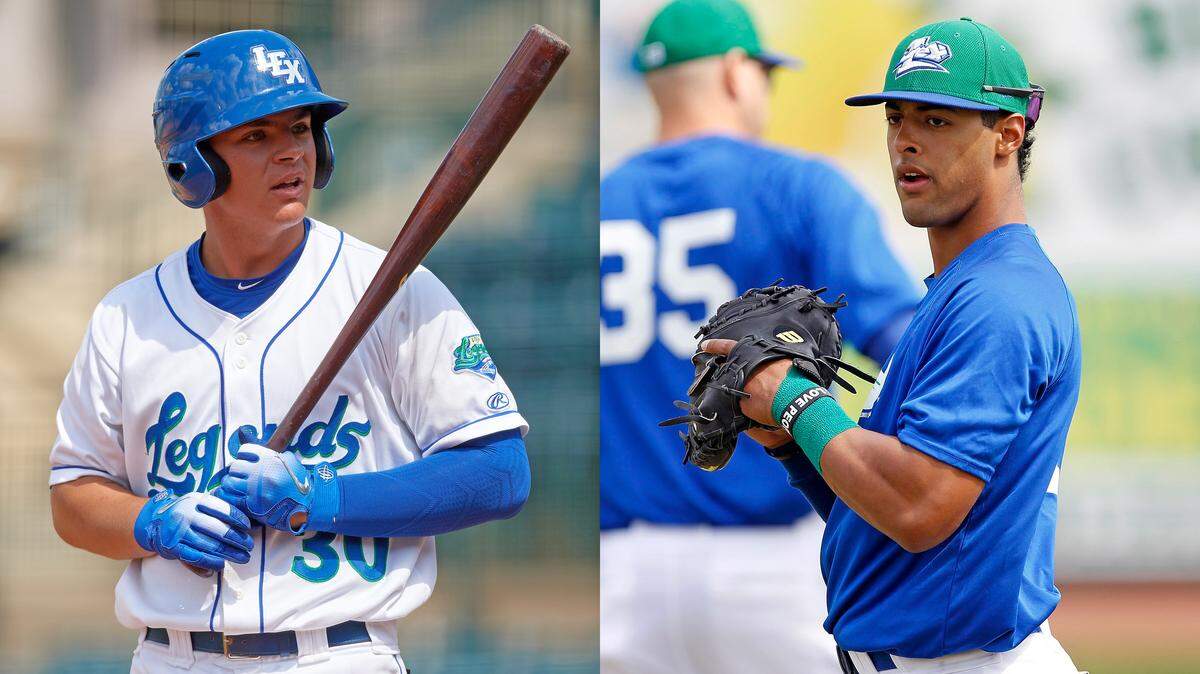
In a minor-league facility that counts the discount grocery store Save-A-Lot as a neighbor, first baseman Nick Pratto and catcher M.J. Melendez, the Royals’ top two picks of the 2017 draft, are taking The Process 2.0 to heart.
“It’s fun to kind of think about that and have that in the back of your head. It also motivates you,” Pratto said in late May, two months into his first season with the low-Class A Lexington Legends. “That’s your potential, and it’s what you want to reach. It’s kind of a goal for us to come together and form that kind of bond, get ready for the next step.”
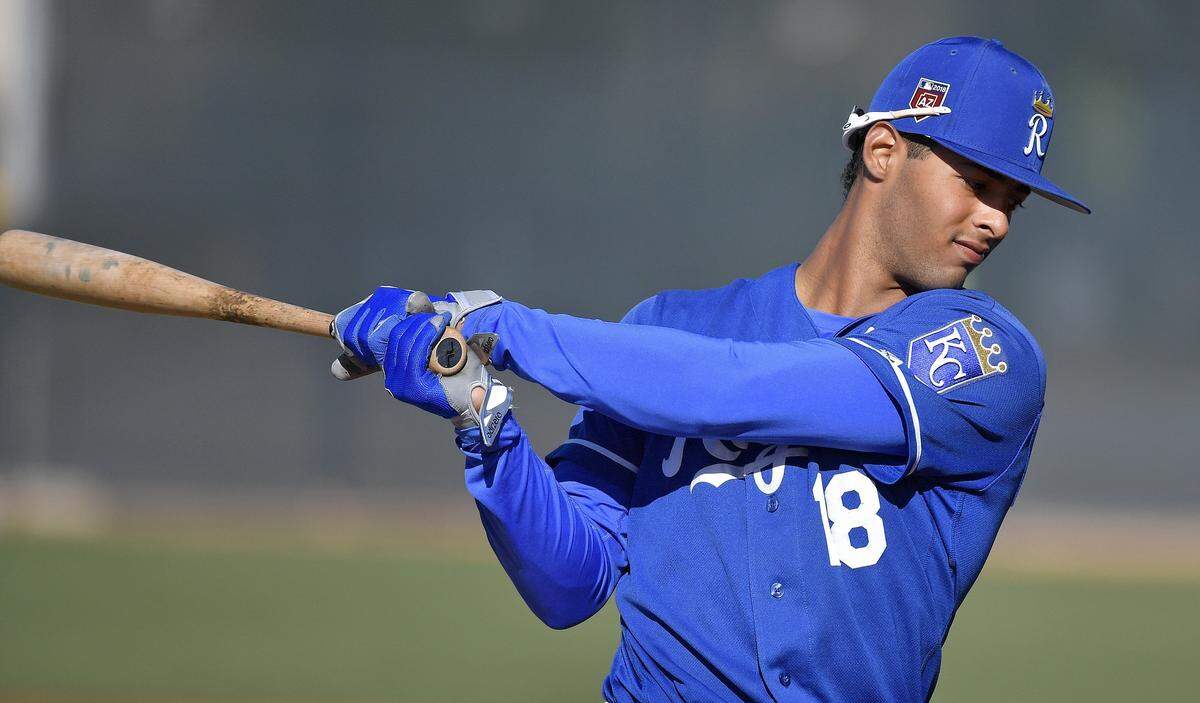
They got a head start on the bond a few years ago. Melendez and Pratto won gold together at the Pan-American Games playing for the USA under-18 team in 2016. Through a twist of fate, the two wound up selected 14th and 52nd overall by the same team in last summer’s MLB draft.
In the year since, their relationship has blossomed. They remained connected during the offseason, chatting via text messages and a group thread that includes fellow Team USA members. They discussed their aspirations and motivated each other.
And they talked about what is expected of them, of the next World Series the Royals might win and the perennially contending ballclub the organization wants them to be part of.
They take pride in being considered the Royals’ next wave of champions. Even when they struggle at the plate, Melendez said they don’t feel burdened knowing the franchise’s future depends on them.
“Just really keeping each other in check is one thing that’s helped a lot, especially (our first full) year,” he said. “It happens — you put too much pressure on yourself. ‘I gotta do this, I gotta do that.’ The reality is all you gotta do is be yourself and things will turn out just fine.”
Both have used that lesson to their advantage. Pratto, whose mature plate discipline scouts rave about, went through a stretch of four games from April 27 to May 1 without a hit. He had fallen so far out of his approach, he struck out 10 times during a 0-for-22 skid.
“Thing is,” Pratto said, “even when I’ve struggled here I’ve always felt I could get the job done.”
Part of his confidence stems from being an elite athlete whose tools average out to 50 on a scale of 80, according to MLB.com’s Pipeline. The other part is fostered by teammates who help him stay grounded.
Melendez, who a week later was 0 for 15 with nine strikeouts, was quick to come to Pratto’s side. He reminded him, “You’re a good player, obviously. If you weren’t, you wouldn’t have been a top-rounder.”
When the mutual encouragement isn’t enough, they lean on a wider support system. Like Moustakas and Duffy had former college players Clint Robinson and Greg Holland helping them navigate their first bouts of failure, Pratto and Melendez have Brewer Hicklen and Holden Capps, fellow 2017 draftees selected out of Alabama-Birmingham and Central Oklahoma, respectively.
“Baseball is a game of failure,” Hicklen said. “M.J. hadn’t really had much failure in his life. To be able to be there for him and support him is really one of the biggest reasons why I play this game.”
The support extends up and down the organizational ladder. Rosters are composed of international signees (Seuly Matias), high school graduates (Khalil Lee) and players who received further seasoning in the college ranks.
The cast is large, one rated 29th out of 30 by Baseball America before the season but highly regarded by the club executives tracking its development. It includes a list of pitchers who also carry the savior tag. Among them are Josh Staumont, Scott Blewett , Richard Lovelady and the five the Royals selected on the first night of this year’s draft.
It includes 2016 fifth-rounder Nicky Lopez, too. Continuing his quick ascent through the farm system, he jumped to Class AAA Omaha two weeks ago after playing his first 73 games this season for Class AA Northwest Arkansas.
For the Royals, their vast network is the stuff of championships.
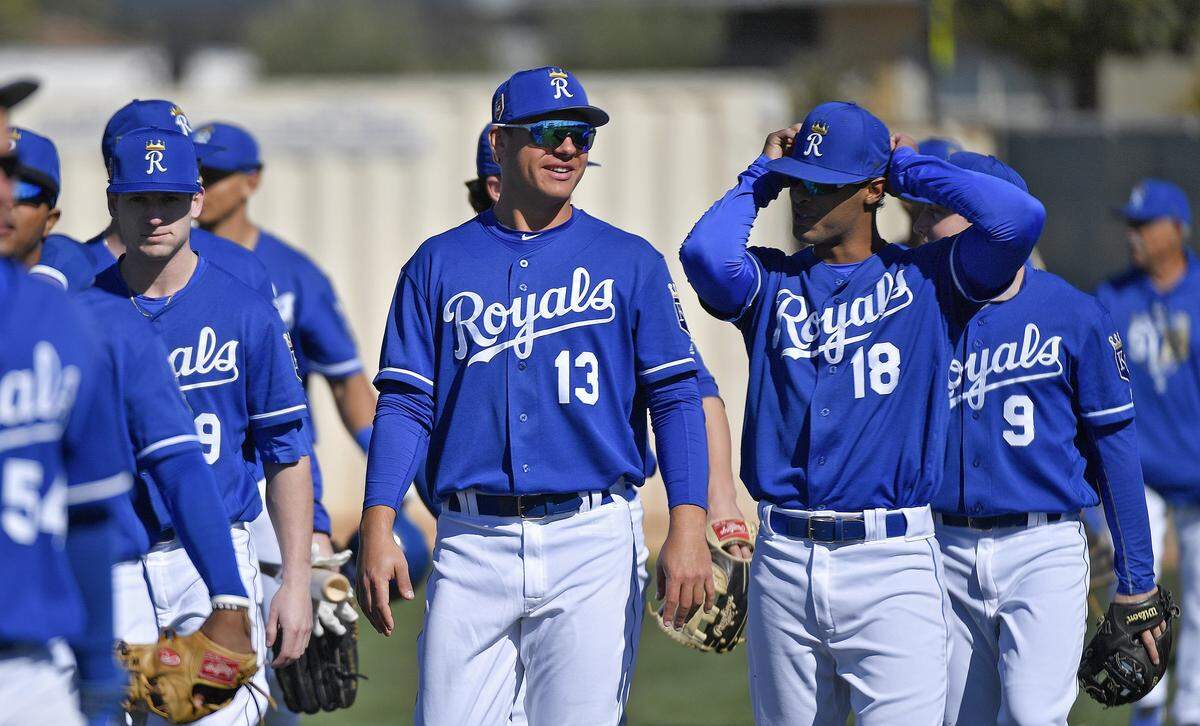
Duffy was 18 years old and a left-handed pitcher from a small town on California’s Central Coast. He’d just graduated from Cabrillo High School in Lompoc and was not underrated by any means. Scouts flocked to his starts by the dozen. Baseball America lauded him for owning “the best fastball in the state.” He knew he had a chance to make good on his dream of becoming a professional baseball player.
So when Duffy finally heard the Royals make him their third-round pick of the 2007 draft, he started buzzing. He didn’t care the team had lost 100 or more games for three straight seasons. He was assured he would play a central role in helping the franchise rise from the ashes.
Duffy soon found out that just two rounds and 94 picks earlier the Royals selected a shortstop from Chatsworth High, a school in the San Fernando Valley that Duffy was familiar with but never played against in high school.
Duffy was at a Grad Night celebration at Disneyland in Anaheim, Calif., and Chatsworth’s graduates were supposed to be there, too. He sprung into action, tracked down the Chatsworth bus in the parking lot and climbed in.
“Is Mike Moustakas on board?” Duffy asked.
But Moustakas was hours away, contemplating his future with the Royals.
“I didn’t really attend anything like that when I was in high school,” Moustakas said 11 years later, standing in the visiting clubhouse at Miller Park in late June. “I ended up not being there. It was pretty funny.”
Although they entered the organization at different times, Moustakas a career-long Scott Boras client who signed right at the mid-August deadline, the story helped the two baseball players and future 2015 World Series champions forge a relationship.
“Moose was my guy from the jump,” Duffy said.
They played out their first full season together in 2008 at Class A Burlington (Iowa) and won the Midwest League Championship. At a steady pace, they began to ascend the ranks. They began to conquer.
As they grew up, the rosters fluctuated. First baseman Eric Hosmer and catcher Salvador Perez were brought into the fold. Outfielder Jarrod Dyson came up. Others, like Robinson and infielder Johnny Giavotella, joined forces to win the Texas League title in 2010.
Four years later, Moustakas and Duffy, the original members of the Royals’ championship core, helped win the franchise’s first American League pennant since 1985.
They brought a parade to Kansas City a year after that.
“I think when you look back on what we were able to accomplish as a team, I think that it’s a great model,” Moustakas said. “I think Dayton drew it up, and he always said that it was going to take some time. It was going to take some time to get everybody to the big leagues. And not only that but to have everybody have success at the big leagues before finally seeing a result. That was his plan, and I think it obviously worked out really well for us.”
Taking the same parts that worked before, the Royals believe their process will work again.
“(Pratto and I) both have super high expectations for ourselves. I know sometimes the pressure can get to us, both being 19 years old,” Melendez said. “Obviously, we want to be the best we can be. We want to show the whole baseball community, not just the Royals, that we’re gonna be the next wave of champions in the big leagues.”
This story was originally published July 8, 2018 at 7:00 AM.