
Jose Contreras' long road from Las Martinas, Cuba
Editor's note: This story originally appeared in the March 30, 2003 editions of The Kansas City Star
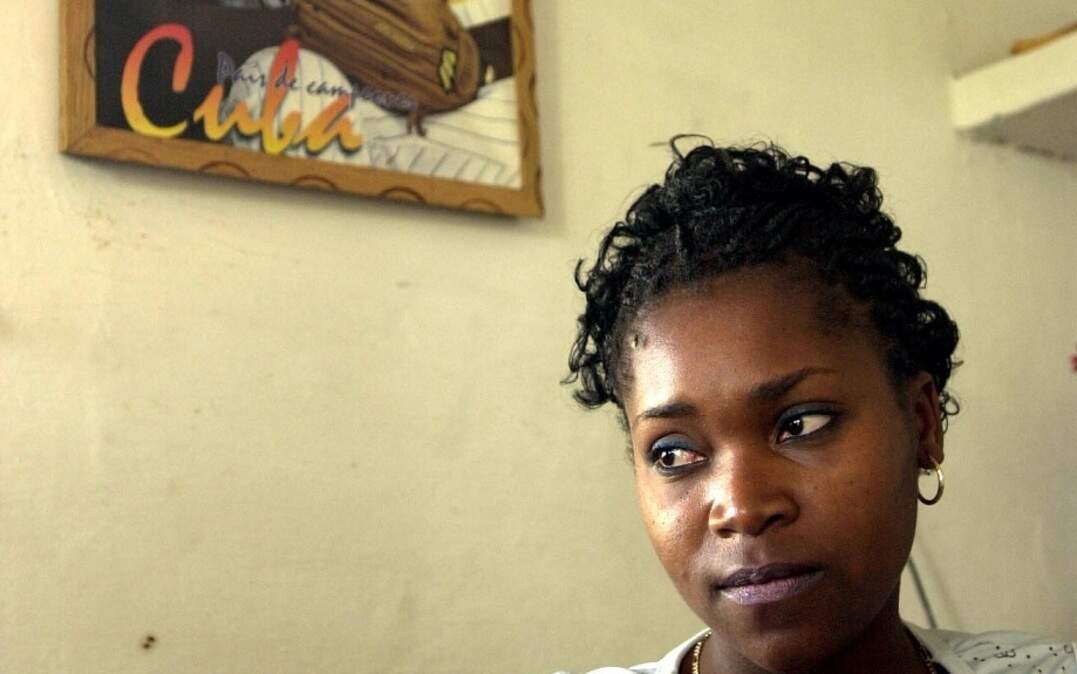
A woman loads her two daughters into a blue Peugeot, once a gift from Fidel. She drives it now that her husband's gone. The children miss him terribly; the 2-year-old still sleeps with his picture.
Today, Miriam Contreras is going to Las Martinas. It's where he grew up. She leaves the athletes' motel where the family still lives - the home he hated - and begins the 46-mile trip from Pinar del Rio. She passes the tobacco houses, the shotgun shacks and the field workers.
It's raining. The revolutionary slogans on buildings and walls are fading. A city boy from Havana, following a few miles back, can't believe a place like this exists. "Jesus, " he says, "this is the end of the country."
Deeper and deeper into the sticks she goes, past the people Castro's revolution was fought for. She winds into the small town of Las Martinas and turns down a dirt road. This is where he grew up, with concrete on the floor of the house and not in the street.
It's his mother's birthday, her 67th. All the family is here. His brother. His sister. His father and cousins and friends. All the things they bought with the money he sent are here, too (U.S. law allows roughly $1,200 a year).
But Jose Contreras is missing, gone for six months now. He's a New York Yankees pitcher, a Cuban defector, a father of two. They haven't heard from him today. His mother says he's surely been trying to call; it's hard to get a connection from the States. Everything is hard since he left. The possibility that they'll never see him again slowly sinks in.
"Sometimes, you feel like death, " says Miriam, his wife of 15 years. "I miss him a lot. Today, especially. It's the birthday of his mom. I came here because he can't come here. Today, it's gonna be a happy day, but at the same time it's gonna be a sad day."
His mother's eyes are filled with sorrow.
"I am very proud of my son, " Modesta Contreras says. "I will miss him, and he will miss me."
Like many political stories, this one has little to do with politicians. It's about things as small as a daughter's smile. It's about a family that wants to be reunited, kept apart by 90 miles of water and 44 years of Cold War policy.
The first baseball defector left on the Fourth of July, in 1991. During a layover in Miami with the Cuban national team, pitcher Rene Arocha stayed behind; soon he was a pitcher for the St. Louis Cardinals. In Cuba, the shocked government called Arocha a "traitor."
Ballplayers saw Arocha's success and at least 60 followed his lead. Most were from Havana, where the brief glimpse of the tourist dollar taunted, making the people want more and more.
The promise of freedom came with a price, beyond the dangerous journey to the United States, which some made in crude rafts. (Most ballplayers had it easier, simply missing return flights home.)
In return, you lost your family. Maybe you paid a smuggler to bring them out later, as some players did. Maybe you had friends in high places who could bend Fidel's ear, as Orlando "El Duque" Hernandez did. Maybe you lost them forever.
This is the question Jose Contreras, 31, faced again and again. For a decade, for dozens of trips abroad, the answer was no. He was the Cuban team ace, the man who threw eight scoreless innings against the Baltimore Orioles in a 1999 exhibition, but still he stayed. He watched as scores of Cuban ballplayers defected. He said he even once turned down $50 million.
"For this sum, nor any other, would I turn my back on my family, on my people, or on my homeland, " he once told Cuban reporters. "I have a lot of respect, confidence and admiration for Fidel."
Then he changed his mind. Every Cuban has a breaking point.
Jose Contreras reached his.
He was in Havana when his car - the blue Peugeot - broke down. Castro had given it to him when Contreras was the Cuban team's brightest star, the man who pitched all the important games.
But those sunny days apparently were setting when Contreras sought help from the president of the Cuban sports federation (INDER), Humberto Rodrguez. Car repairs needed to be paid in dollars, the currency of choice, and Contreras needed 453 of them. That's a lot of money in Cuba, even for a baseball player.
"We can't fix the car, " Rodriguez said.
"How am I gonna get home?" Contreras asked.
"Well, " replied Rodriguez, "leave the car and go home however you can."
Who knows why Rodriguez refused. But that was that. The inadequate housing and the food shortages had been manageable. But this was one bridge too far for Contreras.
"You are never gonna see my face in this office again, " he snapped.
"He never thought I would leave, " Contreras says six months later, sitting by the dining room at the Yankees' spring-training site in Tampa, Fla. "Never. Never. And right at that split second, I thought, that's it. I'm gone. We could be going to Haiti, and I'm staying in Haiti."
Contreras went to the bank and withdrew the dollars he'd managed to save. He got his car fixed and drove back to Pinar del Rio. After paying, he mouthed off to the repairmen that he was never coming back.
As was his custom, he went to visit his father Florentino, 83, before embarking on what would be his final trip with the Cuban national team. This time, his father reminded him to stay loyal. "Never leave your fans, " he said. Jose began crying.
"The tears starting rolling down my face because I knew I wasn't coming back but I couldn't tell him, " he says.
At Havana's Jose Marti airport, for the first time ever, his wife showed up with the girls to say goodbye. That sent Jose over the edge again. He was trying to hide her from the coaches, who would get suspicious, and trying to hide his tears from her.
"What's wrong?" she asked, concerned. "Why are you crying?"
"It's just that I'm gonna be gone 15 or 20 days without seeing you and the girls, " he replied.
"But I knew it was gonna be way more than that, " he says now. "It's been six months, and I'm still not sure when I'll see them again."
Once on board, Jose thought about the comments he'd made to Rodriguez and to the mechanics. If anyone suspected he might defect, they'd never let him leave the island. He was worried they'd pull him off the plane at the last minute. When it took off and began turning west toward Mexico, he thought, "That's it. They can't hold me now." He took a last peek out the window.
"I looked back, and I felt nostalgic, " he says. "For 30 years, this was my life. This was who I am. And I'm never gonna be able to come back. I'll get shot if I go back."
Sometime after the Cuban team beat the Dominican Republic 6-0 last Oct. 1, he simply left the Hotel Camino Real in Santillo, Mexico, and climbed into a car sent by his new agent, Jaime Torres. Torres had told Contreras to call if he ever wanted to leave; now he took the man up on his offer.
Contreras drove to the airport, flew to Tijuana and crossed the U.S. border. After being detained by immigration, he was allowed to leave with his agent. They boarded an early morning flight for Miami. During a layover in Chicago, while looking at a magazine he couldn't read, Contreras saw a picture of a Lincoln Navigator. "Whoa, " he said. This was the car he wanted.
At 8 a.m., he landed in Miami. People welcomed him in the airport. Torres took him to breakfast at a local Cuban place. The waitress had him sign a baseball, saying she wanted the first autograph.
"It seemed to me like I was in a movie, " he says.
He was free. Now he had to figure out how to tell his family.
For a week he didn't call. What would he say? The family all knew what had happened; word of the unthinkable spread through the streets in the towns and the villages: Contreras didn't come home.
Miriam couldn't believe it. For six days, she heard nothing. Jose called his sister in Havana, called his brother, but he couldn't face his wife or his father. He and Miriam had been married since he was 16 and she was 15; the longest they'd ever been apart was for a road trip.
Finally, he got the nerve to call his wife. After hello, she jumped him. She was furious.
"You abandoned me, " she said. "You abandoned your daughters. You are gonna go there and get married and have another wife."
"No, never, " he told her. "You are the reason why I came here. You and our daughters are always gonna be a part of me. The biggest part of me. Sooner or later, we're gonna be reunited here. And we're gonna have a better life."
They started talking more, writing letters back and forth. He talked to his daughters, aged 2 and 10. He heard about the girls kissing a poster of him.
But he couldn't face his father - a loyal revolutionary who taught his children to respect Castro. Jose wasn't sure if his father would forgive him.
After two weeks, he picked up the phone and called his family's neighbor - his parents don't have a phone. Jose heard the words he needed to hear, the ones that let him relax for the first time.
"You were my Jose in Cuba, " the old man said, "and you will be my Jose in the United States."
Jose called home with new discoveries; Miriam had gotten a cell phone so she wouldn't miss a call. He called from Orlando, Fla., telling his family about a wondrous thing called Disney World. In Cuba, the amusement park closed because they couldn't get parts for the rides.
"It's amazing how everything here seems like it's in abundance, " he says, "and in Cuba there is a shortage of everything."
He wrote letters, and Miriam read them again and again when she was lonely. His father picked up a pen for the first time in 30 years to write.
Then there were the girls.
The younger one didn't - and doesn't - get it. A friend was videotaping a message to smuggle to Jose and asked little Nailenis (they call her Beba) to say hello to Daddy. She looked around the room for Jose.
"It breaks my heart, " he says, "because she doesn't understand."
The older one figured out she can only see her daddy again in the States. He's working at being a long-distance dad.
"I talk to him and he asks me, 'What about the school?"' says Nailan Contreras, 10. "I say, 'I'm doing good. I have to study very hard.' "
The family learned to enjoy the ride vicariously. His father laughed when he thought about the distance from Las Martinas to New York City.
"I thought always he would be a good baseball player, " he says, "but I never thought he'd go so far."
Jose Contreras stands alone in the immense Yankees clubhouse in Tampa, Fla. The place is a fantasy land of baseball. Out of a closed door comes Yogi Berra, wearing a baseball uniform. The stadium sells Cuban food; the grounds are immaculate.
Game time is three hours away. Jose is almost happy. He made friends with his teammates; his locker is next to Spanish-speaking Mariano Rivera.
But, in the last weeks of spring training, things couldn't have been going worse.
His father had a stroke soon after his mother's birthday. It tore Jose up that he couldn't go see him. Few outside of Jose's inner circle know how close the father and son are. The stroke really brought home a disturbing reality: Jose would likely never see his father again.
His father's illness, and his own inability to help, followed Jose to the mound. Before, he could ask his father, a former ballplayer, for advice. Now, he didn't even know if the old man was alive. His first performances showed his anxiety: he got rocked.
The questions had started. The New York media wondered if this guy was a $32 million lemon. He watched tape, talking with former Cuban pitching coach Miguel Valdes, who defected with Contreras and now shares a home with him.
Today, though, there are some signs of improvement. Although he can't talk to his dad, Contreras hears his father is doing much better. Last night, manager Joe Torre told reporters that Contreras would definitely make the team - removing a huge weight from his shoulders.
Making the day even better are the pictures. While standing next to his locker, he studies a photo handed to him by a reporter. It's of his mother and father, taken on his mom's birthday. They're standing in front of his boyhood home.
There are the dirt streets of his youth, where he played catch with his father. There's the house where he and Miriam first lived. This is where his journey began. He looks up, his eyes saying more than his limited English ever could. "It was, " he explains later, "like a gift from God."
He takes the mound at Legends Field. It's Friday; the sun is shining. For the first time, he pitches like the same Jose Contreras who shut down the Orioles. He goes five innings, allowing two hits and no runs. The fastball is back. He is hitting his spots. Afterward, he grins when he says how much of a relief it is to finally do well.
"Sometimes I would wake up in the middle of the nights thinking of my father, " he tells a group of reporters crowded around his locker. "When I leave here I will call him with some good news: I threw five zeros."
As more questions come from reporters, he quietly glances down at his watch. He desperately wants to get out of here and call Dad, which he always did after big outings in Cuba. He doesn't even ice his arm down, rushing from the park to his Lincoln Navigator - same model and color he saw in the magazine. At home, he tries again and again to get a line. No luck.
"I really miss him, " he says, sad eyes shining. "I really miss my family."
For five hours he tries. Nothing. Six hours, then seven. Still nothing. It's 2 a.m. Jose won't be talking to his family tonight; there's always bad with the good. Finally, he falls into a deep sleep, alone.
This story was originally published March 30, 2003 at 12:00 AM with the headline "Jose Contreras' long road from Las Martinas, Cuba."