
KSHSAA plan for state softball raises Title IX questions from Kansas parents
What began as an effort by Kansas’ governing body for high school sports to enhance the state softball tournament has instead sparked a gender-equity controversy.
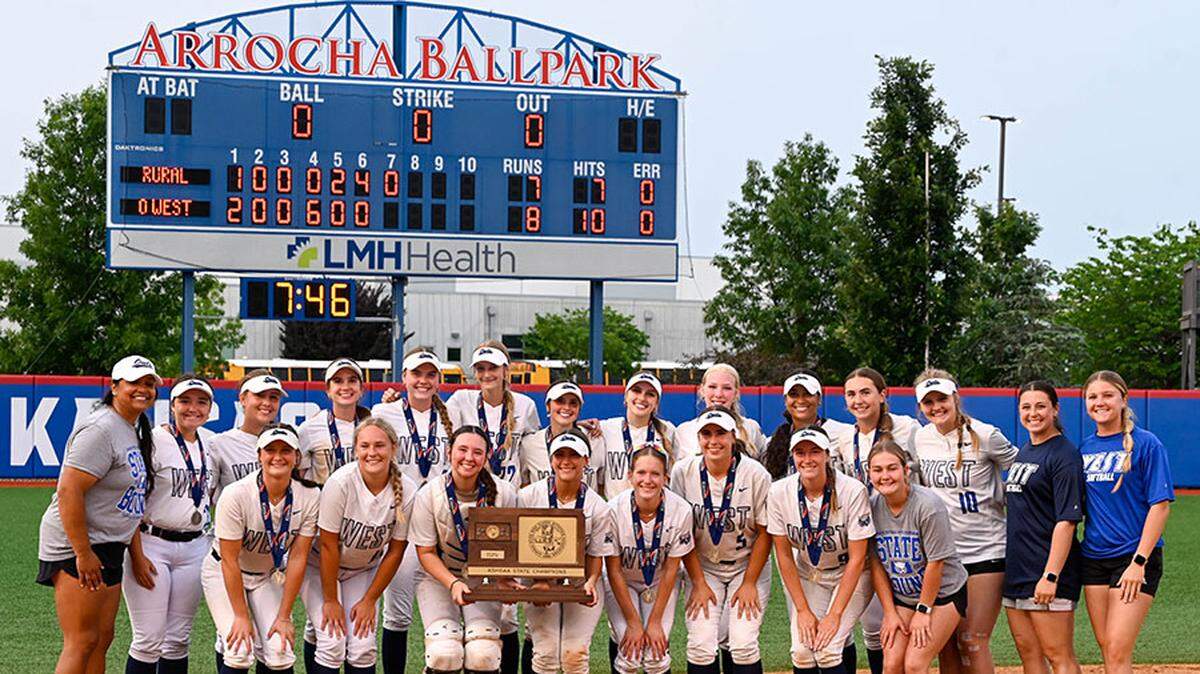
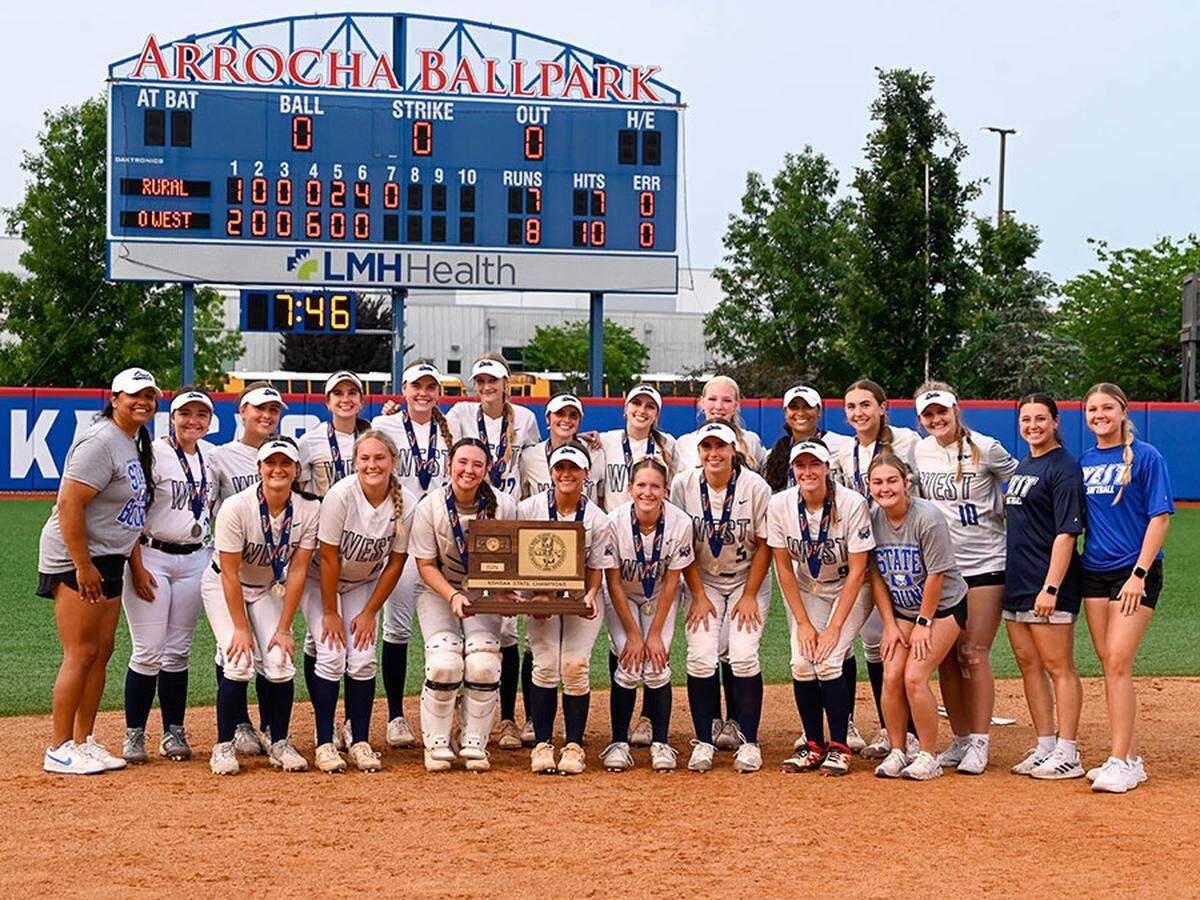
The Kansas State High School Activities Association planned to host all five softball classifications at a single recreation complex for the opening two rounds, followed by all five championship games at Arrocha Ballpark, a Division I field at the University of Kansas.
The plan drew swift backlash from parents in the Kansas City area, who argued it raised Title IX concerns because the state baseball tournament — where Class 6A and 5A teams have traditionally played all games at Division I fields — appeared to be staying the same while softball teams were being shifted to a recreational venue.
KSHSAA disputes that claim, noting that the baseball format remains under review and that the new softball structure was designed to give players from all classifications the opportunity to compete for a championship at a Division I facility. But now the plan for a one-site championship day has been scrapped, a high-ranking KSHSAA official confirmed to The Eagle.
The dispute has exposed a larger tension in Kansas high school sports: how to balance fairness, access and perception when championship experiences differ between sports and classifications.
KSHSAA’s vision on how to elevate softball state tournaments
At the heart of KSHSAA’s proposal was a vision to create a “bigger, better experience” for all softball players in Kansas.
Jeremy Holaday, KSHSAA’s assistant executive director who oversees both baseball and softball, said the plan was modeled after the success of the state track and field meet at Wichita State, which brings all six classes to one site. His goal was to unify the state softball tournament into a celebratory event — complete with a banquet for finalists, a live DJ and a championship day at KU’s stadium.
“We started this process looking to create a bigger, better experience for our student-athletes,” Holaday said. “It had nothing to do with financial or logistical issues. It’s all about the student-athlete having an experience on a larger scale.”
KSHSAA had selected the Blue Valley Recreation Complex as the host, with plans to add temporary bleachers to accommodate large crowds for the early rounds.
But after days of public backlash, mostly by Kansas City-area parents, as they questioned whether the facility and its fields were fit for a championship, the Blue Valley School District withdrew its bid to assist in hosting earlier this month, citing “respect for concerns raised by families” in a statement sent to The Eagle.
Now, Holaday said, “all options are on the table” for KSHSAA in its search for an alternative plan. That includes potentially abandoning the single-site plan for quarterfinal and semifinal games, which would also mean giving up the idea of one statewide championship celebration that had overwhelming support from schools.
“We were going to make a real celebration out of it,” Holaday said. “Unfortunately, the reaction of some people has essentially taken all of that grandeur that we wanted to put into softball and has really diffused it.”
KC softball community sees potential Title IX red flag
Among the most vocal critics has been Diane Waters, whose daughter plays softball at Mill Valley.
Last spring, both Mill Valley’s baseball and softball teams reached the state tournament at KU — a shared experience that parents feared would disappear under the new proposal.
“If that happens again for another school, the boys will load up and go to KU and play in this really neat atmosphere and the girls will load up and go to some rec field,” Waters said. “That’s incredibly not equal.”
Waters filed a Title IX complaint earlier this month through the De Soto school district, though no formal investigation was opened. Her argument is simple.
“They’re keeping baseball at these Division I fields, then they’re moving softball to rec fields,” Waters said. “That’s the issue. They’re not equal.”
Players voiced similar frustration in a KCTV5 interview.
“It’s just not fair,” Ava Shelley, a sophomore player at Lansing, told the television station.
“It feels like a downgrade compared to what we just had,” Mill Valley junior Emma Hadley added in the same interview.
Waters emphasized her fight wasn’t about turf versus dirt — KU’s field has dirt, after all — but about field quality and respect. She said it is the opinion of many in the KC club softball world that Blue Valley Rec is fine for lower-level tournaments, but not for state-caliber competition at the high school level.
“We don’t have a problem with dirt,” she said. “We have a problem with not-well-maintained dirt. Nobody is saying you have to put us on turf, just that softball deserves facilities equal to baseball.”
She said she understands KSHSAA’s intent to give smaller-class teams the chance to play at a Division I facility but disagrees with the method. Her focus, she added, is on the disparity between softball and baseball — not between classifications within softball — because Title IX applies only to gender-based inequity, not differences in competitive class.
“The law is on our side when you compare softball to baseball, but not when you compare Class 6A to Class 3A,” Waters said. “We want to advocate for all classes, we’re not trying to hurt anyone else. But the reality is KSHSAA has not listened to us.”
The small-school view on KSHSAA state softball controversy
For many coaches outside of the large classifications, the backlash from the Kansas City area misses the bigger picture.
“That’s great for them that they’ve always been able to play at those places, but smaller classes haven’t always had that benefit,” said Bill Finucane, a recently retired softball coach at Eudora with more than two decades in the game.
“What KSHSAA is trying to do is make it fair and equitable for all softball players across the state. In no way, shape or form should 5A and 6A have a lock on the best facilities in the state.”
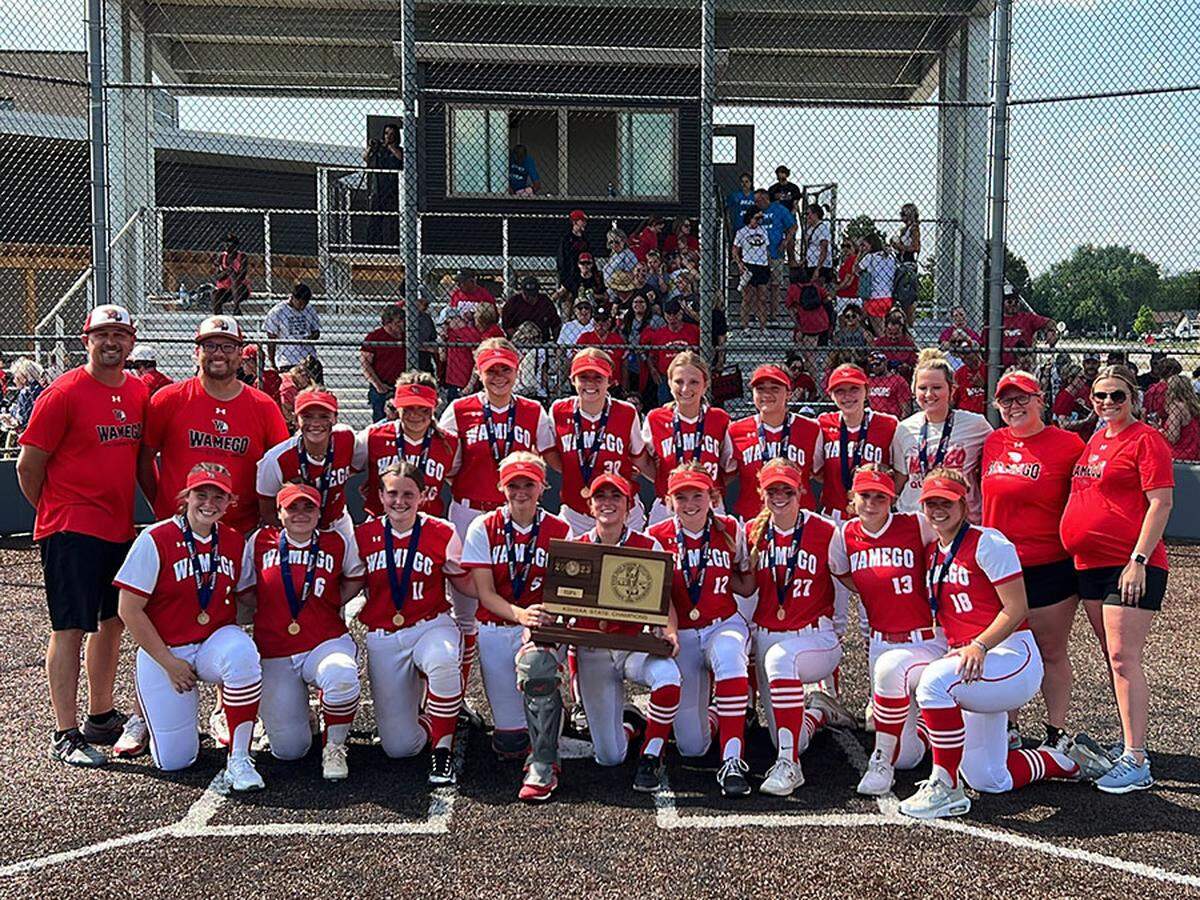
At Wamego, one of the most successful 4A programs in Kansas, athletic director Travis Graber said his school welcomed the original plan.
“We thought it was awesome that everybody was going to be in one location and you could see the talent at all levels,” he said. “What a great experience for players, coaches and fans.”
Graber acknowledged that facility comparisons to baseball are fair but complicated, given baseball’s pitch-count rules and different field requirements.
“You still have to maintain that Title IX piece,” Graber said. “So we’re just going to have to wait and see what KSHSAA comes out with for baseball.”
Finucane agreed that while 6A and 5A players may feel like they’re giving up something, the long-term goal should be to grow the sport.
“Why limit that to just 6A and 5A? Why don’t we give the other kids the opportunity to play in a top-notch stadium?” Finucane said. “It’s not just kids in Kansas City that play softball and have passion for the sport. They’re all over the state of Kansas.”
Paola principal Jeff Hines empathized with the large-class programs losing their early-round Division I games but wondered if the tradeoff wasn’t worth it.
“Are we taking that opportunity away from some kids not to be able to play there? Undoubtedly so,” he said. “But are the tradeoffs for the sport itself and the participants worth it? That’s the question.”
The timing that sparked the state softball controversy
Ultimately, the controversy seems to stem less from what KSHSAA decided and more from when it decided to say it.
Holaday said the softball format was finalized and released while similar plans for baseball were still being developed.
“We’ve never made a determination on what we were actually going to do for baseball this year,” Holaday said. “Softball was just right and ready to go, so we decided to tell our schools what we were doing so they could plan accordingly. For baseball, we’re taking our time to make sure we have the right days and the right facilities lined up, the same things we considered for softball. We’re still evaluating the when and where and why and how we can do the same for baseball.”
Without that context, many softball families assumed baseball would continue playing all its games at KU and Wichita State while softball was relegated to a rec complex — a perception that quickly turned into outrage.
“I wish they would have released the plan for baseball and softball simultaneously,” said Jeff Hines, principal at Paola High. “I think that would have reduced some anxiety thinking softball is going to be treated different than baseball.”
Holaday admitted the early softball release likely fueled the controversy, but noted that no member school had lodged a complaint about the host or format. The pushback came from parents.
Even Waters conceded that if KSHSAA ultimately follows through with a comparable format for baseball, the issue would be resolved.
“All we want is a nice field to play on that is safe and then we want equality,” Waters said. “If they move baseball to (a similar facility), then they can certainly keep softball somewhere comparable and that would be fair.”
Hines agreed that disappointment over losing tradition is understandable, but it doesn’t necessarily equal inequity.
“6A and 5A is used to being at Division I stadiums and now they’re being asked to play locally and it doesn’t feel as special,” Hines said. “That’s totally understandable. That type of change would be difficult, so I can respect that. But that’s a different issue than the boys have a better opportunity than the girls.”
Holaday said he respects those concerns but emphasized KSHSAA’s broader responsibility.
“Our job is to represent all 354 member schools,” Holaday said. “If we want to elevate softball, we have to look at how to enhance the experience for everyone. That’s always been our end game.”
This story was originally published October 28, 2025 at 6:02 AM with the headline "KSHSAA plan for state softball raises Title IX questions from Kansas parents."
.jpg)