
How high school football coaches in Kansas City protect players from heat
.jpg "High school football programs across the country are taking measures to combat high temperatures while players go through preseason workouts.")
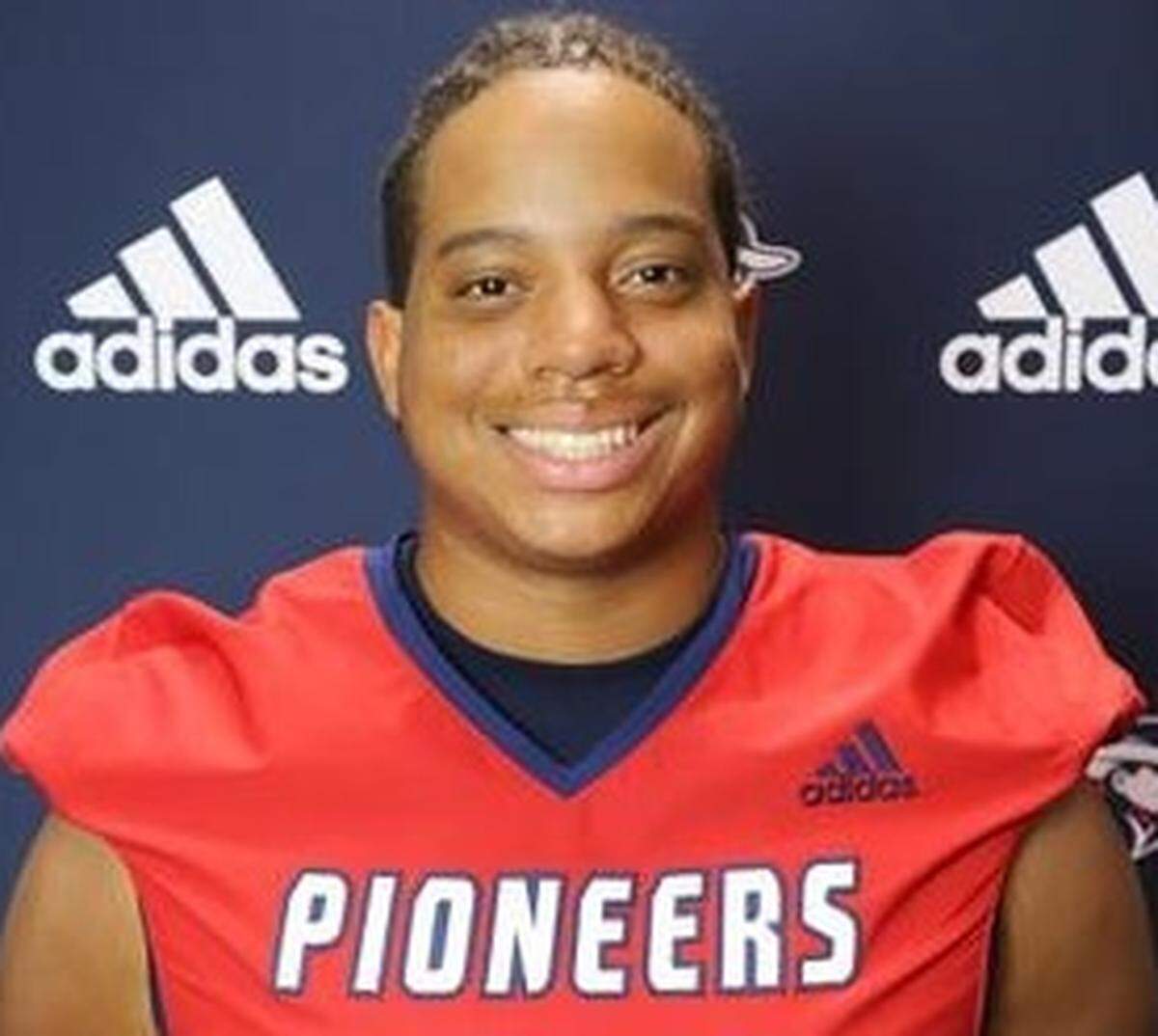
It’s been almost two weeks since Myzelle Law, a 19-year-old student and football player at MidAmerica Nazarene University, died after sustaining what friends have called “heat-related injuries.”
On July 22, he was rushed to Overland Park Regional Medical Center, where he passed away on July 30, according to a GoFundMe started in his honor. Law, a Blue Valley North High School alum, was entering his sophomore season as an MNU defensive lineman.
More than $45,000 has been raised to pay for Law’s medical and funeral costs — and establish a scholarship in his name. His memorial service will be held at 1 p.m. Saturday at Life.Church-Overland Park, as family, friends and the MNU community continue to mourn his passing.
“The one thing about Myzelle is he had this infectious smile that would — as cliche as it is — he would just light up a room,” MNU athletic director Todd Garrett told The Star. “You’d have a conversation with him, you’d shake his hand, pat on the shoulder — whatever it is, he’s one of those kids (that) you thought, ‘Man, do you ever have a bad day?’
“He just had one of those personalities, that smile, that you just couldn’t help but be attracted to.”
MNU is still trying to discern what led to Law’s death. Garrett said he would not address “assumptions or speculations about heat-related illness (or) perceptions surrounding that.” Pioneers head football coach Paul Hansen was not made available for comment upon The Star’s request.
Regarding interactions with Law’s family since the incident, Garrett said the program is trying to be available and supportive as they grieve.
“We have, probably, no more information than a lot of people,” Garrett said. “So we’re just sitting idle and just grieving through this process and loving on our kids and loving on the family as much as we can day to day.”
The Louisville Courier-Journal’s Deadly Games database tracks sudden death of athletes by state, and it lists six “exertional heat stroke” deaths in Kansas since 1909. Currently, Law’s death is listed in the database, though it was not categorized as a heat-related death as of Thursday evening.
His passing resurfaces the question that grows louder each time an athlete dies at a practice or during a game from heat-related illness: What will stop this from happening again?
In light of that thought, The Star spoke with three Kansas City-area high school football coaches about the guidelines they follow to keep their players safe.
They cited better training and preparation, increased focus on weather effects and greater leniency toward their players as reasons why they believe Kansas and Missouri schools are well positioned to protect their student-athletes moving forward.
Current best practices
What happened at MidAmerica Nazarene has never happened to longtime Bishop Miege High School coach Jon Holmes, he said, but reading about it still gave him pause.
“That’s the worst thing any coach ever wants,” he said. “That’s the nightmare scenario, is having to deal with something like that.”
He understands that, as head coach, he’s responsible for educating his assistants about action in case of a serious heat-related event. Blue Valley West coach Josh Koerkenmeier and Raymore-Peculiar coach Sean Martin also take that charge seriously. Both said their coaching staff participates in a yearly heat illness prevention training.
Each school also has an athletic trainer at practice looking for signs of heat illness and advising coaches about rest and water breaks.
“They’re really key with educating us,” Martin said. “Keeping us abreast of what’s going on and making sure there aren’t any problems.”
Summer training allows coaches to get a feel for their roster and what needs to be done to keep players safe. The state of Kansas has also changed its rules to prioritize acclimatization, slowly increasing the amount of equipment players put on from the first preseason practice to the third, and so on, Holmes said.
Additional adjustments to high school practices in Kansas and Missouri have been shaped by the recent institution of Wet Bulb Globe Temperature (WBGT) monitoring.
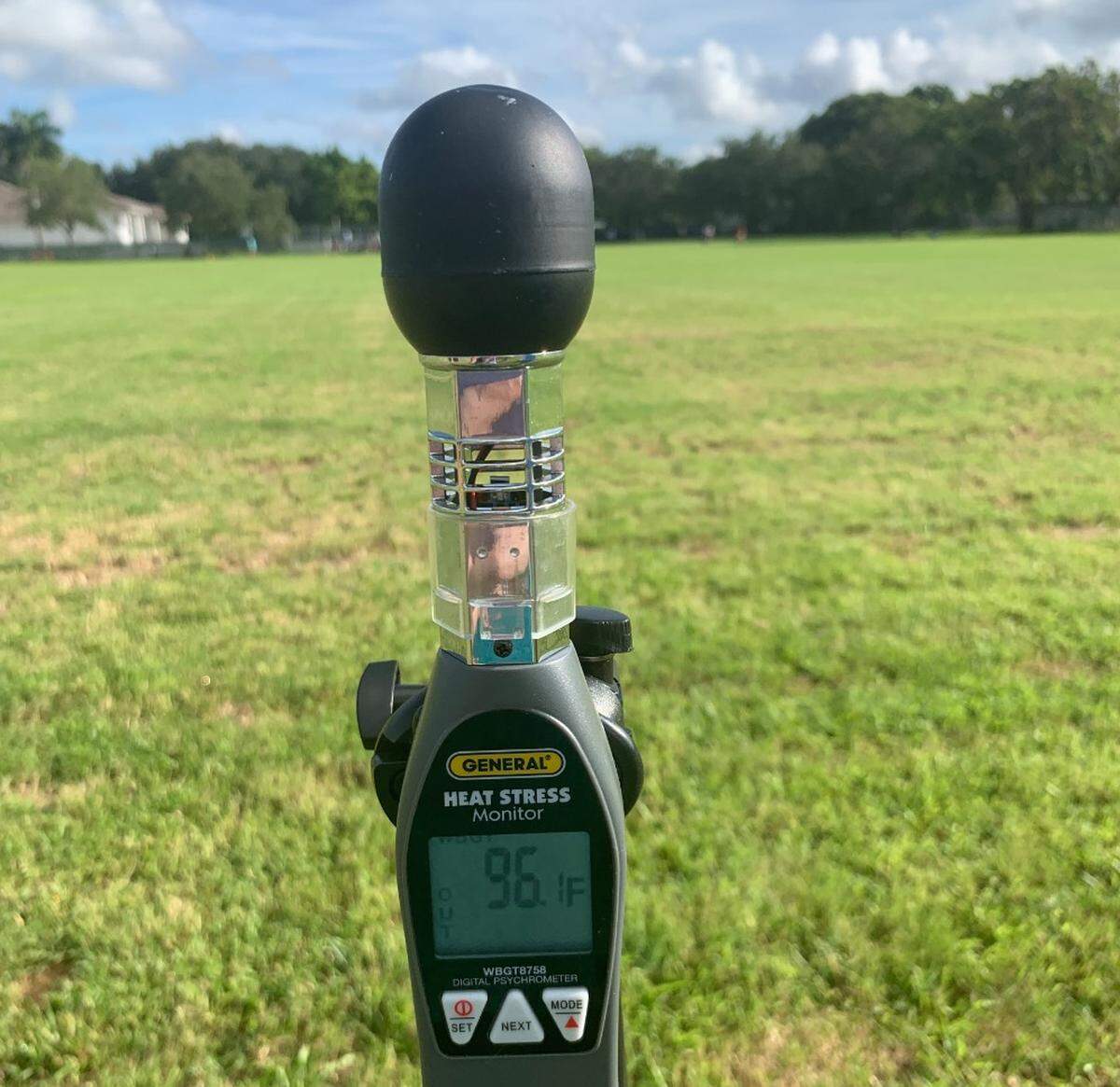
All three coaches mentioned their school or district using a WBGT device to daily measure the heat stress in direct sunlight. They then adjust their practice plans accordingly, based on state athletic association requirements.
The guidelines vary slightly between Kansas and Missouri, but the purpose is the same. Based on the device readout color, coaches are told how many water breaks they need to implement, how much equipment players can wear and how long they can practice, if at all — or if they need to move to a later, cooler time.
“As coaches, it makes it pretty easy for us, because we get an email at 2 o’clock in the afternoon and it says, ‘Here’s what level we’re on,’” Koerkenmeier said. “And so then I look at my practice plans and say, ‘OK, I gotta make sure we’ve got a water break every 30 minutes, and I gotta make sure we don’t exceed two hours of total practice,’ or ‘We can’t wear helmets and shoulder pads today.’”
If a player gets overheated, Holmes said, Bishop Miege always has a cold tub sitting in one of its end zones, which might not have been a major emphasis even five years ago. The school also amended its policies to allow water bottles in class to encourage athletes to hydrate ahead of time.
Perhaps the biggest change in practices, these coaches said, is leniency — not pushing their players to continue if they’re struggling. Coaches better understand now that a player could be experiencing a medical issue, rather than just being out of shape.
“I think that’s what we have to push as coaches, is to make sure that kids understand that, ‘Hey, if your body is telling you something different and you’re not OK, then you gotta stop,’” Holmes said. “And I think every coach can be guilty of saying, ‘Hey, we gotta make sure these kids push through this and this.’
“But we’re around our kids enough to where I think we know when a kid is doing his best and when a kid is not. And I think when you see kids struggle, that’s always the thing that has to come to your mind is: Medically, is everything all right?”
Another factor? Koerkenmeier said that teenagers don’t spend as much time outside as they used to, so they might not be as acclimated to the heat. He added that of his 150-160 players, it’s likely around 10 of them haven’t done the summer workouts necessary to best prepare for the rigors of preseason practice.
Those athletes, especially, have to be monitored, and coaches have to develop rapport that lends to athletes being honest about their condition.
“As a coach, you can’t say ‘Hey, we need you to get tougher. You weren’t here all summer,’” Koerkenmeier said. “You gotta take every one of them as seriously as possible. And I think in the past, kids would not be as likely to communicate that with coaches because coaches would not be as open to listening to any of the symptoms or concerns that players probably had.
“The days of a kid saying, ‘I feel dizzy,’ or ‘I have a headache,’ or any of the signs of heat illness, it’s not, ‘You’re just not tough enough. Keep practicing.’ It’s taken with all seriousness and (saying), ‘We’re gonna get you to the athletic trainer and we’re gonna go from there.’ … It’s the exact same thing with a concussion. We know what the symptoms are. So we treat every time it comes up as, ‘OK, well, this could be the one.’”
More to be done?
Schools have invested in training and trainers. Tests and guidelines are in place, and coaches are more cognizant and compassionate than they used to be.
Yet, high school and college athletes are still dying.
What additional measures could be taken to ensure future safety?
Holmes mentioned many major college programs have heart monitors on each player that their training staffs are consistently checking.
Additional resources like that can make a significant difference. One local example was in 2017 when the University of Kansas performed a cardiac screening on an incoming football player that revealed he had a rare heart condition. While his football career was shut down, it’s possible his life was saved.
High school coaches would like to have more medical technology available, but they acknowledge it costs money to have it.
“That’s a tremendous cost,” Martin said. “I don’t know if high school would ever get there with that. I could see it, but boy, that just adds a whole ‘nother layer.”
As an alternative, Holmes suggested high schools should better involve their student managers in assisting the athletic trainer with monitoring practice and helping athletes.
There’s strength in increasing the number of people watching to make sure severe heat-related illness and death don’t occur.
More than anything, if athletes and coaches recognize symptoms and caretakers respond quickly, area coaches are confident the current best practices will continue to be effective.
“You walk outside and you realize how hot it is, and it’s like, ‘OK, we’re gonna make sure we’re taking care of kids today,’” Koerkenmeier said. “If 150 kids walk onto the field that day, you want to make sure 150 kids walk off the field that day.”