
With 76 D-I signings, how this small Kansas high school became an international power
One of the smallest high schools in Kansas is tucked away behind the skyline of downtown Wichita, giving kids from across the planet a better chance.
About five minutes off Highway 254 and K-96, Sunrise Christian Academy is a school of about 550 students attending kindergarten through high school on the northeastern fringe of Wichita.
Robert Lindsted founded Sunrise Christian in 1983, and the school has grown to about 50 graduating seniors each year. High school tuition is $8,600 a year, and students — including athletes — can apply for scholarships.
The school has also produced 76 Division I men’s basketball players, with all but three coming in the last decade, and is ranked as the No. 7 team in the country.
“We operate at a pretty high level,” Sunrise coach Luke Barnwell said. “We have to be very selective of the kids we bring in.”
Barnwell has been the coach at Sunrise since June 2015 and Tuesday was chosen as one of five finalists for the Naismith High School Coach of the Year award. He has helped Sunrise to its first appearance to the Geico High School Nationals and brought players to Kansas from the likes of Belgium, Venezuela and Mali. On this year’s varsity elite roster alone, a little more than half come from outside the United States.
Senior Davonte Jennings is one of those international players. Jennings is in his third year at Sunrise after Barnwell discovered him at a national showcase in the Bahamas. Barnwell was the first and only to notice Jennings, so the 6-foot guard packed his bags and moved to Kansas.
But before moving to Wichita, Jennings met with former Sunrise star Buddy Hield, who became a top 100 player in high school. He signed with the University of Oklahoma, where he won the national college player of the year award in 2016. The Sacramento Kings selected him sixth overall in the NBA Draft that year.
“He told me, ‘It’s worth it,’” Jennings said. “He said, ‘They’re gonna work you hard, but it’s all gonna be worth it.’”
But how did Sunrise start to shine on a national stage? How did it get here? That started with Lindsted’s son, Kyle.
Kyle Lindsted was the coach at Sunrise for 15 years, starting in 2000, before becoming an assistant at Wichita State and now Minnesota. He said his father felt there was a need for a school with high academic standards and moral and spiritual values. Kyle said he wanted to help and jumped on as the basketball coach.
Lindsted started with a junior high team, had success and carried it into high school with the same group. He said he never had a vision for what the program has become. It started with a simple thought:
“Why can’t we be one of the best teams in this state,” Lindsted said.
Once Sunrise hit that, there was another thought that followed.
“Why not the country, if we work at it hard enough?” Lindsted said. “We weren’t going to invest a lot of money to get to the top. We just wanted it to be the best it could be.”
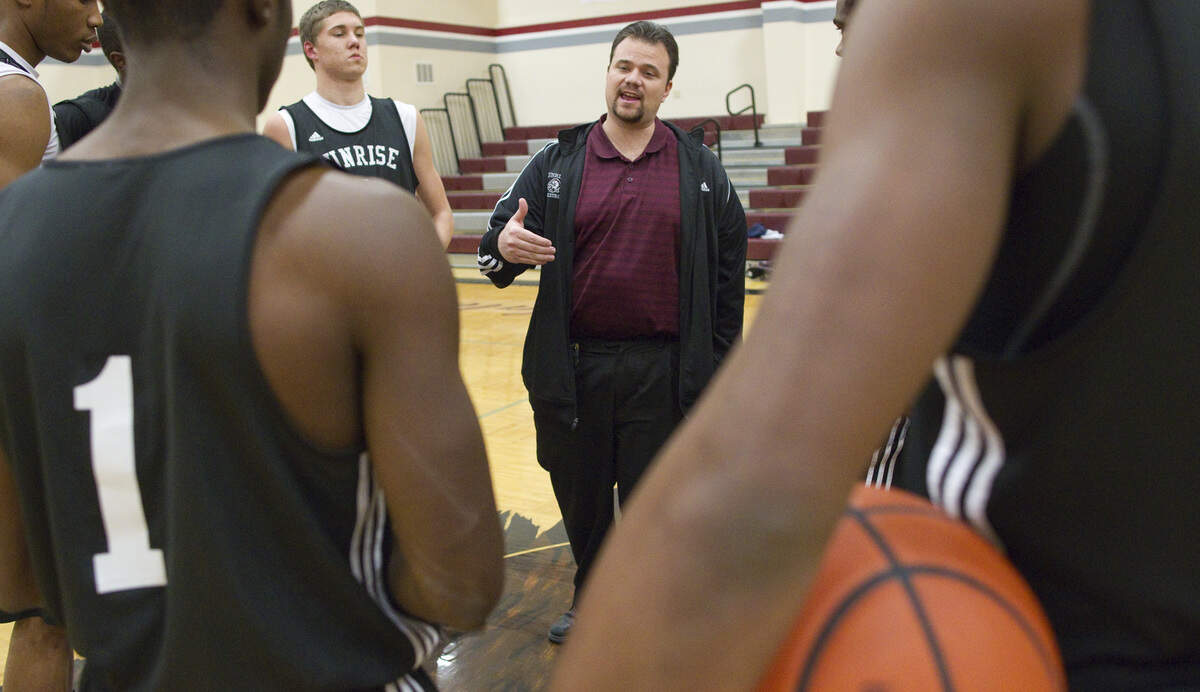
Lindsted said he felt like basketball was becoming a seasonal sport. He wanted basketball “24/7, 365.” He said he wanted to do something different from the rest of the programs in Kansas and even the rest of the programs in the region.
The team isn’t a full member of the Kansas State High School Activities Association (KSHSAA), which means it can do some things a little differently. Sunrise can practice year-round. It can have a clothing sponsorship and contract, which it does through Nike. It can compete in national tournaments outside of the 500-mile limit for KSHSAA member schools.
Sunrise can play against the likes of Wichita Heights or Andover Central, but it cannot compete for a Kansas state championship — good news for the rest of the schools in the state.
Lindsted’s model became Maryland’s DeMatha Catholic High School, which was ranked the No. 2 athletic program in the country, according to Sports Illustrated, in 2005 and 2007. The basketball program is the highlight, with more than 30 state championships and a handful of national titles.
“I just fell in love with the process of building something and becoming great,” Lindsted said. “We sat down for our first team meeting and said, ‘We’re going to be the DeMatha of the Midwest.’”
On Dec. 8, Sunrise beat DeMatha for the first time, 75-67.
The ascent into the national spotlight started with a kid from Lagos, Nigeria. Raphael Akpejiori came to Sunrise when the school still competed for Kansas high school state championships in Class 1A.
Sunrise played against the likes of Scott City, Liberal and a team of homeschooled players from the Wichita area. In 2009-10, Akpejiori and Sunrise lost only two games and one came against a rising program in Florida, Providence School. WSU recruited Akpejiori, but he ultimately went to Miami. He was the first domino in Division I basketball for Sunrise.
Slowly, Lindsted’s program climbed. When Akpejiori was on the roster, Sunrise played in the Fantasy of Lights Tournament in Wichita Falls, Texas. A year later, Sunrise went to Coral Springs, Florida, to play in the Kreul Classic.
Along the way, Sunrise picked up Hield out of the Bahamas. He is the most illustrious alumnus Sunrise has produced, and he is the reason Barnwell went to see Jennings at that national showcase three years ago.
“Buddy is my guy; I look up to him a lot, his work ethic,” Jennings said. “How he made it out is really amazing. It translates to us coming out of the Bahamas. We try to work as hard as him so we can be the next Buddy one day.”
Today, Sunrise is invited to a handful of the best tournaments in the country every year. When Sunrise went to the Geico Nationals this past season, it was ranked No. 13 in the nation, one spot behind Sierra Canyon, where NBA star LeBron James’ children play.
But why do kids from across the world come to Wichita? Barnwell said it starts with an initial interest in a school like Sunrise. When Akpejiori took Sunrise to those heights in 2010, Barnwell said the staff maintained those connections in Africa.
He said over time, Sunrise has developed a web of connections in “each region” of the world, including the rest of the United States.
Sunrise senior Dillon Jones is from Columbia, South Carolina. He was playing for a state championship at Keenan High School in 2018. Barnwell was coaching Sunrise in the Chick-fil-A Classic, also in Columbia.
Barnwell came to the state tournament, saw Jones and liked him enough to invite him to Wichita, Jones said. Without even taking a visit, he accepted.
“I just bet on myself, and I’m kind of reaping it now,” Jones said.
Just down the road from Sunrise, Newton’s Ty Berry first heard about the school when he was a sophomore. When he did some research, he reached out to Barnwell. He wanted in.
Berry was a two-time All-Metro selection at Newton, but even that type of resume doesn’t guarantee a spot at Sunrise. In fact, Berry is the only Kansan on Sunrise’s high school elite team. Barnwell said every situation is different but that it would be wrong to let a Kansas-born player on the team to have him be the last player off the bench.
Berry is now verbally pledged to Northwestern.
“If I could have made the decision sooner, I would have,” Berry said. “This is a great program and a great school. It’s fun how we compete every day against the best kids in the country. ... It’s crazy to have one of the best high school teams in the country 20 minutes from your house. I knew I had to get here.”
Barnwell said Sunrise never had to cold call and recruit players to come to Sunrise. It was a more organic growth. More wins meant more tournaments, more tournaments meant more future Division I pledges, and more of those meant more trust — even on the other side of the world.
As Sunrise continued to compete in national tournaments, college programs from across the country started to pay attention and recruit Sunrise’s players. Wichita State has been one of the most frequent visitors with seven players becoming Shockers since 2014.
“We have kids reach out to us constantly, and that’s a good thing,” Barnwell said. “I’ll get messages on Twitter and emails, probably 25-30 a month now of kids just wanting to come play here.”
Barnwell said he has had opportunities to leave Sunrise for college coaching positions like Lindsted took up after his 15-year run. Barnwell said he isn’t going anywhere. Sunrise has his heart; Sunrise has changed his life, he said.
Sunrise’s success on the court brought money into the school, too. The program is tiered into three teams: Sunrise Christian select and high school varsity elite (both of which can compete against all Kansas high schools), and the post-grad team, which is made up of players who have graduated high school but are taking a year at Sunrise before entering college.
Of the Division I players, 38 have come from the high school elite, 31 from post-grad and seven from the select team.
As the program grew, the high school elite team picked up an Adidas sponsorship when Hield was a senior. After the three-year contract expired, Nike picked up the tab. Neither of the other two teams are Nike sponsored, Barnwell said. The school declined to provide contract details.
“Obviously when you’re sponsored by a shoe company, that helps,” Lindsted said.
All of the players on the high school elite team live in near-campus housing with resident advisers looking over them. Some of them can walk across the road to get to school. And as many as six of them live together in a house. Jennings and Jones are roommates about five minutes away.
Despite what could be construed as a lavish lifestyle for some of the best high school basketball players in the world, there are a lot of misconceptions, Jones said.
When he accepted his invitation to Sunrise, he said he expected a bigger city and a bigger school. The second expectation undoubted fell short. Sunrise sits on about 18 acres, which is about as big as Wichita Heights, about five minutes to the northwest, but the gym fits about a tenth of what Heights’ can.
But the most frustrating misconception about Sunrise comes in academics, Berry said.
“School is way harder here,” Berry said. “I honestly thought school wasn’t gonna be as hard, but I came here, and it was an eye-opener, how many papers I’ve have to write. But I think it’s a good thing though. It has helped me a lot. I scored higher on my ACT. I’m reading books now, and it’s getting me ready for college.”
After Sunrise’s win Thursday against Texas’ University Academy, senior center Isaac Ondekane from the Congo met with his ESL teacher Judith Richards. They hugged and laughed.
Jones said he knew moving from South Carolina to Kansas was a big risk. He said many of the college programs on the East Coast that were recruiting him dropped off after he transferred.
But he found a new family in a small town called Bel Aire.
“This school is an extension of the basketball program,” Jones said. “The basketball prepares you for college, but the classroom might prepare us even more.
“Sunrise might be one of the only programs in the country that do it right. With how small this community, everyone loves on you. I’m from 17 hours away, and I feel like with how many female teachers I have, that’s how many moms I have taking care of me.”
This story was originally published February 23, 2020 at 5:00 AM with the headline "With 76 D-I signings, how this small Kansas high school became an international power."