What happens to ‘iconic’ heart sculpture at KC’s FIFA Fan Fest when it’s over?
The Parade of Hearts is still ongoing throughout the Kansas City metro, but the heart-shaped sculpture that’s captivated residents and visitors is on a much bigger scale.
The Heart of the Game, a 65-foot-tall heart-shaped display by Kansas City sports architecture firm that welcomes all when they enter the FIFA Fan Festival has become the photo opportunity for everyone.
Over the three weeks the festival’s been open, thousands have been spotted getting their photo taken in front of it. Festival volunteers have been more than happy to capture those perfect angles for friends, families and couples visiting the grounds of the National World War I Museum & Memorial.
It’s the icon of the FIFA World Cup, KC 2026 CEO Pam Kramer said at a press conference Friday, June 26.
“I’ve seen so many photos of that heart, and so many videos and social posts about it,” Kramer said. “I think it’s even better than we had hoped.”
A question she and Populous staff members keep getting is what’s going to happen to the heart after the festival comes to an end.
The sculpture wasn’t designed to be a permanent fixture in Kansas City, but that could change. Kramer said she’s in discussions with Populous about what to do with it and other structures the firm designed for the festival.
Kramer said that during a conversation with Kansas City Chiefs owner Clark Hunt at the festival’s soft opening, he predicted the structure would be the defining photo of the event for decades.
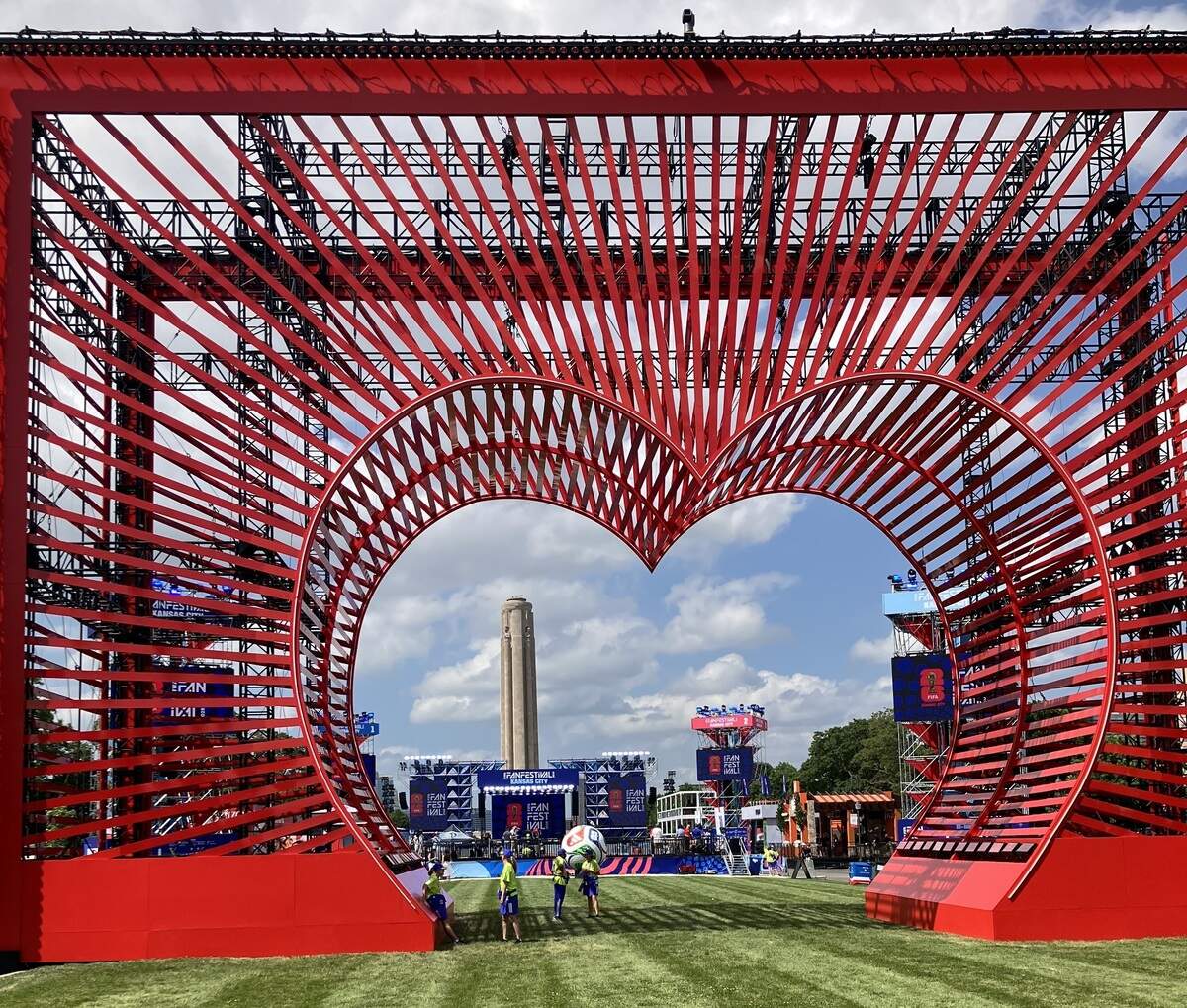
“He said this is going to be the photo that 30 years from now, when everyone tells their children, ‘I was at the World Cup, this is going to be the photo they point to,’” Kramer said.
Kelly Holton, Populous’ senior principal and brand activation director, said the heart is the welcome statement to the world and the backdrop to fandom.
“The charm, the hospitality being core drivers and really wanting to embrace that warm welcome to the world,” Holton said. “The heart was just the natural conclusion, given it’s such a beloved symbol of Kansas City.”