
What’s a Panini card? World Cup tradition brings families, cultures together in KC
AI-generated summary reviewed by our newsroom.
- Panini’s largest World Cup drop has 980 stickers total, including all 48 teams.
- KC families and community groups met at local trading events to trade and finish albums.
- World Fresh Market in Overland Park and other local shops hold card trading events.
If you’ve gone into the World Fresh Market in Overland Park recently, you may have noticed dozens of people crowded around a table by Frutopia, the store’s popsicle and ice cream shop. Since the World Cup started, the international market has been holding card trading events for Panini World Cup cards — and no, they have nothing to do with the sandwich.
The Panini Group is an international sticker and trading card collectables organization “with over 1,000 collection launches each year,” according to its website. The stickers come in packs that contain seven to eight stickers with different images to trade and collect. Panini has cards and stickers for dozens of sports leagues, allowing fans to collect notable players.
But most popular of all is Panini’s decades-long collaboration with the FIFA World Cup, which has been going since 1970. Fans aim to fill a book with each of the special stickers printed for that year’s tournament.
And this year’s drop was the largest collection in World Cup Panini sticker history: 980 stickers.
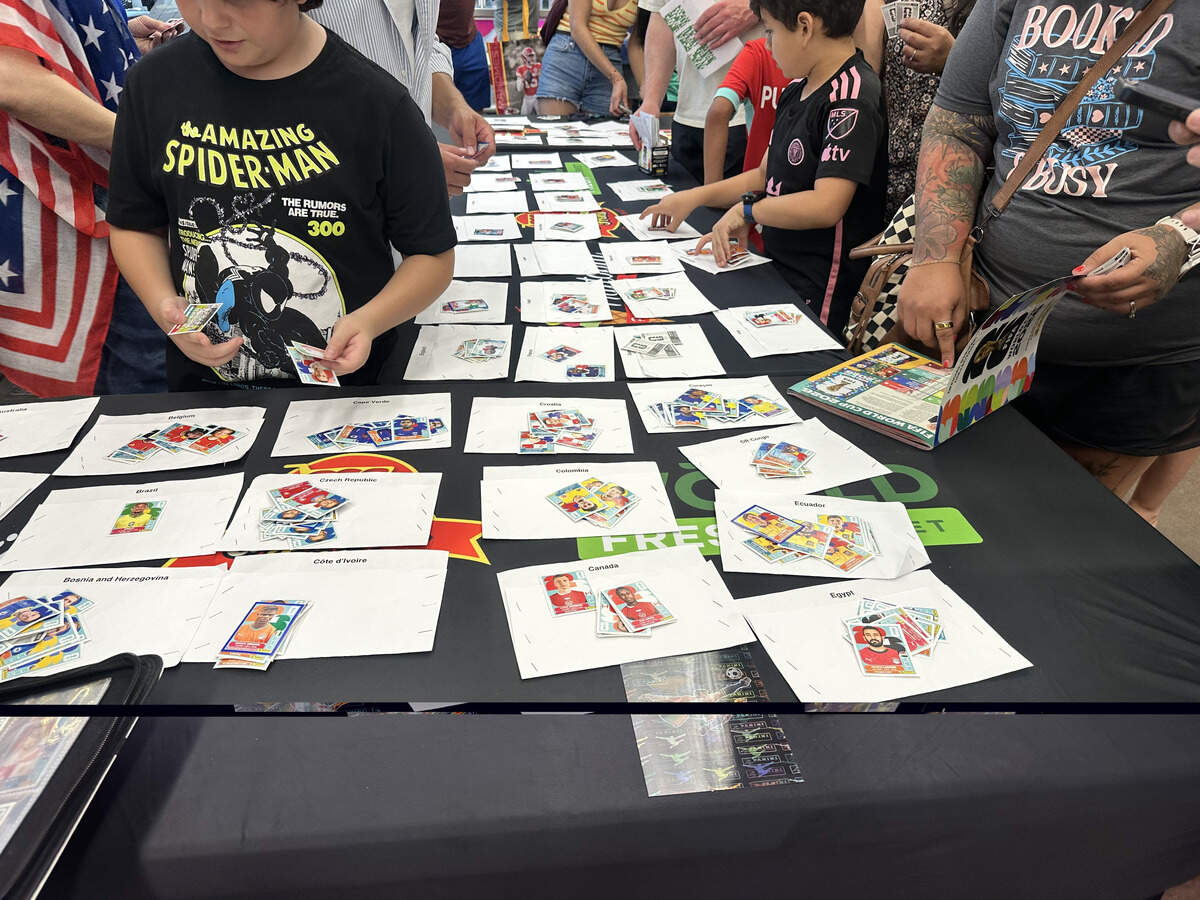
All 48 teams that qualified for the tournament are represented, and each team has 20 cards: 18 players, a team photo and an official badge. There are also 20 special stickers showcasing the tournament and the history of the World Cup, according to Panini’s website.
A collector starts by buying an official album, multiple packs or a box of card packs in bulk. Then, they might try to get rid of their duplicates by attending a local card trading event, or trading online via mail.
There are multiple Facebook groups that help identify different places to meet to trade, what cards people are looking for and getting rid of, and questions about the stickers and meetups.
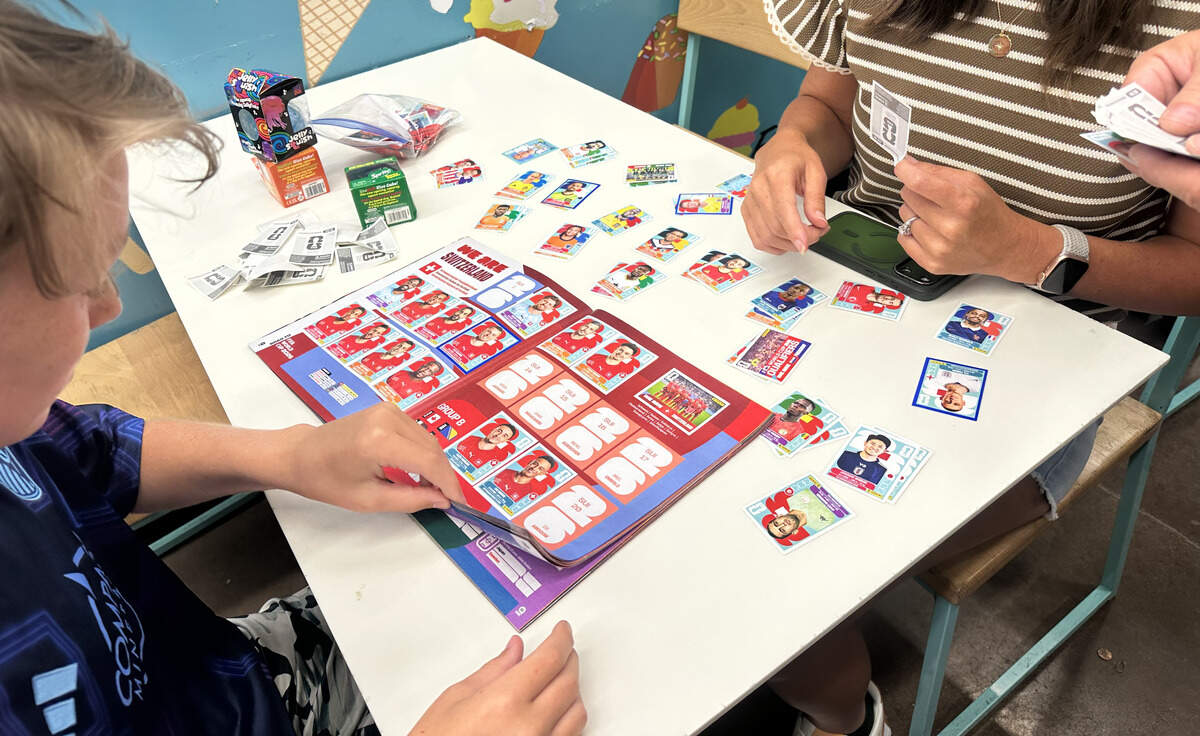
Bernardo Jordan started trading when he was young, having been born and raised in Bolivia. When he moved to the United States 25 years ago, he knew he wanted to continue the tradition. And this year is special: He’s introducing his two children to the world of Panini trading.
“They are very excited for the album. For me, it’s like a tradition. Every World Cup, I do it,” Jordan told The Star.
He went to the World Fresh Market trading event on Sunday, hoping to trade his repeats and fill the 170 empty slots he had in his album. Jordan started collecting at the end of May, and is almost finished because he bought in bulk and traded online. He went home filling 100 stickers, but he wanted to wait to be with his kids before he finished the album.
Anais Melendez traveled from Topeka to Overland Park with her husband and three kids, who each have their own albums. Despite having to find nearly 5,000 stickers between the five of them, they each have under 100 stickers left to find, while Melendez is missing only one. The family stayed at the event for nearly four hours to complete their albums.
“It’s crazy because we started this in May, and I think this is probably the most we’ve all been together, all the time, day and night,” she said.
“It’s crazy because we started this in May, and I think this is probably the most we’ve all been together, all the time, day and night.”
Anais Melendez
Topeka residentEach card is numbered and divided by the teams, and the album’s index tells collectors which page in the album each team’s cards belong in. For example, cards for the United States is labeled USA 1 through 20.
‘A cultural exchange’
The World Fresh Market wasn’t the only event around Kansas City this weekend.
On Saturday, multiple small businesses held a meet-up to give people a chance to trade. One of these was Panaderia de Las Americas near Union Station, which has been hosting trading events for several weeks now.
Enrique Linares, who is originally from Panama but lives in the metro now, spent the day attending multiple trading events to fill his album. Linares said collecting the stickers, which he’s been doing since 2006, is “a journey.”
“What makes it special is to meet people that are interested in the sport, to meet more people, and the final goal to find all of the stickers,” he said.
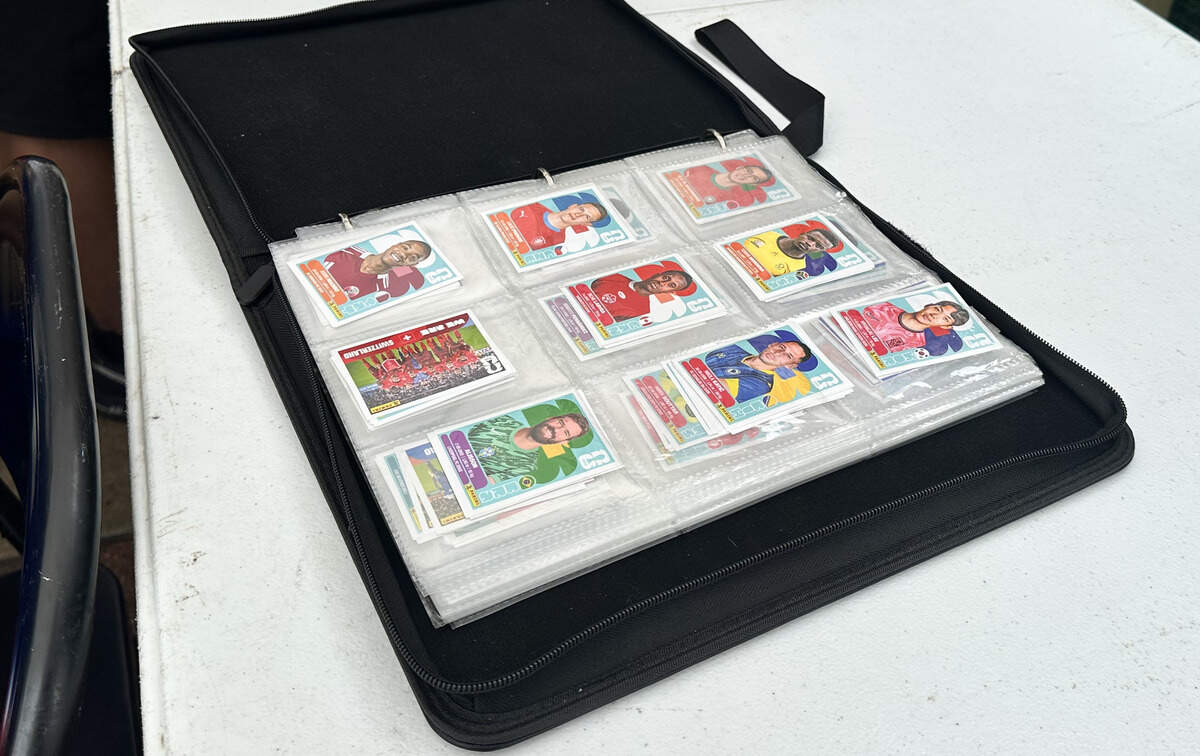
Like many, Linares doesn’t like to travel with his whole album, so he uses an app to keep track of the ones he needs, while bringing his repeats along separately.
Linares also attends Brazil Academy USA in Lenexa, which has hosted card trading events for a few weeks. The school of Brazilian martial arts also serves as a community center to learn Portuguese and enjoy Brazilian food, according to owner Ninja Pinto.
“We do have a huge community of foreigners that live in the city. And in other countries besides the United States, soccer is pretty much a sacred thing,” Pinto told The Star. “[The album] is something in Brazil that people take very seriously.”
Pinto’s children have also been actively trading, and he said he likes how much it teaches his kids about the world.
“My kids, they see any flag that’s in the World Cup and they know which country it is, which is pretty amazing,” he said. “These kids are learning how to negotiate, how to organize, how to put things together. It’s really, really exciting to see how much they learn and grow through going through this process of collecting.”
Panini World Cup cards are available at various retail stores, specialty card shops and online.
At Cortadito Cuban Cafe in KCK, a group of people from various countries get together in a garage behind the cafe to trade their cards.
Sergio Viera went with his 16-year-old son, Santiago, to trade. Viera has lived in the U.S. for 12 years, having grown up in Venezuela. At home, he has a collection of every album he has made over the years. He said the album goes beyond collecting stickers.
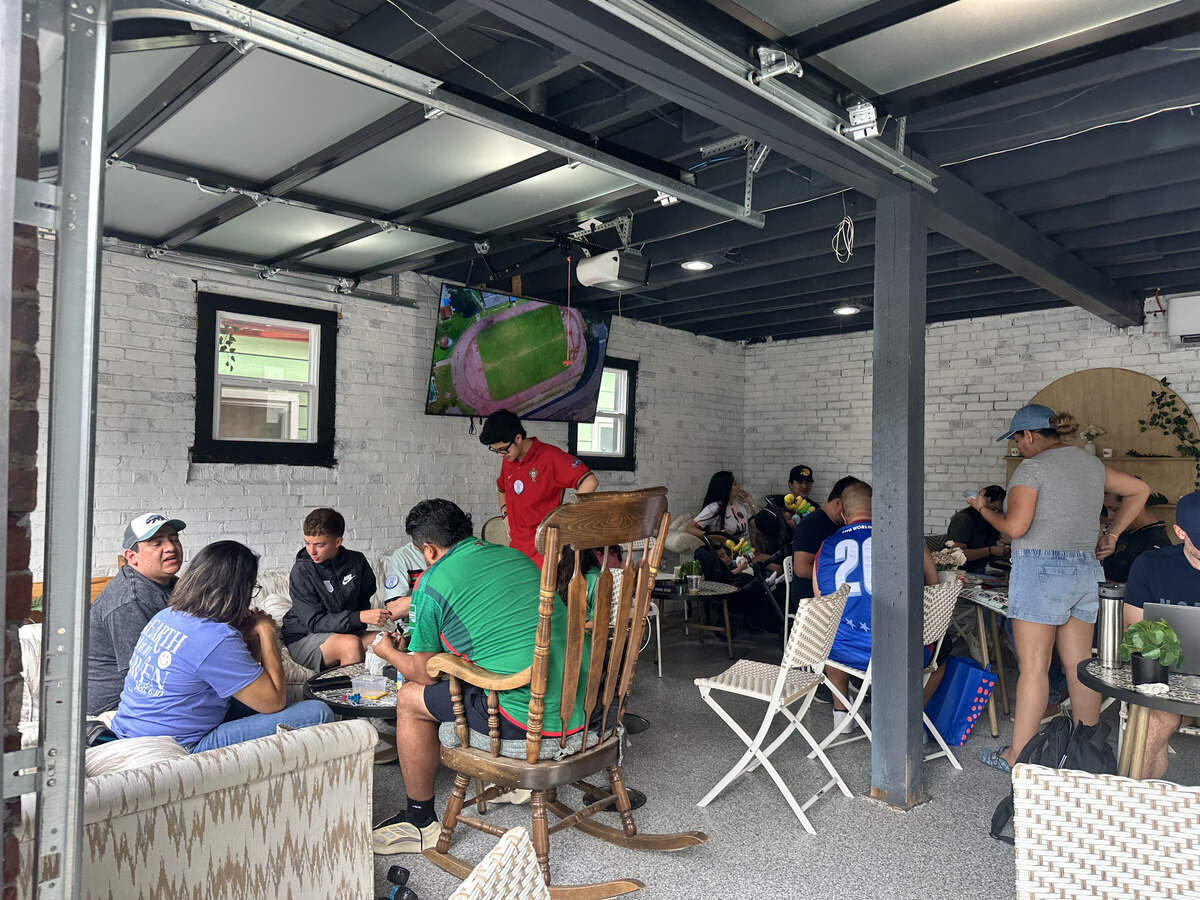
“That is the good thing of the albums, I think it’s something to help you know more people, and make friends, and the passion for soccer you can find, you know the way how it connects people,” he said.
Santiago Viera said he believes the World Cup creates one community of soccer fans all over the world, and the events in Kansas City help Americans become more involved.
“It’s not really their culture to partake in stuff for the World Cup, so for them to be able to maybe join in and see what other cultures do and how special it is for them, it’s a kind of cultural exchange,” Santiago said.
He added that collecting the stickers works as a “binding force” for both families and communities, which he said is more important now than ever before.
“We’re people from different countries, maybe different creeds, different ways of life, but we still manage to share this one moment together, and I think that is the purpose of this. That’s the real point,” Santiago said.