
KC trained airport staff to embrace World Cup visitors’ cultures. See their tips
AI-generated summary reviewed by our newsroom.
- KCI and Downtown Airport staff have undergone cultural training sessions.
- Training covered regional greetings, social cues, food considerations, and etiquette.
- Downtown Airport starts a private-traveler reservation system on June 12.
Kansas City International Airport staff will be the first faces international travelers will see as they make their way through the decked-out terminal. Knowing that, the city has trained staff to be ready to adapt to guests from the eight countries known to be playing in a World Cup match.
“We know that we’re going to get a lot of people from across the globe visiting Kansas City for the first time, and we really want to make that first impression really strong,” said Jackson Overstreet, Public Information Officer for Kansas City’s Aviation Department.
Overstreet told The Star he expects foot traffic to pick up a few days before KC’s first match June 16, and to continue in the days leading up to each match. Staff at the two Kansas City airports, KCI and Kansas City Downtown Airport, have been through a series of training sessions structured around the visitors.
About 3,500 locals will be stationed across the city to welcome and assist guests, and many will be at the airport as “scene setters” to steer fans in the right direction. Airport staff will also volunteer as guides during or around their shifts, and all volunteers have undergone cultural training in addition to their normal preparations.
VisitKC partnered with FIFA and the Protocol School of Washington, a DC-based facility that offers training in protocol, etiquette and cultural intelligence.
PSOW led multiple trainings, including comparisons of the teams that were chosen to play in KC, a cultural guide, and basic dos and don’ts.
“The training was focused on how to blend the genuine warmth and hospitality that KC offers with an understanding of how culture affects every interaction,” said Kathryn King, Client Relations Director for PSOW.
Representatives with PSOW have also been working with FIFA to help other host cities, like Los Angeles. The training included universal practices, such as welcoming guests kindly while speaking slowly and clearly, avoiding sarcasm and slang.
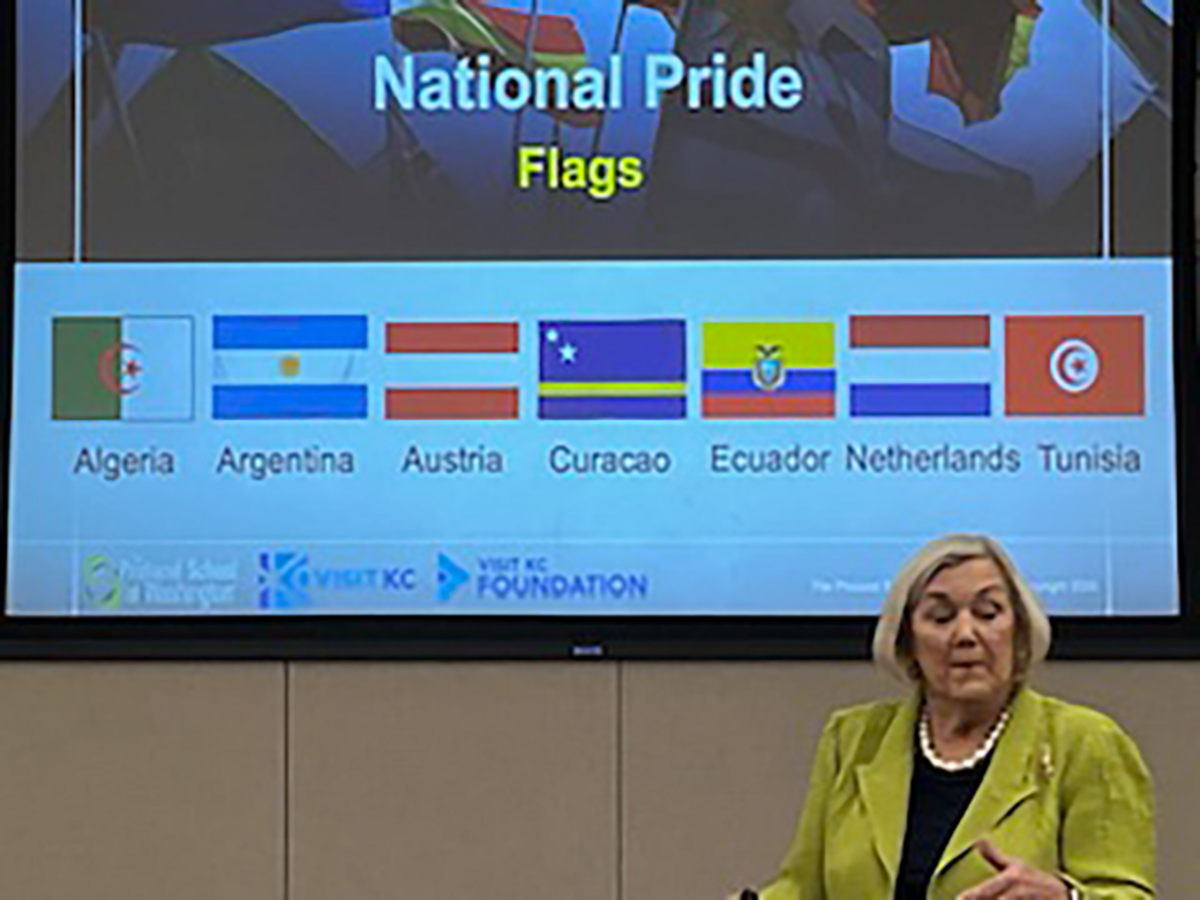
They also separated cultural focuses by regions of the world to give staff an idea of common practices. Then each regional focus highlighted the countries in the region, greetings, religions and values, food considerations, social cues, and a “frontline reminder” that gives a more specific detail to remember when approached by guests from that region.
In Latin America and the Caribbean, for example, staff are told to be inclusive to the groups of visitors that will be traveling, including everyone in the conversation instead of just the person talking. They’re also informed that “guests may stand closer during conversation than U.S. staff are accustomed to.” Latin Americans could also value a slower pace of service instead of a rushed transaction.
On the other hand, visitors from Oceania may prefer straightforward answers and efficient service. Staff are asked to expect humor and casual conversation with visitors from this region.
Some cultures may have unique greetings. A “wai” gesture replaces a handshake in Thailand, and involves pressing palms together with a slight bow. Meanwhile, staff are asked to avoid overly casual physical contact with visitors from the Middle East and North Africa. A “useful” Arabic greeting for some people in this region is “as-salamu alaykum,” which translates to “peace be upon you.” It is also important to avoid using the left hand to greet or to pass anything to people from this region, as some people believe the left hand is solely used for personal hygiene.
Despite the specificity, the training is meant to give staff guidance, and is not all-encompassing. The bottom line for when greeters are unsure is just to, “choose courtesy, professionalism, and curiosity over familiarity or assumptions.”
PSOW also provided a handout for staff to know the “Dos and Don’ts” of fan interaction. It recommends staying neutral and not expressing opinions on the World Cup or debating teams or game decisions with fans. It also tells staff to inform tourists of local tipping customs, but to not take it personally if they don’t tip.
Irina Kobzeva-Pavlovic is a training officer with Kansas City’s Aviation Department. She said the presentations were interactive, allowing the trainees to experiment with hypotheticals in real time.
“There are a variety of different situations that might come out where you have to adjust and do things that you might not be typically used to,” Kobzeva-Pavlovic said.
The airports are preparing for more than just tourists. The downtown airport welcomes many charter planes, and Overstreet said the airport is expecting many celebrities, dignitaries and business leaders who are choosing to fly privately. Starting this week, the airport will have a reservation system that will require private travelers to book slots for landing and taking off.
“The airspace can get pretty busy,” Overstreet said, “so we want to try to make it as a cohesive structured system as possible.”
Operators are accustomed to extensive traffic because of Kansas City Chiefs games and other large events, but the reservation system will help make the process more efficient, Overstreet said.
Kobzeva-Pavlovic said they ended the presentation referencing the city’s slogan, “the heart of America.”
“Our hope is that it’s not just the heart of the Midwest, but that this special experience will find a place in the hearts of numerous visitors that are coming through the airports,” she said.
King has four tips that may be useful for locals to understand how they should approach cross-cultural interactions as fans begin to trickle into Kansas City:
- Understand that the fans want to have an authentic KC experience — be who and what you are known for — real hospitality, amazing BBQ, cultural richness, jazz.
- Treat fans the way you want to be treated when you travel. A smile eclipses a language barrier.
- Allow visitors to initiate greetings — maybe they shake hands, maybe they bow.
- Kindness is universal — mistakes will happen — it’s how you resolve issues that matters most.