KC architect aims to restore decades-old, heart-shaped forest ahead of World Cup
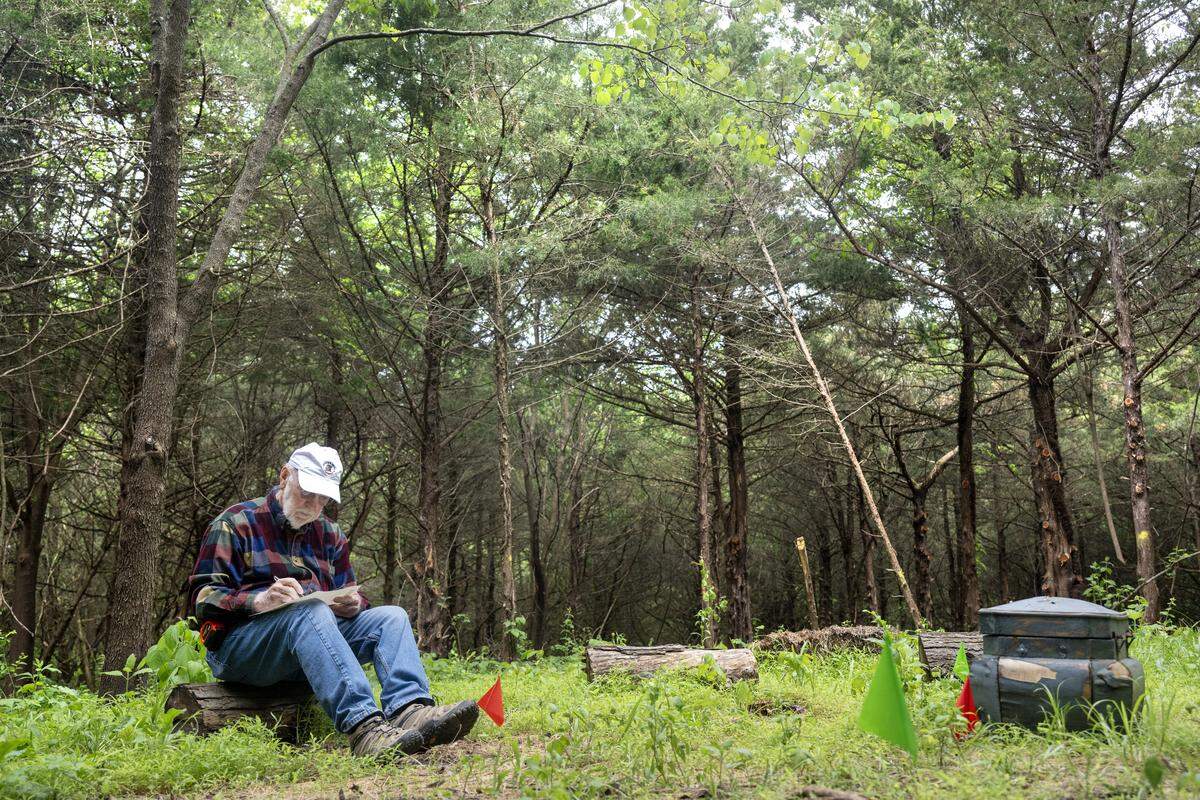
Sitting on a small log in the center of the forest, surrounded by softly waving trees and whistling birds, Bob Berkebile wrote a letter no one will ever read.
It was a message for the forest scrawled on branded stationary, carefully tucked away in an old wooden box with cobwebs in the corner, where the ivory paper will likely fade with age, and rain will someday wash away his inked words.
It’s here in the “heart of the heart” of Heart Forest near Kansas City International Airport that Berkebile hopes people will soon be able to have the same opportunity to reflect and sit in peace among the trees planted more than three decades ago.
Berkebile, a Kansas City-based architect, is on a mission to finally accomplish his 30-year goal of opening the gate of the 8-acre forest located near the intersection of North Brightwell Road and N.W. 104th Street to the public to share its message of hope, love and unity.
“When I’m here in this forest, I can feel that, and I can see it growing,” Berkebile said.
When Berkebile first launched the project to create Heart Forest in the late 1980s, he worked with hundreds of volunteers to plant thousands of trees in the shape of a heart, representing the “heart of America.”
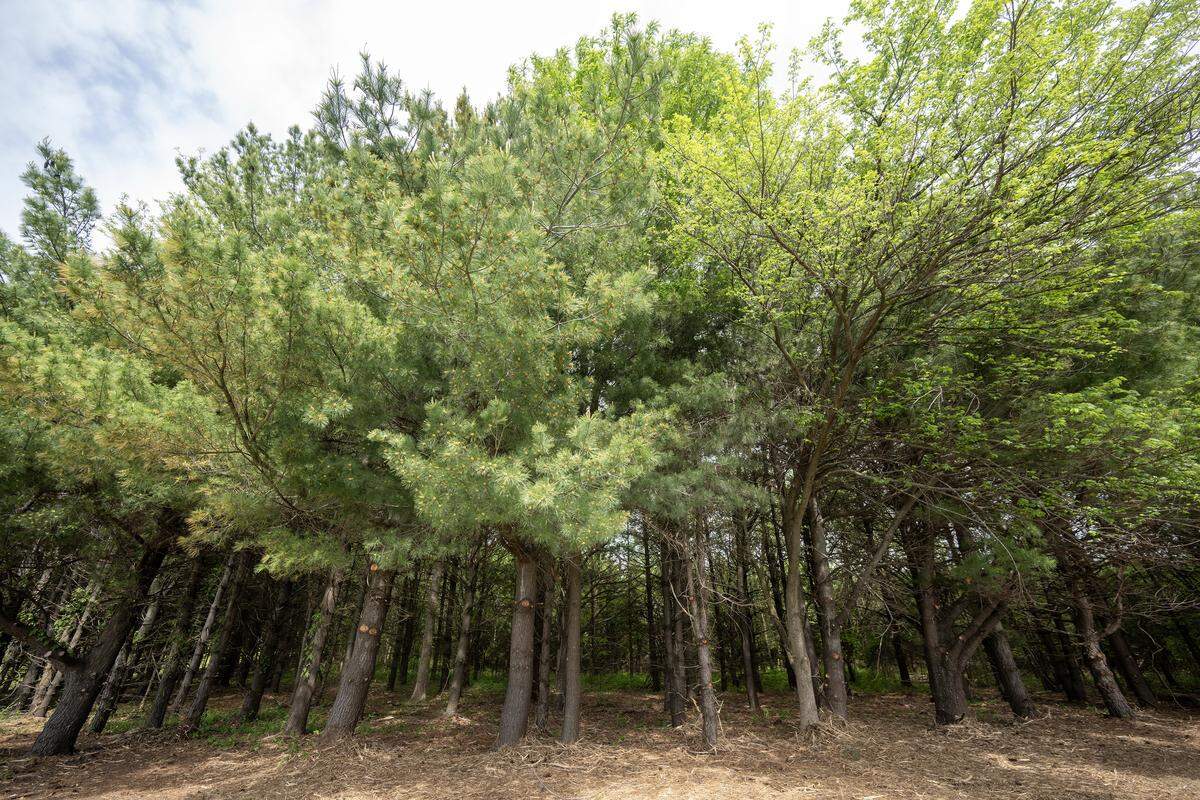
In the years since the first tree was planted in 1990, the young pines and hardwoods grew from 3 feet to 50 feet tall. The paths once designed with precision weaving throughout the forest became overgrown and nearly impossible to navigate. Even the iconic heart shape of the forest began to blur.
And, as time passed, the forest, left untouched for years, was forgotten by many.
But with each branch trimmed, Berkebile is one step closer to restoring the forest and sharing it with as many visitors as possible, a goal he hopes to accomplish this month as World Cup travelers begin coming to town.
“When World Cup visitors start showing up, we hope this will be part of their experience,” Berkebile said.
Revitalizing the forest
With just over a month until Kansas City’s first World Cup match, there’s still plenty of work to be done before the forest gates can officially open.
Large heaps of dead branches pile by the entrance to the forest, with no real path through the tall grass between the road and the outer edge.
In the coming weeks, Berkebile, along with his colleague Brian Weinberg, will lead a variety of projects, including building a parking lot and welcome plaza equipped with benches and informational signage about the forest.
Additionally, the trails running through and around the outer edge of the forest will be enhanced to improve accessibility. And, the canopy of the forest will be cleaned up to sharpen the heart shape to increase its visibility from airplanes flying overhead.
Saplings will also be planted to help regrow the understory of the forest, and work will be done to address erosion caused by nearby farming irrigation.
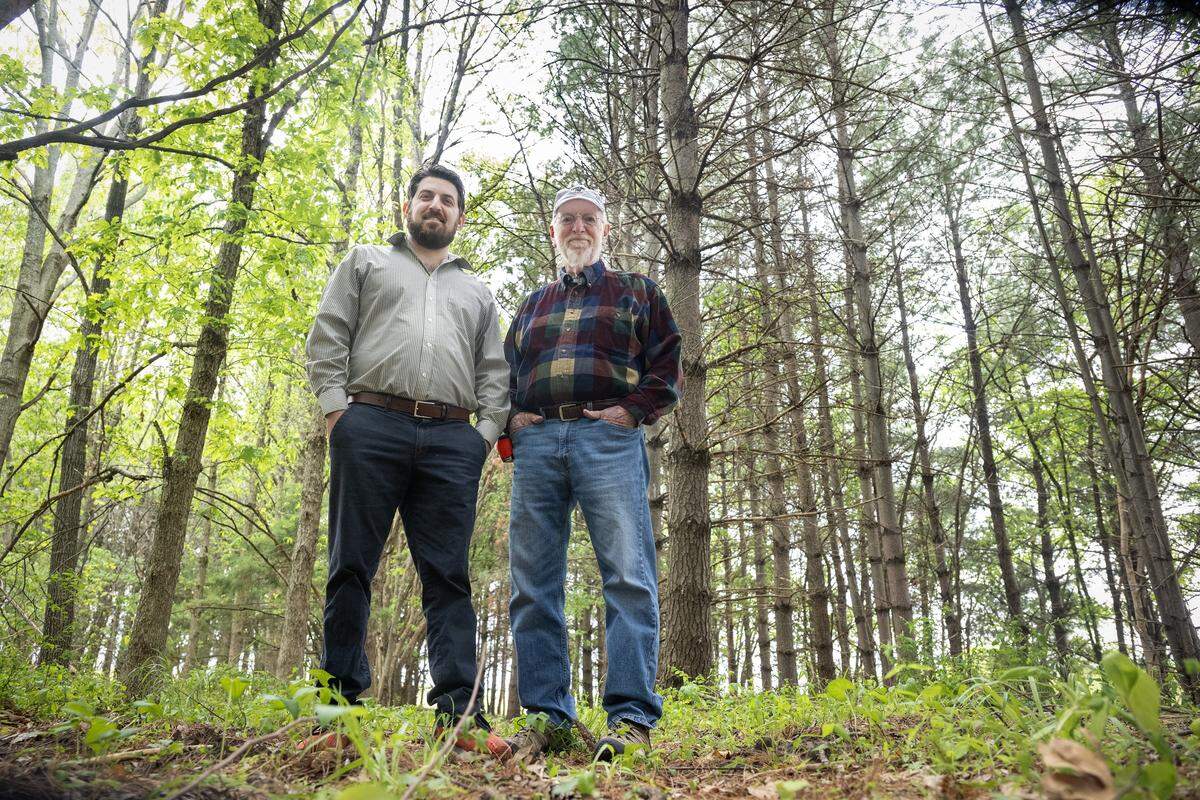
Berkebile and Weinberg, co-founders of the Foundation for Regeneration, an organization dedicated to creating “placemaking” projects like Heart Forest, also plan to create a sanctuary of sorts in the center of the forest, where people can go to relax, reflect and write letters, prayers and thoughts to the forest.
Here, with help from students at the Kansas City Art Institute, they will put benches, tables and a permanent box for visitors to place their messages in.
“It’ll be a really cool, unique, special place,” Berkebile said.
In the meantime, people can visit the forest in small groups by booking an appointment on the Heart Forest website.
‘Heart Spirit’
The idea for Heart Forest first sparked in 1987 during an international global peace celebration in Kansas City, when Berkebile hosted a breakfast for leaders.
There, Tadodaho Leon Shenandoah, the leader of the Onondaga Nation in New York at the time, spoke about the spirit he feels when he visits Kansas City.
“(He said) ‘I’m an elderly man. I travel a lot, and when I do, I grow weary. The exception is when I’m here. You have created something really unique, and I feel it when I’m here. It’s heart spirit. And when I’m here, my heart grows strong and my spirit soars like an eagle,’” Berkebile said.
Those words stuck with Berkebile, inspiring him to bring that heart spirit to life.
“I was pretty knocked out by this,” he said.
So, he got to work first designing a heart-shaped tree line that ran around the entire metro. After a year of contemplating how to make such a large-scale project work, he switched his focus to crafting a condensed, heart-shaped forest near the airport instead.
In 1990, hundreds of volunteers, ranging from Berkebile’s own family and friends to community members and local scouts, began planting around 2,000 3-foot tall trees provided by the Missouri Department of Conservation in heart-shaped rings.
Once it was completed, Berkebile said there was a lot of excitement around the forest. Pilots even used to point it out to travelers as they took off and landed at KCI.
Now, years after that excitement has dulled, Berkebile and Weinberg hope to bring that attention back to the forest and the message it stands for.
“There’s no other place in the world like it. It’s truly a novelty,” Weinberg said.
This story was originally published May 8, 2026 at 5:00 AM.