‘No Friends’ to be had at electric KU-Mizzou game: ‘A war within homes’
Obnoxious. Mediocre. Insufferable. Awful. Entitled.
Those are just some kindest descriptors that Missouri and Kansas fans gave when asked to describe their rival schools in one word.
The recently renewed Border Showdown between Mizzou and KU brought an electric atmosphere to the T-Mobile Center on Sunday, Dec. 7, as well as a feeling of disdain throughout the Kansas City arena. Ulimately, the Jayhawks came out on top, winning 80-60.
Right ahead of the noon tipoff, a montage of Kansas and Mizzou basketball highlights played on the jumbotron, which was complemented by the song “No Friends In The Industry” by Drake. It’s a song that touches on the lack of trust and friendship outside of one’s immediate family and friends.
With the way these rival fans were describing one another, whoever chose that song might need a raise.
“He’s been my best friend my whole life, but on days like today, he’s not,” said KU fan Jackson Sumrall, who came along with his buddy Austin Robb, a Mizzou fan.
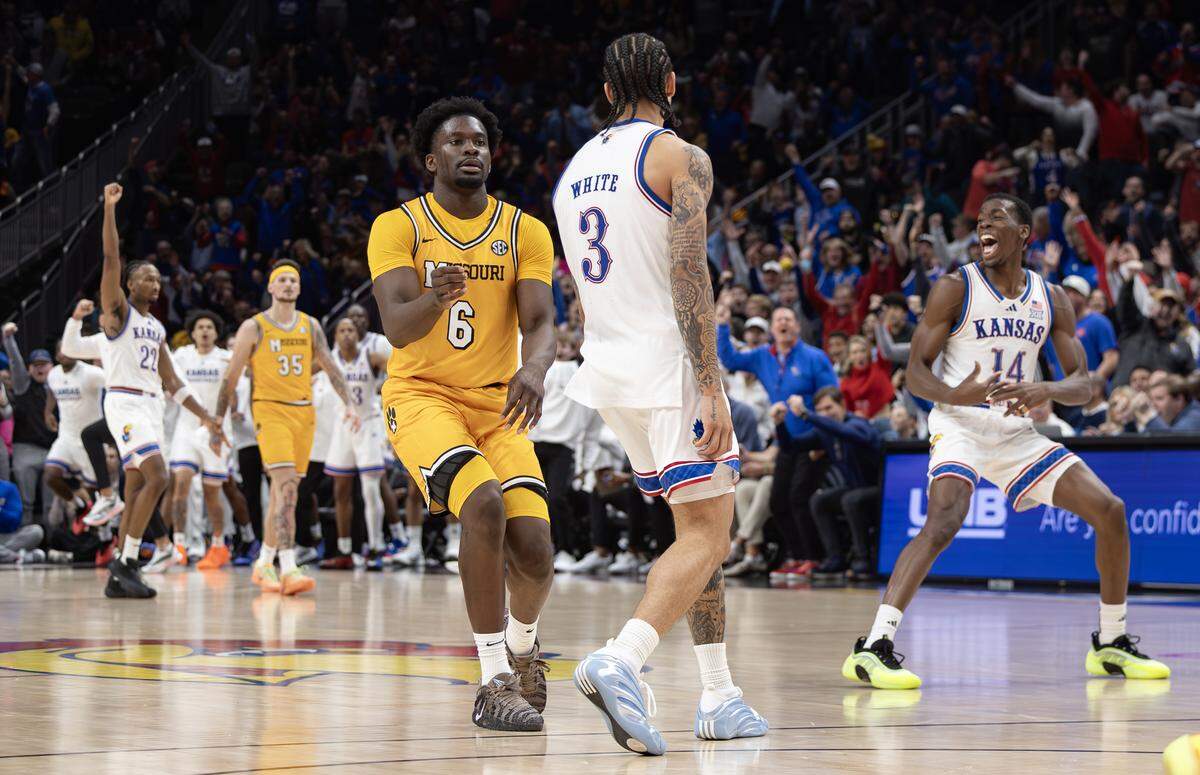
It’s a rivalry that goes deeper than just athletics. You have to go back to the 1850s, when Missouri was a slave state, and Kansas was set to cast a vote on whether it would enter the Union as a free or slave state. The divide led to some bloody battles between the two state and spawned the term from which KU would eventually draw its mascot.
AJ Nies, a freshman at the University of Kansas, said he was educated on the Civil War back when he was in third grade. As a lifelong Jayhawks fan, he understood that this was bigger than a school rivalry.
“We learned about state history, the border war between Kansas and Missouri going back to the Civil War. Learning about the Jayhawkers, John Brown and all of them,” said Nies. “My grandma’s side of the family, they’re all Mizzou fans, so this means a lot to me.”
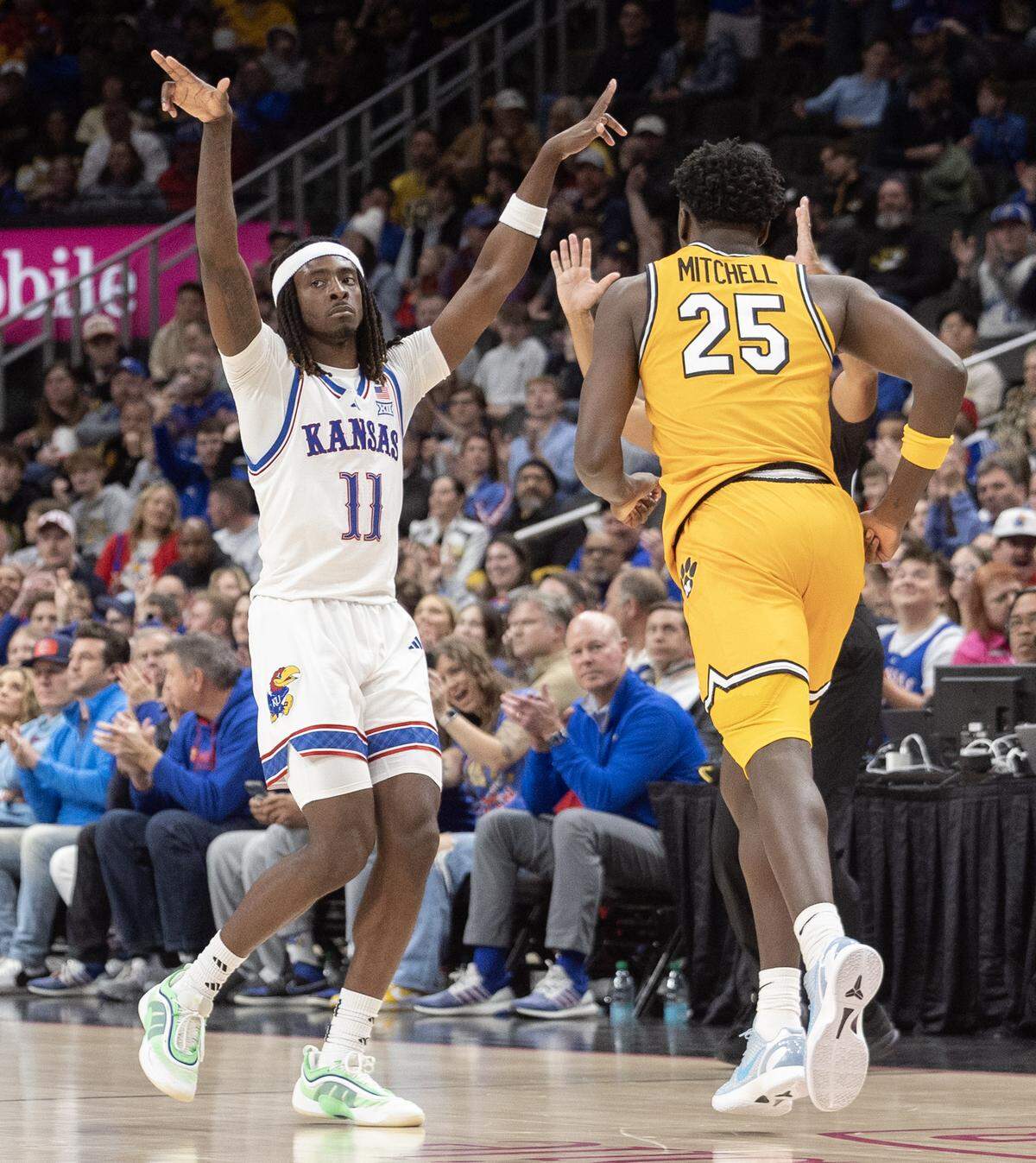
Coaches, players from both sides embrace rivalry
Fresh off the 20-point loss, Mizzou coach Dennis Gates started his press conference praising the opportunity to play in the Border Showdown, saying the rivalry invigorates both universities and fan bases.
“It is a war within homes. You got family members going to Kansas, their siblings going to Missouri,” Gates said. “It’s a great rivalry, and it’s a tremendous game.”
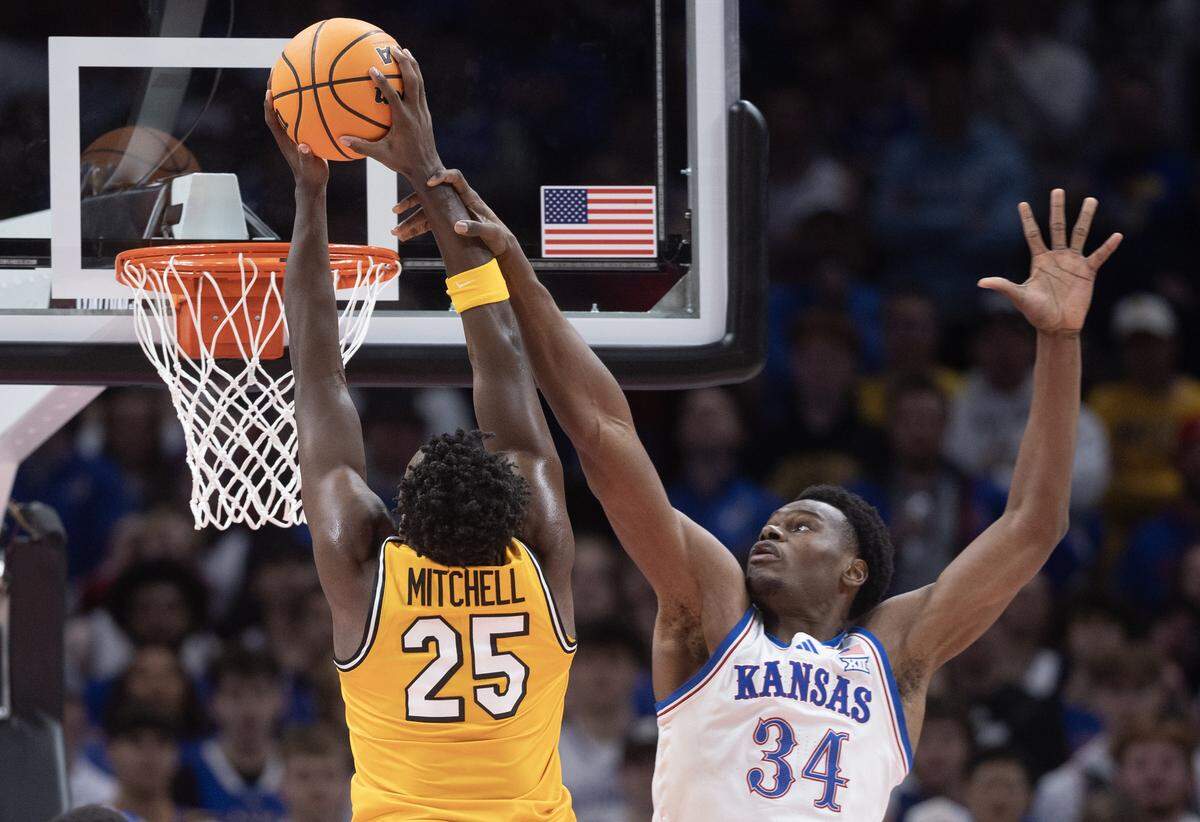
The matchup marked a homecoming for Mizzou senior Mark Mitchell, a Kansas City, Kansas, native, who finished the afternoon with a game-high 21 points. He reflected on being able to play a rivalry game in an arena he’s very familiar with.
“I’ve probably been here about 10–20 times. I’ve been to a couple of KU games here in my time,” Mitchell said. “This means a lot just to be in this rivalry, just to have Mizzou fans behind my back. I think it just means more to be a Missouri Tiger, and to go fight and put on for the rivalry.”
Kansas takes back its bragging rights
Sunday’s matchup could be seen as a get -back game for the Jayhawks and their fans. Last year, in Columbia, the unranked Tigers upset the Jayhawks, who were the No. 1-ranked team in the country.
Fast-forward to this year’s football matchup in the rivalry, Mizzou also took home the win. Fans most certainly remembered this heading into the matchup, with Missouri fans looking for revenge.
“Coming off that huge win against them in basketball, and then getting to play them in football as well, there was so much energy on campus,” said Joey Korn, a senior at Mizzou.
His fellow student Alec Feinman chimed in, saying that “there’s just tension,” when it comes to this rivalry.
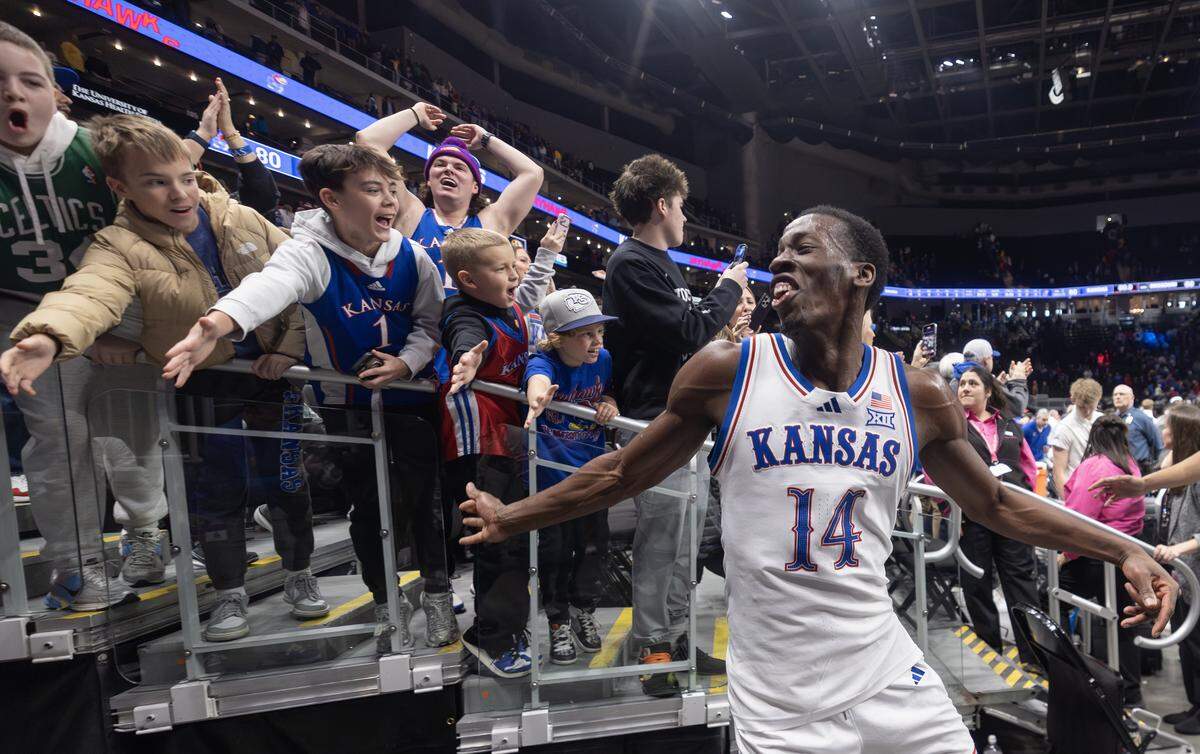
Despite the neutral site, this turned out to be very much a home game for the Jayhawks. Gates guesstimated that the crowd was 90% Kansas fans, and 10% Mizzou fans.
You can surely hear the Mizzou crowd in the first half of the tight game, before things flipped to Kansas’ way in the second half.
“This ain’t Allen Fieldhouse” one Missouri fan yelled out from the right side of the media section.
He was right in the sense that it wasn’t a home game, though it was clear who had the home court advantage. The same side had the last laugh on the court, once the 40 minutes of regulation were up.