How Missouri Tigers football team is preparing to face Army’s triple-option offense
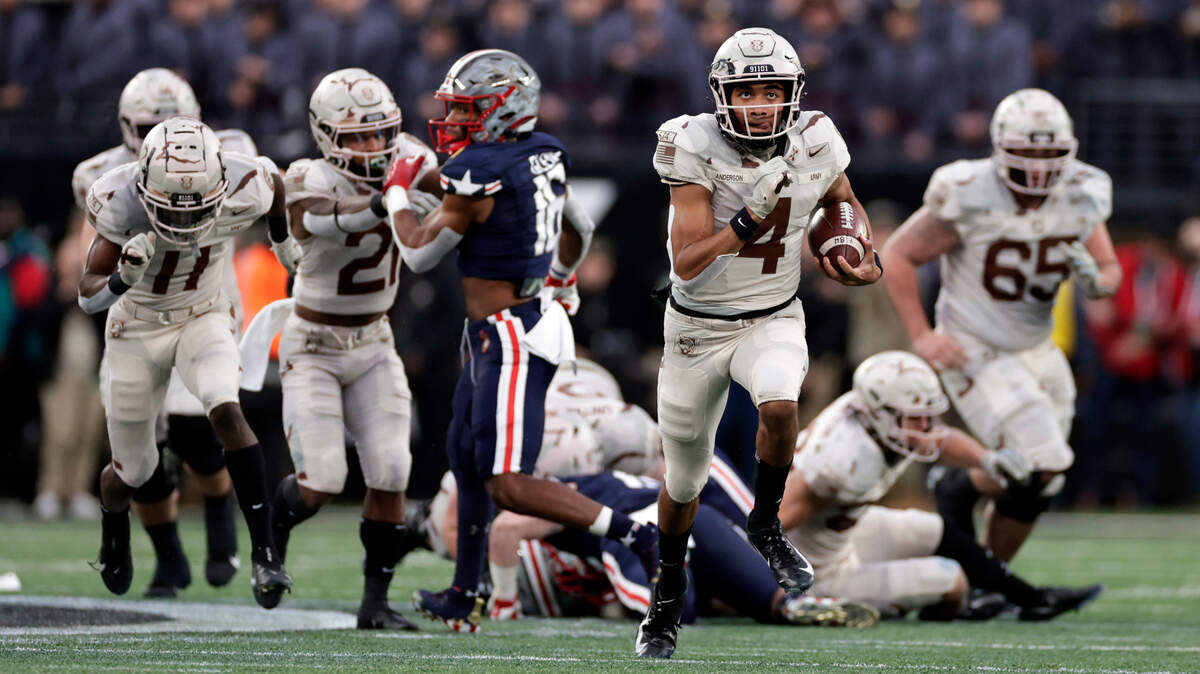
There is no guessing game with the opponent that lies ahead. No illusions or attempts to disguise the scheme that’ll be run. The Army Black Knights are synonymous with the triple-option offense, only used by a handful of teams in today’s era of college football.
The task for the Missouri Tigers in the Armed Forces Bowl at 7 p.m. Wednesday in Fort Worth, Texas is clear: find a way to defend it. Because if not, Army will run the ball down their throats and have complete control of the tempo.
Behind the triple option, the Black Knights have scored a FBS-high 44 rushing touchdowns and are averaging 286.4 rushing yards per game, which ranks second in the country — the first in that category, Air Force, also runs the triple option.
“The greatest challenge is just really the discipline part,” Missouri defensive coordinator Steve Wilks said. “Everybody taking care of their assignment, whether you have dive, quarterback or pitch.”
The dive, keep and pitch are the three options that give the offense its name. The Black Knights line up in what’s called a flexbone formation, which features a fullback behind the quarterback and two slotbacks on either side of the signal caller.
On the first read, the dive, the quarterback hands the ball off to the fullback, who plunges forward. The ball stays with the quarterback on the keep, which has led to 1,064 net rushing yards combined between Army’s Christian Anderson and Tyhier Tyler this season. When the quarterback keeps, he runs parallel to the line of scrimmage and then also has the option to go to the third read and pitch the ball to one of the slotbacks.
Another key aspect of the triple option offense is the use of cut blocks. Often used to combat the lack of size for academy teams in the trenches, the offensive line essentially tries to knock defenders to the ground by hitting them in the knees. This technique creates holes for the backs, or at minimum slows down defensive linemen before they can get to the ball.
“The emphasis is really playing with our weapons, which are our eyes, hands, hips and feet,” Wilks said. “It doesn’t matter how athletic we are, if we’re on the ground we can’t execute. So we gotta do a great job with our fundamentals and technique because these guys are phenomenal as far as cutting on the first, second and third level.”
The thing is, cut blocks aren’t the easiest to prepare for.
“It’s really just learning a new way to defeat blocks as a D lineman,” defensive lineman Darius Robinson said. “Obviously you gotta use your hands, use your feet, use your eyes, but now it’s a different tempo, way different angle of how you’re getting your blocks.”
Cut blocks are hard to simulate in practice, Wilks noted. But throughout the last two weeks coaches have run what he calls a “detail intense cut drill circuit” for the defensive line, linebackers and defensive backs. The coaches and scout team rotate through the different options and the purpose of the exercise is to familiarize players with how they need to watch, identify and respond to avoid being cut to the ground.
“You’re never really gonna understand and know how it is until you get in the game,” Wilks said. “We have gone live a couple of times and guys have gotten a taste of being on the ground and understanding if I don’t have my eyes in the right spot, I’m gonna be on the ground. So it’s just really trying to create that muscle memory and second nature as we get ready for this game.”
One thing that has been missing from those reps is the football itself. The Mizzou defense hasn’t been using one in practice.
“Because what happens is you train your eyes to see different things,” Wilks explained. “So well, I thought he handed the ball off. Or, I thought he kept it. Or oh, I thought it was a pitch. No, all right. No ball. Tackle the dive, all right. Tackle the quarterback, all right. Pursuit to the pitch.”
Wilks said the Tigers will incorporate a ball for the first time in practice on Monday, and then again the following day before the game on Wednesday.
Facing the triple-option offense is a tough challenge to begin with, but throw in the fact that Missouri struggled to defend the run for most of the season and it becomes even greater.
“We came a long way as a defense and we’re just ready to prove ourselves once again,” defensive lineman Trajan Jeffcoat said.
Mizzou’s defense allowed an average 282.9 rushing yards through the first eight games but has improved under the direction of new position coach Al Davis, with the team holding opponents under 170 rushing yards in four consecutive contests to end the regular season.
Wednesday will be a test of how much progress the Tigers have made in defending the run.
“We’re not too worried, we’re not too pressured as well,” Jeffcoat said. “We’re very confident and we just know that we need to capitalize on discipline. Discipline is the biggest theme going into this game. But we have had a lot of energy in practice, so our confidence level is pretty high.”