
He had no feeling in his arm. Now he could be a national NCAA champion
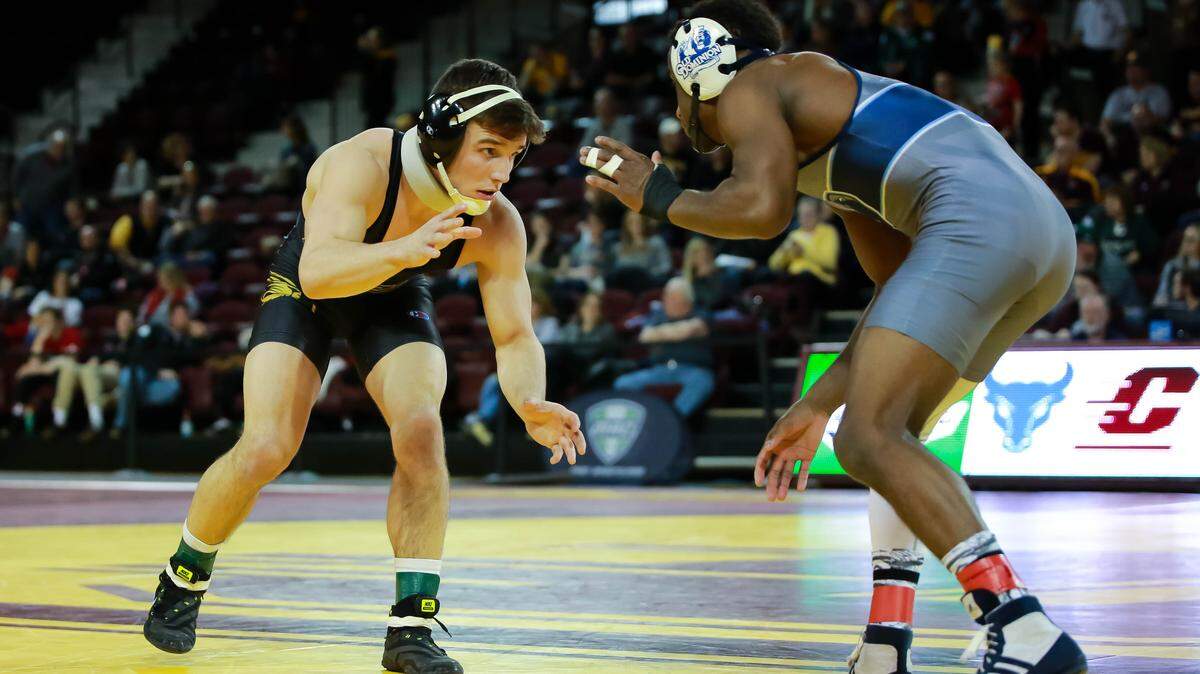
As Missouri’s wrestling season began in the fall, coach Brian Smith had no idea what to expect out of Grant Leeth.
Maybe more concerning, Grant Leeth had no idea what to expect out of Grant Leeth.
A severe neck injury had sidelined Leeth, a Kearney High graduate, for almost three years. Yet the redshirt junior insisted on wrestling even when Smith told Leeth’s family that he should retire from the sport.
But a season that has been full of upset wins now has Leeth, Missouri’s starter at 149 pounds, at NCAA championships as one of the program’s best hopes for a national title.
“He’s having an amazing year,” Smith said of Leeth, who won his opening match on Thursday.
As a freshman at Duke in 2014, Leeth began having pain in his neck. He attributes it to natural wear on his body after wrestling since he age 6.
A visit to the university’s doctors and an MRI didn’t shows any signs to help it.
To fight the pain, he had steroids injected into his cervical spine, an attempt to numb his nerves.
He transferred to Missouri at the end of the season, and when he arrived at MU, the pain only became worse. He was diagnosed with a slipped disc in his neck.
He lost feeling in his left arm, his primary arm for wrestling. His grip strength dramatically diminished.
After seeing him in pain after a tough practice early in his sophomore year, Smith called Leeth into his office.
“If you want to hold your kids, if you want to be able to move when you’re older, you need to be done,” Smith told him. “It’s not worth it.”
Smith suggested a medical hardship waiver, which would have kept Leeth on scholarship but taken him off the roster, so Missouri could add another wrestler.
Leeth wasn’t ready to hang it up, though, and he started scrambling to see what his options were. His mother, Amy, was ready for him to retire out of fear that the injury could lead to paralysis; his father would support whatever decision his son made.
Leeth sought advice from multiple doctors and eventually decided to have disc replacement surgery in November 2015. Before undergoing the procedure, doctors told him there was still a chance he might not wrestle again.
“My life won’t be complete if I don’t give this a shot,” Leeth’s father, Vincent, remembered his son telling him.
Leeth’s rehab process was slow and gradual, and resulted in him missing two years of competition.
But Leeth showed signs of what he could be in the team’s seasoning-open win against Illinois. He beat Eric Barine, who came into the match No. 17 in the country, 6-2 in his first collegiate match since 2014.
After two setback losses at the Lindenwood Open in November, which Leeth called “a wake-up call,” he rebounded with the biggest win of his career a week later.
He defeated Virginia Tech’s Solomon Chisko, who was No. 5 in the country at the time. As the season went on and Leeth continued to win, he climbed up the national rankings.
When Leeth defeated Oklahoma State’s Boo Lewellan in January after losing to him earlier in the season, Smith knew the wrestler's confidence was where it needed to be.
Leeth won the MAC title in his class during the first weekend of March and entered the NCAA championships as the No. 3 seed in the 149-pound class.
“We knew he had talent and we knew if we he could get some confidence then things could blow up like they did,” Smith said. “He just believes in the way he wrestles now.”
Leeth’s season has included smart management by Smith. He’s held him out of a few meets and practices to keep him fresh and healthy.
Leeth is one of a number of Missouri wrestlers who could make deep runs in this weekend’s national tournament.
Looking back at his conversation with Leeth, Smith is happy that Leeth didn’t listen to him, and has taken this improbable ride all the way to nationals.
His father is less surprised. He knew his son wasn’t going to come back for nothing.
“If he ever got the chance,” Vincent Leeth said, “he was going to make the most of it.”
This story was originally published March 15, 2018 at 1:30 PM with the headline "He had no feeling in his arm. Now he could be a national NCAA champion."