Kansas City’s basketball factory: Mokan Elite produces stars across March Madness
When Ochai Agbaji joined the Mokan Elite AAU basketball program in 2017, one thing in particular stood out to his coach, Chris Neff: the kid truly didn’t believe in himself.
Agbaji was trying to find his footing on the 17U squad after entering the Nike EYBL circuit late, between his junior and senior years of high school. He didn’t get much playing time on a team with a loaded roster, and coaches could tell he was in need of a confidence boost.
Neff and his assistant coach, Dave Milliren, would regularly pull Agbaji aside after pregame team meetings, in hopes of lifting his spirits to give him an edge on the court.
“We would just tell him, ‘Man, you belong here. You are special. You got gifts. Let’s use them. Let’s go out,’” Neff recalled to The Star. “Just to really just pump into him, ‘Man, this is where you belong.’”
Nearly five years later, there’s no question that Agbaji belongs. The consensus first team All-American led the Kansas Jayhawks into the NCAA Tournament as a No. 1 seed.
Two of his current teammates, Christian Braun and Dajuan Harris Jr., also came through Mokan; they joined the program in middle school along with Missouri State’s Isiaih Mosley, one of the top scorers in college basketball this season.
They aren’t the only ones. When you turn on a game during the men’s NCAA Tournament this month, there’s a decent chance to see a product of Mokan Elite, one of the top AAU programs in the country, based out of Kansas City.
Agbaji, Braun and Harris lead the way for the Jayhawks. Kennedy Chandler is a star freshman point guard for the No. 3 seed Tennessee Volunteers, whose staff also features former Mokan coach Rod Clark. Forward Malik Hall is a key leader for the No. 7 seed Michigan State Spartans. Kendall Brown has shined in his freshman season for the No. 1 seed Baylor Bears.
Though they don’t see as many minutes as the others, there’s also Bryce Hopkins, a freshman for the No. 2 seed Kentucky Wildcats, and Michael Peake, a forward for the No. 12 seed New Mexico State Aggies.
“It’s gonna be fun to watch,” said Matt Suther, the program’s founder. “Those guys, they all love each other and they’d be there for each other — but when they’re on the court competing against each other, they know they gotta do what they gotta do to get a leg up and win.”
The footprint of the Mokan program is evident across all levels of the sport. There are 27 different players on Division I rosters, and a fair number more across the lower divisions as well.
The program also boasts seven players in the NBA: Trae Young (Hawks), Michael Porter Jr. (Nuggets), Alec Burks (Knicks), Shake Milton (76ers), Semi Ojeleye (Clippers) Willie Cauley-Stein (76ers) and Juwan Morgan (Raptors & G-League). Plus, former coach Max Lefevre, a video coordinator and player development associate for the Timberwolves.
“It’s truly unique to see a program that has this many players at the college and the pro level,” Braun told The Star. “Honestly, you can look around any other school and I can either tell you somebody that I played against or played with. So it’s really cool to see and just to know those guys’ backgrounds and how far they came and how big of an impact Mokan has had on each kid that I played with. It’s awesome.”
How Mokan came to be
Matt Suther felt like something was missing in his life in the years following his collegiate career at UMKC. Working a typical 9 to 5 job, he yearned to be around basketball again.
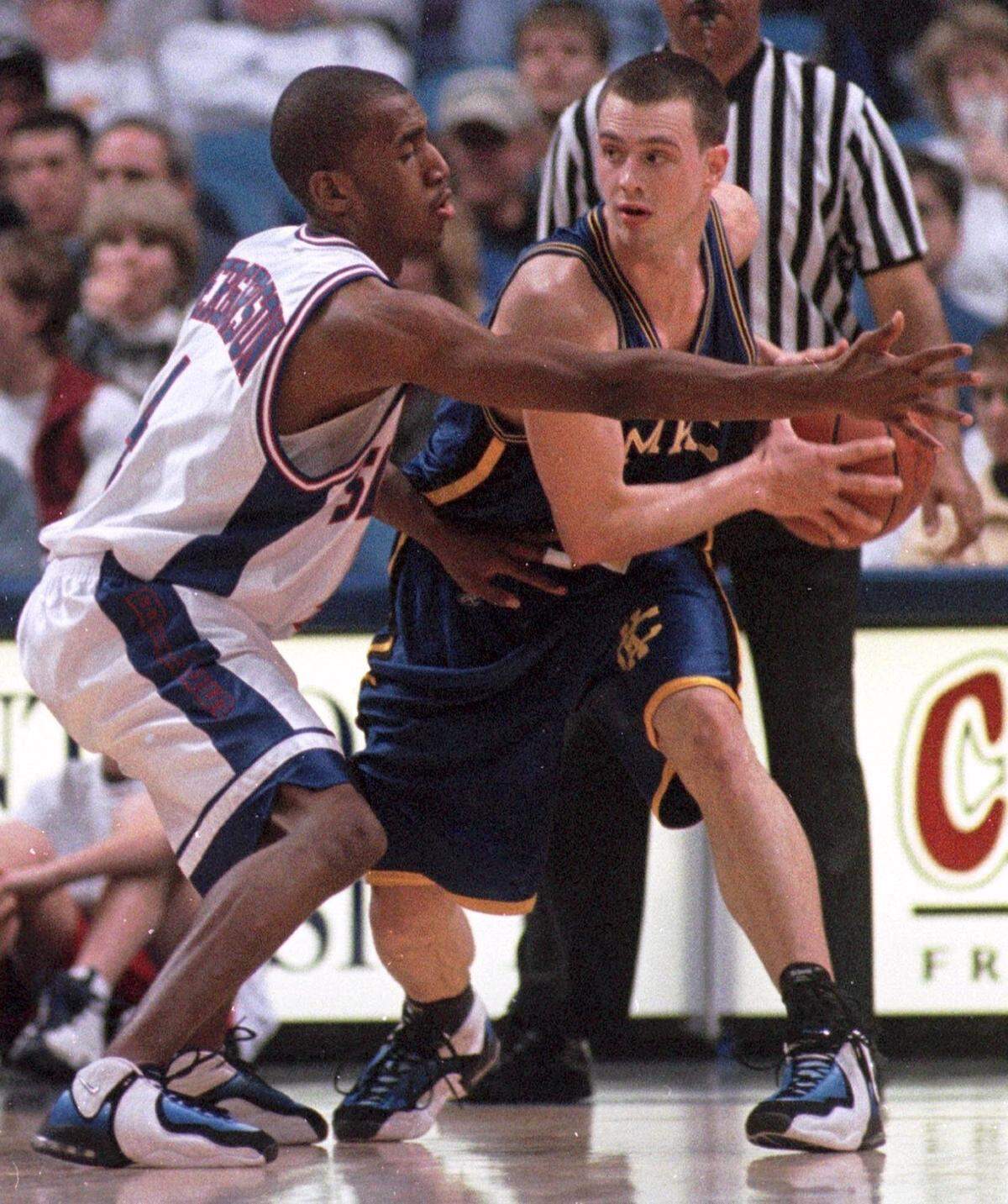
So, in 2004, he began working with a group of eighth graders at the Boys and Girls Club in Kansas City. He quickly formed a bond with those kids and he went on to coach them through high school. Several even earned athletic scholarships, including Willie Reed, who played for the Saint Louis Billikens and was on various NBA rosters from 2015-18, Andrew Jones, a two-sport athlete (along with football) for the Mizzou Tigers, and Aldon Smith, who fully went the football route at MU and was eventually a first-round pick in the NFL Draft.
Suther found himself “kind of at a crossroads” once they graduated. “At that point I was in love with it,” he says. “I wanted to impact more kids.” That’s when he reached out to Western Illinois assistant Rodney Perry — who he declares to this day is “without a doubt the best recruit I have ever recruited” — and shared his vision of starting an official AAU program.
They had both noticed how many talented players weren’t lasting at the college level because they hadn’t been prepared properly. They wanted to change that, to provide a structured environment that would give kids the tools they needed to be successful.
“We felt like there were a lot of people out there that weren’t quite doing it exactly for the kids,” Perry told The Star. “We wanted to do it the right way with the right people.”
They expanded MoKan Elite to two teams in 2008, one of which featured Knicks wing Alec Burks, and it grew organically from there.
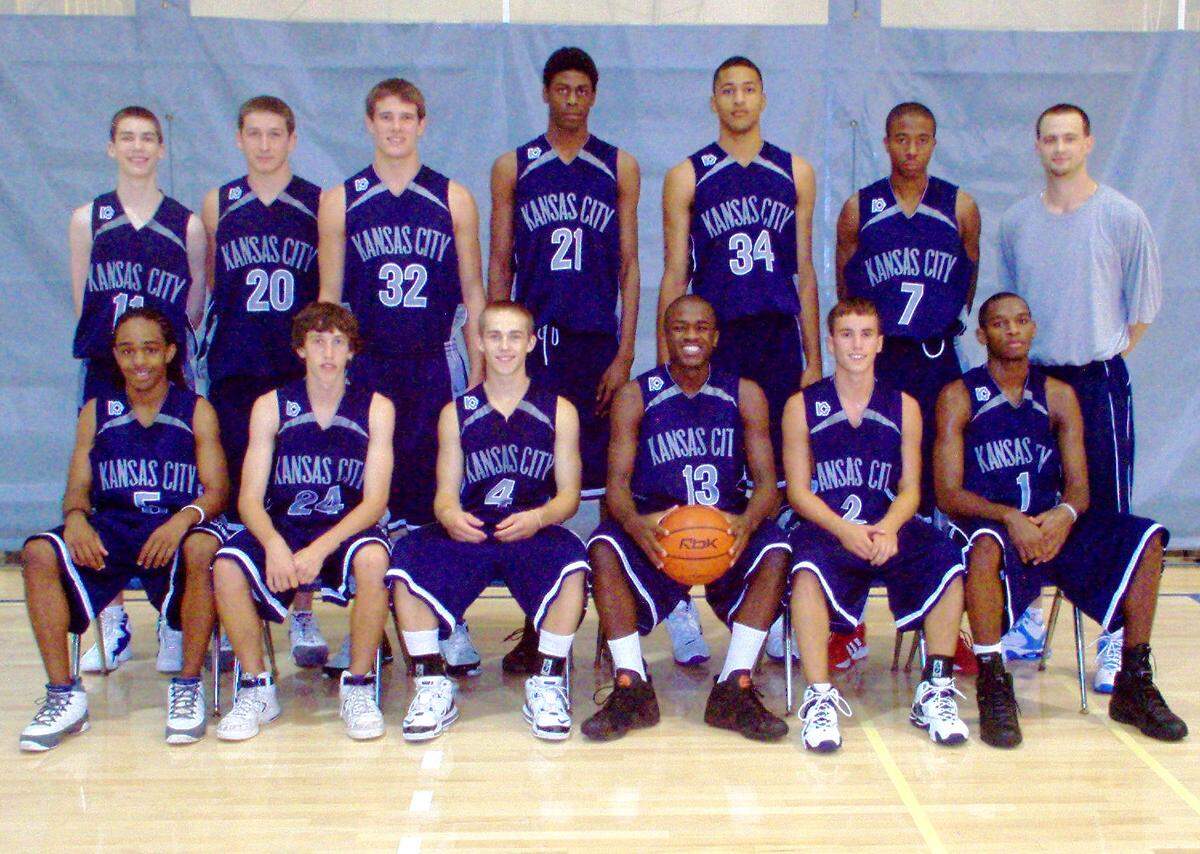
“There was never any grand plan,” Suther said. “It’s just every year we’re trying to bring guys into the program that we feel like our structure and our environment can help them chase their dreams. My belief is when you continue to do that and you’ve got the right people involved and you have the right intentions, these type of outcomes just naturally happen.”
Perry and Neff, who came on board in 2011, have been integral part of that equation. They treat the operation like a college team with a full playbook, film sessions, scouting reports, practice plans and an emphasis on defensive drills. They aren’t there to sugarcoat anything. Players also have access to an academic adviser — and over the last couple years, name, image and likeness education came into play through a first-of-its-kind partnership with Opendorse.
The program became part of the prestigious Nike EYBL circuit in March 2011. In its second year of existence at the time, the league held a play-in tournament event, the winner of which would earn a contract. Nobody expected Mokan to have a shot, but but that team featuring future NBA players Cauley-Stein and Ojeleye won it all.
A few months later came another monumental moment for the program: the first Mokan player selected in the NBA Draft. Burks, after two years at Colorado, was taken 12th overall by the Utah Jazz.
Suther provided support throughout the entire draft process, Burks still remembers. He helped the 6-foot-6 wing pick an agent and was by his side on draft night, which was held at the old Nets facility in New Jersey. After they wrapped up media and other obligations and got back to their hotel in Times Square, Burks only had one thing on his mind: “Are we gonna go eat?”
“We can go anywhere you want,” Suther declared. Burks had just been selected as a lottery pick, so Suther figured Burks would want to go out to a fancy restaurant to celebrate with a steak. But that wasn’t the case.
“He wanted to go across the street to like Johnny Rockets or something,” Suther recalled. “He probably wasn’t even 20 years old at that point. He ordered chicken strips, french fries and a fruit punch (or) pink lemonade or something. … And he looked at me and goes: ‘I made it Coach! I made it.’”
That moment was everything. To see a young man he considered family — as he does with everyone in the Mokan program — in such an innocent daze of excitement after achieving his dream meant a lot to Suther.
“He loves that story,” Burks said. “I ain’t know no better. I was fresh out of Grandview, Kansas City. So you know how it goes. But he was with me during that time. It just shows the love and bond we have with each other.”
Michael & Trae and the Giant Peach (Jam)
Back in his freshman year of high school, Michael Porter Jr. was trying to decide what AAU program to join. There weren’t any options in Columbia, so the future Denver Nuggets forward could either go with the St. Louis Eagles or Mokan Elite in Kansas City.
The more Porter got to know Suther and the way he ran his teams, the more obvious it became that Mokan was the right choice for him. Already with goals of playing in college basketball and the NBA on his mind, Porter was intrigued by the unique type of structure the program provided.
“A lot of EYBL teams, you don’t really practice a lot, you just meet for the tournaments and you play,” Porter told The Star. “We’d all go up there for the weekend and just practice all weekend, even though guys are from different cities. … I thought it’d be the best situation to kind of prepare me for college and give me the best chance to become the best player I could be at that age.”
Mokan starts preparing for each AAU season in March and fits in around 20 practices before the first EYBL event. The program flies players into Kansas City on the weekends, where they usually fit in four practices in three days. If kids need a ride to practice, coaches provide assistance with that too.
“They run it like a college team,” Porter said. “Honestly, the scouting reports and the plays we run are even more detailed than a college program. … I mean, I didn’t play a lot of college, but even that just prepared me for what was going to happen in the NBA.”
The players often spend those weekends staying at the houses of Suther and the other coaches, and many do the same in the summer months as well. Mokan is a family environment at its core. Porter and Young, then living in Norman, Oklahoma, grew extremely close through that during their time with the program.
“We would always stay in the basement of one of our coaches’ houses and just kick it,” Porter said. “That’s kind of where we developed our bond.”
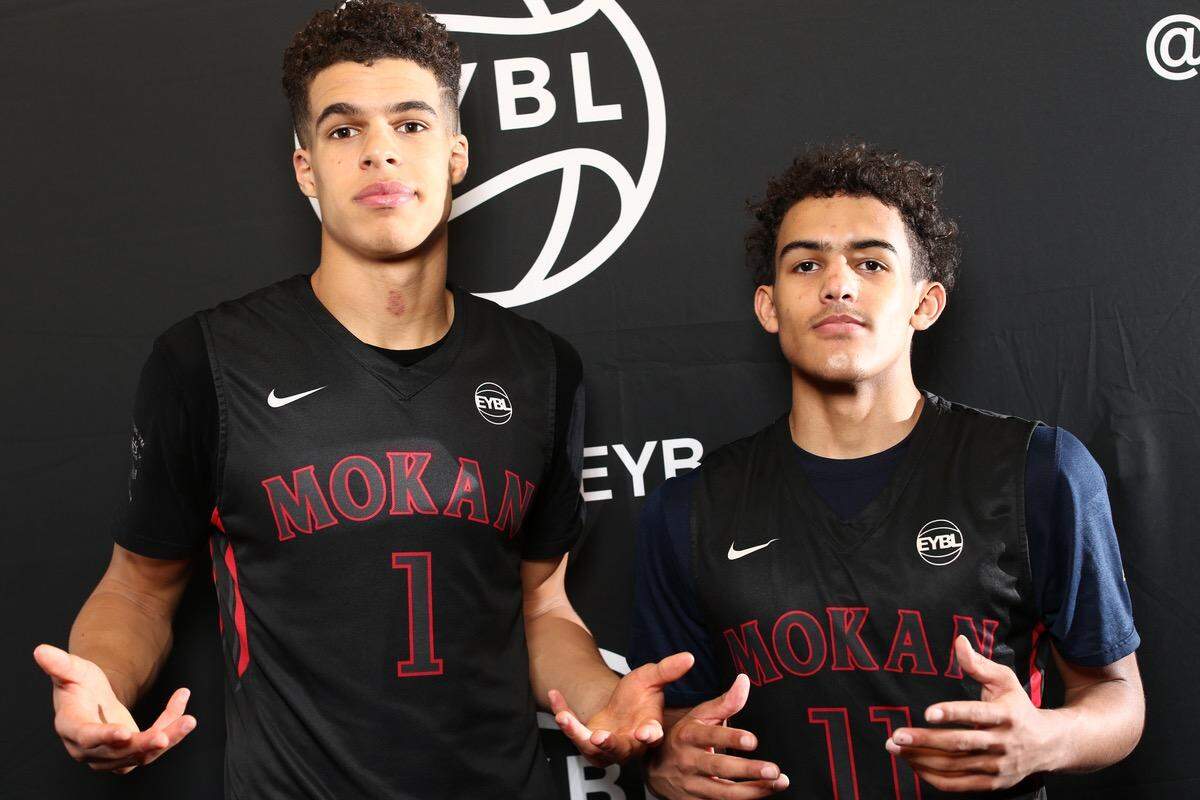
Porter, Young and several other guys on their 17U team in 2015 were playing up a level. As they watched other squads advance to the Peach Jam Final Four in 2015, there was one thought on all of their minds.
“We were just like, ‘Man, that could be us next year,’” Porter recalled. “Because we knew we were gonna be a year older and we already played with each other that year.”
That’s exactly what they did. The 2016 Mokan squad, which also featured Jontay Porter and Carte’are Gordon as underclassmen, went on a dominant run to secure Mokan’s first Peach Jam title with a 93-65 win over PSA Cardinal. Porter and Young combined for 61 points. The team won eight games in a row at the tournament by an average margin of 19.6 points.
A new trio emerges
By the time Braun was in middle school and looking to join a travel team, Mokan had built a reputation as the top program in the Kansas City area.
“We had always heard Mokan was the best and just about the alumni players, a lot about them,” Braun told The Star. “So going into the tryout, honestly I had no idea that I was gonna make the team.”
He made it though, along with Harris and Mosley, who both lived two hours away in Columbia, Missouri — if they needed a ride, a coach made the drive there to pick them up, which Mosley always appreciated. The trio played together from seventh grade all the way through high school, spending countless hours by each other’s sides on and off the court.
“It was kind of like a family,” Mosley told The Star of their relationship. “We just united right when we saw (Braun), and then ever since then we’ve been kicking it with him.”
Harris and Mosley spent a lot of time at the Braun household throughout those years, often staying the night on the weekends. It didn’t matter if they had just gone through practice, the boys could always be found outside competing at something — who could dunk the ball over the others, who could hit the most threes, who could win the most one-on-one battles, anything really. If the team was traveling on the road, the three always shared a room.
“Very unique relationship, all pretty different personalities,” Clark said of the trio, “but they all kind of just have always clicked together …They just were like three peas in a pod and just knew how to kind of push each other’s buttons. It was great because they were able to put that relationship on the other guys they played with also.”
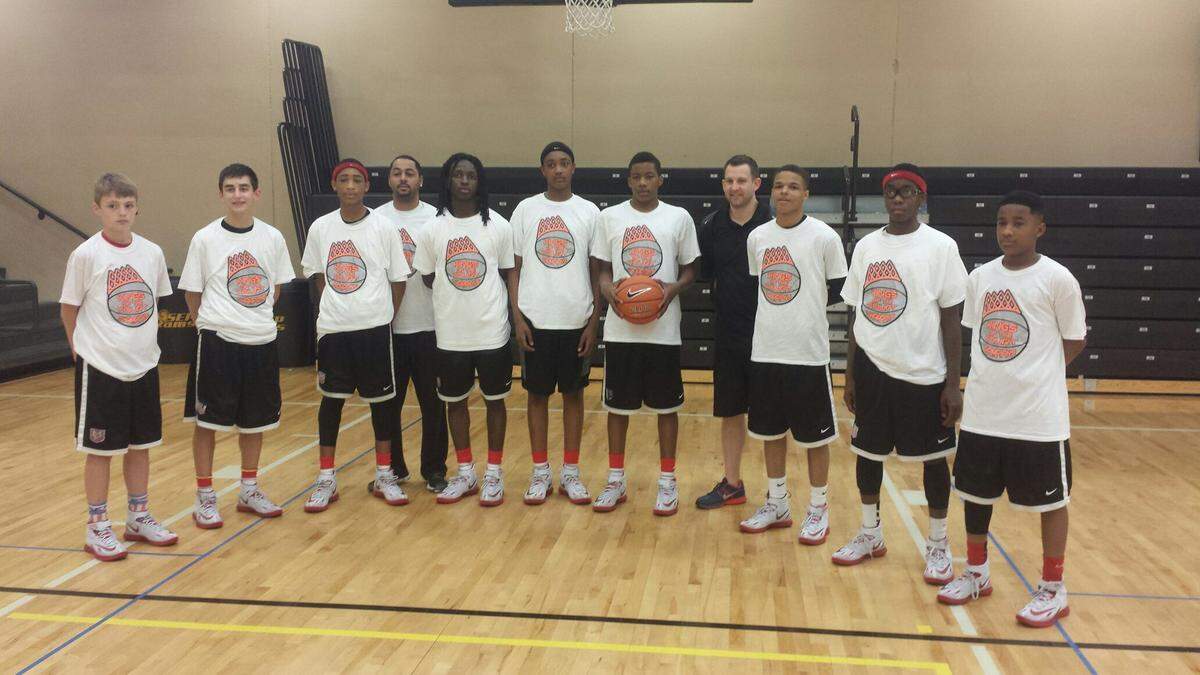
Hall was in their Mokan class as well, one of several players to pair with spending the academic year at Sunrise Christian. Though he didn’t come into the fold until 2017, Hall had been watching Mokan teams for a long time on the EYBL circuit, including following along closely with the 2016 Peach Jam title run.
“When you’re younger, you just kind of look up and you’re like, ‘Hey, hopefully one day I get to be in this position,’” Hall said of earning a spot on Mokan. “And then I got to be in the position the next year ... just getting to see the program for its whole essence, it was something that was surreal to me and just very exciting and something that I loved doing.”
A few years later, while most of that group prepared for their freshmen seasons of college ball, Harris decommitted from Missouri State and reclassified to take another prep year. That move would end up having an impact well beyond his own recruiting situation: it changed the course of Chandler’s future too.
Chandler left his local AAU team in Memphis to join the Mokan program in 2019 after talking with Young, who was in the middle of his rookie season in the NBA. Former Mokan players and coaches have made it a point to stay involved and help in any way they can over the years, regardless of how many seasons they actually spent on a particular team.
“I had a great conversation with (Young),” Chandler said. “He was telling me it’s the best program and it’ll help you in the long run. They’ve had a lot of point guards come out and do successful things; I wanted to be another point guard to add to the collection to be successful coming out of Mokan.”
Chandler had just finished his sophomore year of high school and played up a level with the 17U team that season. He got the nod at starting point guard for the first session, but was challenged by the college-level offensive system Mokan ran.
“I think we went like 2-2,” Clark said. “Kennedy was struggling to run the point for Mokan, because…he just was young, didn’t understand how to deliver the ball to guys, didn’t understand when to pass, when to shoot.”
Harris hadn’t joined that year’s squad on the circuit yet because of his reclassification situation. But once he did, it was a different story for them both. In Harris’ first game back, he recorded 17 assists without a single turnover, according to players and coaches.
“He just put on a clinic,” Clark said. “He didn’t say it, but it was kind of like, ‘Look Kenn, this is how you do it.’ And from that point on, something clicked for Kennedy. He watched Dajuan and then he started to run the offense like Dajuan. He started dropping the ball off and getting guys open shots like Dajuan. Before you know it, you had two guys playing like that, and I think that was unstoppable.”
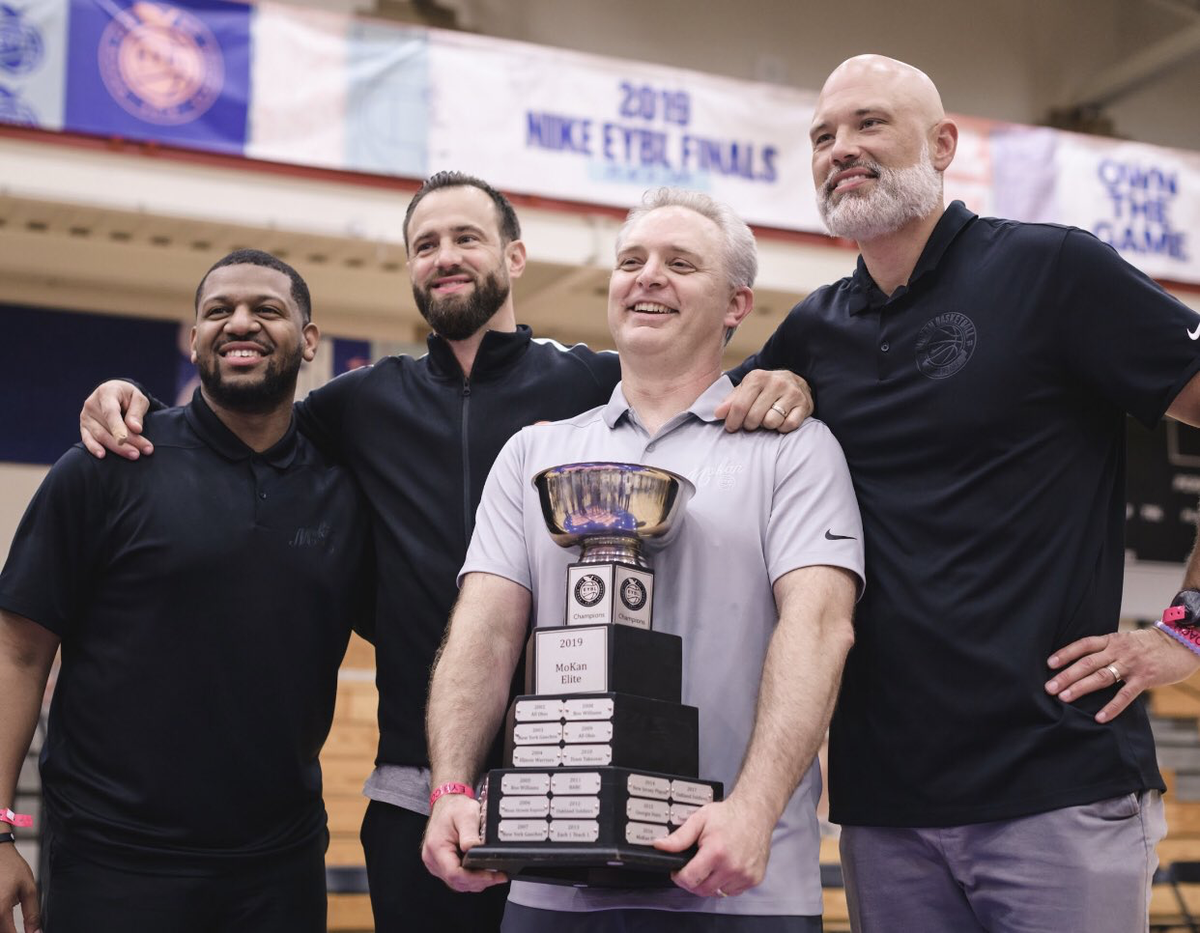
The team went on to make another Peach Jam run — winning their second title in four years — in large part due to the guard tandem of Harris and Chandler, along with the play of star center N’Faly Dante.
Top recruiting offers began to roll in for Harris and Chandler at rapid speed along the way. Harris got a coveted nod from Bill Self and the Jayhawks, which led to him reclassifying back to 2019. Chandler wasn’t on any sort of national radar prior to joining Mokan, but by the end of that summer he was a consensus five-star prospect with offers from some of the best programs in the country. He’d eventually be ranked as the top point guard in the 2020 class.
“Dajuan helped me a lot with knowing the offense of the team, leading me,” Chandler said. “…That program has done so much for me and I just thank them for everything because I don’t know where I’d be without them. They had me put my name on the map.”
A bright future
There isn’t a week that goes by where Braun doesn’t talk with several people from Mokan — outside of his two Kansas teammates who are a given, of course. Whether it be with coaches or guys he played with, everyone makes an effort to regularly check in with each other.
A text chain that started in eighth grade between Braun, Harris and Mosley, as well as several others, remains intact all these years later. Hall stays in touch with all of those guys too. The group chat between the 2019 team that won Peach Jam lights up pretty regularly, with the guys often going back and forth with fun jabs after watching each other in college basketball games.
There’s been plenty for them to discuss this season.
Mosley became the third NCAA Division I player in the last 30 years to average 20 points per game while shooting 50% from the field (50.4%), 40% from three-point range (42.7%) and 90% at the free throw line (90.2%), according to Missouri State. He scored at least 31 points on six different occasions, including a 43-point performance against Northern Iowa on Jan. 8.
Agbaji (19.7 ppg, 5.1 rpg, 1.6 apg) and Braun (14.6 ppg, 6.4 rpg, 2.6 apg) emerged as stars for Kansas, guiding the Jayhawks to Big 12 regular season and tournament championships alongside Harris, who led the team in assists (4.4 per game). In addition to his All-America honors, Agbaji became just the fifth player to win both Big 12 player of the year and postseason tournament MVP honors in the same season.
Chandler also earned MVP honors as he led his team to a postseason championship, which Clark also played a big part in as an assistant coach. Showing incredible poise for a freshman point guard, Chandler averaged 14.7 points on 53.1% shooting, along with 5.0 assists and 2.7 rebounds across three games in Tennessee’s SEC Tournament title run, including 14 points, seven assists and four rebounds in the final win over Texas A&M.
Brown also played a key role as a freshman, providing consistent starter minutes for a Baylor team that’s been burdened by injuries. He’s averaged 10.0 points, 4.9 rebounds and 1.9 assists so far this season, and his remarkable athleticism has solidified his spot as first round draft pick.
In fact, Mokan alums can be found all over projections for the 2022 NBA Draft. The program is expected to have its best year yet in that regard; four players — Agbaji, Brown, Chandler and Braun — have been projected as first round picks by numerous outlets.
But up first is the NCAA Tournament, the biggest stage in college basketball. With teams like Kansas, Tennessee, Baylor and Kentucky looking primed to make deep runs, there’s a chance former Mokan teammates find themselves opposite each other with some hardware on the line.
“We’re just so proud and happy and just love to see them continuing through their opportunities,” Neff said. “But what it’s really important for is the next kids in our program to see it and to know that it exists for them and that it’s goals and dreams that can occur for the next kid that comes through Mokan. ... it really does a lot for our future to see all of our current collegiate players having March Madness opportunities.”
This story was originally published March 17, 2022 at 7:24 PM.