
Winners and losers from the first phase of the pandemic men’s NCAA Tournament
With Oregon’s victory over Iowa on Monday, a record was set for men’s NCAA Tournament upsets as defined by the NCAA. That is, a victory by a team five seeds worse than their opponent. The Ducks’ triumph was the 12th such game in the first two rounds. The previous record was 10.
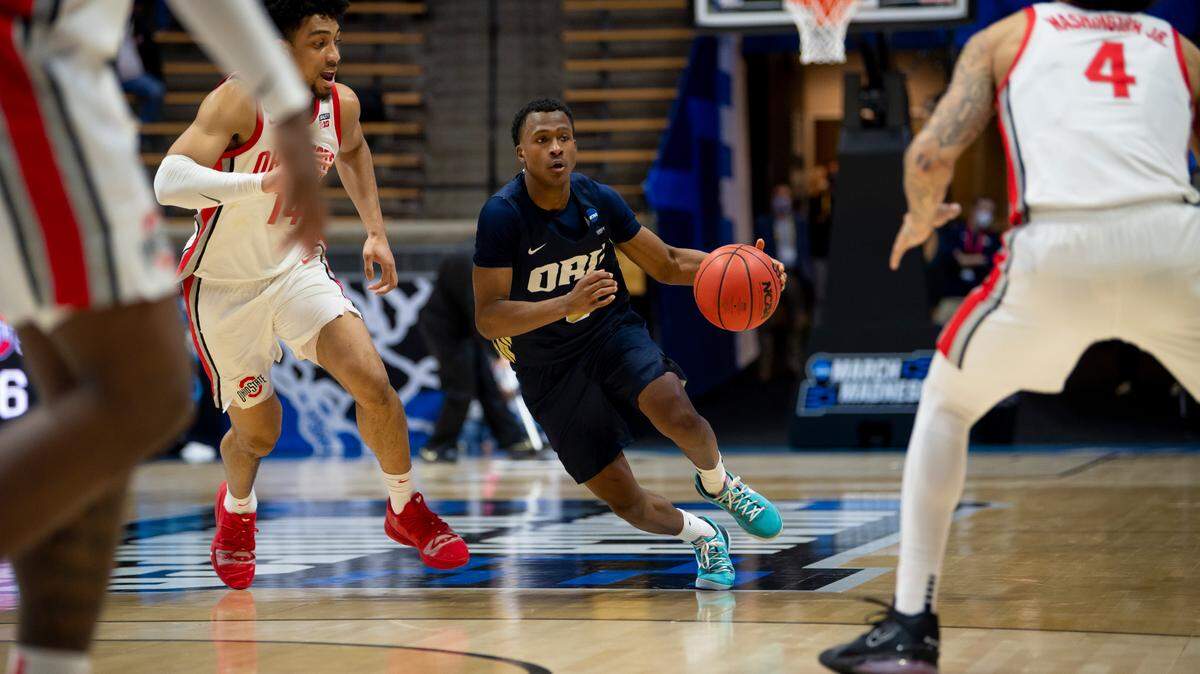
So, what’s going on and how to explain oddities like Oral Roberts becoming the second No. 15 seed to reach the Sweet 16, or No. 14 Abilene Christian seed taking down third-seeded Texas, and first round victories by a pair of No. 13 seeds, Ohio and North Texas?
The usual reasons apply. Mid-majors are undervalued, especially the coaching, because they’re underserved in the media. They tend to be veteran teams with players not distracted by pro ambitions. And simply there are good — even great — players at every level.
It all made for an entertaining and emotional first weekend of a men’s NCAA Tournament filled with winners and losers.
Winner: Max Abmas
The Oral Roberts sophomore guard who led the nation in scoring took charge in the Golden Eagles’ victories over Ohio State and Florida. The Summit League player of the year received honorable mention on the AP All-America team.
Crown Abmas (pronounced ACE-miss) the MVP of tournament’s first and second rounds in a close call over Loyola’s Cameron Krutwig.
Loser: Numerically challenged conferences
The Big 12 with 10 members and the Big Ten with 14 started the tournament with a combined 16 teams on the bracket, five each among the first four seeds. They’re down to a total of two.
The Big 12 started fast, winning its first six games. But Texas’ loss ended the streak, and from the conference only Baylor advanced to the Sweet 16.
Big Ten woes were foreshadowed by Michigan State’s loss to UCLA in the First Four. The Spartans led nearly every moment of regulation before falling in overtime.
By seed, five Big 12 and five Big Ten teams should have been in the Sweet 16. Only top seeded Baylor and Michigan survived.
Winner: West Coast hoops
The Pac-12 entered the tournament as the No. 6 conference in the NCAA’s NET rankings. But the Bill Walton league was the big winner of the first weekend. Oregon got a pass into the second round with VCU’s COVID withdrawal, but showed no rust in the stuffing of Iowa and Luke Garza.
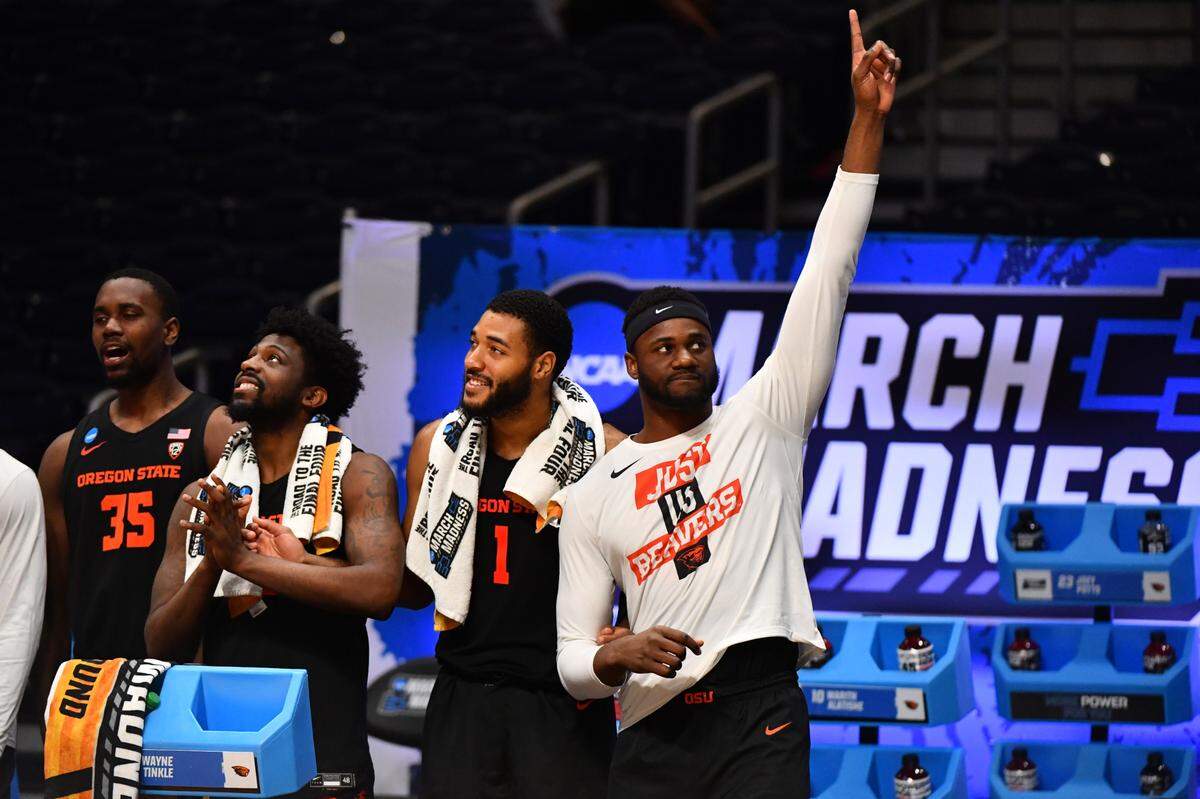
Oregon State, picked to finish last in the Pac-12 and a No. 12 seed, stunned Tennessee and Oklahoma State to reach its first Sweet 16 since 1982.
Southern California’s demolition of Kansas to cap Monday’s action gave the Pac-12 four teams in the Sweet 16, best among the conferences.
With overall top seed Gonzaga in the Sweet 16, the Pacific Time Zone is well represented with five teams.
Loser: Equality
You saw the video of the weight room discrepancy at the men’s and women’s tournaments in Indianapolis and San Antonio provided by Sedona Prince, who plays for Oregon, on her social media account. The original tweet has drawn nearly 17 million views and hundreds of thousands of likes.
It also spurred the NCAA into a flurry of apologies and action to remedy the situation. It was an embarrassing lapse of oversight by the NCAA that was handled beautifully by Prince. When the women’s weight room was installed, Prince delivered another message of gratitude.
Winner: Indianapolis
The toughest part is over. Housing 68 men’s teams on the tournament’s first weekend was a remarkable feat. But Indiana’s capital and region has the arena and infrastructure to make it happen. With 16 teams remaining, this next stretch of Sweet 16 and Elite Eight should be easier.
A few observations:
- On Friday and Saturday there always seemed to be three buses with a police escort motoring through downtown to an arena. The city’s crime rate didn’t increase but sirens were blaring throughout the day.
- Even with 68 teams, there were plenty of available hotel rooms in downtown. Bill Self illustrated the reason when he picked up a stat sheet after Kansas’ first round victory over Eastern Washington and read the attendance: 961. Only family and a few fans are allowed in the buildings.
- Local television was touting the economic impact of event, but many downtown establishments remained closed. A bar owner told me being in the center of activity was a problem. The nearby hotels were team headquarters and they weren’t eating out. Also, there weren’t enough fans in town to keep regular hours.
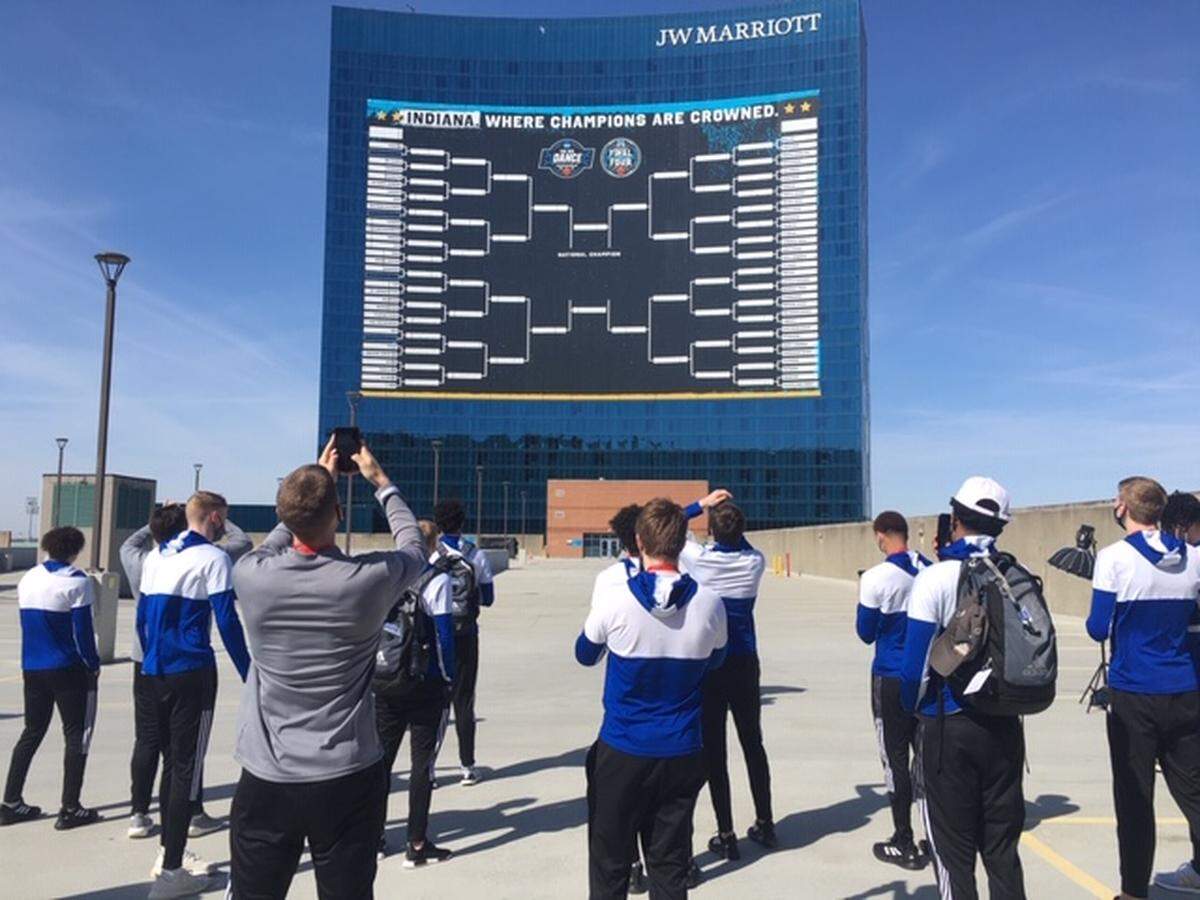
- Credit to the person who came up with the idea of the enormous bracket on the facade of the 376-foot high JW Marriott. With a parking garage directly across the street, teams were provided a perfect photo back drop. I caught up with Drake there the day after the Bulldogs defeated Wichita State in the First Four.
On a sad note: Because Indianapolis is the site for most of these games, the city is poised to become No. 1 in all-time men’s NCAA Tournament games, passing Kansas City.
Loser: The idea the NCAA Tournament should become a one-city event
No. No. No. This is a one-time, pandemic-created bridge to a return of the tournament that touches every corner of the country with the regional rounds.
Besides, keeping players and coaches in Indianapolis, short on distractions, for three weeks is one thing. Next year’s Final Four is next to Bourbon Street.
Winner: Sister Jean
Sweet 16 TV schedule
Saturday’s games:
1:40 p.m.: (8) Loyola Chicago vs. (12) Oregon State, CBS
4:15 p.m.: (1) Baylor vs. (5) Villanova, CBS
6:25 p.m.: (3) Arkansas vs. (15) Oral Roberts, TBS
8:55 p.m.: (2) Houston vs. (11) Syracuse, TBS
Sunday’s games:
1:10 p.m.: (1) Gonzaga vs. (5) Creighton, CBS
4 p.m.: (1) Michigan vs. (4) Florida State, CBS
6:15 p.m.: (2) Alabama vs. (11) UCLA, TBS
8:45 p.m.: (6) USC vs. (7) Oregon, TBS