
As Final Four arrives, Indiana amends controversial law
The list of cancellations for appearances in Indiana were piling up like flights at a snowed-in airport, but these had nothing to do with the weather.
Visiting lecturers, convention-goers and entertainers like Nick Offerman, the actor who plays Ron Swanson in the Indiana-based comedy series “Parks and Recreation,” were stiff-arming the Hoosier State.
The state’s Religious Freedom Restoration Act, which some feared could discriminate against the LGBT community, had that kind of impact.
But on Thursday, things changed.
Language in the law stating sexual orientation and gender identity will be specifically protected was introduced, and the alarms, at least for now, are no longer sounded at a high pitch. The amended legislation was approved Thursday night by Gov. Mike Pence.
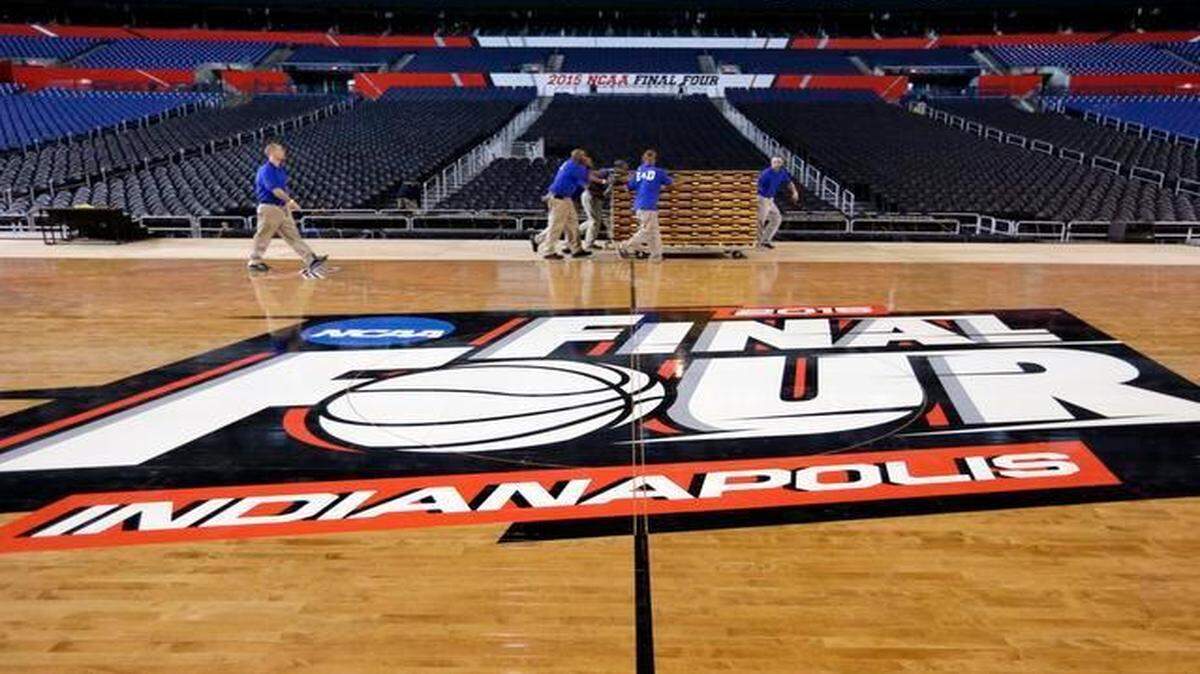
Was it a coincidence that the change was announced Thursday, as hundreds of media representatives, thousands of fans and millions of dollars began to pour into Indiana’s capital city for one of the nation’s biggest sporting events, the NCAA Final Four?
Maybe not.
“We believe that it absolutely, positively needs to get fixed,” NCAA president Mark Emmert said. “It’s a bill that creates an environment within which college athletics would find it very difficult to operate.”
Had Thursday’s action at the Indiana statehouse not occurred, Saturday’s men’s basketball semifinals featuring Kentucky, Duke, Wisconsin and Michigan State and Monday’s championship game would have gone on as scheduled, but future NCAA events may have been at risk. Next year’s women’s Final Four is set for Indianapolis. Earlier this week, the NCAA was asked by the mayor of Tampa, Fla., to relocate the 2016 event there.
There is precedent for the NCAA enforcing a moratorium on predetermined sites. There have been no NCAA men’s basketball tournament games played in South Carolina since 2002 because of the Confederate flag that flies on the state Capitol grounds in Columbia. South Carolina also has failed to land an NCAA approved bowl game and the Atlantic Coast Conference baseball tournament because of the flag.
The Indiana legislation could have had a similar impact on a state and capital city that prides itself on its friendliness and hospitality, not to mention its ability to conduct major sporting events like the Final Four and Super Bowl at Lucas Oil Stadium.
It just so happened that among the first to speak at a news conference announcing the changes Thursday morning were Jim Morris, President of Pacers Sports and Entertainment, which oversees the city’s NBA and WNBA teams, and Allison Melangton, president of the 2012 Indianapolis Super Bowl Committee.
“We’ve had some rough days,” Morris said.
Since the bill was signed into law last Thursday, the response from the sports world has been loud, forceful and swift, starting with the NCAA, which moved its national headquarters to Indianapolis from Overland Park in 1999.
The NCAA’s original denouncement occurred the same day the legislation was signed by Pence.
The act prohibits laws that “substantially burden” a person’s freedom of religion unless that government can prove a compelling interest in imposing that burden.
The new language makes it clear that the law cannot be used to discriminate based on sexual orientation and gender identity.
Indiana is one of 20 states, including Missouri and Kansas, with a law that’s a version of the Religious Freedom Restoration Act, and Pence said Tuesday that there had “been a misunderstanding and confusion and mischaracterization of this law.”
But Emmert said that was not the case.
“We were quite clear about what it meant and what it didn’t mean,” Emmert said. “So we came out early in the process and we were hopeful that we could instigate some change.”
Emmert met with Pence and other legislatures who asked him about his concerns.
“These are not sidebar issues for a university,” Emmert said. “These go right at the heart of what a university is and what it stands for. I made that really clear.”
But it also hit home to Emmert because of the NCAA’s address.
“The issue here was one that, first of all, was near and dear to us because we have 500 employees in this state,” he said. “We have to attract a diverse workforce … We have a particularly young workforce.
“These issues for young people are very different than they are for old codgers like me.”
Kansas State president Kirk Schulz, the NCAA Board of Governors chair, said the RFRA wasn’t on his group’s radar two weeks ago, but the topic will be discussed at a meeting later this month. The board may also begin to ponder taking stances — and awarding or not awarding NCAA championship events in states — based on tolerance issues such as gay marriage.
“Questions like, should we look at any particular social issues in states that hold championships of any type, not just the Final Four, will now be something we’re going to take a close look at,” Schulz said.
To reach Blair Kerkhoff, call 816-234-4730 or send email to bkerkhoff@kcstar.com. Follow him on Twitter: @BlairKerkhoff.
This story was originally published April 2, 2015 at 5:04 PM with the headline "As Final Four arrives, Indiana amends controversial law."