Why bad blood between KU & Mizzou goes deeper than the Border War rivalry
AI-generated summary reviewed by our newsroom.
- Kansas and Missouri renew the Border War rivalry Saturday after a 14-year gap.
- KU players, including recent transfers, received history lessons on the rivalry.
- Coach Leipold emphasizes preparation over emotion amid high fan anticipation.
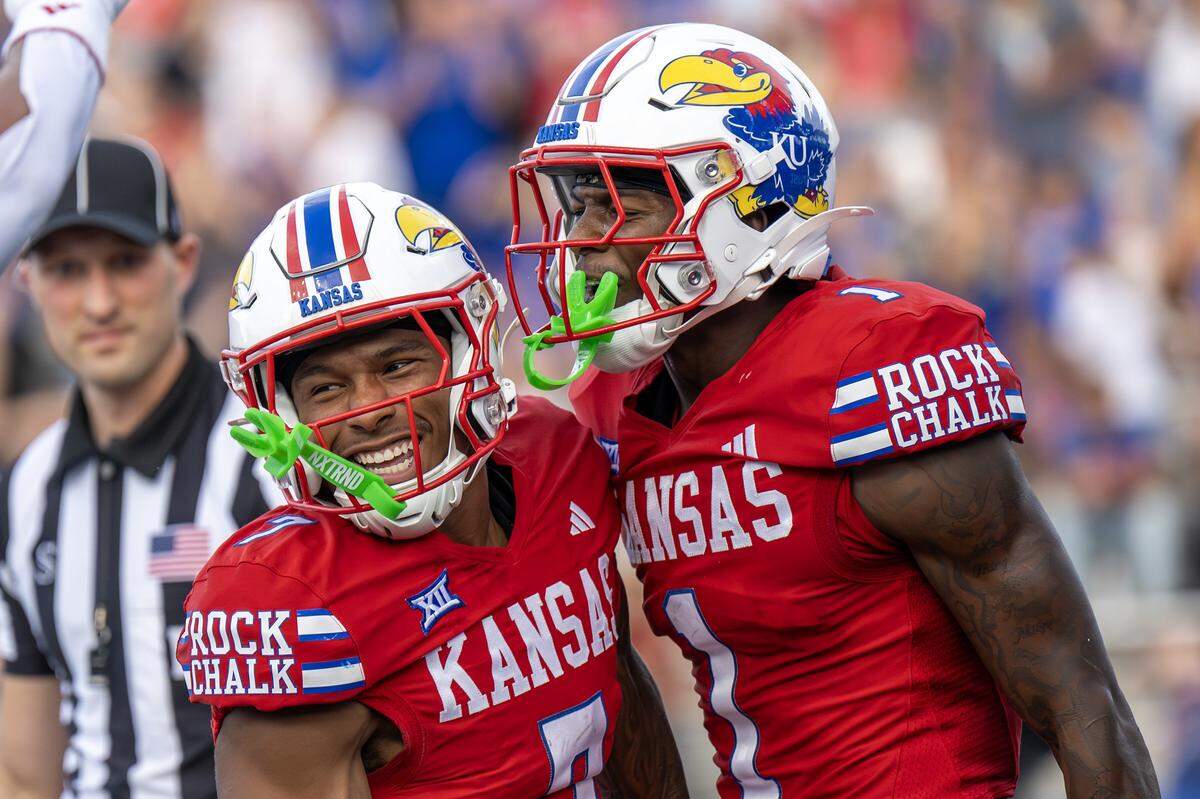
When kicker Laith Marjan transferred from South Alabama to Kansas in December, he went through an orientation to learn about KU football.
He even got a history lesson on KU’s biggest rivals — namely, the longstanding rivalry between Kansas and Missouri, more commonly known as the Border War.
“They told us in our onboarding process when we got over, ‘Yeah, there’s been wars over it. A lot of history in the game,’” Marjan said at KU’s media day in August.
“We heard about ‘Bleeding Kansas,’” punter Finn Lappin interjected.
Marjan continued, “You just kind of know when you go into that environment … it’s a rivalry game. It’s going to be very intense because there’s a lot of history behind it.”
Lappin, a native of Melbourne, Australia, was a little taken aback by the history of the rivalry.
“I was not very caught up on American history, so everything is a bit of a surprise to me,” he said. “It’s pretty crazy, I must say.”
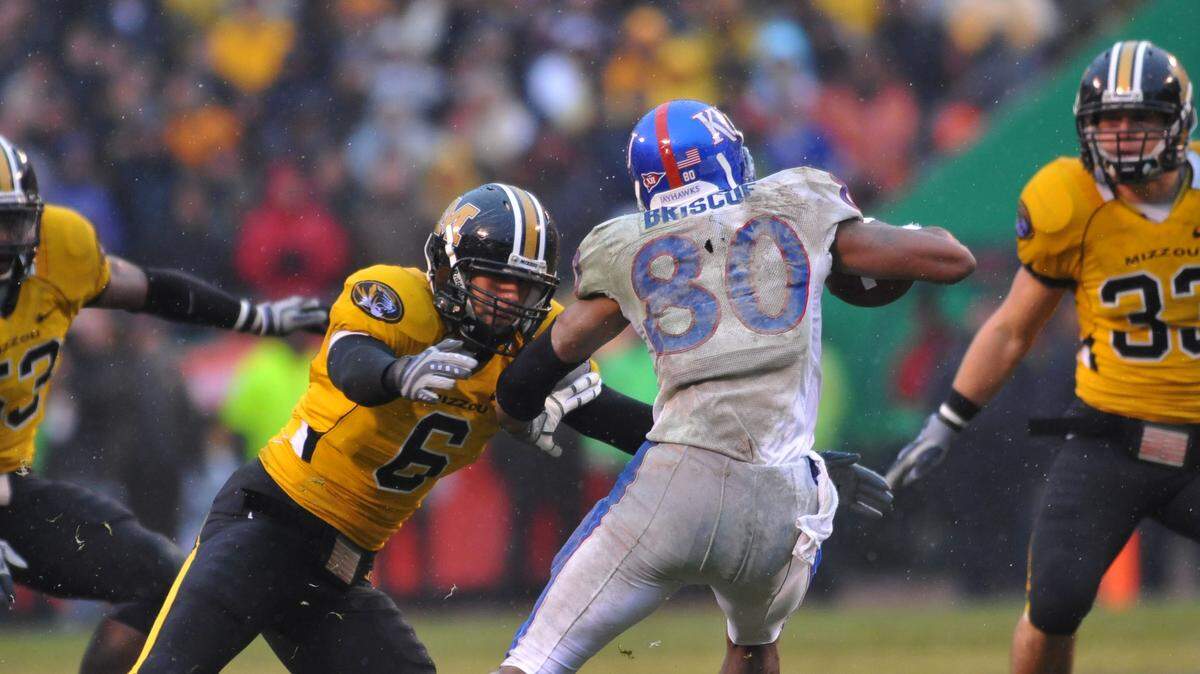
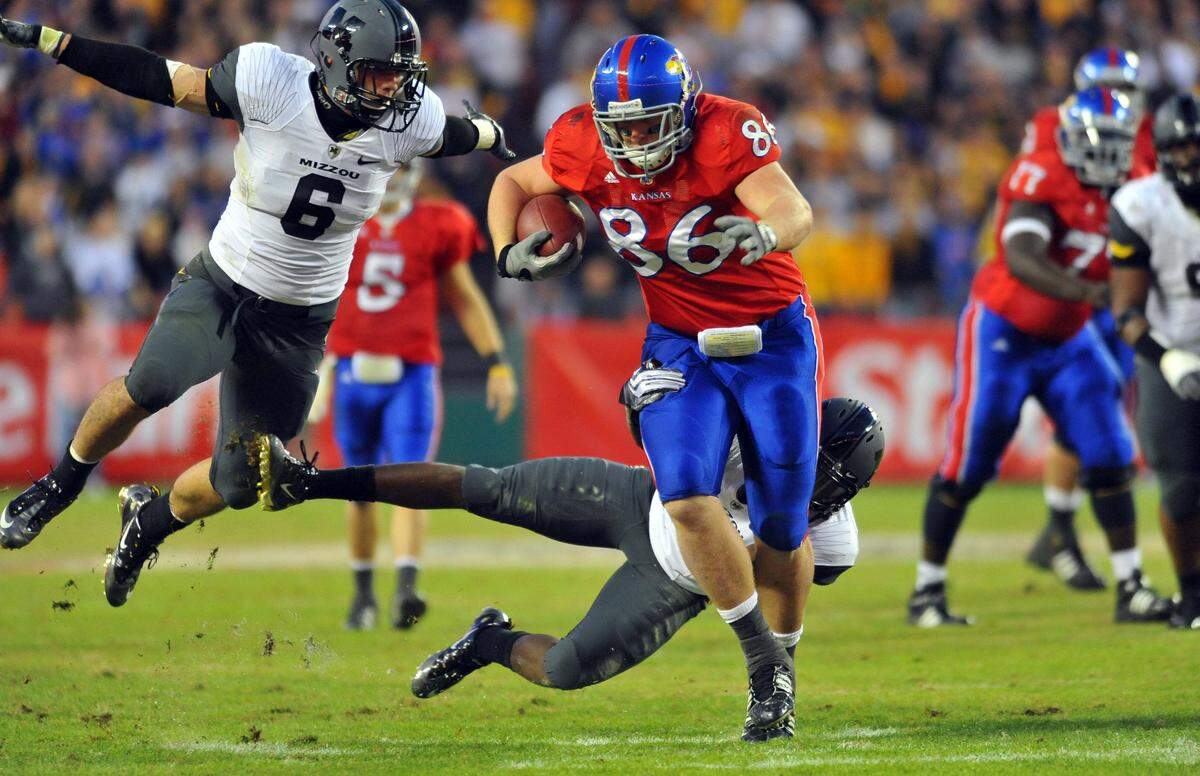
The Border War showdown is finally back this Saturday, for the first time in 14 years. The last time the sides played in football was in 2011, right before the Tigers departed for the SEC.
Kansas coach Lance Leipold noted that the Jayhawks had a history lesson on the rivalry Monday.
The rivalry dates back to before the Civil War, coinciding with real American history.
“We gave a little background history today, where it went all the way back to the border and what the border stood for, the past history of free states and slave states,” Leipold said. “Kind of went through the whole history where these two states have been competitive and not always agreed.
“Then, we went through when the first game was played and all the things that have gone on from there. Where the series is at. Touched on how it hasn’t been played in a while. I think they got a good understanding of some of that.”
Publicly acknowledged or not, this is a game that fans on both sides have circled on their calendars.
In fact, Leipold has been aware of the intense hatred KU fans have for Missouri for a while. Sometimes, he even hears about it in places he doesn’t expect.
“I’ve been asked about this game for a long time,” Leipold said. “My wife and I were at church yesterday, and somebody wanted to talk about it. I didn’t know that was the right time to really (do that). … Somebody said, ‘Kick their butt,’ but didn’t say butt. I was in church, and I didn’t really think it was appropriate.
“You can tell people are excited. It’s good. ... I think that’s what makes college football what it is.”
Count defensive end Justice Finkley among those excited to experience the renewal of the rivalry. Finkley, a transfer from Texas, knows what it’s like to play in a historic rivalry.
He was part of the Red River Rivalry between UT and Oklahoma at his previous stop. Naturally, he’s ready to see how the Border War compares.
“I’m honestly hyped up to kind of have that Red River Rivalry type,” Finkley told The Star in August. “Those are games that get you really pumped up for the season. I can’t wait for Missouri.”
He also offered his perspective on what makes the game between UT and OU so special.
“It’s a lot of hate, and there’s a lot of fans there,” he said. “It’s always a great time after the game.”
Finkley looks forward to experiencing that when the Jayhawks travel to Columbia. Kansas hasn’t won there since 2004. In fact, KU looks to end a three-game losing streak vs. the Tigers overall.
.jpg "USATSI_26947822 (1).jpg")
It’ll be difficult to do that in what’s sure to be a boisterous environment. Missouri is a 6.5-point favorite over the Jayhawks.
To help prepare for the rowdy crowd, Leipold and his staff will practice with piped-in crowd noise cranked up a notch. That was in full effect at KU’s practice Tuesday as the crowd noise could be heard from outside the stadium.
“We practice with crowd noise quite often … obviously that will be increased and more frequent this week,” Leipold said. “Plus, it being our first road game ... and it being a sellout. You try to keep that in the forefront as you talk about those things.”
Ultimately — history and rivalry aside — Leipold wants his team focused on the game, not the emotions surrounding it.
“It’s still a matter about how you prepare, your focus and everything you put into it, and then going out and executing on game day,” he said. “Your emotions sometimes can take you directions that can be counterproductive, sometimes. So I want to make sure that this team is well-prepared and focused on playing their best football to date.”
This story was originally published September 2, 2025 at 12:05 PM.