
We got a sneak peek of the new Kansas football stadium. Here’s what stands out
AI-generated summary reviewed by our newsroom.
- Kansas unveils $450M stadium renovation, modernizing two-thirds of venue.
- New seating moves fans closer, enhances viewing angles and field connection.
- Upgrades include larger jumbotron, suite level, and wheat-inspired design.
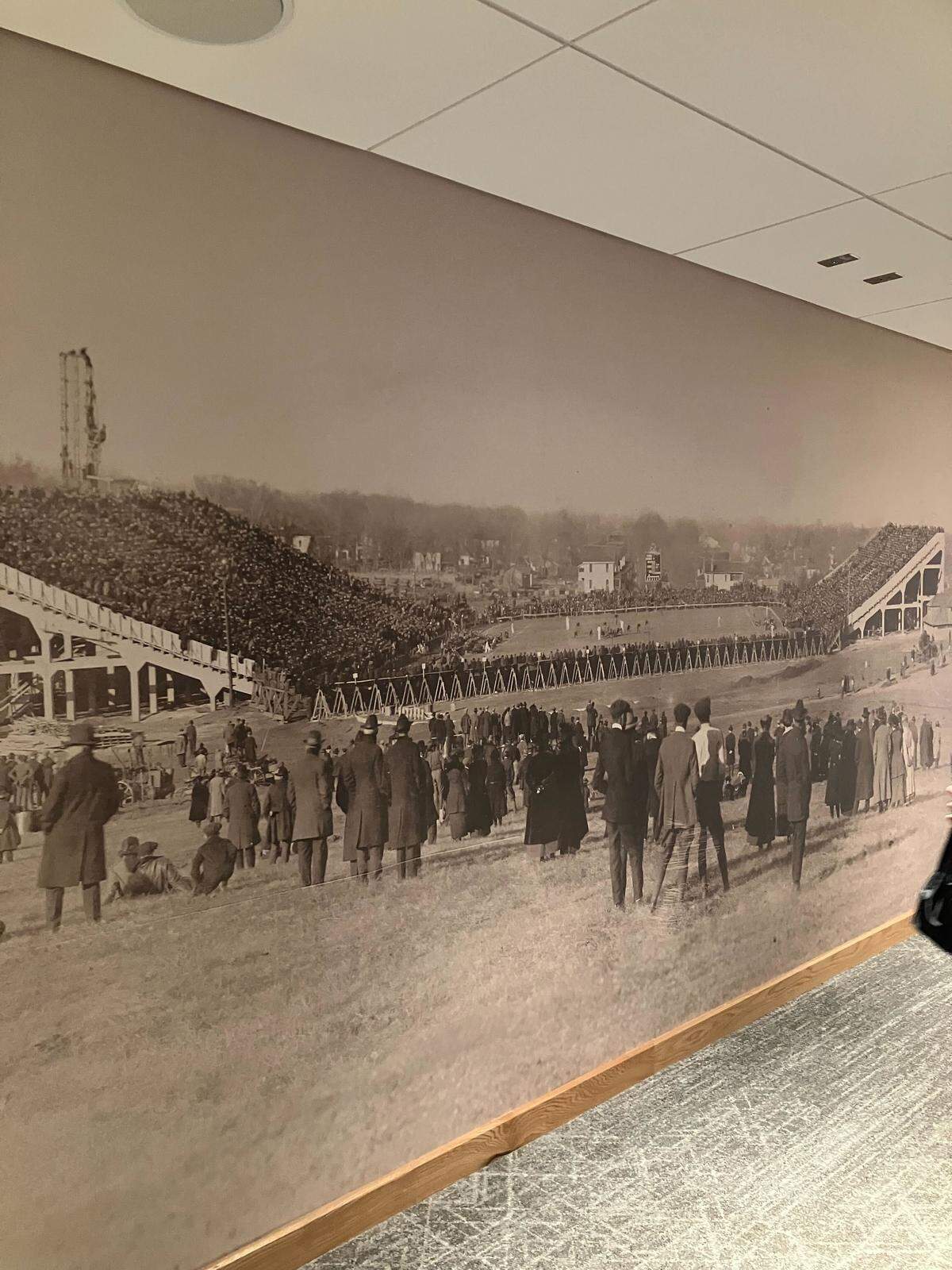
The photo is in black and white, spread across a wall inside David Booth Kansas Memorial Stadium.
It displays a 1921 football game, the first season at a venue that now stands as one of the oldest in the sport. The patrons are in dresses, suits and fancy top hats. It is, quite clearly, a different era.
Barely.
Until recently, the concrete from that 1921 photo still held up the east and west stands in Lawrence.
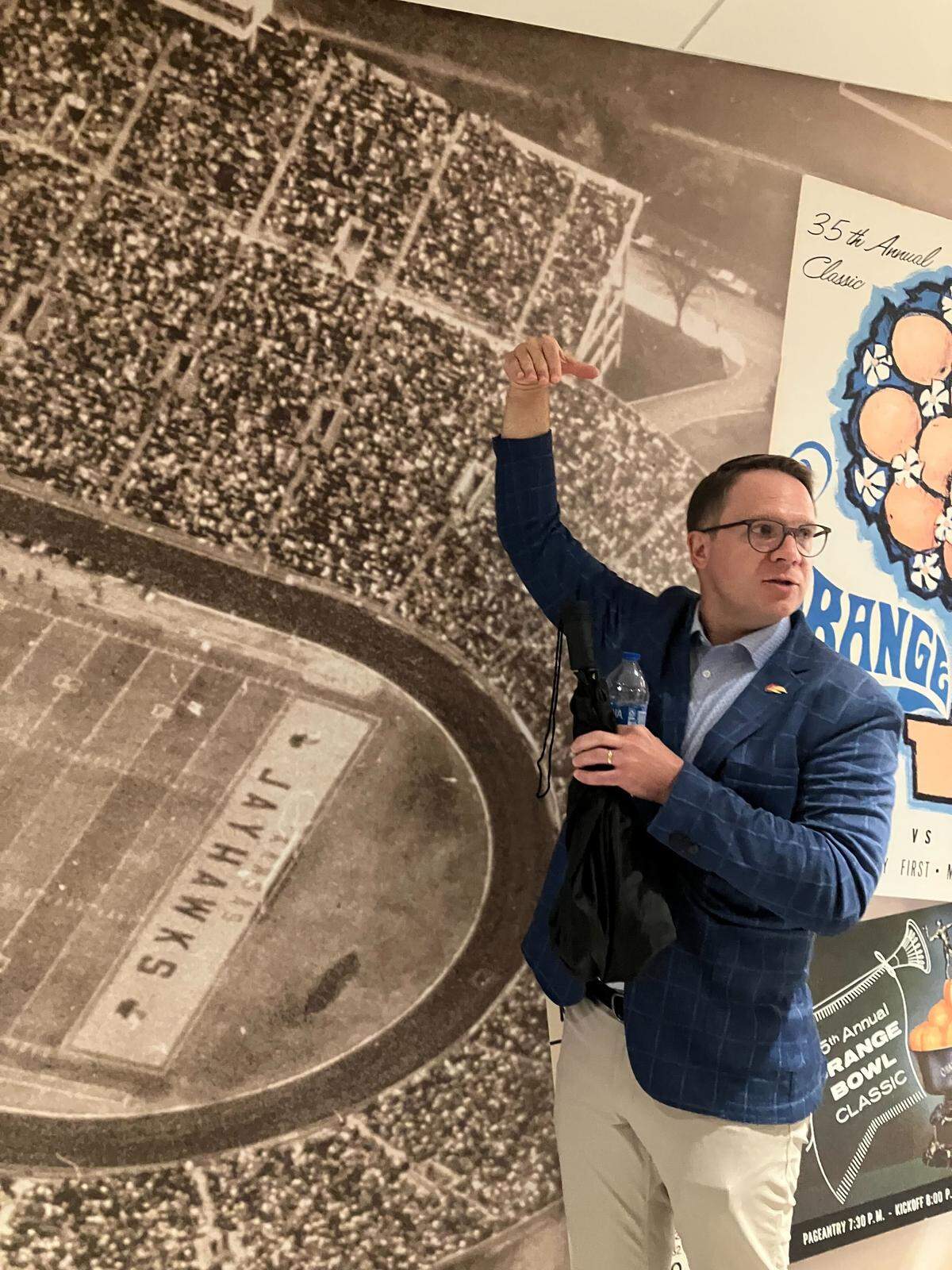
The picture now serves as a reminder of history in a $450 million transformation that encompassed more than two-thirds of the stadium — which will be open to some 40,000 when Kansas opens its season Saturday against Fresno State.
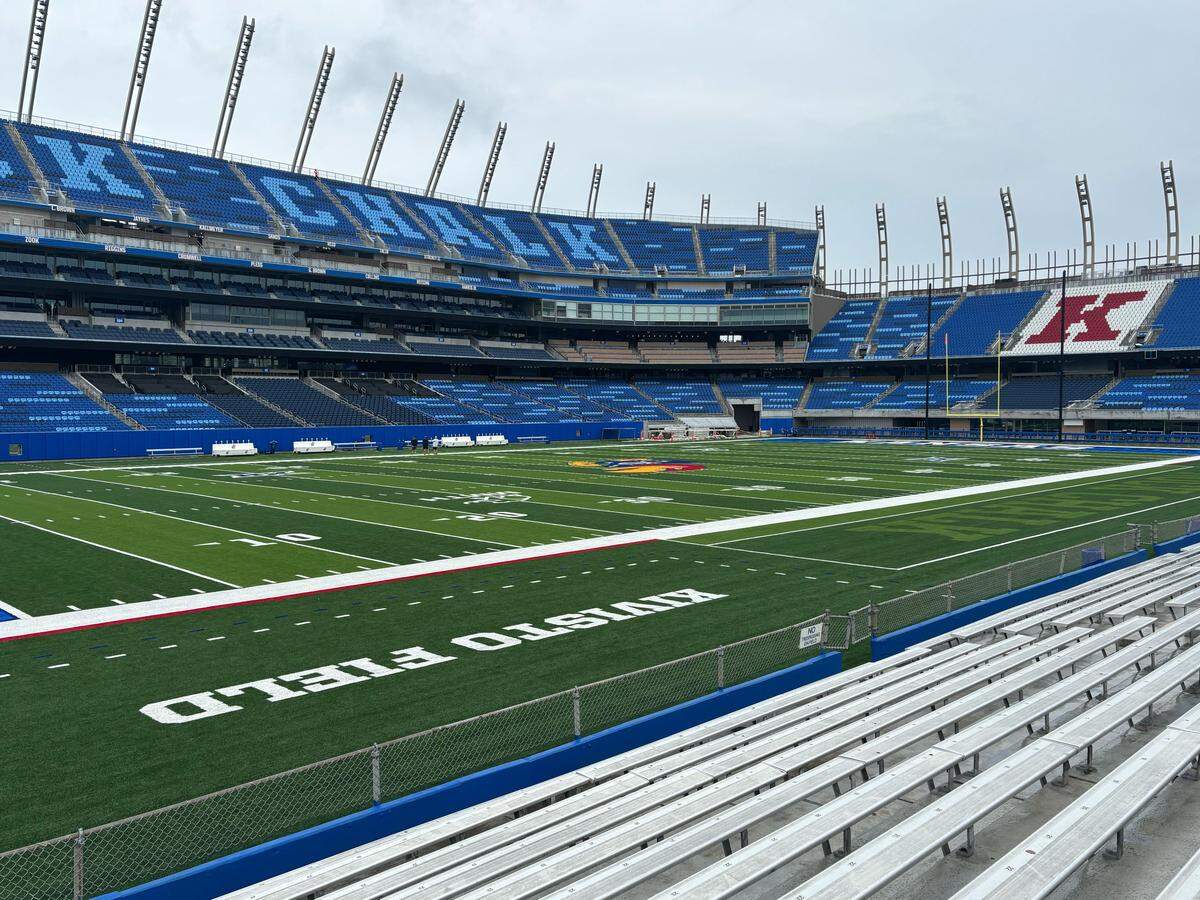
The yet-to-be-renovated east side of the stadium is another reminder. KU hopes to soon usher in the second phase of the project, boosted with a $75 million gift from David Booth (within a broader $300 million donation) and the city of Lawrence approving finances earmarked for the renovations.
But we got a sneak peek of the completed initial phase, the brand new parts, with KU athletic director Travis Goff serving as our tour guide — and yours, too, through our video and pictures.
A new view
The stadium strikes you before you enter, and it’s not just the wheat-inspired light poles.
The venue has taken on a higher profile, and its illumination is more visible from a distance.
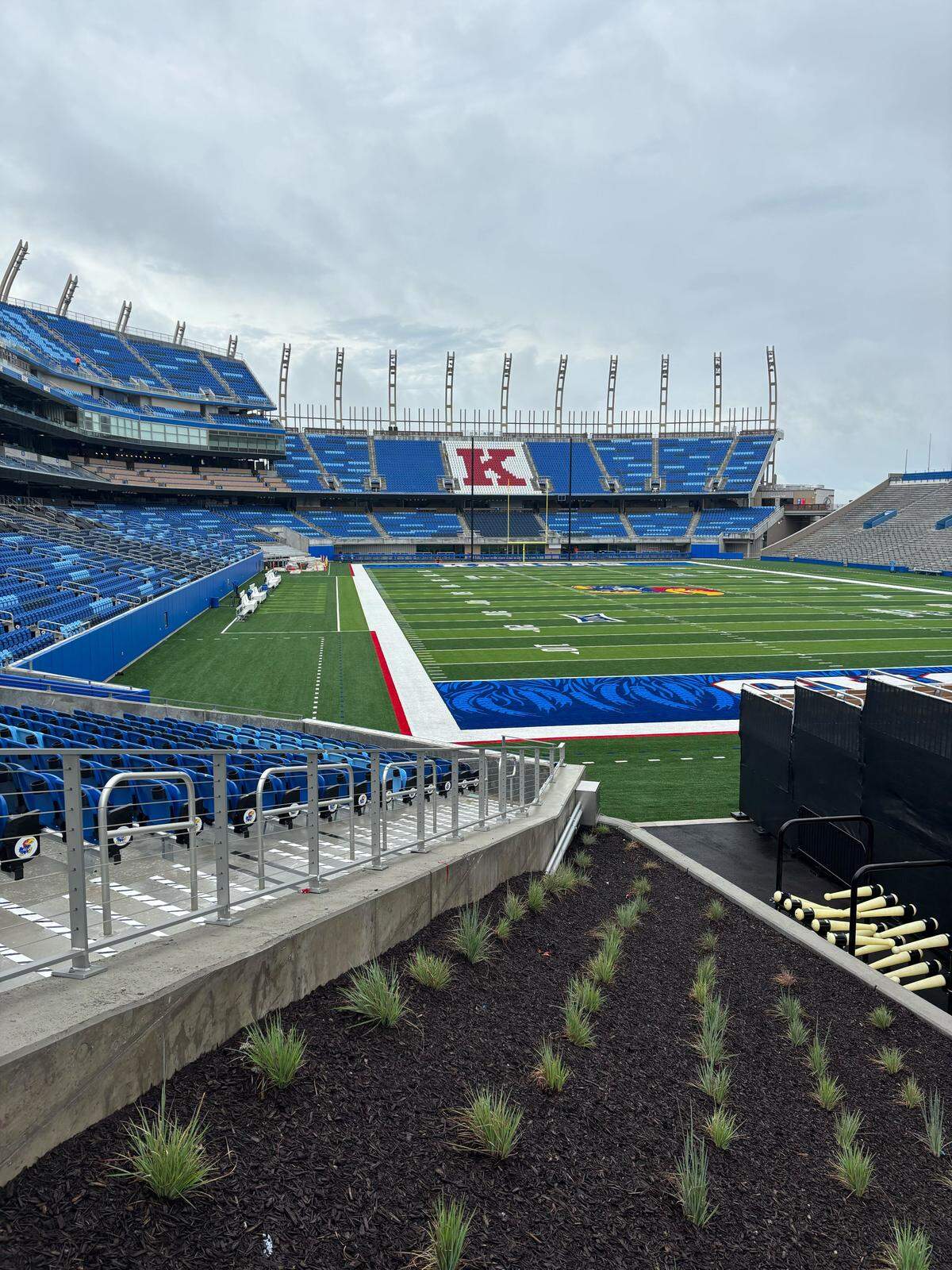
Once inside, nothing jumps out more immediately than the sense of modern luxury — or what other stadiums have long considered necessary features — like the simple but new seatbacks in a stadium that previously offered none in the bleachers.
But you don’t have to be inside long to realize something even more inviting: an entirely different sensory connection to the field.
In the old north end zone, they would often tarp over some seats that sat behind an old track, deeming them too distant a view to sell the tickets. Goff called it “the worst seat in the sport in the old world.”
Not anymore.
It’s that way everywhere in the new seats. A mid-level suite level on the west sideline is now 80 feet closer to the action. The top row of the stadium now is about where the previous suite levels were. The lower-level end zone seats are so close you’d best be alert when the ball’s coming that way.
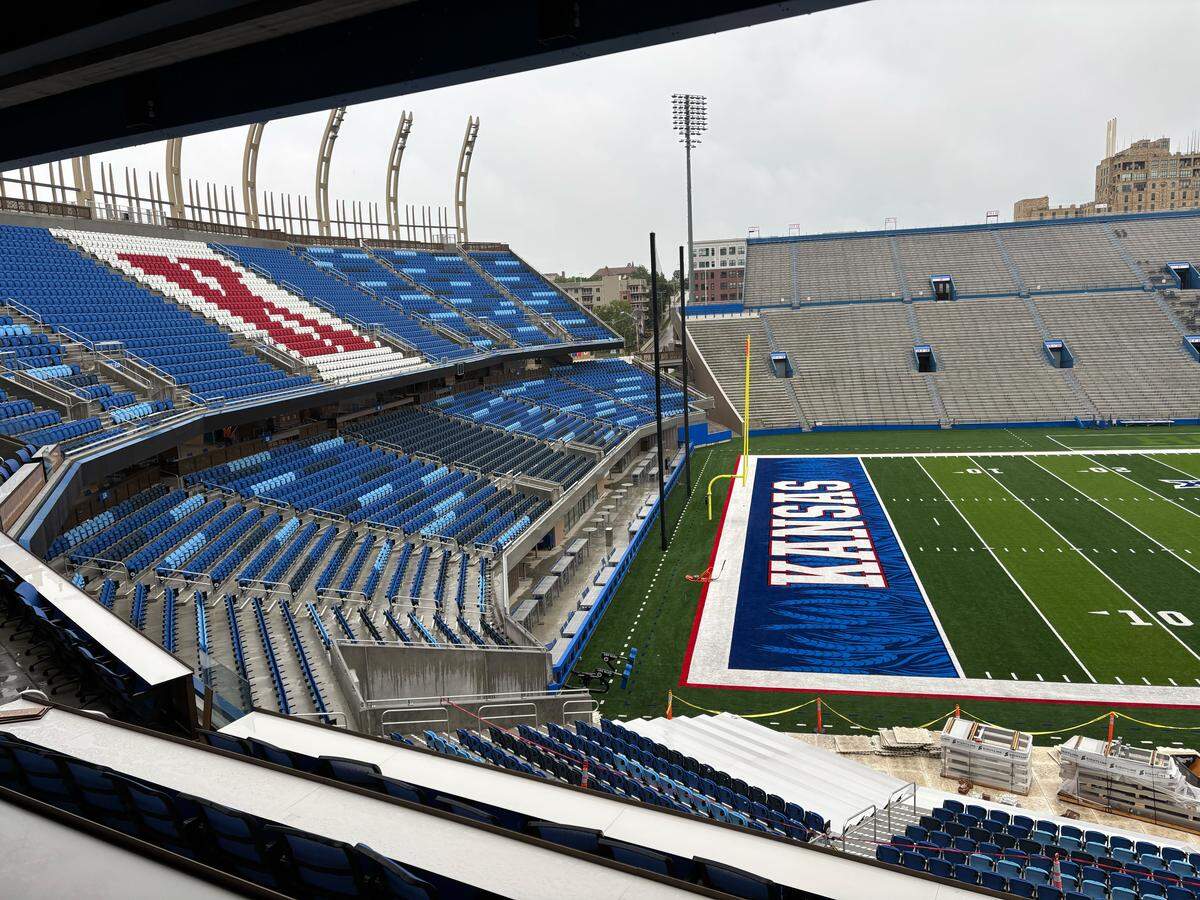
Then there’s the south end zone, where the jumbotron is about 2 1/2 times its old size. Alas, it further blocks the view from The Hill, but Goff hopes in the future to have the other side of the scoreboard put to use both for games and concerts —- albeit while aiming to persuade more of those sitting on The Hill to become paying customers.
It all ought to make for a cozier — and notably louder — environment.
The history remains — in a new way
The stadium is distinguished by the imagery honoring both KU’s past and the legacy of the state.
On the field, that’s perhaps most visible in the nuanced but notable wheat-themed art surrounding the Kansas logos in each end zone — images aligned with the massive external light fixtures evoking waving wheat.
Those end zone images, Goff said, reflected “a delicate dance of wanting to do something unique, different, but not go overboard (and) kind of lose your way.” That was part of a plan to use “signage and storytelling” throughout and outside the stadium to bring to life what’s unique about the state and the university.
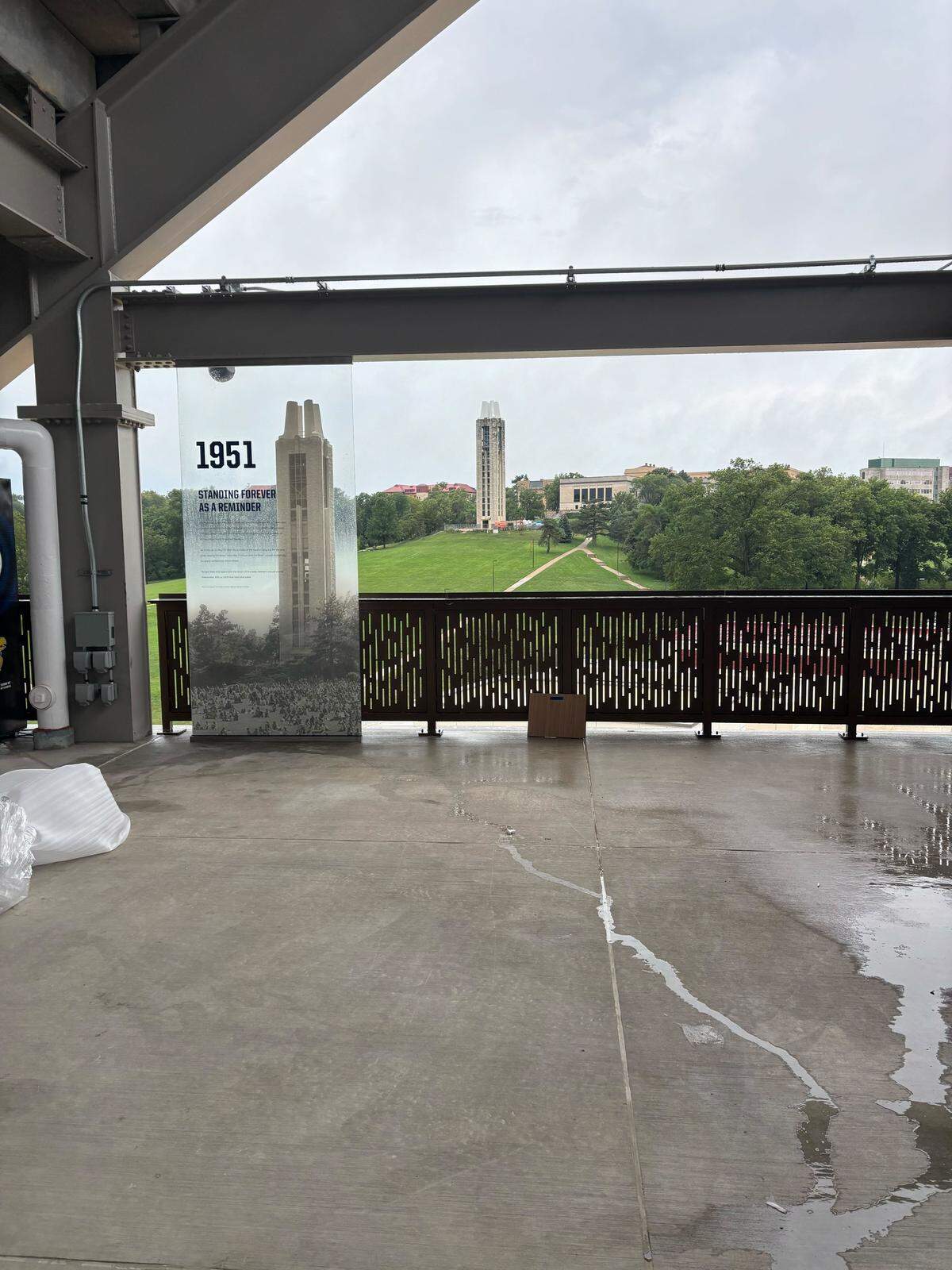
So you’ll see displays in the concourse that chronicle the history of “Bleeding Kansas” and Lawrence “Risen From Ashes” after Quantrill’s savage raid. Those and other displays tell the story of all the war memorials around campus — a tale particularly amplified by a World War I memorial plaza just outside the north end of the stadium that was built in partnership with the National WWI Museum and Memorial in Kansas City.
The venue has been enhanced. But its past remains. Keeping “Memorial” in the stadium name was a conscious decision to continue recognizing the original intent of the stadium’s name.
Still to come
The stunning contrast between the remaining antiquated aspect on the east side and the modern on the west will loom large until its completion, when this whole project will feel like the difference between the dilapidated old Kansas City International Airport and the state-of-the-art version that opened in 2023.
But there is a certain immediate appeal in what remains to be done for a school that wants to both reinvent the game-day experience and honor its past.
“Honestly, at least for this year, I love looking at what we have yet to do,” said Goff, standing in a gleaming new suite and looking across the field at the spartan remnants. “I think it’s a really good reminder that we obviously need to finish this thing. And so there’s still urgency, and there’s still a need that’s right there, front and center, expressed to us.”
In a sense, it will serve to accentuate the broader mission — with the second phase of the Gateway District ultimately to include a hotel, entertainment plaza, new dormitories and the imminent launch of an already-built 55,000-square-foot conference center behind the north end zone.
The football turnaround
This is about more than a stadium’s transformation. It’s about a program’s transformation.
Over an 11-year stretch from 2010-2020, the Kansas football team won 21 games, an average of fewer than two per season. They were 6-91 in Big 12 contests.
Then Lance Leipold came to town. After a 2-10 opening year, KU made back-to-back bowl games for just the second time in program history before moving forward on the project.
Leipold intentionally got lost in the weeds of the intricate details — like a wall-to-wall big screen that helps with player walkthroughs, or a new seamless path from the facility to the field that didn’t previously exist — but we shouldn’t. The big picture is the point.
“I would say this, unequivocally: Doesn’t happen to this magnitude without Lance, without success in this program that the guys have achieved for us,” Goff said. “Would we have figured something out? Yeah, we would have figured something out. We had to.
“Would it be to this magnitude, to this scale? The honest answer is probably no. So they deserve so much credit in this thing.”