KU Jayhawks football says these assets have been ‘game-changing.’ Will recruits agree?
Receiver Trevor Wilson was battling soft-tissue injury issues — and that didn’t make any sense to strength coach Matt Gildersleeve.
This was at the University at Buffalo the last two seasons, a riddle with no discernible cause. Wilson was one of the Bulls’ most impressive athletes, while also rating as one the team’s strongest players in each weight-room lift.
Gildersleeve was stumped ... until the two followed coach Lance Leipold from Buffalo to Kansas this summer.
On their first day together in Lawrence, Gildersleeve had Wilson get on a NordBord — a multi-thousand dollar piece of equipment not previously available at their Mid-American Conference school.
Gildersleeve was stunned by the results.
“He’s got weak hamstrings, and I couldn’t believe it,” Gildersleeve said. “I would never have guessed that kid had weak hamstrings.”
The two immediately went to work. Gildersleeve says in the last few months, Wilson has done exercises to double the newtons of force produced by each of his hamstrings.
Gildersleeve is quick to point out that it’s foolish to say that one can predict injuries; the human body is one of the most complex systems in the world.
Having said that, though, the breakthrough with Wilson did address a weakness he didn’t know about before.
And — knock on wood — also has helped keep him on the field for all five games this season.
“A real-life example that’s just game-changing,” Gildersleeve said. “We just couldn’t afford that stuff before.”
This is the new reality for Gildersleeve and Leipold as they look to push KU ahead in all stages of a football rebuild.
They’ve elevated themselves to a Big 12 program with Big 12 money — and both seem determined to make the most of the new opportunity.
“It’s night and day,” Leipold said, “the resources that are available at the Power Five level.”
Now, the challenge will be getting others to hear them out.
For this whole thing to work, KU will not only need to develop the bodies it has on campus now, but it will also have to convince others that this is the place where they can reach their football fulfillment.
That could be high school athletes. Or junior-college players. Or lower-level FBS transfers — like Wilson or quarterback Jason Bean from North Texas this season — who are looking to prove themselves.
Gildersleeve has only been at KU a few months, but that’s been enough time for him to craft a vision of what he believes is possible ahead.
“I do know one thing: You come here, you’re going to get developed better than you are anywhere else in the country,” Gildersleeve said. “That’s the pitch.”
And to get at why Gildersleeve believes that, you first have to understand where he — and Leipold, too — are coming from.
How it started
One mention of the word “Aquafina,” and Gildersleeve is ready to go on a tangent.
Gildersleeve previously played tight end at Division III Mount Union and has been working a decade as a strength coach at Akron and Buffalo.
Never, though, has his program had bottled water readily available.
Until arriving at KU, that is.
“Every time I open a fridge and grab one,” Gildersleeve said, “I’m just like, ‘This is insanity.’”
The mindset reflects a part of Gildersleeve’s personality that he’s glad remains a part of him.
Gildersleeve admits he’s been a grinder before now. Faced with low budgets and limited staff in the MAC, he constantly was put in situations where he was forced to figure things out on his own.
Examples are plentiful from his previous stop.
There were times at Buffalo when Leipold’s training table — especially before Gildersleeve arrived — consisted of Little Debbie Zebra Cakes and Nutty Bars. Staff members, meanwhile, would buy supplies to make their own trail mix.
Gildersleeve immediately realized one of his overarching goals was often to create a big-time feel out of a shoestring budget.
So he went to work. Tart cherry juice for recovery? The $1.40 per bottle was too expensive for Buffalo, so Gildersleeve — his family owns property in northern Michigan’s cherry country — found an orchard that sold tart cherry concentrate. He and his staff members bought them in bulk, then mixed the cherry juice themselves, using spoons and pitchers you’d expect to see at a lemonade stand.
The self-crafted beverage came out to 25 cents a serving.
He didn’t stop there. Gildersleeve strategically set things up so he’d be notified by email when a superfood company was running its holiday sale.
The multivitamin supplement, for a limited time, was 30% off. Gildersleeve studied the supplement’s shelf life to prevent waste, then would order 400 cases — just to keep costs as low as possible.
“Being (in the MAC) for 10 years made me the coach that I am,” Gildersleeve said, ”I’ve had to work for every climb up the ladder that I’ve gotten.”
It didn’t stop him, though, from preparing for that next opportunity, whenever it would arrive.
The last few years, Gildersleeve kept up with all the latest technologies, even if they were above budget. What would he do, he’d often ask himself, if he ever were able to take over the strength program at a Power Five school?
It helps explain what happened next. Once Gildersleeve accepted the KU job, he wasted no time getting started, calling up contacts he knew to order some of KU’s new equipment — like the NordBords — while still on his drive from Buffalo to Lawrence.
“Those wheels were turning before I even got here,” Gildersleeve said. “I didn’t want to be unprepared for when we when this opportunity came.”
And what’s happened in the last five months since is only the start of what Gildersleeve hopes to accomplish.
Making it personal
Torry Locklin’s body was stressed — and Gildersleeve knew that without him saying a word.
It was early in August drills, and some absences in the running back room started to give Locklin more opportunities in practice.
There was one problem: His overall load was up 30%, according to the GPS tracking device attached to his shoulder pads, with studies showing that type of spike to be one of the largest indicators for potential injury risk.
Gildersleeve saw the numbers and spoke with KU’s coaches, who came up with a practice plan to cut back on Locklin’s reps in an attempt to minimize risk.
The feedback for that came immediately. Gildersleeve, while monitoring his laptop on a table at the edge of the practice fields, was able to monitor Locklin’s exertion in real-time to ensure his new regimen was working.
It’s just one illustration of how KU is able to individualize its player-development formula, with Gildersleeve explaining how this particular insight wouldn’t have been possible for him before.
Buffalo was able to afford 12 of these Catapult GPS trackers, meaning that the top receivers and cornerbacks would each get one, along with a handful of other top players.
KU, meanwhile, has 48, which provides one for each first- and second-teamer along with a select few specialists. The athletic department also has purchased “ClearSky” GPS technology that allows for tracking in the indoor practice facility as well; at Buffalo, Gildersleeve wasn’t able to get any data when his players were inside.
The tools are certainly being utilized. One way: KU’s players are tested to determine their max speed in miles per hour during the offseason, then are monitored during practice to see how close they are coming to that mark.
Gildersleeve says studies have shown that players who aren’t hitting 90% of their max speed during drills on a given week are at higher risk of injury and also are in danger of losing that level of conditioning. So each week, Gildersleeve sets up “Speed Thursdays” after practice where guys that failed to hit their 90% mark — often tight ends and linebackers who aren’t always going full speed while tied up in the middle of the field — build up in their runs before eventually hitting their own standards.
The information also allows for bigger-picture analysis. Just last week, KU’s players went through mid-term evaluations, with Gildersleeve reporting that, overall, the Jayhawks have gotten quicker, stronger in their hamstrings and more explosive with their leaps.
“The nice thing is that’s a tangible,” Gildersleeve said. “Instead of just saying, ‘Ah, I hope this is working. I hope we’re getting faster,’ ... I can show you data that says we’re still getting stronger, we’re still getting faster. That’s important.”
Gildersleeve also is working to create player improvement with nutrition as well.
KU’s players have been placed in groups based on their own needs, with training tables set up for “weight gain,” “maintain” and “weight loss.”
This is where having more people around helps. KU football dietitian Stacey Potter, for example, is constantly in the meal areas to check food, help count calories and speak with athletes.
Gildersleeve says nutrition can often be the most difficult facet to implement. Players come to college with their own routines and have often made it this far without paying much attention.
“I can’t make you eat a clean meal at dinnertime. I have to make you want to eat the clean meal at dinnertime,” said Gildersleeve, who is a Level I certified nutritionist. “And that’s why nutrition is really tricky sometimes. To me, that’s a key to good coaching. Poor coaches make you do things. Great coaches make you want to do things.”
Gildersleeve hopes to rely on his past to build new routines ... with some proper nudging as well.
KU, for example, is utilizing the “Notemeal” App, where players are required to log their meals. Those in the weight loss category also have to take a picture of their plate before eating, with some example photos of what their plate and portions should look like available on the table in front of them for reference.
Those who aren’t following along could be subjected to a meeting with Gildersleeve, Potter, Leipold and the player’s position coach, with Gildersleeve saying those gatherings often “aren’t fun.”
The complete focus, however, is to try to bring everything together to make a regimented process.
“You have to intentionally try for it to not work,” Gildersleeve said.
He has reason to believe in his methods.
Even with fewer dietary options, Gildersleeve oversaw plenty of physical transformations during his tenures at Akron and Buffalo. He challenges any players with doubts to do their own research, looking for themselves at how some of his previous two-star MAC recruits worked their bodies to a level that earned NFL contracts.
This is one of the highlights that Gildersleeve gives to recruits during his Powerpoint presentation. He loves showing side-by-side photos, highlighting how some of his past players developed following six months, one year, two years or four years under his watch.
“When you buy into the program, this is what happens,” Gildersleeve said. “This visual, just imagine you being this guy over here, not this guy over here.
“So that’s the pitch. The development is the pitch.”
What’s ahead
KU’s current transfers — in their new Power Five home — say some of the simplest luxuries are important as well.
Wilson appreciates KU’s Fueling Station in the basement of Anderson Family Football Complex, which allows him to grab healthy snacks like grab-and-go pickles 24 hours a day, seven days a week. Meanwhile, former Buffalo linebacker Rich Miller remains amazed that KU has a cooler filled with Gatorades in every meeting room.
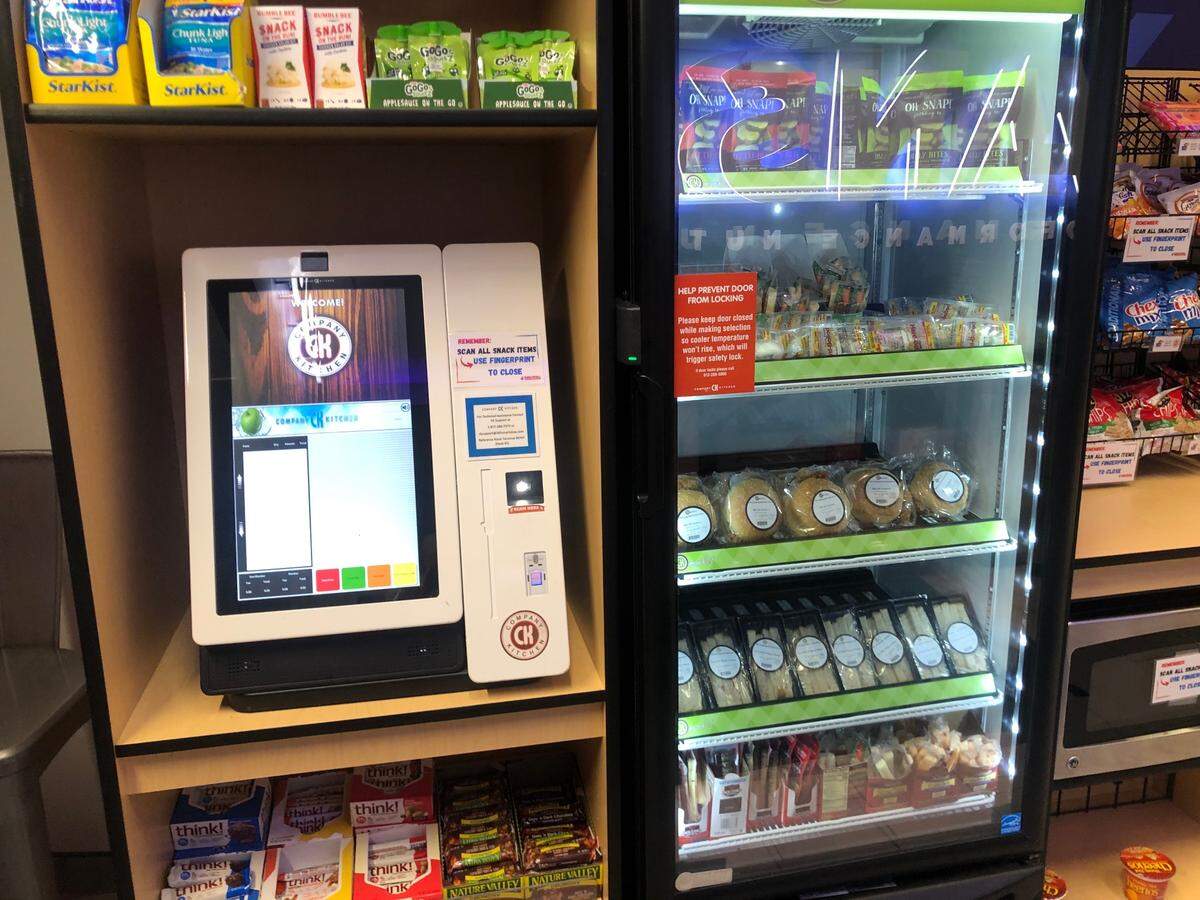
“Things (at Buffalo) were not bad at all, but here is just an excessive amount of everything,” Miller said. “So you can tell the budget is bigger.”
Former Buffalo defensive end Eddie Wilson and Bean repeat a similar message about their move to KU: They’ve never had this many eyes on them before.
For Bean, that’s shown itself in many different areas.
“We have a resource for literally everything, whether that’s eating, nutrition. Obviously the training room, we have — shoot I don’t know — three different trainers we can go see and the team doctors,” Bean said. “The strength staff, we have the head strength coach and then we have guys under him that can still help us just as good as he can.
“Like I said, there’s a little bit of people for everything.”
Leipold’s hope is that experiences like Bean’s will resonate with others.
KU will likely have to be creative — and versatile — with its recruiting to bring in the players needed for a turn-around.
That potentially means seeking out lower-level transfers looking for a step up.
While also giving those players a glimpse of what they might’ve been missing all along.
“If you want to get developed, this is where you’re going to come,” Gildersleeve said, “because there is literally no stone unturned of what we’re going to think here.”
This story was originally published October 14, 2021 at 8:01 AM.