
Jamari Traylor’s father is a candidate for clemency from President Obama, but will his request be read in time?
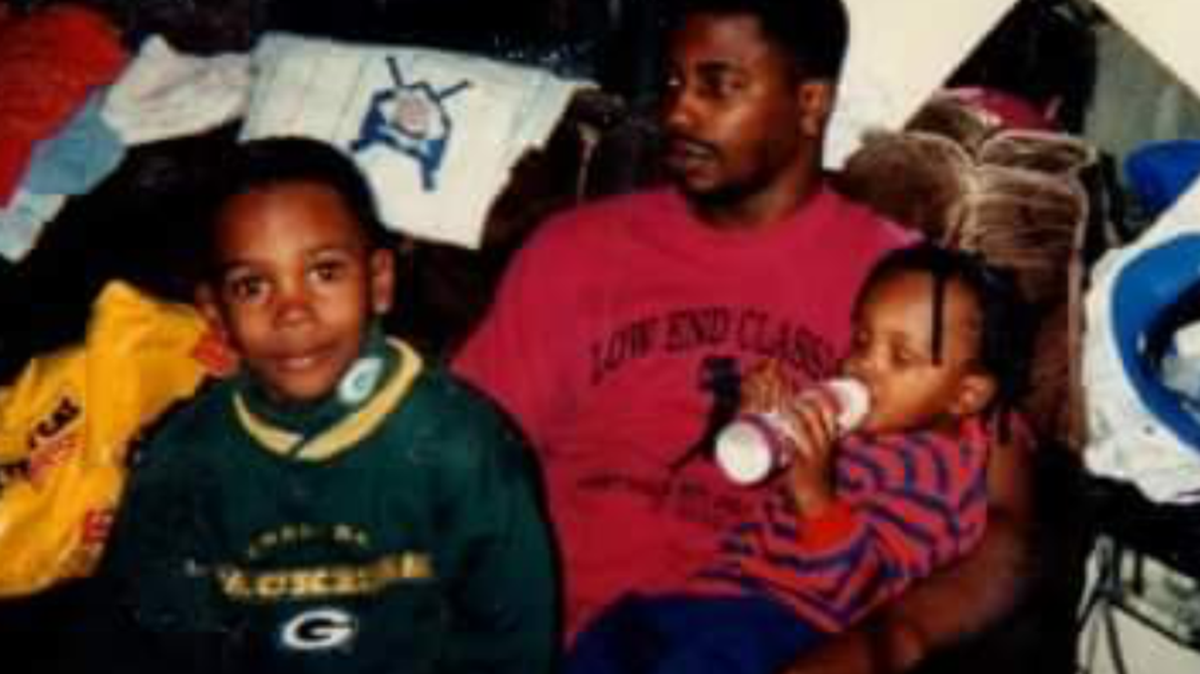
Since he was given a life sentence in 2008, Jessie Traylor has received his GED. He’s completed classes in business development, Spanish and sports officiating and also attends a culinary arts program two hours a day, five days a week.
With all his appeals exhausted, Traylor lives as if he might some day make it outside prison walls.
That audacious hope has a chance to be rewarded in the next month.
Thanks to a new project and unparalleled action from President Barack Obama, the father of former Kansas basketball forward Jamari Traylor has filed a petition for clemency — which includes letters from himself, Jamari, KU coach Bill Self and judge Michael McCuskey — to the United States Department of Justice.
There’s only one problem: His request is one of 13,000 still pending with the Office of the Pardon Attorney.
“It’s a needle in a stack of needles,” attorney Carl Folsom III said. “And the time is running out.”
Jessie Traylor put on work clothes before leaving his house, wanting to give the appearance to his children that he was going to a real job.
Instead, with the bills piling up in Chicago, Traylor had made the decision to be a part-time drug courier. Going by car or Greyhound bus, he would transport narcotics from Chicago to Decatur, Illinois.
“I believed that back then it was my only way,” Jessie said in his letter to Obama. “I never had a lot of money or fancy things. I was just trying to make the problems I had go away.”
He was arrested in 2008, when he was found to have approximately one kilogram — or about two pounds — of cocaine in his backpack. Because he’d had two prior nonviolent drug convictions, the mandatory minimum sentence for his crime was life in prison.
Fifteen-year-old Jamari remembers making a trip to Indiana, as Jessie came face to face with his son across a glass window, telling him that he was never leaving jail.
Jamari cried the entire ride home.
“It felt like my heart had been ripped right out of my chest,” Jamari said in his letter to Obama.
The father and son have stayed in contact since. Jessie loves listening to Jamari’s stories, telling Obama in his letter that Jamari is “my hero.”
“I am so very proud to call him my son,” Jessie said in the letter. “He has been my energy for life.”
If Jessie does have his sentence shortened, Jamari’s ties to KU basketball will have played a significant role in his father’s release.
And if it happens, guard Frank Mason might be credited with the biggest assist of his life.
Carl Folsom III already had three Clemency Project reports on his desk at the Federal Public Defender’s office in Topeka when the conversation turned to KU basketball.
It was shortly after the team’s NCAA Tournament loss to Villanova in April when he and co-worker Cindy Johnson started discussing Jamari Traylor, who was nearing graduation at KU.
The Clemency Project work was all pro bono. The initiative launched in January 2014 after U.S. Deputy Attorney General James Cole asked lawyers to provide help to federal prisoners who likely would have received shorter sentences had they committed the same crimes today.
The discussion of Traylor naturally led to another question: Could their type of work apply to Jamari Traylor’s father, who was known to be in prison for drug charges?
Folsom contacted Clemency Project director Cynthia Roseberry, who hadn’t heard of Jessie Traylor and said no one was working on his case. Jessie appeared to meet every requirement — including the fact that, under current law, he’d likely have a mandatory-minimum sentence of around 10 years instead of life — with the one exception that Jessie had spent only eight years incarcerated as opposed to 10.
That didn’t deter Folsom and Johnson for long. Roseberry spoke at their office the next week during an annual conference, and she made specific reference to someone who had received clemency after spending only eight years in prison.
An hour later, during a lunch break, Folsom and Johnson drove to Lawrence. The two spoke briefly with KU assistant coach Kurtis Townsend, but they weren’t able to contact Traylor because of a phone issue.
Before leaving, they happened to walk by Frank Mason. He took their business card, saying he was going to see Traylor later that night.
He’d be sure to tell his friend what they had to say.
Michael McCuskey received a lifetime appointment as a federal judge by former President Bill Clinton, only to give that title up because of cases like Jessie Traylor’s.
McCuskey, currently a state judge in Illinois, had no option but to sentence drug offenders like Traylor to life behind bars. A court transcript quoted McCuskey as telling Jessie, “This is not my sentence. This is Congress’s sentence.”
“I chose to no longer be a cog in this unfair machine of ‘justice,’” McCuskey told Obama in his letter.
McCuskey goes on to say that Traylor’s sentence was “not just” for “his role as a low-level, nonviolent drug courier.”
There’s also the matter of Traylor’s punishment compared to the others arrested as part of the same drug ring.
Dana Hawkins, found to be a distributor in Decatur, had a 262-month sentence reduced to 133 months. His release date is set for Feb. 1, 2018.
Djuan Davis, found to be a supplier, served 52 months. He was released on Aug. 30, 2013.
And finally, Kelly Gallagher, who was found to be a street-level drug dealer, served 70 months. He was released on March 25, 2013.
Though the pre-sentence report claims Traylor “had no authority or control over his co-conspirators and was less culpable than most other participants,” he was sentenced to spend more time in jail than the three others combined because of his two prior drug convictions.
In McCuskey’s letter, he requests that Traylor’s sentence be reduced to 10 years.
“Mr. Traylor was a very average drug courier, who was treated unfairly by the U.S. Attorney’s Office in the Central District of Illinois,” McCuskey wrote. “The life sentence that Mr. Traylor received was far too harsh.”
The biggest question that remains: Will McCuskey’s letter — and Traylor’s petition — get read at all?
Last Monday, Barack Obama pardoned 78 and shortened the sentence of 153 others — the most clemencies ever made by a president in one day.
When Folsom saw the press release, he looked for Jessie’s name first.
“It’s a really unique thing I don’t think ever is going to occur again,” Folsom said of Obama’s clemencies. “This is probably a last shot-type thing.”
Folsom has plenty of reason to be invested in Traylor’s case now. He spent between 30-40 unpaid hours — including many late nights in May and June — writing up the petition and making the legal argument on Traylor’s behalf. Johnson spent just as much time doing all the investigating, which included getting records from the bureau of prisons, contacting people to write letters and coming up with a release plan, which would include Jessie living with wife Tracey Golson and working at J. Parker Rooftop Restaurant.
Because Folsom is not allowed to file the petition as a public defender, he contacted Lawrence lawyer and friend Rebekah Gaston, who attached the required documents and submitted it June 17 as a volunteer attorney.
“We’re hoping they get to it before President Obama leaves office,” Gaston said. “I guess we get a little nervous as each day passes.”
Folsom’s office has had two of their cases through the Clemency Project result in shortened sentences. On the five cases he’s worked on, he’s yet to hear a response.
The deadline looms. Jan. 20 is Obama’s last day in office, and there’s not optimism that the new administration and attorney general will offer a similar program.
“It’s probably now,” Folsom said, “or it’s not going to happen.”
Jessie, who is 48 and currently in Yazoo City, Mississippi, has served 102 months, though that doesn’t include 14 months of credit he could receive for good conduct. He has no disciplinary incidents for fighting and only five minor incidents in eight years — an overall clean mark that is rare among prisoners with life sentences who aren’t able to get their time shortened for good behavior.
In his letter to Obama, Jessie starts by taking responsibility for his actions, saying his poor choices caused pain and suffering for his family.
He still has dreams for his future, though. He would love to watch Jamari play basketball, getting the opportunity to make up some of the experiences he’s missed.
While playing professionally in Austria, Jamari waits in anticipation while fully aware this could be another dead end.
“I’m still hoping for the best, although time is ticking. My dad is doing the same,” Jamari said in a text message. “That’s probably the only thing that keeps him going in there, the thought of getting out.”
When he first started work with the Clemency Project, Folsom was told it was best to get everything in by January. Those deadlines were adjusted back a few times, and after contacting the White House general counsel, he was told all filings made by June should be considered.
He can’t be sure that’s the case, though.
“It’s exceptionally high (probability) that if someone reads it, it’ll get granted,” Folsom said of Jessie’s petition.
“That’s the problem. We don’t know if it’ll actually get read in time.”
Jesse Newell: 816-234-4759, @jessenewell