
Fans embrace beer sales at KU, K-State, Mizzou by guzzling Bud Light, Michelob Ultra
A Jayhawk, a Tiger and a Wildcat walk into a bar. What happens next?
Odds are good they each order a Bud Light, or maybe a Michelob Ultra.
Whenever Kansas, Kansas State and Missouri host sporting events on the same afternoon, three distinctively different game-day experiences are on display. Each school has its own athletic identity, making it difficult to find common ground between their supporters. But here is something fans of all three can seem to agree on:
Beer.
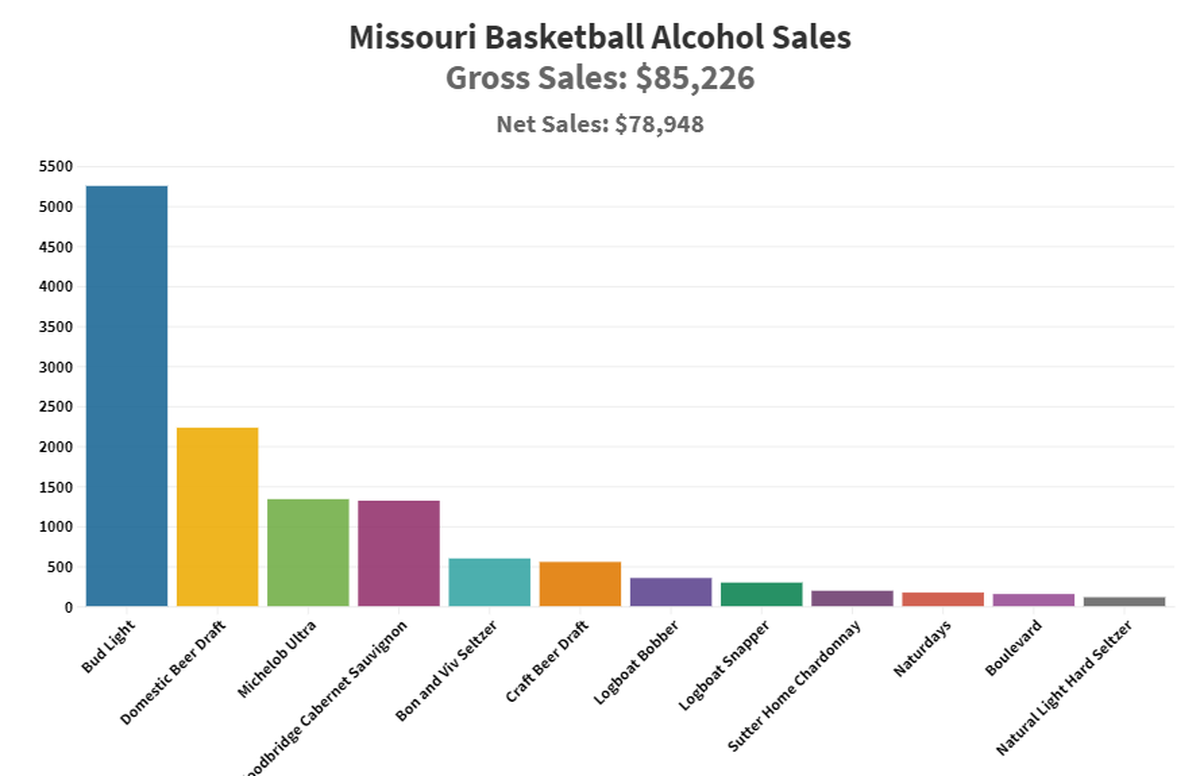
A review of alcoholic beverage sales at KU, K-State and Mizzou sporting events from the past academic year revealed that Bud Light was the most popular beer sold at both Kansas football games and Missouri basketball games, while it ranked second behind only Michelob Ultra at K-State basketball games.
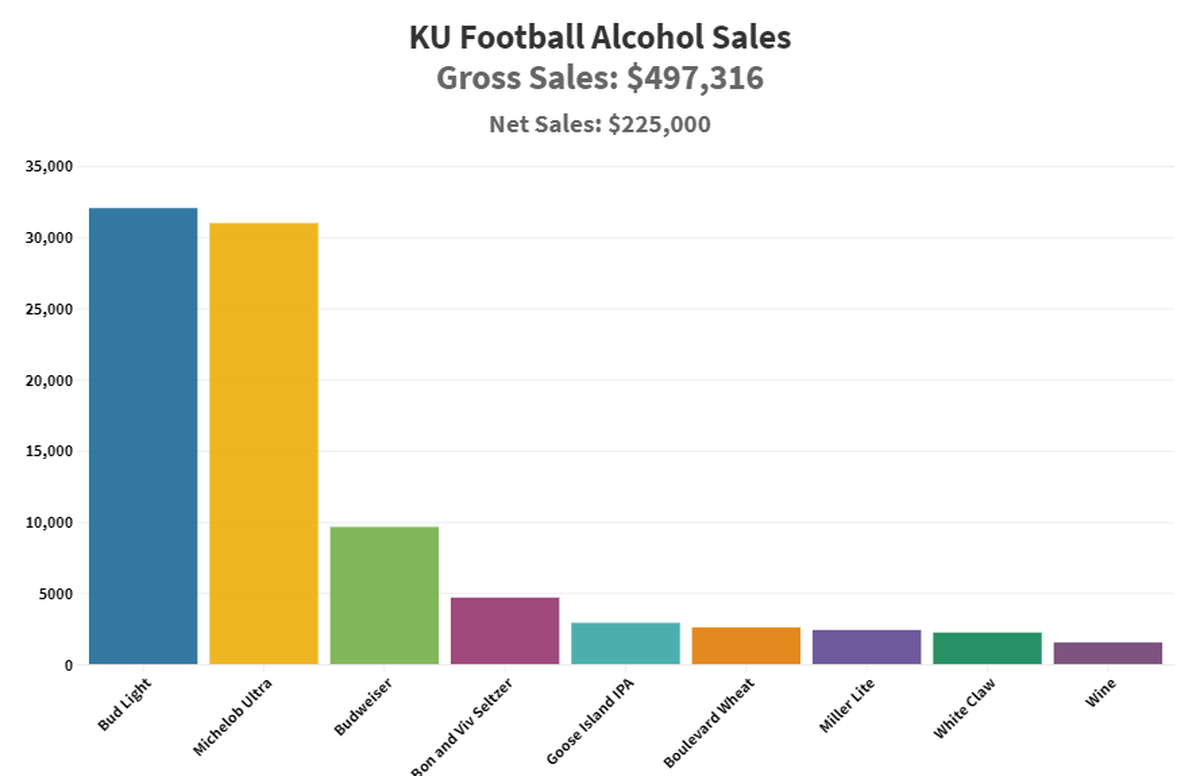
Kansas sold 32,040 cans of the domestic beer at its football games last year. Missouri (5,251) and K-State (2,616) also sold large quantities at their men’s and women’s basketball games.
Those numbers help illustrate how all three athletic departments successfully ventured into the world of alcohol sales at their most popular sporting events over the past several months. For the first time, each school began offering beer and wine throughout their stadiums and arenas to all fans of legal drinking age last season.
That decision was a hit in Columbia, Lawrence and Manhattan.
“We had a very positive experience with expanded alcohol sales,” KU athletic director Jeff Long said. “The money we netted off of our sales was more than we anticipated in even our more aggressive scenarios and providing it inside the stadium created a better atmosphere at our football games.”
“The overwhelming response we got was positive,” Missouri deputy AD Tim Hickman said. “Our fans like having that amenity at games.”
“I think it has gone pretty well, to be honest with you,” K-State AD Gene Taylor said. “I have not yet heard a complaint from a fan that they don’t like the beer sales. We haven’t had any issues with it.”
Tapping into a new revenue source
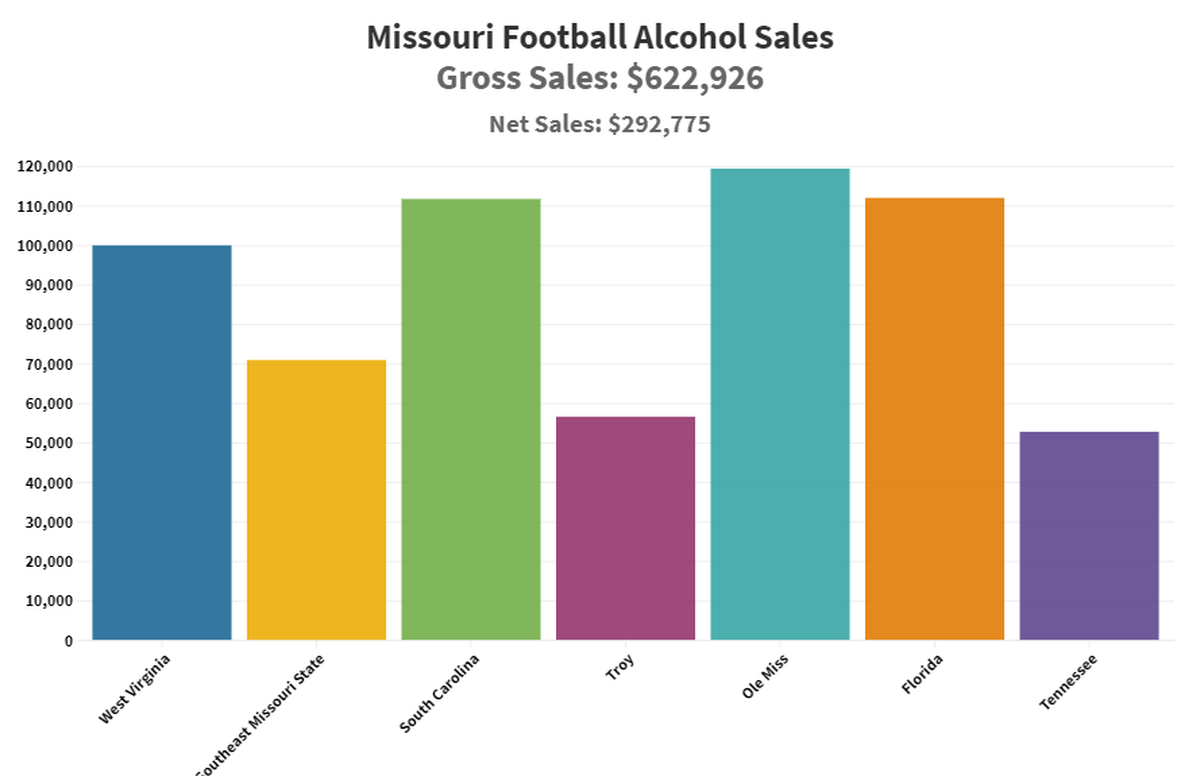
Missouri fans were the thirstiest members of the group, leading the way with gross alcohol sales of $622,926 at football games last season, in addition to $79,803 at men’s basketball games and $5,023 at women’s basketball games. The Tigers netted $371,723 on those sales, according to documents obtained through a records request.
That’s a nice, dependable source of revenue for the athletic department that previously went untapped.
Kansas also cashed in after introducing alcohol at its football games, selling $497,316 worth of beer and wine at Memorial Stadium for a net profit of approximately $225,000, Long said. The Jayhawks averaged an announced attendance of 33,874 at their seven home games, but it appears many of those fans purchased drinks while they watched first-year coach Les Miles and his team.
The Jayhawks did not sell alcoholic beverages outside of premium areas at Allen Fieldhouse. Long said the school has no plans to expand beer and wine sales at basketball games.
K-State sold 12,036 units of beer and wine at its basketball games for a net profit of $67,866. It didn’t sell alcohol at its football games last year, but athletic director Gene Taylor is considering the option of introducing it at Bill Snyder Family Stadium as early as this coming season.
It seems KU, K-State and Mizzou fans all have a thirst for beer at games, and each school is happy to help them quench it.
At KU, fans could choose between eight different kinds of beer in addition to wine. After Bud Light, Michelob Ultra was the most popular beverage, followed by Budweiser and then Bon & Viv Spiked Seltzer. Miller Lite was the least popular beer, with 2,400 cans sold. But it did rank ahead of White Claw and wine, which was by far the least popular drink offered.
At Missouri, fans were much more receptive of wine. Woodbridge Cabernet Sauvignon was the fourth-most popular drink sold among the 12 offered at basketball games, behind Bud Light, draft domestic beer and Michelob Ultra. Craft beer wasn’t much of a hit in Columbia, with Boulevard ranking last at just 152 units sold. But the Kansas City favorite did beat out Natural Light Hard Seltzer, which ranked last.
The Tigers only provided individual beer sales for basketball games.
At K-State, fans embraced variety and purchased 18 different kinds of alcoholic beverages. Among those, they gave Coors Banquet a particularly cold shoulder. The school sold just 48 cans of that beer all season. But the Wildcats liked Goose Island IPA (1,464), Shock Top (1,320), Coors Light (648) and Naturdays (336) in addition to Bud Light (2,616) and Michelob Ultra (3,096). Similar to KU, wine ranked last.
Still, both schools were happy to sell it for nearly $8 a pop.
“We are very pleased to add $225,000 into the budget,” Long said. “That has an impact for us. Some may argue that it’s not enough to justify alcohol sales. If we had increased incidents or more fans transporting alcohol into the stadium, I can see that argument. But it was a double positive for us. We saw more revenue and fewer alcohol-related incidents.”
A prime-time football game in front of a large crowd can mean a big payday for any school that sells beer and wine.
For example: Missouri totaled $119,926 in alcohol sales when 62,021 fans watched the Tigers play Mississippi. That was their highest number of the season, but MU also reached six figures in alcohol sales during home games against South Carolina and Florida.
Even their least-attended home game against Tennessee still brought in $52,696 in alcohol sales.
Kansas averaged $71,045 in alcohol sales at its seven home games.
Joining the party
For decades, many athletic departments have shunned alcohol sales outside of game-day suites and club levels for various reasons. Kansas, K-State and Missouri all had reservations about expanding their drink menus for the first time. They included: underage drinking, unruly fans, alcohol-induced fights and longer lines at concession stands and restrooms.
But all three schools rolled the dice on the new venture as beer and wine sales became more commonplace. Schools like Arizona State, West Virginia and Texas, which partnered with Corona as an official beer partner, proved they could host games in front of beer-drinking patrons without experiencing any hiccups.
The Jayhawks, Tigers and Wildcats wanted to try, too.
And they didn’t endure many headaches, either.
.jpeg "Kansas State Basketball Alcohol Sales (1).jpeg")
“We didn’t see any kind of noticeable difference in alcohol-related incidents,” Hickman said of Missouri’s games. “Our police department was very much for it. When we have the ability to sell it, we have the ability to manage it. That eliminates the need to binge-drink ahead of time or sneak other things in.”
Taylor said beer and wine were introduced seamlessly at Bramlage Coliseum.
He feared the arena might have some incidents when KU visited Manhattan late in the basketball season, but even that game went off without a hitch.
“We didn’t have any issues that I am aware of in regards to fan issues,” Taylor said. “I also think in the student areas we didn’t have anyone bringing beers in and handing them to their buddies. We paid pretty close attention to that in terms of identifying the students and making sure they followed the rules. I don’t know that we had any ejections because of it.”
In Lawrence, special precautions were taken to make sure football games remained family friendly. Beer and wine weren’t offered at concession stands behind the student sections. In Columbia, all alcoholic beverages were poured into cups. In all three college towns, beer sales ended before the fourth quarter of football games and early in the second half of basketball games.
The introduction of beer and wine also meant the end of exit/re-entry at KU football games, which provided other benefits for the home team.
“Our fans, candidly, stayed in the stadium longer,” Long said. “Fewer of them left early. We didn’t have anybody staying out in the parking lot after halftime instead of coming back in. We saw our stands remain fuller longer by eliminating (re-entry). We saw less incidents regarding alcohol and we had our best attendance in the past 10 years. We were up 74 percent. Those are all very remarkable and advocate for this being a good decision for us.”
More beer at more games?
That raises a question for Kansas: Why not also expand alcohol sales at basketball games?
Long is quick to shoot down that possibility as a non-starter. What’s best for KU football isn’t necessarily also what’s best for KU basketball. After talking to donors and season-ticket holders about the game-day experience at Allen Fieldhouse, which typically features a full 16,300 for just about every opponent, he says the Jayhawks have a special environment that doesn’t need adjusting.
Taylor thinks the same way about K-State football games.
He isn’t ready to introduce beer and wine at every concession stand inside Bill Snyder Family Stadium. At least not yet. K-State currently offers alcohol inside suites and club levels at football games. It also has a beer garden, where fans can drink privately away from the action.
But K-State’s football atmosphere is not the same as basketball. With an abundance of parking surrounding the stadium on all sides, some fans prefer to exit games and visit their tailgates before returning for more. Others are ready for beer sales. Taylor wants more feedback from fans before committing to alcohol sales at football games, even after the good experience the school has had so far with alcohol sales at basketball games.
“They are just so different,” Taylor said. “You have got a lot more people at football. In basketball, you show up, walk in the arena, sit down for a couple hours and then leave. You’ve got several hours of tailgating at football and then a three-hour game with exit and re-entry. Football is a lot more complicated than basketball. So we have got to take all those factors into consideration.”
Still, more schools are joining the party. A grand total of 78 Division I football teams offered beer and wine at games last season. That included six teams from both the SEC and the Big 12.
The SEC lifted its ban on alcohol sales at football games last year, allowing Arkansas, LSU, Missouri, Tennessee, Texas A&M and Vanderbilt to embrace them. In the Big 12, the only holdouts are Baylor, Iowa State, K-State and TCU.
“We might be within a year or two of it only being a small minority of schools that are not doing it,” Hickman said. “That would be my take. People are looking for that experience and there are a lot of positives if you handle it correctly.”
A successful debut year of alcohol sales could prompt more colleges to join in.
The Jayhawks, Tigers and Wildcats are glad they already did.
This story was originally published April 9, 2020 at 5:00 AM with the headline "Fans embrace beer sales at KU, K-State, Mizzou by guzzling Bud Light, Michelob Ultra."