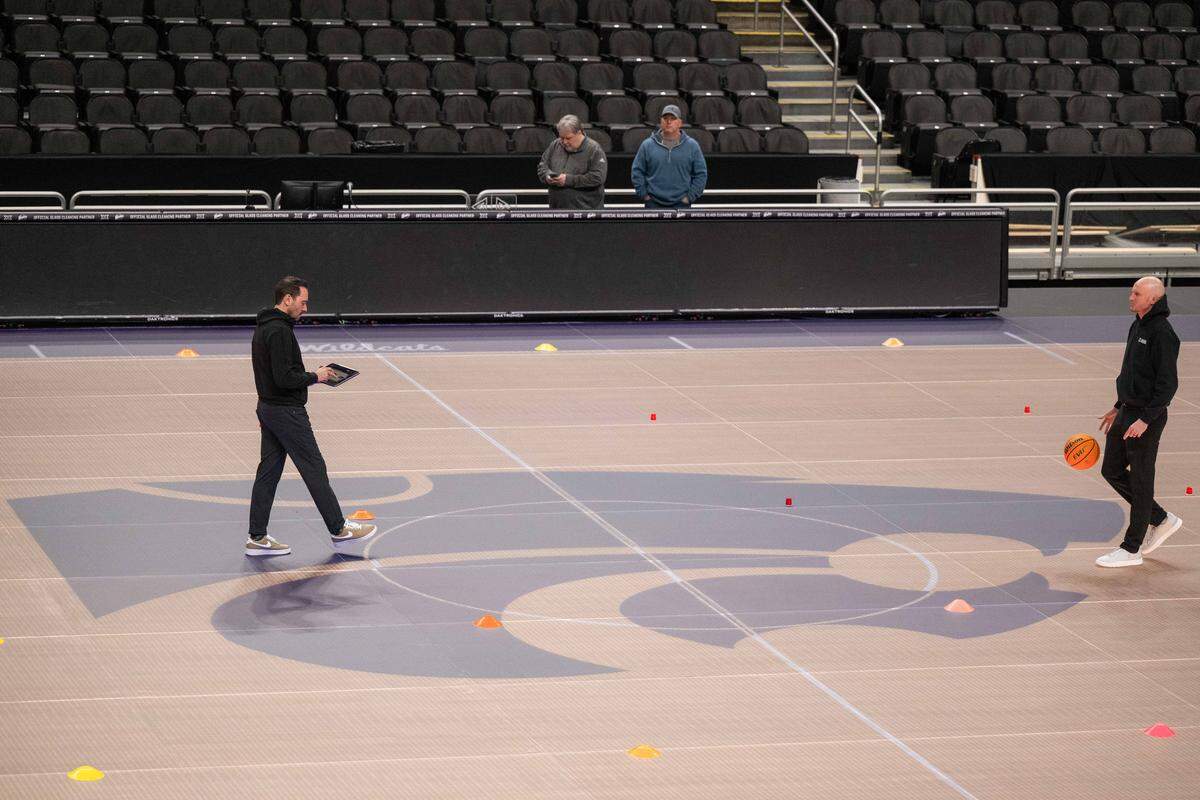
An inside look at the Big 12 Tournament’s LED glass court — and how it all works
AI-generated summary reviewed by our newsroom.
- Big 12 debuts ASB GlassFloor LED court at this week’s tournament
- Glass surface, ceramic-dot grip and spring metal claim to ease athlete strain
- Court is a programmable display for coaching, fan engagement and branding
A brand-new experience is coming to the Big 12 men’s and women’s basketball tournaments this week when the conference unveils its new interactive LED video sports floor, marking the first time the floor has been used in official college basketball competition.
ASB GlassFloor, the company behind the court, has already had its floors used for different sports and entertainment events around the world — some based in America — since 2011.
The floor first premiered in knockout rounds of the 2023 FIBA U19 Women’s Basketball World Cup. Six months later, it was used during the 2024 NBA All-Star Weekend. Later that year, they developed the second edition of the Athletes Lab, where NBA and college teams can train on the surface in Orlando in partnership with the professional league.
The Germany-based manufacturer has been constructing the court since the early 2010s, constantly fine-tuning and upgrading with the rapid pace of evolving technology.
Their three-year partnership with the Big 12 began with a conversation with the conference’s chief brand and business officer Tyrel Kirkham at a Las Vegas conference in 2024, ASB GlassFloor CEO of the Americas Chris Thornton told The Star.
As ASB works to get approval for competitive NBA games, they saw the Big 12 tournaments as the perfect opportunity to showcase their product on a big scale.
“The Big 12 came in and they see the value of this,” Thornton said. “They see the benefits on the players. A lot of the Big 12 teams came through Orlando, practiced on the floor as well. So a lot of the teams have already been on this floor once or twice, and they love it.”
How the glass court works
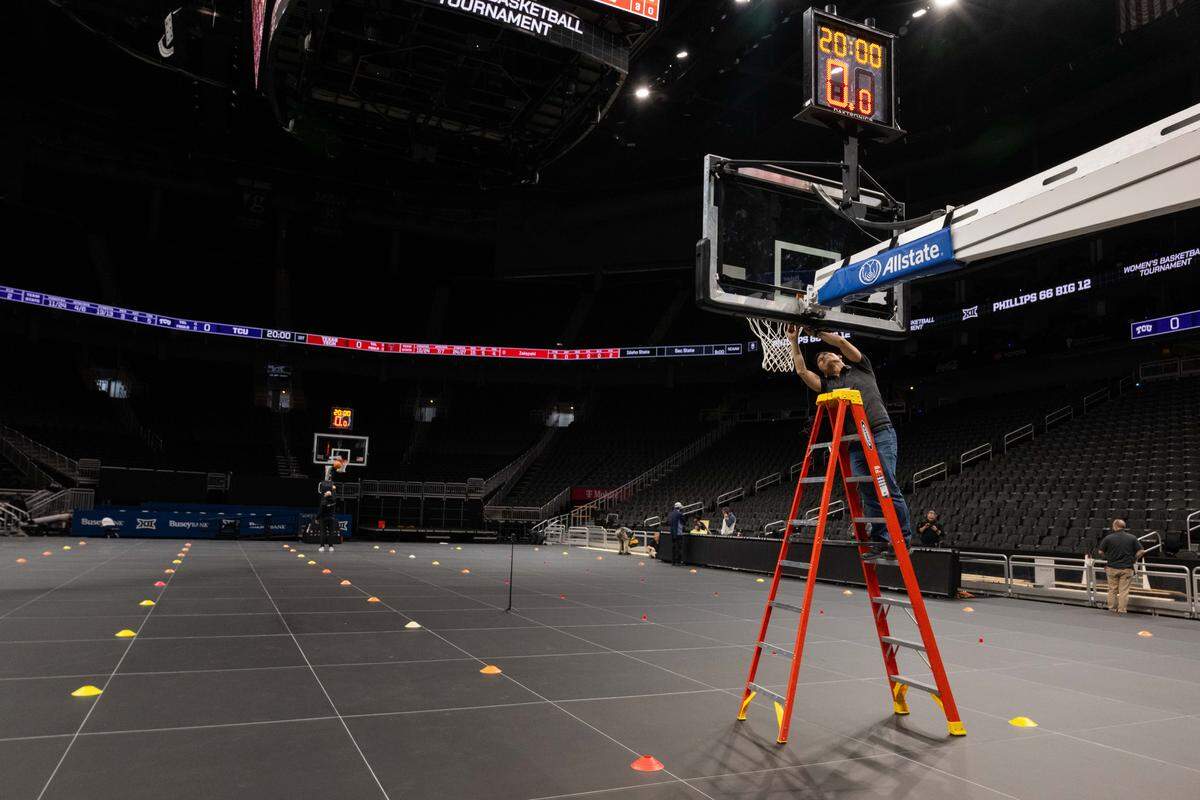
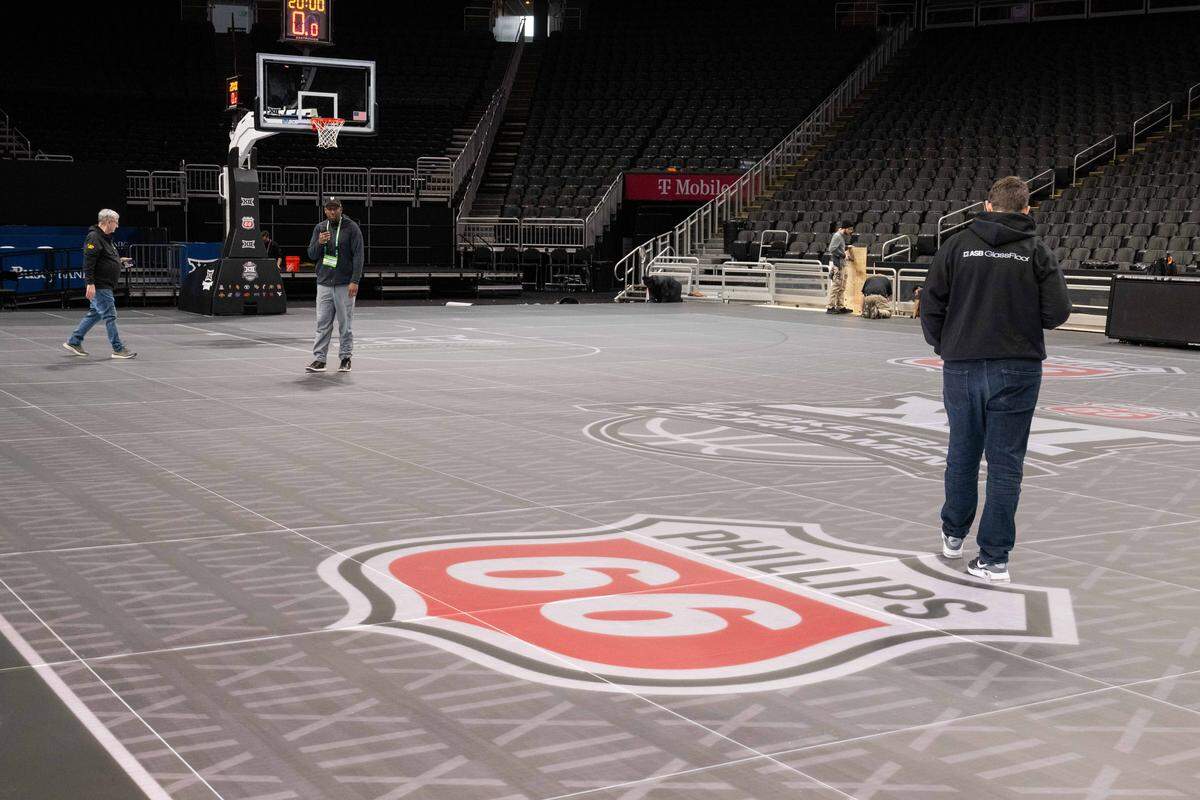
When fans enter T-Mobile Center, they will see a black court with square panels throughout, but they won’t interfere with play, Thornton said.
Large crates bring in the separated panels. Underneath the floor is spring-action metal, which has LED lights embedded inside of it. The top surface is glass and features a dotted, dark ceramic coating burned into the top of the glass that only one factory in the world can make, according to Thornton.
The gritty, ceramic dots create the grip on the floor, which Thornton calls the company’s “secret sauce”.
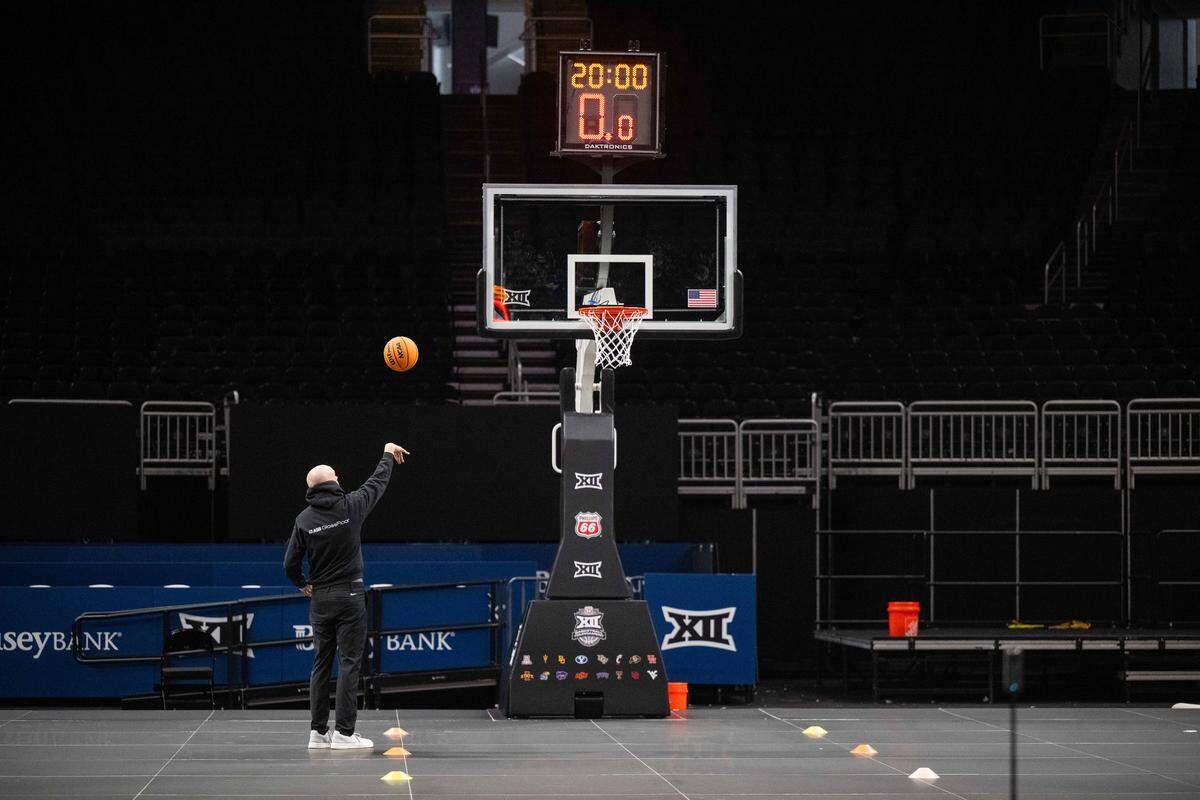
“The ceramic dots, they’re specifically placed at the right amount of distance apart to give you that more consistent grip. You’ll never have a dead spot or a low spot on this floor,” Thornton said.
The ceramic coating on the glass, two pieces of safety glass, and the spring-action metal make up the ASB GlassFloor, which the company hopes revolutionizes basketball-playing surfaces.
“It’s lighter on the athlete’s body, it’s lighter on their knees, it’s lighter on their ankles,” Thornton said.
It takes six to 10 hours to put together and can run on power from the arenas it is based in without any additional power needed.
“So it’s safer, and the athletes feel more comfortable when they’re running, and they have that same grip, if not a more consistent grip than a hardwood floor,” Thornton continued, “because this is all done by computer.”
The court’s wow factor
The court’s main draw, aside from the potential benefits to athletes, is the customization.
“It’s basically a big TV screen at the end of the day,” Thornton said.
The court can be controlled by an iPad, as Thornton changed the colors and graphics of the court to fit each Big 12 school among NBA teams and other designs. An onsite crew will be in charge of the all the bells and whistle once gameplay begins Wednesday with the Big 12 women’s basketball tournament.
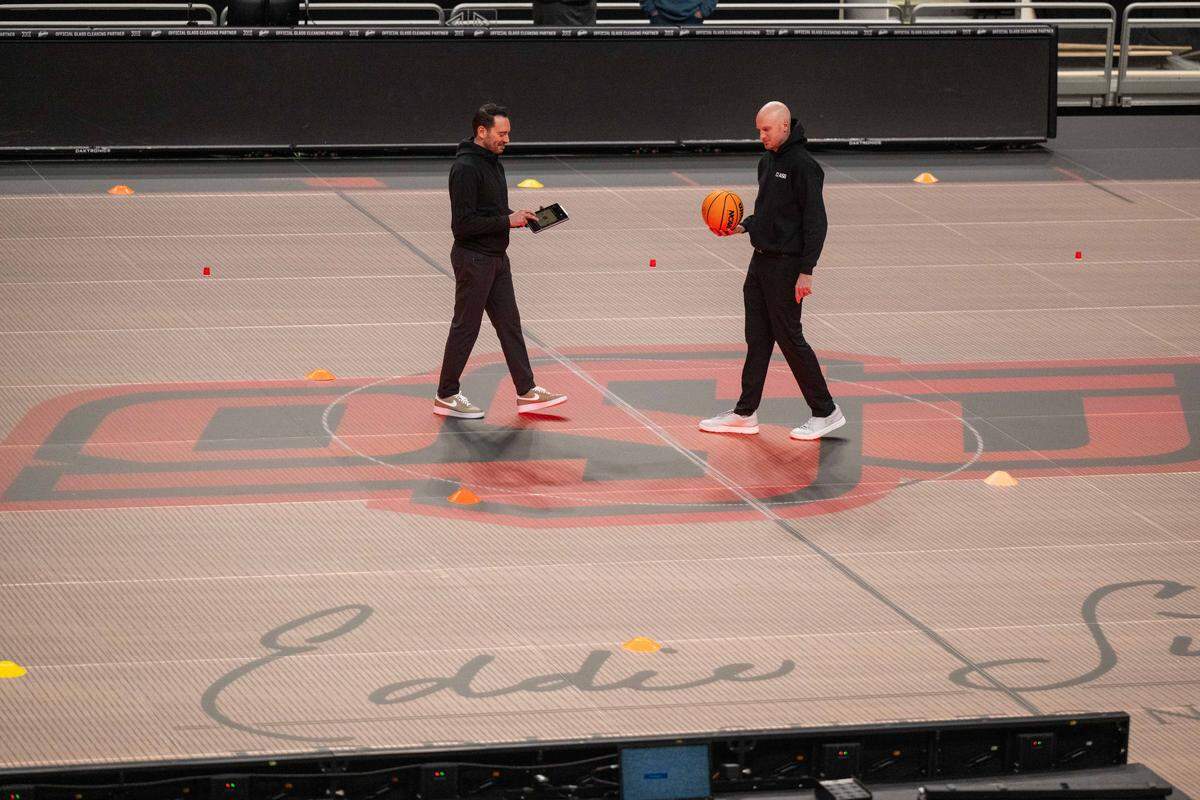
Coaches can also draw plays on the court and have their plays progressed in motion. Fans can expect to see shot charts, interactive fan games during timeouts and animations during a game’s big moments.
“You’re going to see some small movements in the court, but at timeout, it becomes a dynamic takeover,” Thornton said. “Halftime, a dynamic takeover. We’ve got some really cool, creative stuff we’re going to unveil during the tournament.”
While the court designs have already stirred fan conversation, ASB GlassFloor is building with hopes to become the next primary basketball playing surface for years to come.
The lifespan of the courts is approximately 25 years, with costs reaching north of $2 million and a single panel taking less than 10 minutes to replace. ASB GlassFloor can make the courts in four months with LEDs taking up to six months to be made and installed.
Thornton compared the company’s product to the first iPhone when explaining how he projects the future.
“This ecosystem of what you can do digitally on the court, new applications, new coaching drills. This will also advance on the floor as well,” he said. “We are laser focused on being an athletic surface, because this was engineered for elite athletes, at the end of the day. It wasn’t engineered to be in entertainment. I think that just comes along with it ... and if the athletes didn’t like playing on this, we wouldn’t be sitting here right now at the Big 12 championship.”