
Predicting what’s next for Big 12 and expansion targets BYU, Cincinnati, Houston, UCF
After weeks of uncertainty, it seems as though the Big 12 and its eight remaining members have a future together.
The conference has formed a committee of two athletic directors and two school presidents, including Kansas chancellor Douglas Girod, to explore expansion options that will allow the league to rebuild after flagship members Oklahoma and Texas leave for the SEC.
Sources have confirmed that the Big 12 is focusing on BYU, Cincinnati, Houston and UCF as early front-runners in the expansion process.
But adding new teams could be a delicate process. Big 12 athletic directors met with commissioner Bob Bowlsby for back-to-back days earlier this week in the Dallas area. When those meetings ended, Bowlsby issued a statement that made it clear Baylor, Iowa State, KU, K-State, Oklahoma State, TCU, Texas Tech and West Virginia are working together to strengthen the conference, but he didn’t specifically mention expansion.
What’s next?
College sports writers Drew Davison, Blair Kerkhoff and Kellis Robinett are ready to make a few predictions, presented in a round table format:
1. If BYU, Cincinnati, Houston and UCF are the front runners, which school deserves the Big 12’s first invitation?
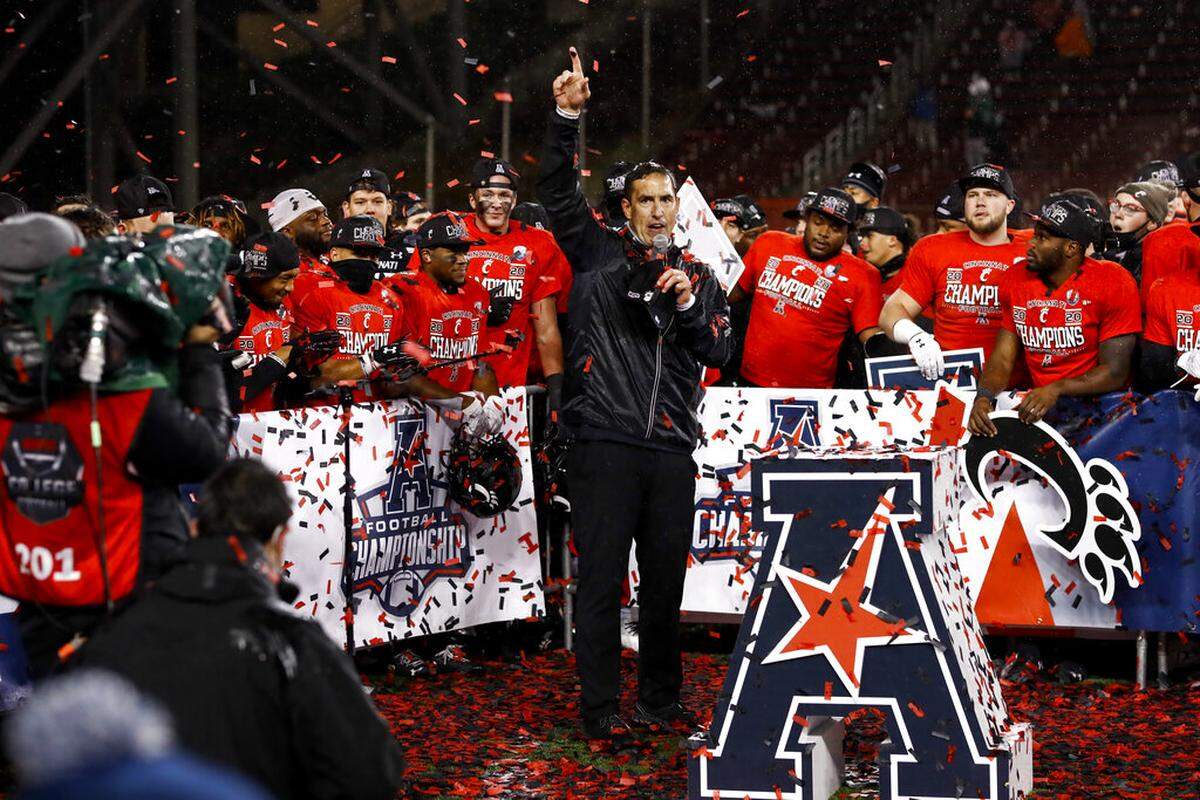
Kellis Robinett: Bob Bowlsby’s first call should go to Cincinnati. The Bearcats check all the boxes in ways the other three schools don’t. Value? Check! New TV market? Check! Top 10 football team? Check! Located in a fertile recruiting area? Check! Good basketball? Check! Big enrollment? Check! Located near West Virginia? Check! Cincinnati is basically already a Power Five team, it’s just in a Group of Five conference. BYU is a close second, because it brings the most value of the group and isn’t currently tethered to a league.
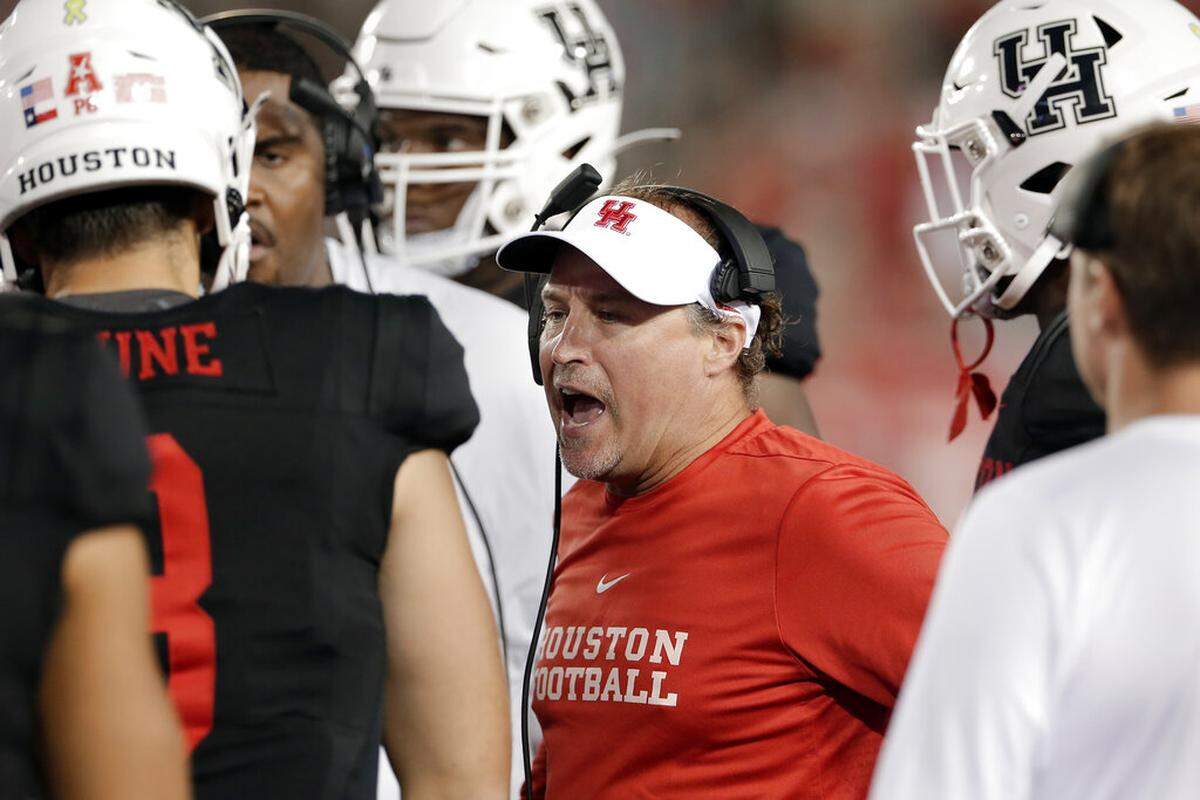
Blair Kerkhoff: If you polled it, I think most would say BYU, and the Cougars would be a good addition to the Big 12. But I’ve been saying for years, Houston should be a priority. Football and men’s basketball have tradition. Houston has been in a bowl game more often than not over the past 20 years. It’s the third largest university in Texas, and like all Texas schools they have a hand sign — the Cougar Paw.
Drew Davison: BYU. The Cougars bring immediate value to the league given their strong following and TV numbers. After that, I’d go with an order of Cincinnati, Houston and UCF. Cincy doesn’t have BYU-type TV numbers, but it’s still strong and brings solid football and basketball programs. Houston helps the Big 12 deepen its footprint in Texas while UCF would allow the league to expand into Florida.
2. Do you object to any of those four schools?
Blair Kerkhoff: The list is strong. The potential addition of BYU and Central Florida would greatly expand the footprint and would make traveling difficult as it has been for West Virginia. But Brigham Young is a no-brainer. Orlando is an easy access destination. I’d also like Cincinnati as a travel partner for West Virginia. Three of the four are urban schools, which would be different but not unwelcome by the Big 12.
Drew Davison: No. I feel all four would be nice additions at this point. This is a football conversation, of course, and this refortified Big 12 would be just as good, if not better, than the Pac-12 most years. From a basketball perspective, the league would remain among the best in the country, too. Houston just made a Final Four, Cincy is a March Madness staple and BYU just returned to the Dance last season. UCF doesn’t have the richest basketball history, but it did make the NCAA Tournament a couple years ago.
Kellis Robinett: Not really. They are clearly the four best options available. But I do have some questions about BYU. Its chances of joining the Big 12 were torpedoed five years ago when LGBT groups sent a letter to Bowlsby and school presidents urging the league not to consider the Cougars because of concerns about their honor code. Is that still an issue? UCF is also far away.
3. Throw a wild card into the mix. Which school is next in line after the favorites?
Blair Kerkhoff: My wild cards are Boise State, Memphis, UNLV, Colorado State and Air Force — I’ve seen those suggested. I also heard from someone who would like to see Army, Navy and Air Force as part of an expanded Big 12. Boise State is the strongest contender here.
Kellis Robinett: You know what? I have also heard that the service academies might be considered if the Big 12 looks at other options. But I am more interested in Colorado State. The Rams would be a long-term play instead of a short-term money grab, but they are located in a state that used to be within the Big 12’s footprint and their school reminds me a lot of KU, K-State and Iowa State. Colorado State is located in a fun college town, but is also close to Denver.
Drew Davison: Navy would be my wild card over schools such as Colorado State, San Diego State, USF, Memphis and SMU. Navy would bring in strong TV numbers (thanks in large part to the Army-Navy game) and a wide-reaching fan base. The Midshipmen are coming off a down year but they have finished in the top 25 twice in the last six seasons. I’d go with Navy if the Big 12 wants to pursue a service academy.
4. Does it make more sense for the Big 12 to add two or four schools?
Drew Davison: It makes sense to add four so the Big 12 can return to being, you know, 12 schools. The 10-school format worked well from a scheduling standpoint and made sense with Texas and Oklahoma still in it, but the league is going to have to grow once the flagships are gone. I’d rather roll the dice on four schools growing under the Big 12 umbrella rather than two. Plus, once the league enters TV negotiations, the more quality league games the better.
Blair Kerkhoff: Tough one. I think first in terms of scheduling options and not revenue payout from the conference office. Ten allows for a less crowded complete round-robin schedule and all but guarantees home-and-home for basketball, which has been a Big 12 strength as a 10-team conference. Twelve would allow the Big 12 to split into divisions as the league originally operated and make the football championship game a clash between division winners. Maybe K-State, KU, Iowa State, WVU, Cincinnati and Central Florida in one division, the Texas schools, Oklahoma State and BYU in the other?
This also is a good place to bring up something I’ve thought about for years: Can this be a football and basketball only conference? Because realignment is a football revenue driven process, why make Central Florida’s softball team travel to Iowa State or BYU’s soccer team visit West Virginia? Olympic sports should become affiliate members of conferences that make geographic sense.
Kellis Robinett: I prefer 12 schools. Why? For starters, it’s mathematically correct. More importantly, it would give the conference some protection if a school like Kansas or Iowa State improbably bolts for the ACC or Big Ten down the road. As much as I love the round-robin schedule, it’s probably time to shift back to divisions like every other major conference.
5. When can we expect the Big 12 to start adding new members?
Blair Kerkhoff: Depends on the Texas, Oklahoma departure dates. I don’t envision the Longhorns and Sooners in the same conference with the additions. So as early as next academic year, or as late as 2024-25. I’m guessing sooner rather than later.
Kellis Robinett: I think there’s a way the Big 12 can add schools before Oklahoma and Texas depart for the SEC. The Houston Chronicle reported Thursday that Houston is ready to make the move ... and fast. But it will be a tricky process that likely involves inviting two new members now and two more new members later. I have absolutely no idea how that kind of aggressive expansion would impact the conference’s TV contracts. Also: AAC schools are technically obligated to provide 27 months notice and pay a $10 million exit fee if they intend to leave for another conference. I expect a slow process until OU and UT announce firm exit plans.
Drew Davison: BYU could join at any point, given it’s independent in football. And, if the Big 12 covets BYU, maybe it makes a move sooner than later so the Cougars have a chance to play Texas and Oklahoma in conference matchups. The AAC schools would have to cut deals with their league to get out of it earlier, but that would likely go over as well as OU and UT trying to leave the Big 12 before the grant-of-rights deal is up.
This story was originally published September 3, 2021 at 5:00 AM with the headline "Predicting what’s next for Big 12 and expansion targets BYU, Cincinnati, Houston, UCF."