
This is the most valuable question Big 12 schools must answer if expansion continues
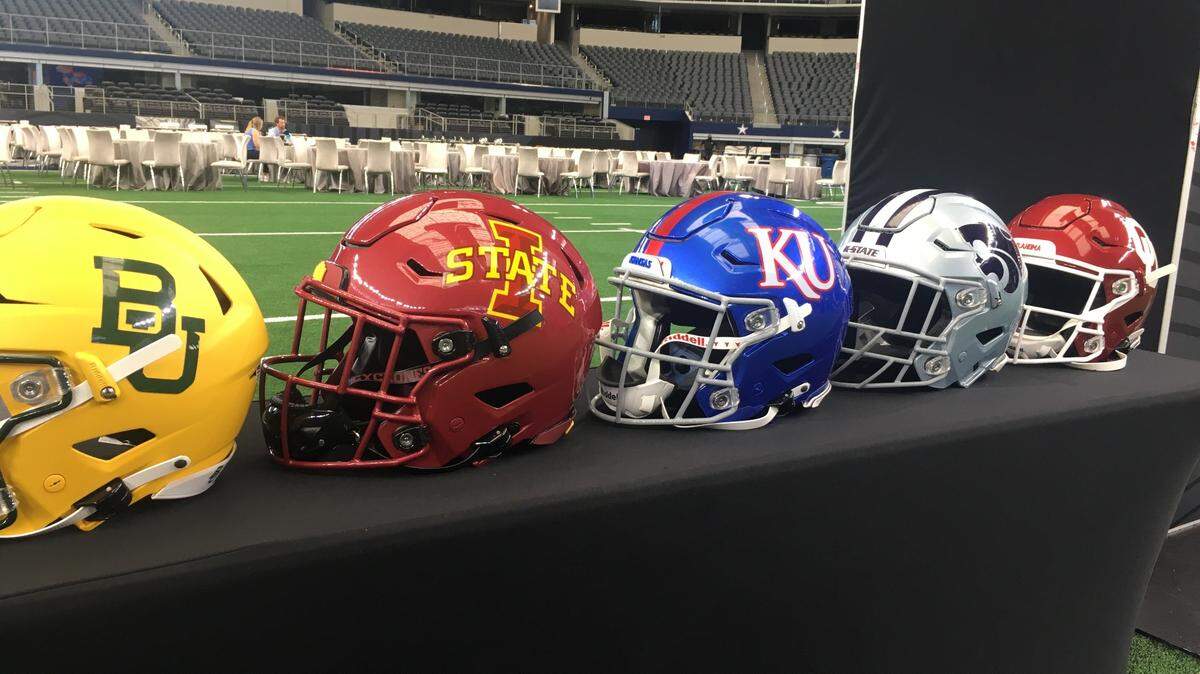
There’s no telling what will happen next in the mysterious saga of conference realignment, but some key players involved in the shifting landscape of college sports have provided a few clues on what may trigger future expansion.
It seems to boil down to one word: Value.
There are many ways to measure value, but money rules. At the end of the day, that means a good expansion candidate adds monetary value to its conference, allowing that league to increase revenue by millions through its media rights. A bad expansion candidate does, well, the opposite.
Sure, university presidents and conference commissioners will also preach things like academics, cultural fit and geography as key factors, but those can all be overlooked to make room for the most valuable expansion candidates.
Oklahoma and Texas are heading to the SEC to make it the richest conference in the country. Can any other league keep up, or at least close the gap, via expansion of their own?
That is a question that administrators within the ACC, Big Ten and Pac-12 are all asking right now, some more vocally than others.
“If we add teams just to try to keep up with somebody else but those teams don’t grow our revenue base, do we really need to add them?” Washington State president Kirk Schulz told the Mercury News last week.
“All the conversations I’ve had are really focused on closing the revenue gap,” added Schulz, who serves on the Pac-12 CEO Group’s executive committee. “That still drives a lot of the decision-making. You could pick schools that make us a 16-or-18-team conference, but the next question is, ‘OK, how does that close the revenue gap?’”
The Big 12’s eight remaining teams are hoping they can convince the Pac-12 that they are valuable expansion candidates, either individually or collectively.
Big 12 commissioner Bob Bowlsby and his Pac-12 counterpart George Kliavkoff have begun exploratory talks about the possibility of their conferences aligning in some way. Options ranging from a scheduling alliance in football to a full-blown merger seem to be on the table, though nothing seems imminent.
But individual Big 12 members would almost certainly also be open to switching leagues on their own.
Schulz knows what it’s like to be on that side of the fence, as he worked as Kansas State’s president when conference realignment last surfaced a decade ago.
Things are a little different this time around. Even though Big 12 teams are eager to find a stable home, no conference has publicly stated a desire to expand. It’s more of an option than a necessity.
But let’s say the Pac-12, indeed, looks to expand its footprint east. How much value must a school provide to be worthy of an invitation?
The good news for Big 12 teams is that the Pac-12 brings in significantly less money than most other power conferences.
During the 2018-19 athletic year, before the pandemic arrived, the Pac-12 distributed $32 million to its members, according to ESPN. That ranked ahead of only the ACC ($29 million) and lagged well behind the Big 12 ($37.7 million), SEC ($45 million) and Big Ten ($55 million).
So any team hoping to join the Pac-12 will need to be worth around $32 million or more in standalone value. That is a much lower bar to clear than the price for any team hoping to join the Big Ten.
Do any remaining Big 12 teams have a big enough brand?
It’s difficult to say. Bowlsby has said that he expects the Big 12 to distribute north of $40 million in the next fiscal year, but departing members Oklahoma and Texas are responsible for approximately half of the league’s value in media rights.
Bowlsby has said the Big 12’s media contract with ESPN and Fox is worth about $28 million per year, per school. Without Oklahoma and Texas, that number drops closer to $14 million. But it also doesn’t include money generated from third-tier rights providers such as The Longhorn Network and ESPN+.
If you subtract only that number from the Big 12’s future distribution projection, that means each remaining team will be worth about $26 million to its conference per year on average.
That is less than the Pac-12 currently distributes to its members, but it’s not far off. Perhaps an alliance could add value to both conferences. Or maybe the most attractive remaining Big 12 teams would appeal to the Pac-12 as a way to slightly increase revenue while also expanding into new recruiting territory like Texas.
Oklahoma State and Texas Tech were expansion candidates for the Pac-12 a decade ago, albeit as partners for Oklahoma and Texas. Baylor is coming off a national championship in men’s basketball. TCU is located in the fertile Dallas/Fort Worth area. Kansas is a basketball blueblood. K-State is one of the few Big 12 schools with league championships in baseball, men’s basketball and football. Iowa State football is a playoff contender this year. West Virginia is the flagship school in its state.
You could make an argument for any or all of them.
Then again, few Big 12 teams align with the Pac-12 from a cultural standpoint. So you could argue against them all, too.
When asked if he was in favor of expansion, Stanford coach David Shaw said he is only in favor of adding schools that add value, meet academic standards and strive to be strong in all sports, not just football.
If the rest of the Pac-12 agrees with those criteria, that could make Big 12 members a harder sell. Kansas and Iowa State are members of the prestigious American Association of Universities, but Texas Tech is about as far away from Stanford as you can get academically.
Few Big 12 schools also share the Pac-12’s passion for Olympic sports.
Those could be significant hurdles for any Big 12/Pac-12 partnership.
Then again, even Shaw mentioned the word “value” before anything else.
This story was originally published August 10, 2021 at 1:36 PM with the headline "This is the most valuable question Big 12 schools must answer if expansion continues."