
Dave Bliss returns to coaching (with a feature from the archives)
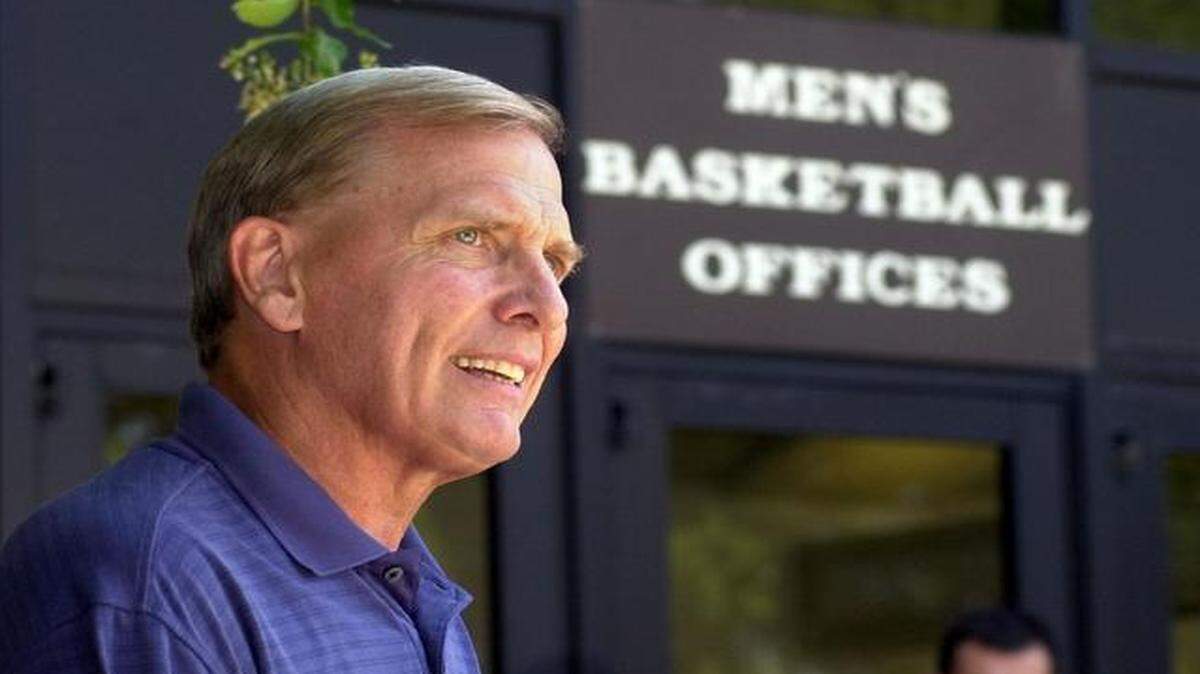
Editor’s note: This story by Kent Babb originally appeared in The Star on March 28, 2010. Dave Bliss was hired Monday as the men’s basketball coach at Southwestern Christian University, a NAIA school in Bethany, Okla.
SAN MARCOS, Texas -- The Hearse whips around hairpin turns on a rain-slicked highway, the 66-year-old in the driver’s seat steering with the heel of his left hand. He’s talking about death.
Dave Bliss shifts the conversation toward life’s aftermath and the way he’ll be remembered. He says he’s been asked before about the words he’d like on his tombstone. But he knows that in the mind of most, his epitaph has already been carved.
“I’ll forever be known as the coach at Baylor, “ he says, steering the Cadillac SUV he nicknamed for its box-like shape. “It doesn’t matter anymore.”
He presses the gas pedal, speeding through the Texas Hill Country and some of the same back roads he traveled as one of the nation’s most successful college basketball coaches. He won 526 games in 28 seasons, but it was a scandal at Baylor University in 2003 that sealed his legacy. Bliss funneled money to players and was aware of players’ drug use. It wasn’t until one Baylor player murdered another that an unsteady empire collapsed, leaving Baylor’s program in shambles.
“I used to be a good guy, “ Bliss says.
It took nearly seven years, but the Bears are back, one victory from the Final Four, and the locals in Waco have too much good to talk about to think about all that bad.
But Bliss likes to keep it close. He rises early each day, writes in a journal, and reminds himself of the depths of human indiscretion. He says he had no idea he was capable of such deceit.
“My whole life, I tried to do the right thing, “ he says. “We all have a dark side.”
Bliss is on Interstate 35 near Austin when his cell phone rings. A high school basketball coach is calling for advice. The coach is interviewing for a job at a bigger school, and he’s asking Bliss how to play it.
“You know if it’s in God’s will, “ Bliss says, “it’s going to work out.”
Bliss counsels for 15 minutes, using Bible verses to make his points. Bliss is a man of God now. He says he walked alone so many years. When his life was darkest, God offered light. Now, Bliss travels through Texas -- and, soon, the country -- describing how pride and the coaching lifestyle allowed darkness to overcome him.
He speaks at churches and coaching clinics, including 500 people at the 2008 Final Four. Bliss says he’s starting a ministry; a Web site and perhaps a book are in the works. Next month, he’ll speak to a conference at Virginia Commonwealth University. The topic of the conference is character.
Bliss used to wield his influence over the minds of young men on the basketball court. He has learned to find joy and satisfaction in doing it in the harshness of the real world.
“It’s like the three guys at the funeral, “ he says. A joke. This one is about a pastor who asks three men what they’d like to have shared at their funerals, when they’re lying in their caskets. One wants to be remembered as a good husband. The next wants people to say he was a good father.
“And the third guy turns, “ Bliss goes on, “and he says: ‘I’d want said about me: ‘Look, I think he’s moving!’ “
He laughs long and deep before his smile fades.
“That’s how I am, “ Bliss says. “I’m still moving.”
Bliss is a storyteller. His words have a rhythm, and it’s easy to understand how he could lure a recruit and enchant a fan base. Here’s one:
Bliss could feel the eyes on him. He was a child, maybe 10 years old, self-conscious but willing to conform. He had been anointed.
It was young Bliss’ job to carry in the cross at Trinity Episcopal Church in Binghamton, N.Y. It wasn’t the path to salvation that interested him; it was the path to basketball. Churches in those days offered the only local leagues, and Bliss was willing to be his church’s acolyte if he could play. So he stood in the back, ready to carry that huge cross to the front. He didn’t mind that his friends mocked him.
“It was supposed to be good for me, “ he says.
Here’s another: Bliss was in college. An Ivy League man and an athlete. Some strangers approached him about joining a group. It would offer opportunity and brotherhood, place him on the same path as U.S. senators and Rhodes scholars.
So they led Bliss through Cornell University and into a crypt, initiating him into the Sphinx Head Society, a secret organization that, even nearly 50 years later, Bliss is reluctant to share details about. But again, of the thousands on campus, Bliss had been selected. He was granted opportunities most men weren’t offered.
Bliss later landed a job on Bob Knight’s staff at Indiana, becoming one of Knight’s favorite pupils. He taught Bliss about hard work and the man-to-man defense, and by the time Bliss was 32, he had his own head coaching job, at Oklahoma.
It was years later that Bliss learned that rules sometimes interfered with building a good team. He also learned that veiling the truth was sometimes a necessary evil. His way was being validated: Bliss became known as a coach who resurrected programs, moving to SMU and New Mexico before heading to Baylor in 1999.
If Bliss lied to a player about his role, who would make Bliss repent when the player sat on the bench? If he told parents that his top priority was their son’s education, who would make Bliss atone when the player flunked? A small lie didn’t hurt. That was the coaching game.
“If I told the truth in every aspect, “ he says, “I might never get a player.”
Who would teach him a better way? His athletic director? Bliss says he felt no pressure at Baylor to change. The NCAA? He says he never was confronted for violations before 2003. His family? That was easy. Bliss is 13 years older than his wife; Claudia was 22 when they married, and Bliss took over all decisions and investments.
“Coaches, “ he says, “are in control of everything.”
Bliss was the leader of his family, and lying to them became as easy as lying to a recruit’s parents. They would all understand. Bliss knew what was best.
Here’s another story:
It was 2002 when Bliss began recruiting Patrick Dennehy and Corey Herring. Bliss says he didn’t need the players, but he wanted them anyway. He wanted to be known as a good coach who could do everything his way. It didn’t matter that he might not have scholarships. But Dennehy’s mother and stepfather had concerns. They were reluctant to send Dennehy so far from home in Carson City, Nev.
Bliss made a call. By then, it was second nature. Bliss spoke to Dennehy’s family and made a promise. He said he’d take care of their son.
Bliss ignored the signs. He says another coach told him Dennehy used drugs and might be a bad influence.
“I’m thinking I can cure people, “ Bliss says now.
Then, sure enough, Bliss couldn’t get Dennehy or Herring a scholarship. When he couldn’t find university money to pay their tuition, Bliss says he paid it himself: about $40,000.
“I knew right from wrong, “ he says. “I made the decision based on what was best for me.”
Then Dennehy injured his knee at a practice in 2002, ending his season. Bliss says now that God was trying to tell him something. But Bliss had Dennehy stay in Waco while his knee healed. It was then, Bliss says publicly for the first time, that Dennehy’s teammates began saying that something wasn’t right. Bliss says he learned Dennehy was selling drugs out of his off-campus home.
“Selling everything, “ Bliss says, adding that it was mostly painkillers. “The players always know.”
Bliss says that two of Dennehy’s teammates confronted the coach about the drugs, saying Dennehy traveled to Fort Worth, about 90 miles north of Waco, to replenish his supply. Bliss says one former Baylor player, whom he wouldn’t identify, witnessed one of Dennehy’s deals.
Bliss also heard that Dennehy and another player, Carlton Dotson, had forged a bizarre friendship. They spent hours together, and one of their hobbies was firing guns at a local range. Bliss says he began hearing more gossip: Dennehy was having an affair with Dotson’s wife.
“There’s so much of this that people don’t know, “ Bliss says.
Then Dennehy went missing, and Dotson disappeared, too. Dotson had dashed to Maryland, confessing weeks later to shooting Dennehy and dumping his body in a gravel pit. Bliss says he believes the killing was in retribution for the affair.
It was then that Bliss saw his world crumbling. Bliss kept lying: to investigators, to his wife, to himself.
“I was in an absolute panic, “ he says. “The last few weeks, I was hoping something would happen: a bolt of lightning and it would all go away and be a bad dream.
“You just aren’t right. You don’t live. You don’t sleep. You don’t make wise decisions. Things were going fast-forward and just spiraling out of control.”
A 21-year-old man lay dead, and Dotson would plead guilty to murdering his former teammate. A program lay in ruins. Spread across the nation were families and onlookers who could neither explain what happened at Baylor nor understand how Bliss could oversee such chaos.
One family buried their son; another watched as their son disappeared inside a 35-year prison sentence. Dennehy’s mother, Valorie Brabazon, left her husband. Some still blame Bliss.
“He ruined lives that he can’t even comprehend, “ says Brian Brabazon, Dennehy’s stepfather.
When it was revealed Dennehy wasn’t on scholarship and his parents hadn’t paid his tuition, the NCAA investigated. Bliss says that some players suspected Dennehy had used drug money to pay his way. Bliss didn’t correct them. He told the players to share their suspicions with the NCAA.
“Wrong in itself, but it’s a different wrong, “ Bliss says now. “That would’ve answered a lot.”
Instead, a Baylor assistant coach named Abar Rouse recorded a conversation in which Bliss told the players how to respond to the NCAA. Now Bliss was tampering with the investigation, trying to shield himself by amplifying the transgressions of a dead man. A mistake, Bliss says now.
“That’s not a mistake, “ Brabazon says. “That’s pure evil.”
Bliss and Tom Stanton, Baylor’s athletic director, resigned. Even then, Bliss sheltered himself from the severity of the situation. In 2005, the NCAA slapped Bliss with a 10-year coaching ban. The Bears were banned from NCAA and NIT play for two years, and their 2005-06 nonconference games were taken away.
“You’re really more upset that you got caught, “ he says. “You haven’t seen all the bodies strewn. Now I’m looking back over five years of wreckage, and I feel just about as dreadful as you can feel.”
For years, Bliss mostly stayed away. He rarely grants interviews and didn’t return to Waco for a long time. He moved to North Dakota and Colorado, taking jobs in and out of basketball.
Then he realized that closure would come only in Texas. He moved to Kyle, a suburb of Austin about 125 miles south of Waco, in September 2008. His daughter lives there. Bliss renewed his relationship with God and spent the last seven years trying to salvage what’s left of his name.
Bliss says he called Jim Haney, the executive director of the National Association of Basketball Coaches, and apologized. He made amends to his family. He says that when he speaks to coaches’ groups, he sometimes expresses regret for shaming the game..
But what about the others -- the families at the center of it all, who were promised trust and protection?
Bliss pauses for a moment.
“What would I apologize for?” he says. “Other than having a program where one player ...”
Hearing the sound of the words, Bliss stops and changes the subject.
Students hurry from place to place on a cloudless day on Baylor’s campus. The big screen outside Paul J. Meyer Arena welcomes passersby to “Bear Country.” Across campus, a student named Venée Hummel unloads another cardboard box of green T-shirts the Baylor Bookstore ordered to commemorate the Sweet 16.
“History is being made, “ says another student, Dipo Olagundoye, and he can’t contain a smile. The 2003 ordeal is all but forgotten. Baylor moved on.
Not everyone has. It’s a cloudless afternoon in San Jose, Calif., too. A man knocks off early from his job at the natural gas company in Carson City, drives the five hours west, and stands in the center of Oak Hill Memorial Park. There’s a wall of graves on a hill. One belongs to Patrick Dennehy.
Brian Brabazon makes the trip about once a month, and he’ll stand there and talk to Patrick. On this day, Brabazon talked about basketball. Does Patrick know Baylor is a No. 3 NCAA seed? Does he know some have the Bears in the Final Four?
“Maybe five minutes talking about basketball, “ he says by phone, a few hours after the visit, “and five minutes asking God to look over our family. It sounds stupid, I guess.”
Brabazon leaves flowers and cleans up, and then it’s time to return to Carson City. Nothing is more difficult.
“He really was a good boy, “ Brabazon says, his voice trembling.
Brabazon says he has forgiven Dotson for killing his stepson, in part because drugs were involved and because Dotson was mentally unstable. But Brabazon hasn’t forgiven Bliss. He says it’s because Bliss has never apologized and, even now, is in such denial that he doesn’t realize the dominoes his poor judgment set in place.
“I am fighting myself to forgive Bliss, “ Brabazon says. “I know that somewhere down the road, I’m going to reconcile this and forgive him. But I’m fighting it with all my might.”
Bliss is on the road to Austin when he presses the gas again and points the Hearse down a hill. “Ready for another bad joke?” he asks.
A pastor is giving a rousing sermon, declaring that every member of his church is going to hell if they don’t repent. One man in the congregation, sitting in front, chuckles. The pastor sees him and repeats it: Every member is going to hell if they don’t repent. The man chuckles again. So the pastor stops and asks the man if he disagrees with the message. The man shrugs and says: “No, pastor. It’s just that I don’t go to this church.”
“That’s how we kind of live sometimes, “ Bliss says. “We think the other guy is going to have the problems.”
And that’s how Bliss lived, that he was somehow immune to punishment because he was smarter, slicker, different. Even now, it’s difficult to know whether Bliss has truly absorbed the consequences, or if all this -- the ministry, the Bible verses, the jokes -- are just the words of a master storyteller who spent years reshaping the truth.
Bliss needs to make a stop. It’s near his family’s home in Kyle, where he lives on a golf course and spends his time reading books, watching movies and sharing his experiences.
He parks at the post office and pulls two envelopes from the back seat. He’s sending notes to two coaches, telling them to avoid the things he did. To listen to his words, learn from his mistakes. He hopes it’s enough to save a few souls, the last stand of a man whose legacy is already written.
“I used to think that I was a good person that did a bad thing, “ he says, reaching for the post office door. “I found that I was a bad person that occasionally did a good thing.”
He drops the envelopes with the clerk, thanking her with a smile. Then he turns and heads toward the exit.
“I’d like to think that the person I used to be, “ he says, “I wasn’t forever.”
This story was originally published April 6, 2015 at 5:15 PM with the headline "Dave Bliss returns to coaching (with a feature from the archives)."