
One of KC’s newest Diamonds began taking shape before she ever played pro softball
Long before she came to be an outfielder for the KC Diamonds, Kansas City’s new professional softball team, outfielder Lexi Hastings wondered if her shot at a breakout season was slipping away.
Twelve games into her second year at the University of Connecticut, she was struggling mightily.
After batting .318 and finishing second on the team in runs and total bases as a freshman, Hastings couldn’t hit the side of a barn.
All the signals of a sophomore slump were there: seven hits in her first 34 appearances, 12 strikeouts and a .129 batting average.
It wasn’t until she returned home to Lynchburg, Virginia, for a game against Liberty that the tide began to turn.
“I was playing on a field that I had spent my entire life watching people play on,” Hastings said. “I’d dreamed about playing there.”
As she gazed into the stands, she saw the community that had seen something in her before she knew she could become a great softball player. Old coaches, teammates, former opponents, her family — all there to cheer her on.
“That’s when the switch flipped for me,” she said. “It was like I felt safe as a person. I felt unconditionally loved as a person. That’s truly all I need to be able to play free.”
From that moment on, Hastings put any notion of a sophomore slump to bed.
Over her final 35 games, she transformed into one of the Big East’s most dangerous hitters, batting .486 with six home runs, 25 RBIs, 47 runs, 36 stolen bases and a .586 on-base percentage.
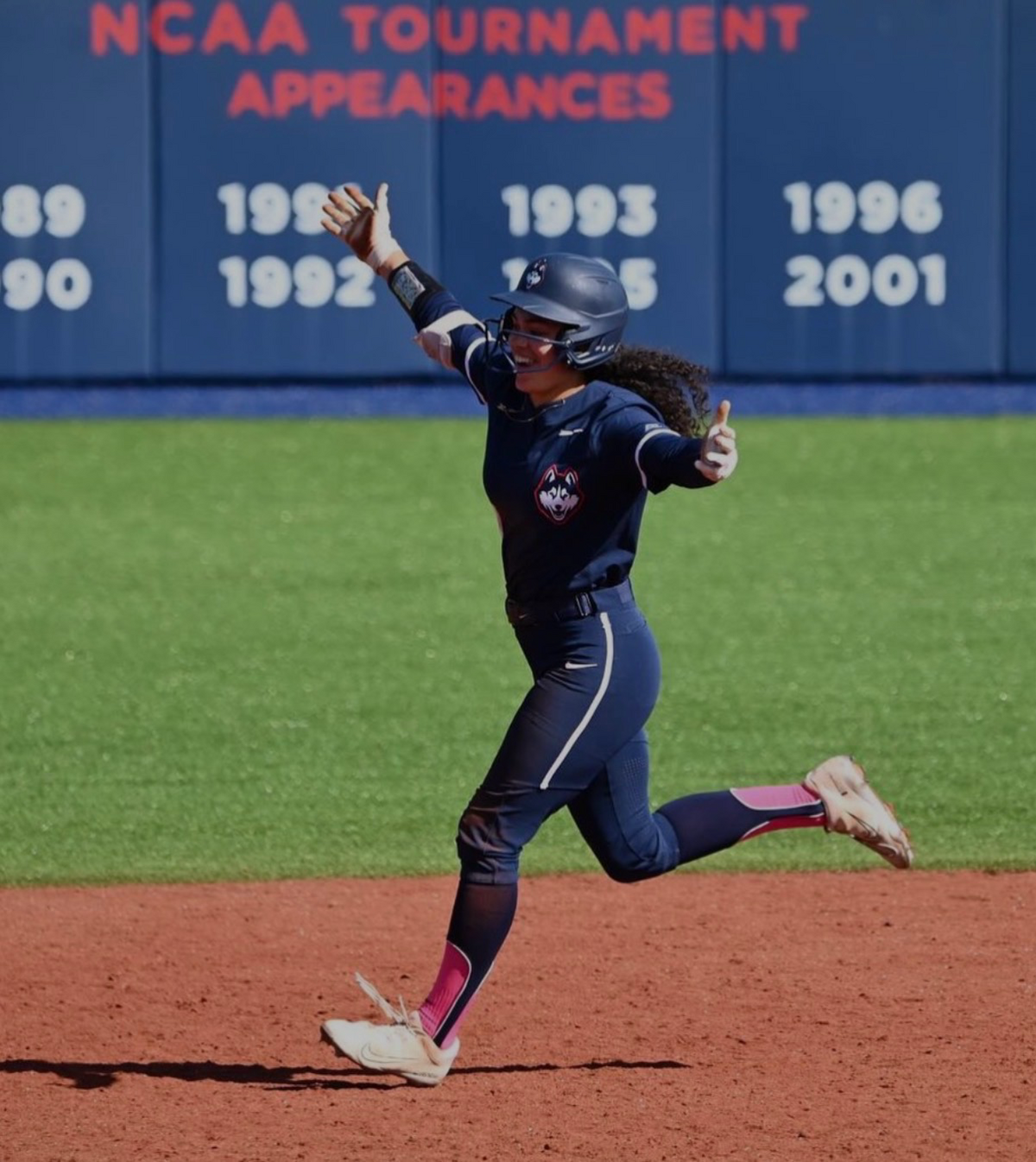
When the season concluded, she earned first-team All-Big East and first-team NFCA All-Region. More important than any award or recognition, however, was the feeling of being safe, comfortable and loved by everyone around her.
It helped her become the person and softball player she is today.
But it took years to learn — especially because of where she comes from.
Just hold on, you’re coming home
When Hastings first met her parents, Dawn and Ben, she was 4 years old.
As she was brought into her new home for the first time and tucked into bed, Dawn told her that God’s arms were wrapped around their house and that she was safe.
Dawn shared this message with many of her foster kids. It helped them feel comfortable during a time that was anything but.
“When they arrive, they’re very fearful,” Hastings’ mother said. “They don’t know us. We’re just another stranger. At that moment, many of the kids don’t trust adults because adults have let them down.”
Like most children might be in her situation, Hastings was skeptical.
Unlike most, she spoke up.
“Well, how do you know God’s arms are wrapped around your house?” she asked.
On its face, it was an innocent question — especially coming from a 4-year-old. But the very fact it was asked at all illuminated everything Hastings had been through in her short life.
“I had never really been introduced to God or this person who could protect me,” Hastings said.
At an early age, she said, she had recognized she wasn’t safe at home with her biological parents. So she told her preschool teachers everything that was going on at home. Those teachers reached out to social services.
Hastings said she was removed from the house for a few weeks while her biological parents were placed in classes. Her biological parents were able to keep her, for a time, but things didn’t change. She still felt unsafe.
And once again she spoke up.
“We went to see her mom for probably four weeks,” Dawn Hastings said. “But one day she walked out and said, ‘You guys aren’t keeping me safe …You tell me you’re keeping me safe, social services tells me they’re keeping me safe, but you make me visit her every single week.’
“We were like, ‘Wow, that took a lot to say that, as a 4-year-old.”
And from that moment on, Dawn resolved that Lexi wasn’t going anywhere.
“If they’re going to allow us to adopt her, we will,” she remembered thinking. “We’re never letting her go.”
Diamond in the rough
When Hastings first arrived at their home, Dawn recalled, she was a little girl weighed down by experiences no child should have to carry. The trauma of a turbulent household had aged her beyond her years.
She struggled with depression for a while. She had difficulty opening up and communicating her emotions. She said she had to learn that home could be permanent, that parents could keep their promises and that her sisters, Faith and Melinda, could become family.
The process took years of loving and nourishment and fostering a relationship with God, she said. Her parents tried many things to build her up, and one of the first breakthroughs came in an unlikely place.
Hastings’ court-appointed guardian introduced her to a horse named Henry and gave her the responsibility of caring for him every weekend. Feeding Henry, grooming him and riding him every Saturday, gave her something to look forward to.
“All of a sudden, there was a light coming on in her,” Dawn Hastings said. “She began to believe there were better things out there in the world.”
Her parents nurtured that spark. Figure skating taught Hastings she could excel at something. For perhaps the first time, she discovered confidence in herself. In fact, Dawn said with a chuckle, she became almost cocky.
To help her balance an individual sport with something more collaborative, her parents signed her up for competitive cheerleading. Hastings and her older sister participated for a year, but that foray ended when they didn’t win enough for Hastings’ liking.
The roulette wheel finally landed on softball when Hastings was in middle school ... and that’s the sport that stuck. The diamond gave her space to run toward something when the horrors of her past threatened to engulf her.
“I found softball at a point in my life where that was the same year that I wrote a letter in school that I was going to end my life,” Hastings said. “I didn’t want to be on Earth anymore.
“Softball became a place where I could truly just be a kid. I could have fun, be silly and crack jokes.”
Softball pulled her through the darkest days and gave her something to focus on. She learned to be a better teammate, adopt a healthier attitude toward failure and develop a level of resilience that would carry her when she struggled to learn the game’s more technical aspects.
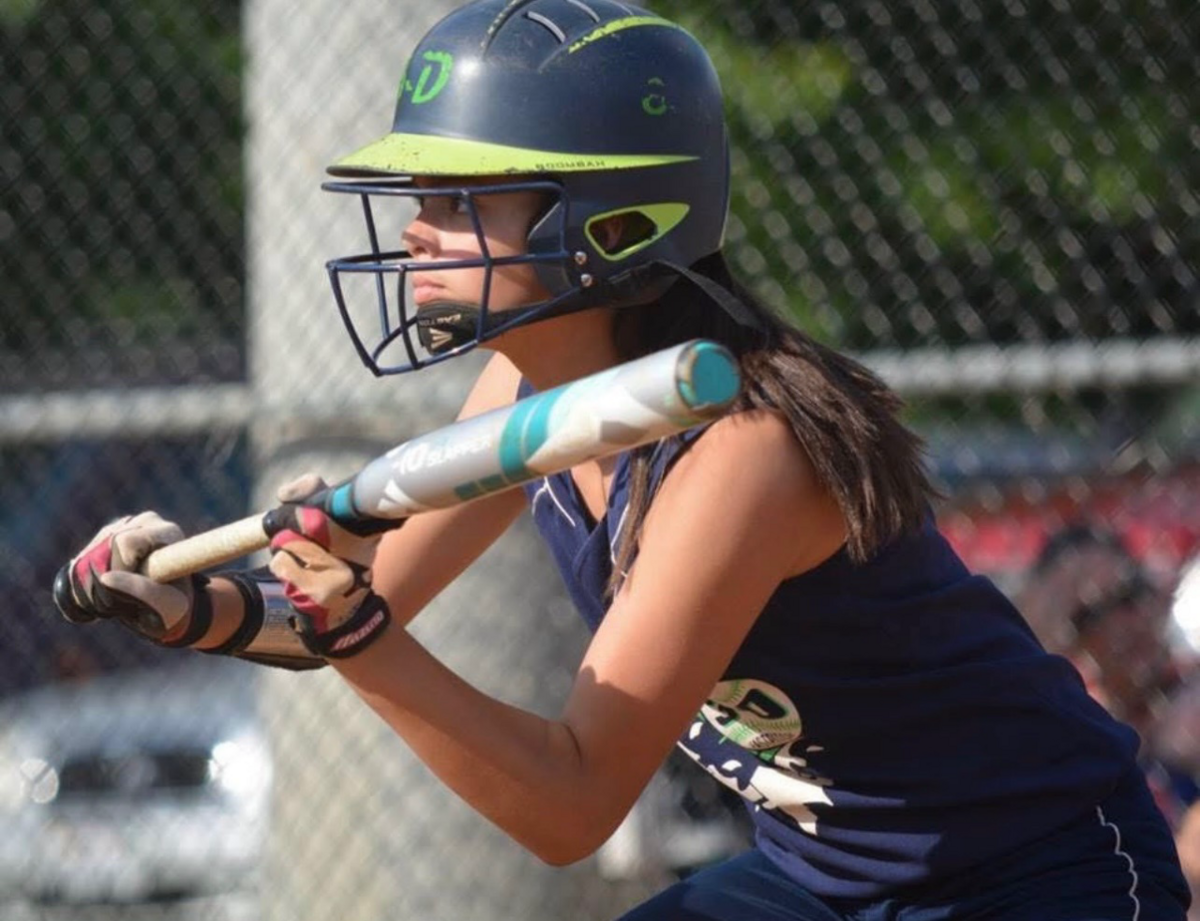
“At first, they only had her run the bases because she couldn’t throw the ball that far,” her mother said with a laugh. “Which is crazy now, but she was really horrible at throwing the ball. Every coach we went to would say, ‘Oh my gosh, she can’t throw the ball.’
“But she sure could run.”
Speed kept Hastings on the field and out of her head. Her potential kept coaches invested. Rather than seeing a player who couldn’t throw, they saw one who never stopped working.
Practice rarely ended when everyone else packed up their gear. If there was another drill to do or another swing to take, Hastings wanted it.
“It was a very, very slow process,” she said. “I remember being in probably fifth grade, writing in my diary, ‘I got a bunt down today. I finally, like, touched the ball today. I fouled off the ball today. I got on base today,’ and really celebrating all those little moments.”
By seventh grade, she had begun working with travel-ball coach Kenny Mount. He soon realized there was no such thing as enough practice for Hastings.
“After practice she wasn’t done, and she was always the one who wanted to come before practice if she had a chance,” Mount said. “Lexi’s just never satisfied. She’s just always driven.”
He remembers vividly the first home run she hit during batting practice. For many young players, this would’ve been a reason to celebrate. For Hastings, it was simply proof that there was another level to reach.
“She just kept driving and driving and driving to get better and be more consistent,” Mount said.
Something about Hastings’ determination made coaches, mentors and teachers want to invest in her. They stayed after practice. They answered questions. They opened doors. They saw not just the player she was, but the one she was determined to become.
They wrapped their arms around her.
Her mother listed so many people who were influential in her life that it was hard to keep count. And, even then, she felt bad about potentially forgetting someone. One who stood out was her high school track coach, Don, who built her a handcrafted home-plate display case made of wood after her first home run. It held her keepsake balls.
Years later, when the case was stolen during the family’s move to North Carolina, he built her a new one — yet another reminder of the community that has always been in her corner.
“There were people there every step of the way for her,” Hastings’ mother said. “There were so many people instrumental in helping her along the way. I’m eternally grateful for them because getting her to a place where she was open to that was far from easy. They’re a big part of why she’s gone the places she has.”
Hastings did her part, too — by making sure those dreams never faded from view. She kept vision boards. She filled her diaries with goals.
In high school, she wrote one that seemed almost impossible at the time: “I’m believing with crazy faith that I will go to a college where my four years are paid for, and I will be debt-free.”
By the time Hastings began narrowing her college choices, she thought she knew where she was headed.
She held scholarship offers from several smaller programs and was close to committing to the University of South Carolina Upstate in Spartanburg, S.C. Two days before she planned to announce her decision, Connecticut called.
Huskies head coach Laura Valentino had encountered a clip of Hastings while watching recruiting film of one of her teammates. Hastings wasn’t the player Valentino had set out to evaluate, but there was something about her.
That twist of fate led to a recruiting call unlike any Hastings had experienced.
Rather than leading with softball, Valentino wanted to know about her life. They talked about Hastings’ family, her goals and who she was when she was away from the game.
Hastings, naturally inquisitive, had plenty of questions of her own. Instead of answering them herself, Valentino asked each player on UConn’s roster to record a video sharing what life in the program was really like.
For Hastings, that type of gesture meant more than any recruiting pitch ever could. It was a show of love that a 4-year-old Lexi would have appreciated, too.
“I immediately was like, ‘This person cares about who I am as a person and a player,’” Hastings said. “That was important to me, to find a coach like the mentors I’ve already had in my life.”
Connecticut turned out to be everything Hastings hoped it could be. The coach who recruited her by asking about her life became the latest person to recognize her potential.
On that first call, Hastings had goals in mind — among them, helping to restore the good name of one of the Big East’s flagship programs.
“They trusted me to help bring a championship back that had been dormant for decades,” Hastings said. “They saw that in me, virtually, before I ever stepped on campus, and thought that I could be a part of that.”
It took four years, but Hastings delivered. In 2025, she helped lead the Huskies to their first Big East Tournament championship in two decades, accomplishing the goal that Valentino had outlined during her recruiting process.
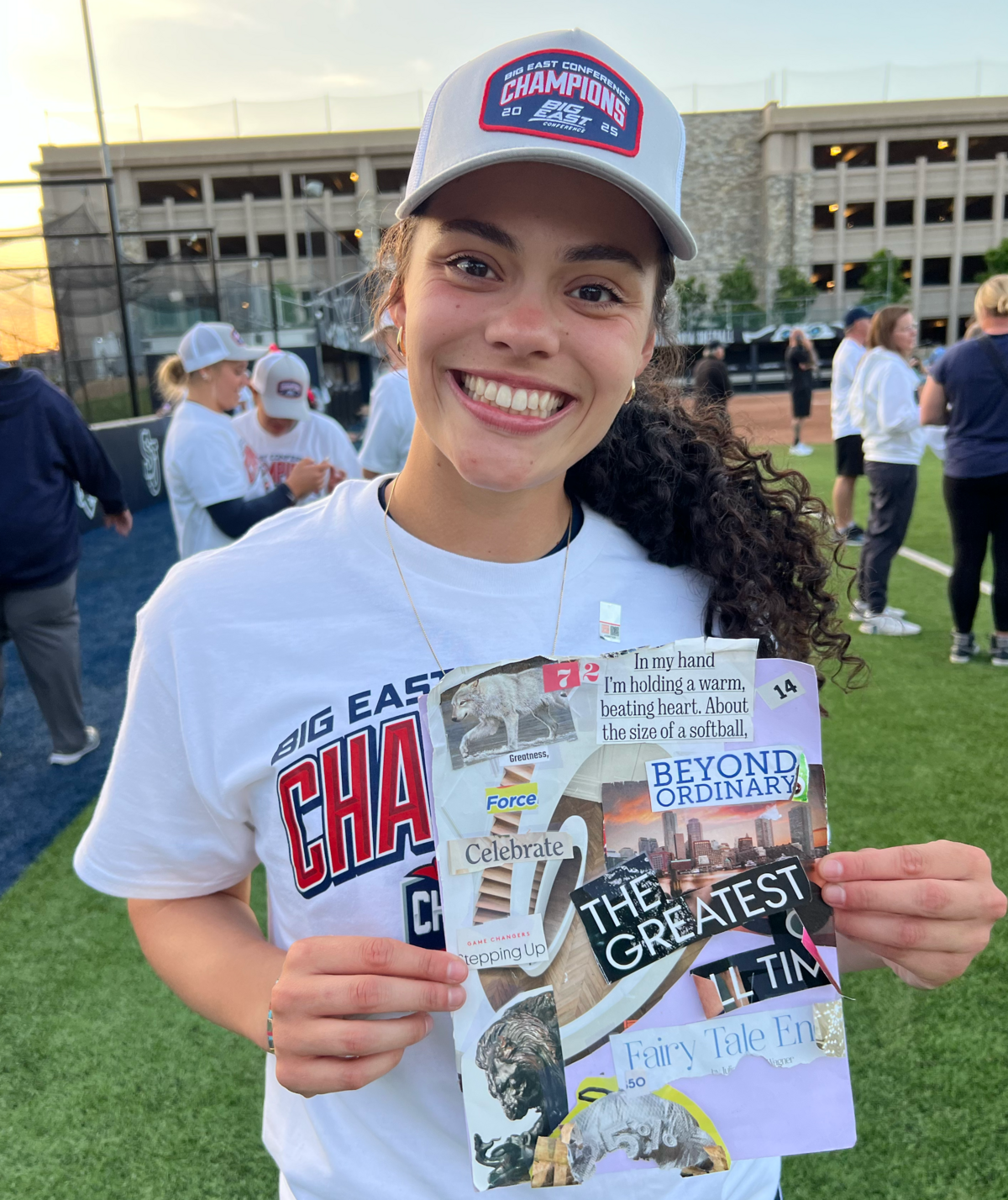
Hastings also fulfilled a few of her own dreams.
After her freshman season, one of her teammates handed her the team’s stolen-base record book.
“’Now it’s your turn,’” she told Hastings.
It became the only record Hastings allowed herself to think about.
“I hadn’t been looking at my on-base percentage or my fielding percentage,” Hastings said. “Stats will ruin you. All I was thinking about was, ‘Each day, how can I help my team win?’”
That mindset led her to one of the most decorated softball careers in school history. By the time she graduated, Hastings was the 2024 Big East Player of the Year; she had earned four All-Big East selections; and she was first-team NFCA All-Region.
She still ranks second all-time in program history with 254 hits and fourth with 211 games played. She remains the Huskies’ all-time leader in both runs (198) and steals (128).
The record book, however, was never the destination. Now with the Diamonds in Kansas City, Hastings is living out her dream of becoming a pro softball player and chasing something bigger than awards or statistics.
She wants to connect with the community that is welcoming professional softball to Kansas City for the first time. She wants young girls filling the stands to see a future they may have never imagined for themselves.
And she wants children growing up in foster care to know their story doesn’t have to end where it begins.
“She’s always saying, ‘All I want is to be the person that the little girl I was wanted to look up to,’” her mother said.
It’s safe to say that pursuit has been a home run so far.