
Kansas’ top prep golfers face an impossible choice. Is a rule hurting the sport?
AI-generated summary reviewed by our newsroom.
- Kansas allows one approved outside event; AJGA events are not on the approved list.
- Farrow was ineligible to defend his title after playing the Team TaylorMade Invitational.
- KSHSAA permits one outside event and limited the list to Central Links and USGA events.
Colt Farrow had already done the part that was supposed to matter most.
He won medalist honors at regionals. He carried Andover Central to a team championship. He helped the Jaguars qualify for the Class 5A boys golf state tournament for the first time since 2019. And for one afternoon last week, the defending Class 5A individual state champion gave his teammates the state-tournament moment they had been chasing for years.
Then Farrow left for Florida.
When the Class 5A state tournament tees off Tuesday morning in Wichita, the defending champion will not be in the field. Not because Farrow failed to qualify. Not because he stopped caring about high school golf.
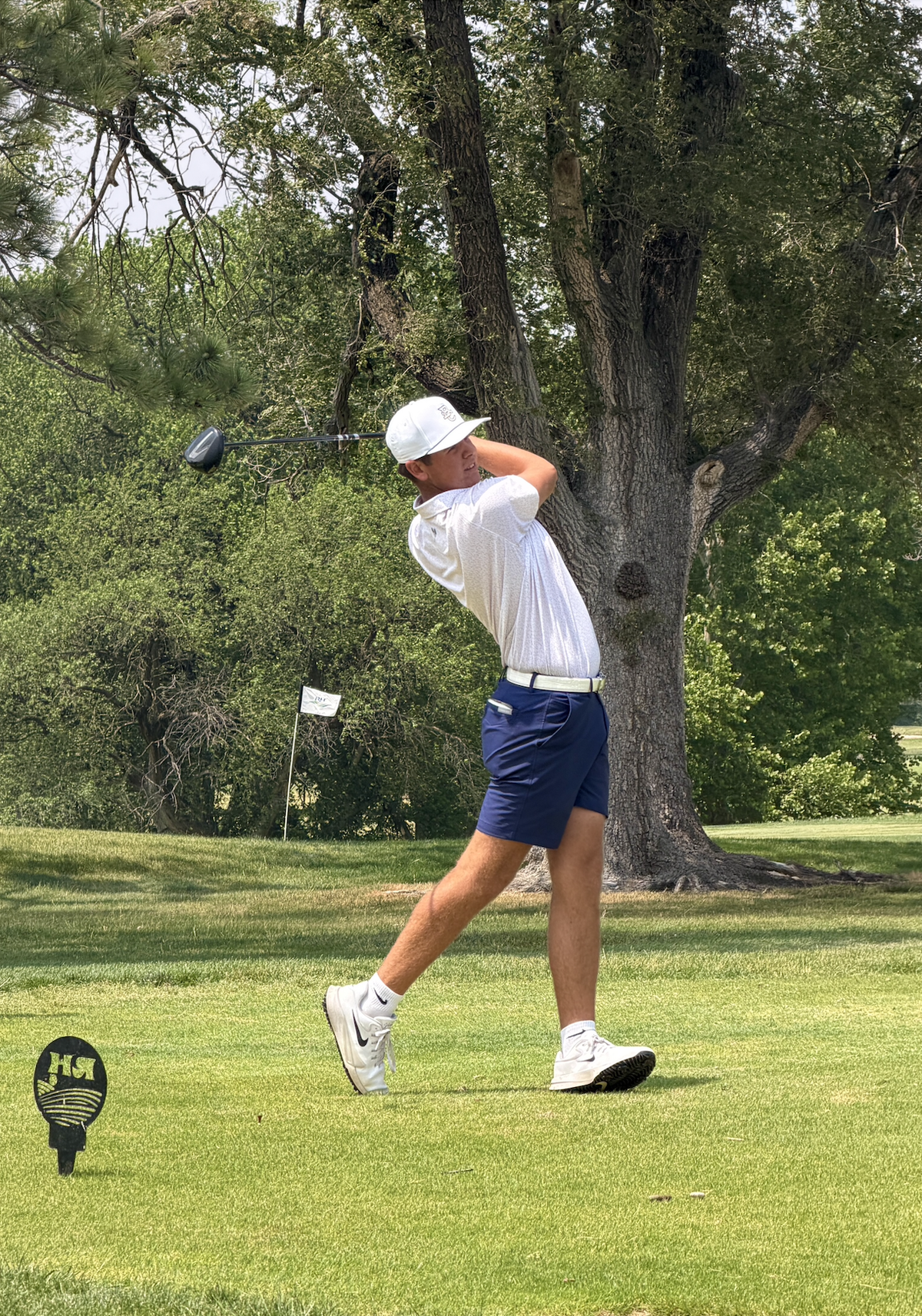
Farrow, a Colorado signee and the one of the top-ranked junior golfers in the country, chose to play in the Team TaylorMade Invitational, an elite American Junior Golf Association event in Florida that wrapped up Sunday.
Under Kansas rules, that decision made him ineligible to defend his state title.
“It definitely still hurts,” Farrow said. “State is my favorite tournament I’ve played in and something I always looked forward to. That was a very, very tough decision to make.”
Farrow’s absence from the state tournament is the latest and most visible example of a growing tension in Kansas high school golf. A rule designed to protect school competition prevents golfers from playing AJGA events during the high school season and remaining eligible, even when those events fall on weekends and do not directly conflict with school tournaments.
Critics of the rule say it has created the opposite effect from what was intended: pushing some of the state’s best golfers away from high school golf.
“If your weekends are free, I don’t understand why you can’t go play in tournaments that you want to play in,” Farrow said.
Farrow played in regionals last Monday, left for Florida on Wednesday and finished the Team TaylorMade Invitational on Sunday. If Kansas allowed him to play both, Farrow said he would have made the travel work to return to Wichita and play Tuesday with his Andover Central teammates.
Instead, he had to choose.
“I feel like I worked really hard for an amazing opportunity to not only go represent myself, but also represent Kansas,” Farrow said. “Then I had to make a choice because we’re not allowed to do both, which sucked.”

The impossible choice Kansas high school golfers keep facing
For Wichita native Lunden Esterline, the same decision changed the course of his high school career.
Esterline won the Class 3A state championship as a freshman at Collegiate in 2024. Entering the next spring, he was a top-75 national junior golfer preparing to return to high school golf when an invitation arrived for a prestigious AJGA event.
It was not on the Kansas State High School Activities Association’s approved list of outside competitions. Esterline had to choose between playing high school golf with classmates he had known for years or protecting the national schedule that was beginning to open doors in the junior golf world.
He chose the national circuit.
“It forces you to be slightly selfish because you have to think about what’s better for you and your game,” Esterline said. “Either way, you were going to be missing out something and someone was going to be upset with you.”
Esterline said he wanted to do both. He liked high school golf. He liked the team camaraderie and the feeling of turning an individual sport into something bigger than himself.
“I was really bummed about not being able to play high school golf,” Esterline said. “It was so much fun, not just playing, but hanging out with the guys, going to get food after a meet and just hanging out. I loved that atmosphere, which made it really hard to leave.”
Esterline’s mother, Sabrina, remembered the decision as more than a simple golf calculation. There were tears, she said, because Lunden loved his teammates and had gone to school with some of them since he was 2 years old. He was not trying to escape high school golf. He was trying to protect the opportunities opening in front of him.
The decision paid off almost immediately.
By opting out of high school golf and continuing to play the national junior circuit, Esterline built his ranking high enough to earn an invitation to the Junior PGA Championship that summer. He won it, a breakthrough victory that opened another door: a spot on Team USA for the Junior Ryder Cup, where he helped the Americans win. During that same summer, he committed to Auburn.
Esterline, a high school junior who is now ranked No. 31 nationally by Junior Golf Scoreboard, has not returned to Kansas high school golf.
“I just don’t think people understand how golf recruiting works,” Esterline said. “It’s not like football or basketball where you can get recruited off your highlights. You have to go play in these events to be seen.”

That disconnect is at the center of the debate.
In some high school sports, the school season can be the central recruiting vehicle. In elite junior golf, the recruiting marketplace is built around AJGA events, Junior Golf Scoreboard rankings, national invitationals and USGA events.
Collegiate athletic director Troy Black said Esterline’s situation revealed how differently golf recruiting works from the high school sports world he knew best.
“Until I sat in this chair, I never knew anything about this rule,” Black said. “As a high school football coach, I’m used to the kids playing high school football to get recruited. But with sports like golf, that’s not the way that it is.”
Black said he understands the purpose of protecting school-based participation. But in golf, he said, the rule can push elite players in the opposite direction.
“I would understand it if the outside tournaments were interfering, but they’re all on the weekends,” Black said. “So when we tell these kids that they can’t play in them, we’re actually pushing them towards the club culture and away from school activities and representing their school. And it’s hard to fault the kid for making that choice.”
Black put it more directly when talking about Esterline’s recruitment.
“Auburn is not coming to Wichita Collegiate to offer Lunden Esterline a scholarship,” Black said. “They are seeing him on those tours when he’s playing against the best of the best.”
Former Wichita State men’s golf coach Judd Easterling saw the same reality from the recruiting side.
Easterling, an All-American golfer at WSU under legendary coach Grier Jones, said he rarely recruited Kansas high school events when he was leading the Shockers. If he wanted to evaluate junior golfers, he knew where to go: ranked weekend tournaments in Oklahoma or Texas, where the courses were strong, the fields were deeper and the multi-day format offered a better view of how players handled competition.
“I don’t blame Kansas kids for pursuing the outside competitions because that’s where you can get in front of these college coaches,” Easterling said. “If you want to gain access to all of these coaches, you have to play in these events. That’s how you gain exposure. By limiting the chances to play in those events, you’re really limiting their ability to be seen by the right people at the right times.”

Examining the KSHSAA rule at the center of the junior golf debate
Kansas’ outside competition rule generally bars athletes from competing in the same sport outside school once they become members of a school team.
In golf, KSHSAA amended the rule in 2022 to allow one approved outside competition during the school season, in place of one of the golfer’s eight allowable school competition days. The golfer also needs approval from the school principal and KSHSAA must be notified in writing at least 30 days before the event.
But the approved list is limited to Central Links Golf and USGA events. AJGA tournaments — the national junior events that elite golfers, families and coaches say often drive rankings, invitations and recruiting exposure — are not included.
That means a Kansas golfer can use the one-time exemption for events such as U.S. Open local qualifying, but not for many of the AJGA invitationals that gather the best junior golfers in the country. And not for the type of tournaments where players like Farrow believe they must play to keep pace nationally.
The rule has been challenged before.
Nearly a decade ago, Maize South senior Wells Padgett was the defending Class 5A state champion and an Auburn signee when he qualified for the state tournament. Instead, he gave up his high school eligibility and played in a U.S. Open qualifying tournament.
Padgett said he would have played state if his team had qualified. But because it was only him, he decided the U.S. Open qualifier was better for his individual development.
His decision helped spark the conversation that eventually led KSHSAA to create the one-event exemption now in place. But Padgett believes the change did not go far enough.
“I have absolutely no regrets at all,” Padgett said. “Honestly, I really loved that I did it because I thought it was going to bring change. And it did some, but not enough. So now it’s these guys’ turn to step up and try to bring change again because it needs to happen in Kansas.”
KSHSAA board minutes show that, in November 2021, the Executive Board directed staff to develop language for a one-time in-season opportunity for events identified by KSHSAA in conjunction with the USGA and AJGA. But when the policy was adopted in April 2022, the final language referenced Central Links Golf and the USGA — not AJGA.
It remains unclear why AJGA was left out of the final policy.
Jeremy Holaday, the KSHSAA staff member who oversees golf, said the original purpose of the exemption was narrower than the current debate.
“The primary reason we opened it up was for kids to play in the U.S. Open qualifiers,” Holaday said. “The AJGA is a great organization, a respectable organization. But if you talk to certain coaches, they like to see that list remain a little bit more restrictive.”
That is where the future of the rule may hinge.
Holaday said he senses another review of the rule could be coming this summer. A smaller change — such as adding AJGA events to the approved outside competition list — could move faster if the Kansas Golf Coaches Association recommends it to KSHSAA. A broader attempt to abolish or significantly loosen the outside competition rule would require more layers of approval, including support from coaches, athletic directors and ultimately the KSHSAA Board of Directors.
“We of course want the best of the best to compete for our state championships, there’s no doubt about that,” Holaday said.
For families who have watched the same issue surface across multiple generations of elite Kansas golfers, the frustration is not only with the rule. It is with how hard it has been to generate momentum for changing it.
“We just don’t have any traction,” Sabrina Esterline said. “We’re just kind of stuck.”
The debate raging inside the Kansas high school golf world
The divide now runs through the people most invested in high school golf itself.
To the players and families pushing for change, allowing AJGA events would bring more elite golfers back to school teams. To some coaches, it raises a different fear: that loosening the rule would make high school golf feel secondary to the national junior circuit.
Hutchinson coach Charlie Pierce, who has served as president of the Kansas Golf Coaches Association for nearly a decade, said he was speaking from his personal view as a coach, not for the association. But Pierce said the issue has been voted on before by coaches and has never come close to gaining enough support to move forward.
“Personally, I like the rule the way it is,” Pierce said. “Four weeks out of the whole year to be playing with your buddies doesn’t seem like a huge sacrifice to me. But I’m old. I still think high school kids ought to be high school kids instead of scattering themselves all over the country.”
Pierce said KSHSAA already made a fair concession by allowing one approved outside event. He also believes the rule affects only a small number of golfers, many of whom are already strong enough to earn major Division I opportunities.
“You can count on one hand the kids who are impacted by this,” Pierce said. “What we don’t want as coaches, and again this is my own personal opinion, is a bunch of these kids going to play in low-level AJGA events and not coming out for high school golf. It’s just a giant money grab.”
That argument frustrates those who believe the rule is being evaluated through the wrong lens.
Part of the divide may come from how few Kansas coaches ever encounter the kind of player most affected by the rule. There are hundreds of high school golfers in Kansas, but only a small number are true Division I prospects chasing AJGA invitations, Junior Golf Scoreboard points and national recruiting exposure.
Several people familiar with the junior golf circuit said many coaches voting on the issue may be evaluating it through the lens of a typical high school roster, not the calendar facing players like Farrow, Esterline or Bishop Carroll freshman Kaden Leivian, who is the second-ranked freshman in the country on Junior Golf Scoreboard.
“He is already getting looks from SEC schools,” Carroll coach Mark Berger said of Leivian. “And it’s not because he won his first two high school tournaments.”
Berger, a longtime Bishop Carroll coach, said he understands the desire to protect high school golf. But he believes the current rule is hurting the product it was designed to preserve.
“When we don’t have our best golfers playing high school golf, that’s not right,” Berger said. “A kid shouldn’t have to make that choice. Especially when every other state around us doesn’t make kids have to make that choice. If they can play in both, I don’t see why they shouldn’t be able to.”
Oklahoma and Texas allow high school golfers to play outside events during the school season. That allows golfers in those states to play school tournaments during the week and ranked junior events on weekends, a setup Kansas golfers and families say creates a significant developmental difference over a four-year career.
The central disagreement is philosophical.
Pierce and some coaches believe the rule protects the high school team experience. They worry that opening the door too far would weaken school golf by allowing outside tournaments to pull players away.
“From my standpoint, four weeks is more than worth it if you want to be a teammate,” Pierce said. “Now if you want to go off and do your own thing, that’s your own choice.”
Holaday made a similar point about the uniqueness of the state tournament.
“There are 100 AJGA events every year,” Holaday said. “There is only one state championship. I just hope the student-athletes who are making the decision to play in those events are the ones thinking that’s the right decision. If they believe it’s the right decision for them, then I respect it.”
But Dylan Schmidt, the football coach at Andale and father of two-time U.S. Kids Golf world champion Graham Schmidt, said the “four weeks” argument sounds more reasonable than it feels inside the junior golf calendar. The problem, he said, is not the length of the high school season. It is that some of the most important national tournaments happen during it.
“That works out fine if you don’t have a big event,” Schmidt said. “But guess what? They do have big events. And kids want to go play in them because it could open doors that might never be open for them if they perform well.”
Farrow, Esterline and others argue the choice does not need to exist.
Almost every outside event they want to play is on weekends. Almost every high school tournament is on weekdays. They believe Kansas could allow both while keeping requirements for postseason eligibility, such as the rule that golfers must play five high school tournaments to qualify for the postseason.
Their argument is not that high school golf does not matter.
It is that the current rule makes it harder for the best players to keep it in their lives.

Why outside tournaments matter to junior golf recruiting
Kate Tilma saw that gap while growing up in Wichita.
Tilma, one of the most accomplished women’s golfers in Kansas history, became the first female golfer in the state to win the Kansas Junior Girls Amateur and Kansas Women’s Amateur in the same year in 2020. She went on to play Division I golf at Kansas State and Wichita State.
She played high school golf at Kapaun Mt. Carmel as a senior because she already had her college scholarship secured and wanted the experience of playing with her younger sister, Meg. Together, they helped Kapaun win the 2021 Class 5A team championship.
Neither sister played Kansas high school golf again.
“It is such a bummer rule because a lot of really good players don’t play high school golf for that reason,” Tilma said.
Tilma said she traveled to Texas nearly every week for Texas Junior Golf Tour events when she was younger. Her competitors there were surprised when she explained that Kansas rules would not allow her to also play high school tournaments during the week.
She does not dismiss high school golf. She said her senior season helped her short game and gave her memories with her sister she will never forget. But she knew outside events were more important for recruiting and college preparation.
“I definitely would have,” Tilma said when asked if she would have played high school golf all four years if the rule were changed. “The rule is supposed to make people choose high school golf, but a lot of the really good players are doing the opposite. It’s just unfortunate that you have to pick.”
Padgett believes the issue may matter even more for players below the superstar level.
Players like Farrow, Esterline and Tilma are elite enough to be found. But Padgett worries about the Kansas golfer on the edge of Division I recruiting — the player who needs more ranked starts, more chances against deeper fields and more face time with college coaches.
“Guys in Kansas are still not getting the exposure that everyone else is,” Padgett said. “If you’re a really good player, they’re going to find you. But it’s just not fair to the guys who are on the edge. That exposure is huge, and you need to play in as many of those events as possible.”
Those tournaments matter for more than rankings, Padgett said. They allow college coaches to see how players carry themselves, respond to pressure and compete against stronger fields.
“When coaches just look at the rankings, they really miss out on the type of person a kid is,” Padgett said. “You are more than just a number on a list. You are more than just a score. So for these guys to not be able to get to play in those tournaments and show coaches who they are as a person, it’s just extremely unfair.”
For Farrow, Team TaylorMade was not just another tournament. It was a chance to play against one of the best junior fields in the country. He ultimately tied for 16th in the 72-player field.
The experience was valuable. The cost was missing state.
“I feel like Kansas is very underrated when it comes to junior golf,” Farrow said. “There are a lot of good players. It would be amazing to see something change, even if it doesn’t affect Lunden or I, because I think you would really see Kansas high school golf take off.”

What happens when the best players leave Kansas high school golf?
The girls side has seen some of the same absences.
Emerie Schartz, a senior at Andover, is ranked No. 33 nationally by Junior Golf Scoreboard, has been a member of the U.S. National Junior Team and is committed to Texas A&M. Her younger sister, Avery, is ranked No. 56 nationally and is one of the country’s top players in the 2028 class.
Neither has played a round of Kansas high school golf.
Sabrina Esterline, Lunden’s mother and the former U.S. Kids Golf local tour director, believes the rule has already cost Kansas high school golf some of its best players.
“You literally have four kids sitting in Andover, Kansas who are not playing high school golf because of this rule,” Sabrina said, referencing Lunden, Farrow and the Schartz sisters. “And they are all ranked top 50 in the country. Can you imagine that happening in basketball?”
Critics also say the rule affects more than the national recruits everyone already knows.
Justin Maddux sees it from multiple angles. He is an assistant golf coach at Cheney, a middle school golf coach and the director of the local U.S. Kids and Under Armour tours in Wichita. He also has a middle-school son, Peyton, who plays ranked junior tournaments.
Maddux said he had 30 kids come out for middle school golf in Cheney. But middle school golfers also operate under KSHSAA restrictions and Maddux said they are limited to six school competitions. For players who want more tournament experience, he said, the rule limits development before they even reach high school.
“At the middle school level, we’re developing,” Maddux said. “How do you make high school golf better? It doesn’t start in ninth grade. It starts in seventh grade. That’s why we need to be giving our kids the best opportunities to become successful.”
Maddux rejects the idea that changing the rule would help only a few elite players.
“I hear it all the time that we don’t need to change the rule for four or five kids,” Maddux said. “Those people are just clueless about what goes on in Kansas golf when it comes to that. This isn’t about four or five kids. This is about hundreds of kids who need more development than just high school golf during the spring. It’s a developmental problem.”
To Maddux, the rule is not just limiting elite players. It is limiting the ceiling of the sport statewide.
“You want to talk about the level of Kansas high school golf going through the roof?” Maddux said. “Get rid of that rule and it would be insane because you’re going to have more kids develop at an earlier age because they’re getting more and more reps.”
Maddux said he has tried to run Under Armour events in Wichita during the high school season, but the 15-to-18 boys division drew no players. He said the issue was not interest. It was eligibility. If high school-aged players cannot participate, tournament organizers have little reason to bring ranked events to Kansas.
That forces Kansas families to drive to Oklahoma, Texas, Missouri or even further for events they believe should be available closer to home.
Easterling also believes Kansas has the courses and golf culture to host more of those events.
“The thing that I’ve seen in Kansas is that we have an elite number of golf courses,” Easterling said. “We should be having events in Wichita, in Garden City, in Salina, in Winfield and Wellington, in Lawrence and Manhattan, in Kansas City. There’s so much support around the game of golf and so much untapped potential there.”
Dylan Schmidt, father of two-time U.S. Kids Golf world champion Graham Schmidt, said the rule has a ripple effect into youth golf.
“I don’t think people understand the ripple effect this KSHSAA rule has down to the youth level,” Schmidt said. “My fifth-grade son can’t play in any of these events in Kansas. Why? Because they don’t exist.”
Schmidt, a six-time state champion football coach, has spent his coaching career preaching the value of high school teams. But as a parent in the junior golf world, he said the current Kansas setup is not realistic for the best players.
“Kids in Kansas are forced to make a decision and I think that’s just sad,” Schmidt said. “It’s sad for those kids and it’s sad for Kansas high school golf. Surely we can come up with a way to make this work. Oklahoma has figured it out. I hope we can figure it out.”

Sam Stevens understands the value of high school golf better than most.
The 2014 Kapaun Mt. Carmel graduate is one of the greatest Kansas high school golfers of his generation. He won three straight individual state championships, helped Kapaun win three straight team titles, played at Oklahoma State and is now one of the best golfers in the world on the PGA Tour, ranked No. 51 in the Official World Golf Ranking.
If anyone could be held up as proof that the Kansas path still works, it is Stevens.
But Stevens does not see his career as a defense of the rule. He sees it as proof that the best players can sometimes overcome a system that makes the path harder than it needs to be.
He remains strongly pro-high school golf. Some of his favorite memories came at Kapaun, where his teammates became his closest friends and where he learned how different golf can feel when there is a school, a team and something bigger than one scorecard attached to it.
“Some of my favorite memories are from playing high school golf,” Stevens said. “We had a great team and we all got better because we were pushing each other in practice every day. I think there’s a real benefit of being on a team and learning how to be a good teammate and just to get to experience playing high school sports.”
That is why Stevens believes Kansas should make it easier for golfers to keep both worlds in their lives — the high school team that gives the sport meaning and the national junior events that can shape their future.
“If you don’t play in those ranked events, then that’s going to negatively impact your ranking,” Stevens said. “It could change where you end up going to school and who’s recruiting you. Especially now with real NIL funds going around, you might be losing out on a lot of money.”
Stevens knows Kansas golfers can still make it. He did. Others have.
But that, he said, should not be mistaken for proof that the rule is helping them.
“All this rule is doing is limiting the opportunities for kids coming out of a state that doesn’t get that much recognition to begin with,” Stevens said. “You can definitely still make it despite the rule, but that doesn’t mean it’s a good rule. If someone is really good, they can overcome a bad system.”
This story was originally published May 26, 2026 at 7:01 AM with the headline "Kansas’ top prep golfers face an impossible choice. Is a rule hurting the sport?."
.jpg)