
One word shouldn’t be overlooked in Kansas State’s legal battle with Jerome Tang
AI-generated summary reviewed by our newsroom.
- K‑State designated Jerome Tang firing 'for cause' to try to avoid his $18.7M buyout.
- Key dispute is whether AD Gene Taylor’s judgment is 'reasonable' by objective standard.
- Tang’s lawyers will likely note other coaches have made similar remarks.
As more and more legal experts share their opinions on the looming battle between Kansas State and recently fired men’s basketball coach Jerome Tang, it is beginning to feel like the fate of his $18.7 million buyout may ultimately be determined by the interpretation of one paragraph within his contract.
Located on Page 7 of the document, within section 4.2, you will find language that states the Wildcats are allowed to fire Tang “for cause” if it is determined that he engaged in “objectionable behavior” by “the sole reasonable judgment” of athletic director Gene Taylor.
Earlier this month, K-State chose to dismiss Tang “for cause” instead of “without cause,” which opens the door for the university to avoid paying him an exit fee of any kind.
The reasoning for the “for cause” designation, as explained by Taylor: The viral comments that Tang made after a 91-62 loss to Cincinnati, in which he said his players didn’t deserve to wear purple uniforms and then threatened to cut them from the roster if they didn’t start playing with more pride, were hurtful to student-athletes. They also brought embarrassment to the school.
Some have criticized K-State for firing Tang for cause because he made bold statements at a news conference, rather than dismissing him without cause because he missed the NCAA Tournament in three straight seasons. Others have defended K-State’s position, because it appears that Taylor had the contractual power to make this kind of decision.
An Oregon law professor told the Eagle last week that Tang’s contract contained “very strong wording for the university” regarding its ability to fire a basketball coach for cause.
That may be true.
But that opinion may have overlooked one key word within that paragraph — “reasonable.”
That lone word could lead to endless legal debate, according to Marc Edelman, a tenured professor of law at Baruch College in New York.
“Any lawyer advising a coach on signing an agreement of this nature is not worth his salt if he doesn’t make sure that the word reasonable is in there,” Edelman said. “By including the word reasonable, it takes away the notion that the athletic director could just make any judgment that he deems reasonable.
“The use of the term reasonable would mean that an objective outside person would also have to deem the behavior as objectionable, which makes it more difficult for a party to make a decision, even if they believe it’s reasonable. It’s a very important hedge word, which can muddy the waters and lead to reasonable questions as to whether the termination was indeed reasonable.”
In other words, reasonable people may have to agree with Taylor’s reasoning for firing Tang in order for K-State to win if this goes to court.
Dwayne Smith, a Kansas City-based external attorney investigator who specializes in contract law and compliance, raised another concern.
Why didn’t Taylor reference “objectionable behavior” when he spoke with reporters after Tang was fired?
Taylor explained that Tang’s “comments about the student-athletes and the negative reaction to those comments from a lot of sources, both nationally and locally, is where I thought we needed to make this decision.”
That would seem to reference a different part of Tang’s contract, which states the K-State men’s basketball coach “shall not engage in any behavior, actions, or activities” that subjects the university to “public disrepute, embarrassment, ridicule or scandal.”
“If they’re terminating him for cause,” Smith said, “you would think Taylor would have quoted the objectionable behavior clause. He didn’t do that. He quoted a different reason.”
It’s possible that Taylor had more than one reason to terminate Tang’s contract “for cause” and he simply hasn’t shared them all publicly. Taylor may have also been referencing “objectionable behavior” without directly saying it.
Smith also questioned why K-State allowed Tang to coach a road game against Houston before he was fired. If his press conference after the Cincinnati loss was so bad, why not fire him then instead of several days and one game later?
Taylor said he was out of town for a few days after the Cincinnati game, and he needed time to meet with university president Richard Linton before he decided to move on from Tang.
Smith also wondered why K-State didn’t place Tang on administrative leave while the school conducted a thorough investigation. Though that is not mentioned as a requirement in Tang’s contract, that is common procedure that wasn’t followed.
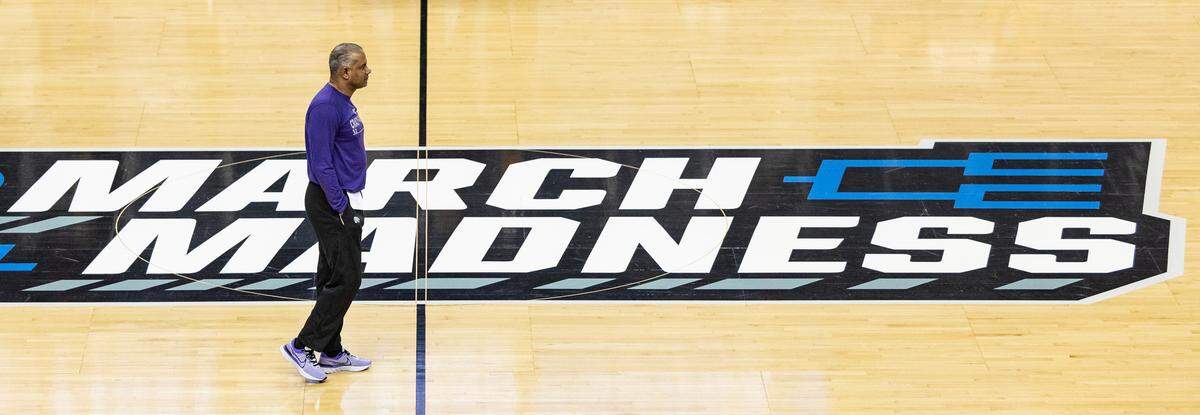
Taylor said he met with Tang and asked him to explain his words after the press conference.
In any case, a legal battle appears to be on the horizon. Tang has retained two prominent lawyers in hopes of recovering as much of his $18.7 million buyout as possible. Smith suggested that Tang could even sue K-State for a higher number.
If this case makes it all the way to court, a judge will listen to myriad arguments on both sides.
Tang’s legal team will likely argue that no other athletic director would find it “reasonable” to fire a coach over a press conference. Other coaches, including Colorado’s Tad Boyle, have made similar remarks this season, and they remain employed. Perhaps that was just Tang’s way of firing up his team.
It’s also worth mentioning that K-State guard Abdi Bashir supported Tang afterward by saying, “I don’t think Coach Tang said anything wrong.”
“Any fact that is favorable to the coach,” Edelman said, “is one added fact that could be used in an argument, should this go to court, to support lack of reasonableness with the underlying decision.”
K-State will potentially argue that Tang brought unnecessary stress to basketball players by threatening to take away their scholarships and that he damaged the school’s ability to recruit future student-athletes. Are those not “reasonable” reasons to fire a coach?
A judge may end up answering those questions.
One word can be very meaningful in a contract.
“This isn’t that unusual,” Edelman said. “In college sports and employment contracts in general, the employer always wants broad grounds to terminate because the talent side always tries to negotiate and use hedge words such as reasonable to try to muddy the waters when someone is fired. It is very common for them to threaten to sue, and, more often than not, the parties end up reaching some form of negotiated settlement, either before the case is filed or in its early stages.”
This story was originally published February 26, 2026 at 6:00 AM with the headline "One word shouldn’t be overlooked in Kansas State’s legal battle with Jerome Tang."