
Karen refugee group finds community through sport of chinlone at Kansas City park
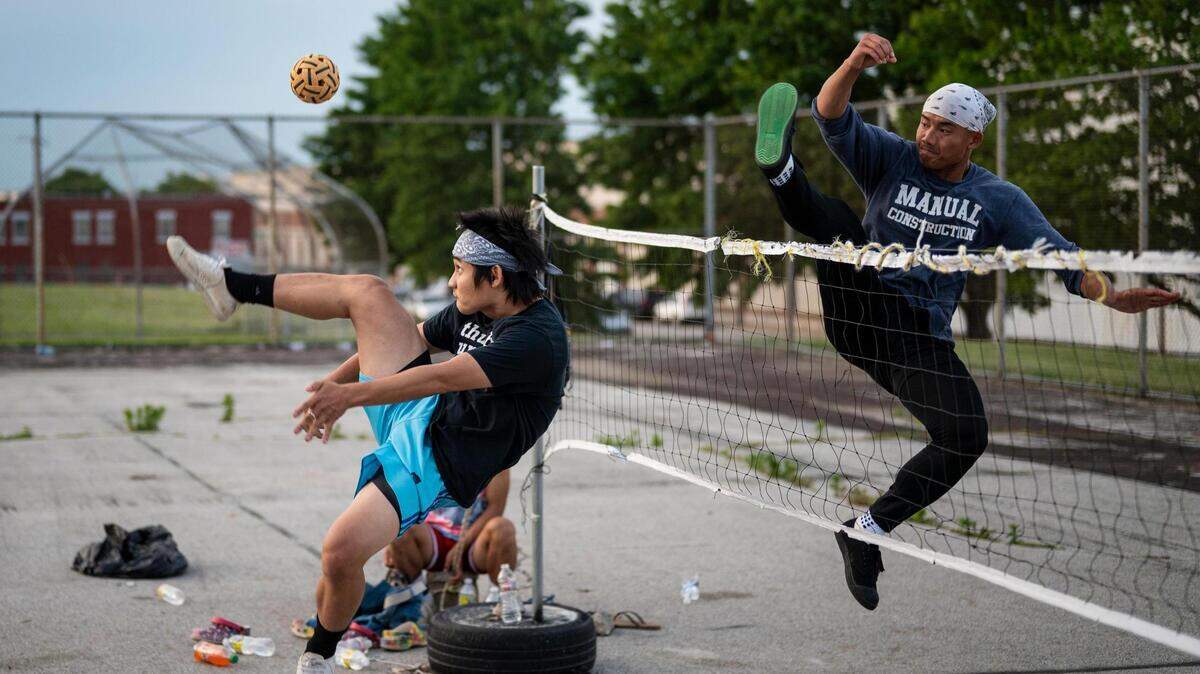
Early most afternoons at Sheffield Park in east Kansas City, it’s silent.
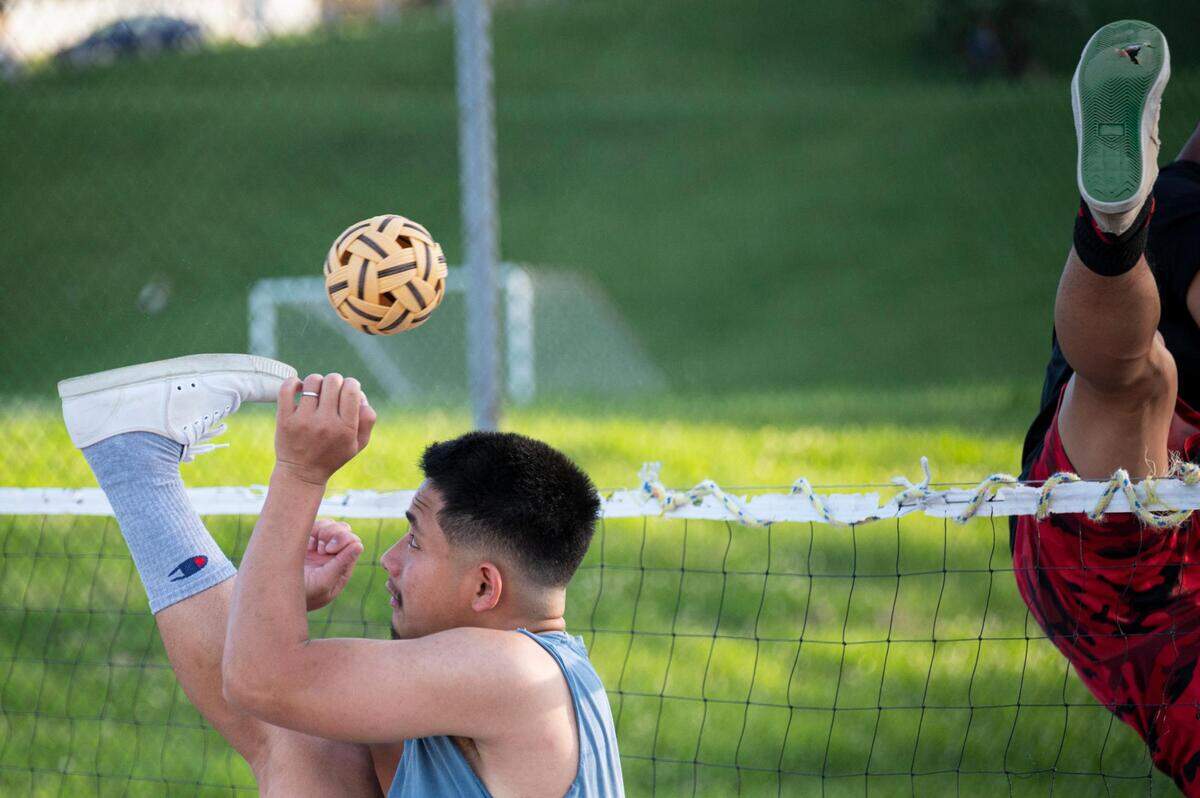
Then, a group of Karen-Americans come to fill the park with the sound of friendly trash talk and the constant rattle of the synthetic plastic ball in their sport of choice: chinlone, the traditional sport of Myanmar, or Burma.
Htoo Lay first learned chinlone, also referred to as takraw or kick volleyball, in a Thailand refugee camp when he was 12. His family, like many who comprise the ethnic-minority Karens of Burma, fled Myanmar because of violence there.
Two years later, Lay immigrated to Kansas City from the camp where he was born and raised and quickly found a group of fellow Karen refugees at high school who met to play chinlone every afternoon.
Think of it like volleyball without use of hands or arms, Lay said. Players compete on a badminton-size court and have three touches to get the ball over the net without letting it hit the ground.
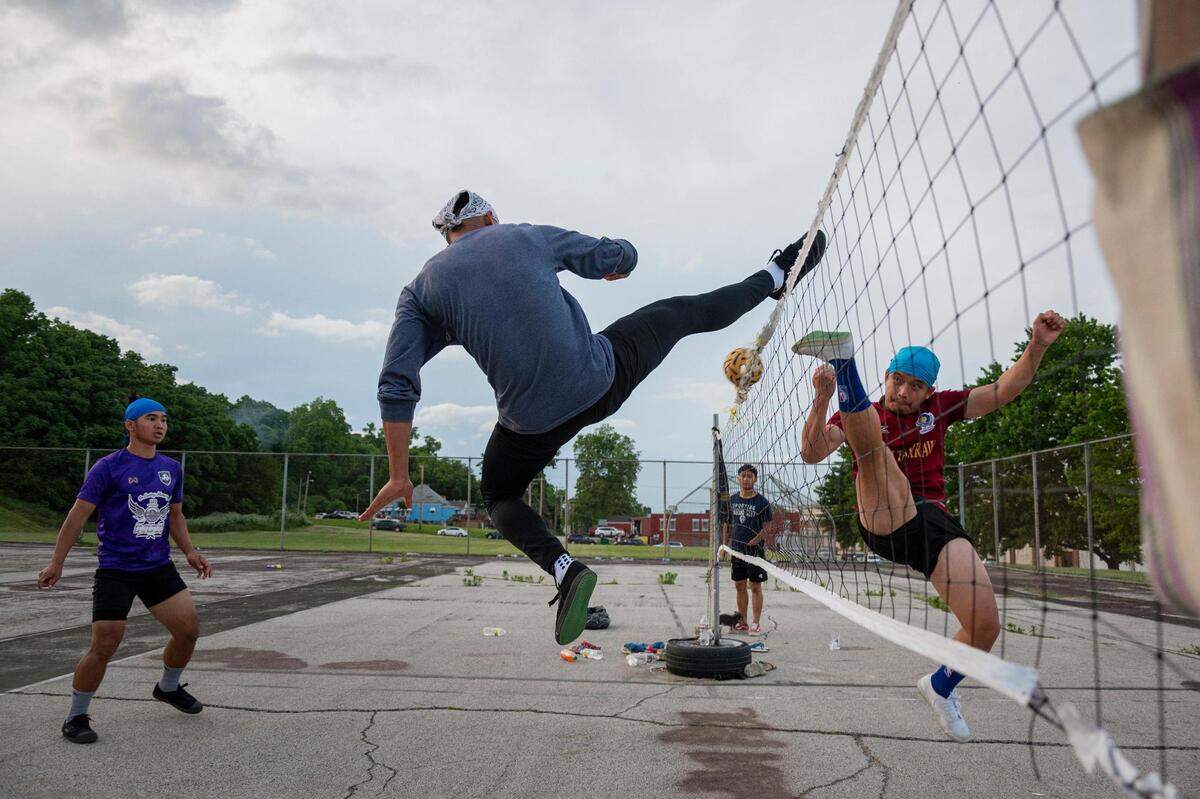
The group is still going strong: on any given afternoon, 10-20 people will meet at Sheffield Park. On weekends, that number can balloon to 30 when the group isn’t playing in a tournament.
“It’s special,” Lay said. “Even if we’re not from the same refugee camp or same place, if you know how to play this sport, we’re going to get to know each other and get close to each other.”
Last weekend, two Kansas City teams traveled to Clarksville, Arkansas, to play in a tournament hosted by the Karen Youth of Clarksville.
Lay’s team didn’t win the chinlone tournament. But a surprise awaited him.
“My childhood friend, my closest friend back in the camps,” Lay said. “He was there to play too.”
It had been 16 years since Lay last saw his childhood best friend in the Thailand refugee camp where they lived.
“I was so surprised when I saw him,” Lay said. “I remembered that he didn’t know how to play (chinlone), but he actually knew how to play it.”
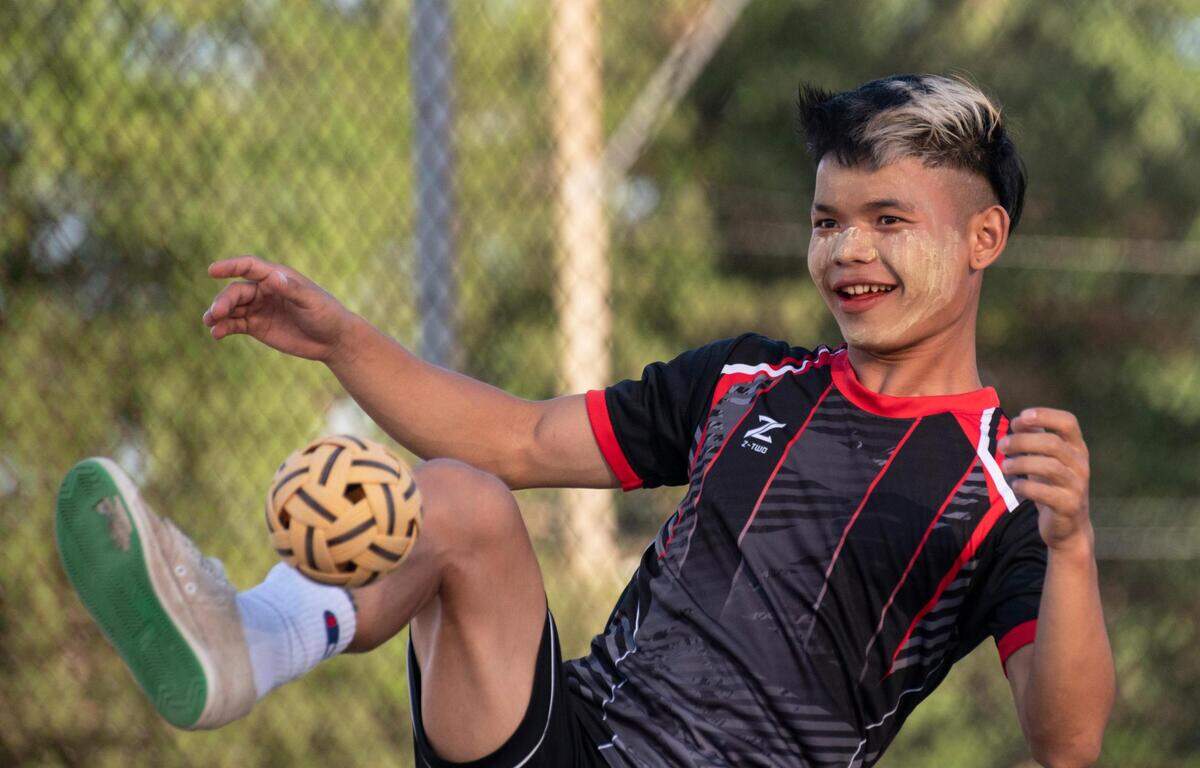
It’s a similar story and experience to so many other Karen refugees in America: finding connection through chinlone after immigrating to America.
Ehmoo Taw’s family immigrated to Missouri from a Thailand refugee camp in March 2013 when he was 9.
“My first year here was sad,” Taw said. “I missed my friends back in the camp. I missed them, and I couldn’t do anything. It was snowing everywhere, we would go outside and play in the snow, and then I would get sick. We weren’t used to the weather yet, we were used to the tropical weather in Thailand.”
“I just had to stay home and sit down and do nothing.”
Everyone played chinlone back in his refugee camp, Taw said. But he often couldn’t get into those games because the adults there didn’t think he was good enough, he said.
So he didn’t play until 2017, when he met Lay Ku, another member of the group.
“He picked me out and trained me,” Taw said. “A lot of people trained with him. They brought me and I started getting better.”
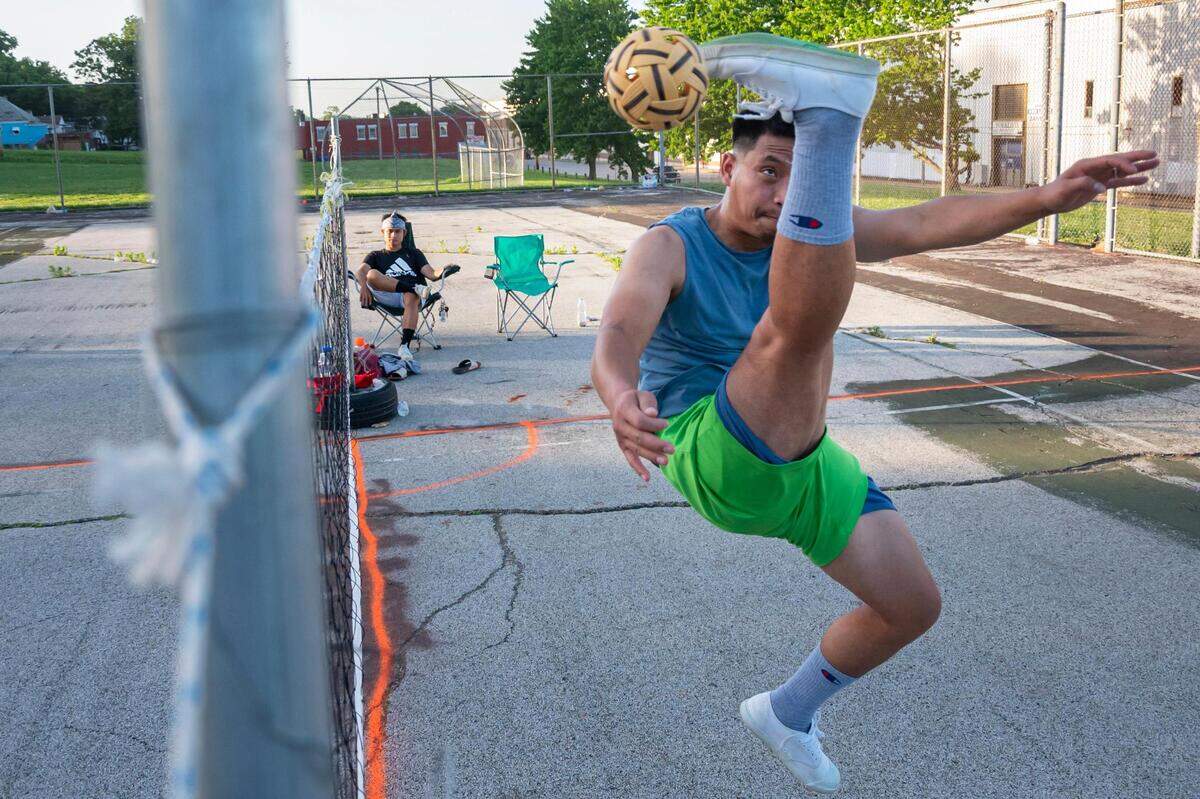
Now, Taw plays every afternoon he can. When he can’t, he’s practicing with one of the rattan chinlone balls that are about three times the size of a tennis ball.
Those years of practice show in Taw’s results. He is one of the highest flyers in the group, often sacrificing his body to make a leaping spike-kick over the five-foot tall net — similar to a bicycle kick in soccer. The move sometimes ends with his arm or head taking most of the impact at Sheffield Park’s rock-hard concrete court.
“Here, it’s dangerous,” Lay said. “When you do a spike kick, you have to be careful, because you can get injured anytime when you do.”
Injuries are not uncommon. Taw wears tape on his left elbow from when he dislocated it on a spike-kick.
Lah Wah, another chinlone player, said the group is looking for a better field. For years, they played at a local apartment complex and another field before being told they weren’t allowed.
“We need a field, an actual field, but we don’t know where we can go,” Wah said. “In Minnesota, the (Karen) community actually built two fields that are actually for this game. They had turf, and when I went there, it was beautiful.”
According to a 2017 report from the Karen Community of Minnesota, the largest population of Karen-Americans, around 17,000, lives in Minnesota. According to RefugeKC, a local nonprofit Christian ministry, around 1,000 Karen refugees live in the Kansas City area.
The Karen people, found mostly along the southeast edge of Myanmar, are involved in the world’s longest ongoing civil war. Every year, Karen refugees travel to Washington, D.C. to protest the Burmese government for its treatment of the Karen people.
Ta Toe Thou went in 2017, attending one of the largest such demonstrations in which 9,000 Karen people gathered in Washington D.C.
“It wasn’t only us, there were other ethnicities that were (protesting) the Burma military,” Thou said. “It was very painful, to be honest, but we manage to live and go on each day. We will never forget about the fact that we came here and that we are grateful.”
Thou first came to Kansas City in 2010 from a Thai refugee camp. He learned chinlone when he was 5, as his family would gather in a circle and just pass the ball around.
The biggest difference in the camp: no shoes.
“By the time you go to bed, you basically feel a lot of pain on the side of your feet,” Thou said. “But you get used to the pain … (the game) brings a lot of family closer.”
Thou has played chinlone in Kansas City with the group since 2014. But recently, with the birth of his son and daughter, he’s been playing less and less.
He’s hopeful his children will eventually play chinlone, just as he did as a child within his own family.
“I’ll definitely give it a chance,” Thou said.
This story was originally published June 17, 2022 at 10:55 AM.