
KC native Sydney Miramontez reflects on struggles with mental health, return to soccer
Sitting in a hotel room in Orlando following a team dinner, Sydney Miramontez had a huge smile on her face as she talked about the double practice that had consumed most of her day.
“I got to play soccer twice today, that’s so cool,” Miramontez gushed.
The excitement in her voice was palpable. But that excitement hasn’t always been there.
In February 2020, at just 25 years of age, Miramontez announced her retirement from the game she’d played since she was a little girl growing up in Kansas City.
She never gave a reason for stepping away from the game, simply stating at the time that she was proud to have played professional soccer.
A year on, Miramontez is back to playing pro soccer, having recently signed with Kansas City’s new National Women’s Soccer League team. But she’s only told a select few the reasons for her retirement. Not her teammates, not her coaches.
Until now.
Now, she’s ready.
Some of her closest friends and teammates will be hearing Miramontez’s struggles for the first time right here, just like you.
Self-doubt. A sense of a lost control. Questioning her own passion for the game.
“I’ll be honest,” she said. “I haven’t talked about this a lot. So trying to find the right words or the best words to say is a little bit tough.”
The road to here
Miramontez had always been in the spotlight.
In high school she played for Shawnee Mission West, racking up 52 goals and 52 assists across four years — both stats still stand as school records. At the club level, she won three Kansas state championship titles with KCFC.
She spent her collegiate years at Nebraska, featuring 75 times for the Cornhuskers. She led the team in assists her senior year and earned second-team All-Big Ten accolades.
She transitioned seamlessly to the pros, starting a handful of games for now-defunct FC Kansas City and then the Utah Royals after FCKC ceased operations and moved to Salt Lake City.
But a persistent foot injury throughout the 2019 season limited her to just four starts for the Royals that season. She underwent successful foot surgery ahead of the 2020 season, but her time on the fringes had taken a toll.
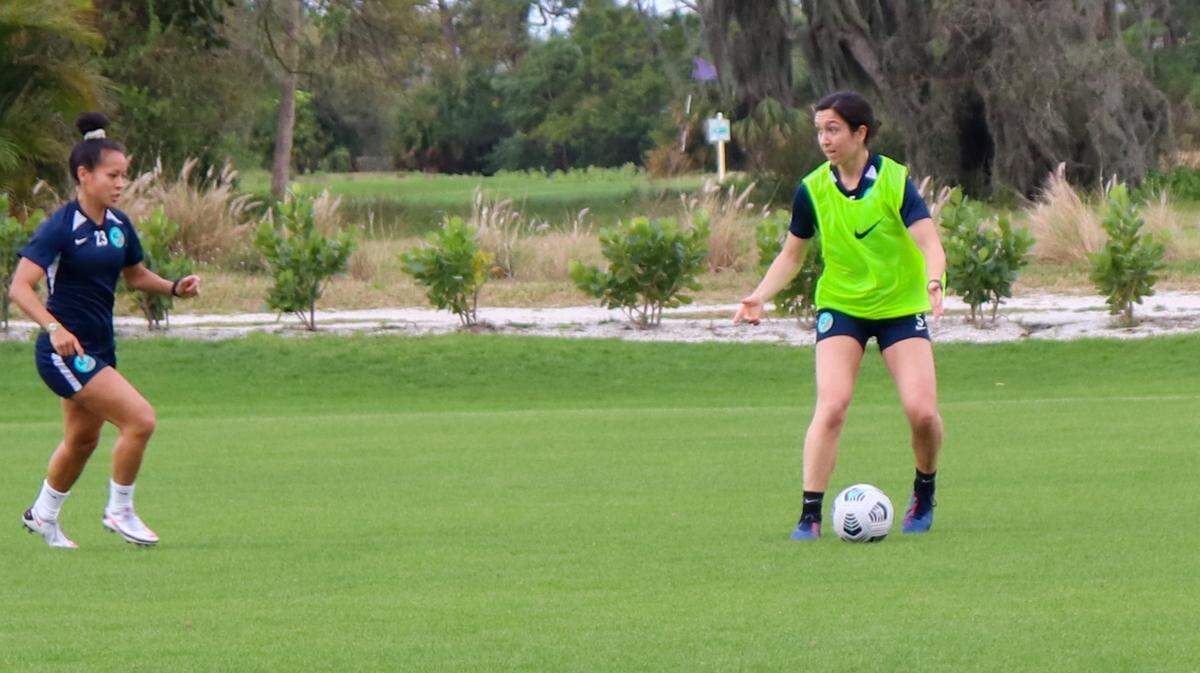
Along with a growing urge to explore career avenues outside of soccer, she began to question whether she was mentally and physically prepared to return to the high-intensity grind of pro sports.
“That injury aligned with the grind, you could say. It was tough,” Miramontez said. “I was facing some adversity and wasn’t seeing a lot of playing time, and at that time, as a young player, I didn’t know how to deal with that.”
During the 2019 season, she began to feel like she was losing control over her place with the team. As she worked to recover from injury and break into the first team as a regular starter, she began to experience more hard days. It was becoming rare that she would leave the field excited and happy.
Initially, she said, she sought help from within the club.
“I so badly wanted specific guidance,” she said. “I didn’t feel like I was getting that.”
The nonprofit Athletes for Hope organization estimates that up to 35% of professional athletes suffer from some sort of mental health crisis at some point in their careers — on a soccer team comprised of 28 athletes, as many as nine.
Miramontez invested heavily in her own fitness and nutrition. Eventually, those aspects of her life began controlling her, as opposed to her controlling them.
Her yearning to regain control became so intense that even things she’d once turned to for comfort became burdensome.
“It got to a point where it was controlling a little bit of what I was doing on and off the field,” she said. “Affecting relationships, affecting my mental state, and that became my focus.”
Being away from family and friends in Kansas City didn’t help. She announced her retirement on Feb. 19, 2020.
“I think that just drove me down a path and to a place where I felt like my coping mechanisms were not the best for my body or physically to being able to play on the pitch,” she said. “So I think when I came to that realization that these two things are kind of intertwining, I needed to step away. That’s just what needed to happen.”
Life after soccer
From afar, retirement looked good on Miramontez.
She appeared happy and excited to move into a new phase of her life. She had newfound freedom, being able to visit friends out of town on the weekend or go to a restaurant and eat and drink like she wasn’t an athlete.
But on the inside, it was a different story.
“I think that was also trying to hide the fact that I was really sad, that I had ended my career in that way,” she said. “I think that’s how I dealt with that sadness, though: I wanted to fully embrace trying different things that I hadn’t been able to do my whole life up until that point.”
She got a job as an account coordinator for an online food-ordering platform. She threw herself into the position, working for eight months from the one-bedroom apartment that she shared with her boyfriend.
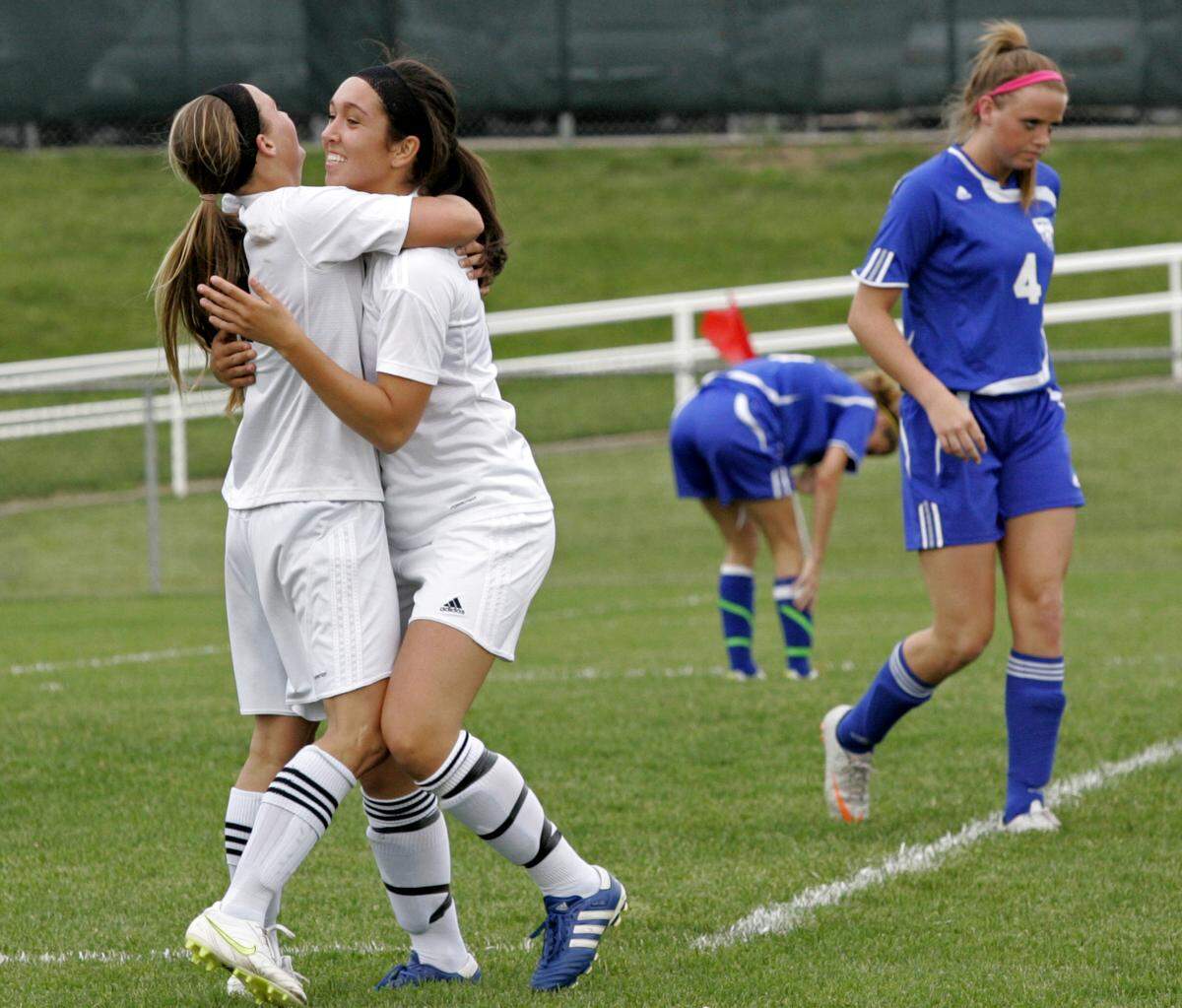
It was an exciting time for Miramontez. She said she learned a lot about herself in her new role: what it meant to be a true professional, how she could influence others within the company, the importance of mastering small details.
She says now that wouldn’t trade the experience for anything. But the mental issues she’d experienced in soccer persisted.
“I thought, at times, soccer was creating those problems for me,” she said. “And so when soccer had been removed and I was still struggling with those things, I invested in and confided in finding the help that I needed to get, and really did some work to figure out what the real issue is.
“I think I realized that soccer was not the issue. I wasn’t mad at soccer; there were just other things that I hadn’t figured out how to deal with.”
She said she started going to therapy to better understand and evaluate her mental health and see what could be done to bring her issues under control. She was connected to counselors who helped her understand her problems: how she’d gotten to this place, and why the events leading up to her retirement happened.
And, most importantly, how she could become healthier and return to the game she’d loved since her childhood.
“When I stepped away and recognized there we some things that needed to be taken care of — once I started to do that, I realized that I still love soccer and I definitely wanted to keep playing,” she said.
Flood of emotion
The September following her retirement, Miramontez sat down to watch the 2020 Fall Series. Her younger sister, Sinclaire, had been drafted into the league by the North Carolina Courage just a month before Sydney retired.
It was one of the first chances Sydney had to watch her younger sister compete professionally.
As the game started, her tears flowed.
“I miss it, I miss it,” was all she could say.
The next day, Miramontez drove to Indian Woods Middle School. She kicked a soccer ball against the wall, controlled its ricochet, and repeated that action again and again.
She felt good, confident her love for the game had returned.
“I think I know that reaction came naturally once I had put that work into myself to get some things figured out,” she said.
She continued to work out alone but began reaching out to coaches around the league. One of them was Huw Williams, with whom she’d worked during her time with FC Kansas City.
At that point, the notion of an NWSL team returning to Kansas City was in its infancy. Williams had been contacted by would-be owners Chris and Angie Long, but no one expected then that KC would field a team in time for the 2021 season. Instead, Williams steered Miramontez to a couple of local training sessions.
Then, in early December 2020, the Longs and their ownership group were awarded an NWSL expansion team. They’d inherit the outgoing Utah Royals’ roster; Williams would be the head coach.
And Miramontez was signed by Christmas.
“I get a smile on my face every time I just think about being back here, playing for this city,” she said. “I’m all about this team, but there’s something that is burning inside of me for my city. I love this city so much, and I feel very lucky that I was coming back to this city.”
Miramontez said she is still sifting through the feelings she had at the time of her retirement. Healing is not a quick process that can be done overnight.
But she also said she doesn’t regret her retirement. It’s the whole reason she’s able to once again enjoy the game she loves.
“I don’t think that I would be able to sit here and say that confidently, like, ‘This is what I know happened to me,’” she said, “had I not removed myself from the environment and really did some work to figure out how I’ve gotten to that place and why those things started to happen.”
As Miramontez finished sharing her story, she realized she had one more thing to say. She wanted to explain why she’s divulging her struggles now, in this way — not confidentially to friends and family, but to a Kansas City soccer writer.
“I do want to note that some of the things I did share I haven’t really talked about,” she said. “Some of it is personal, but some of it I want to be a voice in that area and shine a light on these things.”
“I don’t want to see anybody else have to end a career early because they couldn’t handle it, or there were things that they didn’t feel like they could talk about or figure out.”
This story was originally published February 26, 2021 at 5:00 AM.