
For Pitt State, others in MIAA, football season better late than never’s about to start
Events that started last spring put Pitt State linebacker Morgan Selemaea in a state of disbelief. The COVID-19 outbreak had ended spring sports and forced the university to cancel classes. Even the weight room for athletes had closed.
Uncertainty stretched into the beginning of the next semester. The NCAA canceled its Division II fall championships and the MIAA followed with the announcement to suspend fall sports, meaning no conference-sponsored football season.
“It was hard to wrap your head around this,” said Selemaea, a senior from Harrisonville. “There had never been anything like it.”
But a sense of the familiar has returned. It’s game week for the Gorillas. Weeks of planning and following COVID-19 protocols have produced a five-game schedule for Pitt State, starting Saturday.
The Gorillas and some others in the MIAA have been watching others play football for weeks. Now, for some, it’s their turn.
Better late than never.
“With all that’s gone on I feel extremely blessed to have these games,” said Tucker Horak, a senior running back from Rossville, Kan.
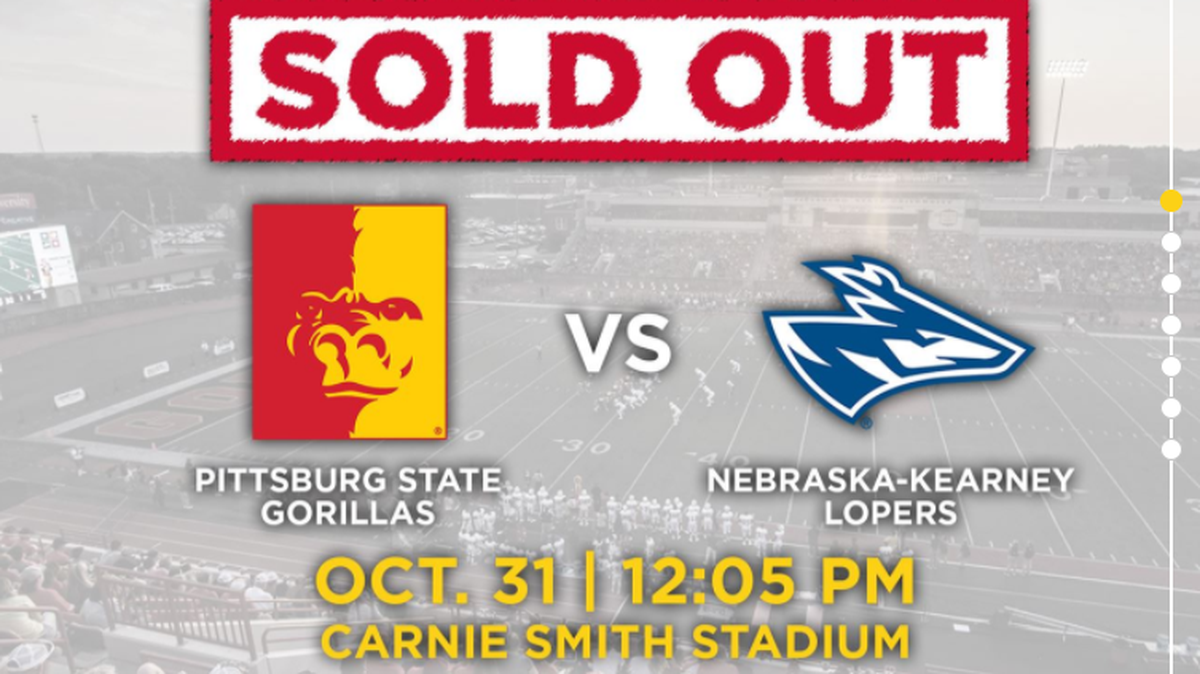
The Gorillas entered into a scheduling alignment with fellow MIAA schools Missouri Western and Nebraska-Kearney, Saturday’s opponent for a noon kickoff in Pittsburg. Additionally, athletic director Jim Johnson lined up games against Stephen F. Austin, Western Colorado and West Texas A&M. Five Saturdays, five games, a schedule that has come together since September.
“We decided if we’re not going to have a league schedule we were going to find a way to play,” Johnson said. “If there was a path we were going to find it.”
Fellow MIAA members Central Missouri, Washburn and Northwest Missouri State have also created a scheduling alliance. Their games are being billed as exhibitions or scrimmages on their schools’ websites and will be played in November. In that group, the schools have agreed to have starters play the first half and reserves after halftime.
Some Division II conferences have shifted football season to the spring. The Great Lakes Valley Conference, which includes five Missouri schools, will play a four-game schedule next March and April. Part of that is a round robin among William Jewell, Truman State, Southwest Baptist and Missouri S&T.
Under NCAA guidelines, the teams must test for COVID-19 weekly and have results back within 72 hours of competition. Finding other schools that could test that often was part of the puzzle of putting together a schedule, Johnson said.
There are some differences in attendance limits, with most schools capping capacity at 25 percent. Masks will be required.
Still, there will be football at a few schools, and at Pitt State, that wasn’t always a given.
“We had a series of weeks where I got up in front of the team I was telling them bad news,” first-year Pitt State head coach Brian Wright said. “I was telling them there were no championships, there was no season.
“Shortly after that we really shut down athletics from a what typical day would look like because we had some positives in the athletic department and moved to voluntary workouts for a while.”
Through it all, a day didn’t pass without Pitt State seeking a solution. Football was happening elsewhere. The Division I major conferences had schedules. High schools started playing. Pitt State, which tops the list of all-time victories among Division II programs, began making calls to other schools.
It helped to see Division II programs in the Colorado-based Rocky Mountain Athletic Conference make plans to start a season. Four schools will complete a scheduling round-robin this weekend.
“What we learned along the way was to make a decision but be nimble and pivot when you have to pivot,” Johnson said.
It added up to a five-game schedule at Pitt State. Not ideal, but it’s a football season.
“And not having any football Saturdays,” Johnson said. “That would have been tough for us.”