
Changes at Spectrum Sports cloud future of KC's all-sports cable station
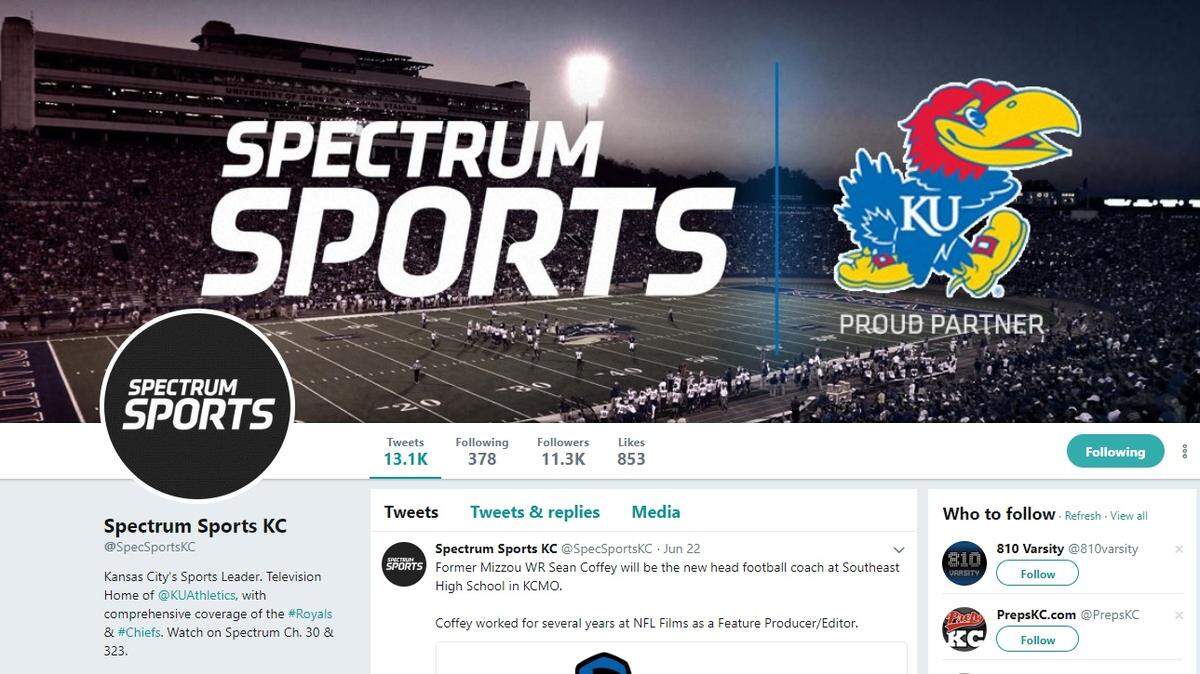
Earlier this month, employees and former employees of Spectrum Sports gathered at the station for what was described as a “meet and greet,” but the occasion also served as something of a farewell.
The next day would be the last for on-air personalities Kennetra Pulliams and Rachel Kilmer, the last of the full-time anchors not retained by the station, and with only a handful of staffers remaining in the office a few miles from the Truman Sports Complex a chapter in Kansas City sports programming appears to have closed.
Born December, 1996 as Metro Sports, the station continued as Time Warner Cable SportsChannel and became Spectrum Sports KC upon being purchased by Charter Communications in 2016. Channel 30 on most area dials remains on the air but with little original programming.
Blue Zone, the Royals’ highlights show, is on the schedule, and Chiefs studio shows ran through organized team activities and could return in the fall, along with high school football games.
But little else is known going forward, and the Jayhawk Network, home to University of Kansas sports since 2013, is looking at options.
A glance at the schedule on Spectrum Sports and Spectrum Sports 2 (Channel 324) shows a steady menu of high school and Kansas basketball replays, documentaries and studio programming from previous years. Those shows serve as a reminder of how the station accepted the challenge of broadcasting the Kansas City sports scene on a 24-hour basis.
“I think it was the most ambitious TV experiment in Kansas City television history,” said Brad Porter, an on-air personality and original employee who spent all but the final year at the station. “To say out of the blue there would be an all-sports cable channel in Kansas City, how was that going to work?”
With rough patches, in the beginning.
Porter produced the first program at Metro Sports, an hour-long call-in show hosted by Duke Frye. Soon, callers who got on the air received a gift, a 12-pack of Surge soda.
But the station grew quickly by making bold moves. It hired anchor Dave Stewart away from KMBC Channel 9 and started providing the sports segments for KCTV Channel 5 news, bringing anchor Leif Lisec to the station.
Another huge early hire was Fred White, the longtime Royals broadcaster who had been let go by the team. White eventually returned to the Royals, and his contacts helped Metro Sports make perhaps its biggest splash.
From 2003-07, Metro Sports produced and broadcast the Royals, making the station a major player in Kansas City media.
“I can remember we were doing a Royals game one night with our Metro Sports sign on the water fountain,” said Neil Harwell, a co-founder of Metro Sports with John Denison, Carol Rothwell and Bob Niles. “We were also producing a Chiefs game that night, and I just remember thinking, ‘This is what we dreamed about when we started this.’”
At some point over the past two decades, Metro was the broadcast home for every area major college, Sporting KC, the Missouri Valley Conference, the Missouri Mavericks, Kansas City T-Bones and other teams. For a few years, Metro televised every minute of the 31-game NAIA men’s basketball tournament.
But perhaps the station’s most impactful programming, and the group that is most dispirited by the station’s prospects, involve the high schools.
Metro Sports blanketed the region with coverage of all high school sports. The Metro Sports production truck at a Friday night football game ensured large crowds and students who came dressed for the occasion. Then they’d get to a TV set to watch highlights of their game and others into the region.
“I’d go into a grocery store and people would say they saw me on the game of the week, or that the game we televised was the biggest thing that had happened to them,” Porter said.
The big schools — Rockhurst, Blue Springs, Liberty and those in the Lee’s Summit, Shawnee Mission, Blue Valley and Olathe districts — got plenty of exposure. But Metro also shined a spotlight on underserved schools.
Center High football coach Bryan DeLong remembered a 2012 district championship game at Oak Grove. The Yellowjackets weren’t often featured in the media, but this game was on Metro Sports.
“Having that game on TV had our kids fired up,” said DeLong, whose team won 21-6.
DeLong, like many area high school coaches, has been a Spectrum Sports devotee for years. He’s presented highlight tapes of broadcasted games as a graduation gifts to his seniors.
“Real announcers, talented people putting that kind of effort into high school games, I’m very sad to hear what’s happening,” DeLong said. “I’m not sure we realize how blessed we’ve been to have had this in Kansas City.”
Bishop Miege boys basketball coach Rick Zych said he would schedule Saturday morning practice around the station’s weekly highlights show. He’d scout opponents from their appearance on Metro Sports.
“It put Kansas City sports in front of the kids,” Zych said.
Zych remembered playing a St. Louis school in a tournament at Aquinas and the coach asking him in amazement why the games were being televised.
“He couldn’t believe we had our station here for high school sports,” Zych said. “For high school kids, parents, family, coaches, everybody, not having it is a major blow.”
All-access coverage of high school and other events were the subjects of well-received documentaries, which also included features on Border War rivalry between Kansas and Missouri, professional wrestling in Kansas City, The Woodlands race track, and the Comets indoor soccer team.
What becomes of the Jayhawk Network? IMG Sports Marketing owns KU's third-tier broadcast rights, which include a football game, two exhibition and four regular-season men’s basketball games, other events and original programming, and the deal is worth some $6 million annually to Kansas.
Jim Marchiony, associate athletic director for public affairs, said the school has heard from other media outlets interested in the Jayhawks but wouldn’t be specific.
“What we’re finding out is there is a lot of interest in a Jayhawk Network from production companies and TV entities, and more than one has expressed interest in picking this up,” Marchiony said. “We can tell you there will be options in cable and over the air.”
As for Spectrum Sports, a Charter spokesperson declined to comment when asked about the future of the station. “We have nothing to report at this time,” said the spokesperson via email.
One region that used to air their version of Spectrum Sports — Tampa and Orlando — dropped the 24-hour sports formats in both cities at the end of 2017, and they’ve become news stations with an evening 30-minute sports show.
A hint of what’s coming for Kansas City? No answer from Charter. But some are convinced a market remains for the type of programming Metro Sports delivered for two decades.
“We think we created something that people really enjoyed, and if it goes away there is going to be a void,” Harwell said. “My hope would be that this is a concept that is not given up on.”
This story was originally published June 29, 2018 at 5:45 PM.